Wooden Cutlery Vs Plastic Cutlery does not have a single universal winner. The better option for you depends on how you prioritize factors like cost, convenience, appearance, and ecological responsibility. For a zero-waste event or eco-conscious food business, wooden cutlery may align better with your values. For quick, low-budget service, plastic may still be the go-to.
This article breaks down the pros and cons of wooden cutlery and plastic cutlery; we will provide a detailed comparison to help you choose the right cutlery for your values and application.
Wooden Cutlery vs Plastic Cutlery: A Quick Comparison Table
The comparison below highlights how each option performs in the areas that matter most, such as sustainability, comfort, food compatibility, cost, and regulations. You can use this quick overview as a starting point, then read the rest of the article for deeper details.
| Category | Wooden Cutlery | Plastic Cutlery |
|---|---|---|
| Material | Renewable wood (e.g., birch, bamboo) | Petroleum-based plastic (PS, PP) |
| Eco-Friendliness | Biodegradable and compostable | Non-biodegradable, polluting |
| Durability | Strong but can soften in moisture | Varies by grade; good moisture resistance |
| Food Safety | No chemical leaching | May release toxins under heat |
| User Feel | Natural and sturdy | Lightweight, sometimes flimsy |
| Aesthetics | Rustic and eco-friendly appearance | Functional but less premium |
| Best Use Cases | Dine-in, eco events, catering | Takeout, delivery, pre-packed meals |
| Legal Compliance | Accepted in plastic-ban zones | Increasingly restricted or banned |
| Cost | Slightly higher per unit | Lowest cost in bulk |
What is Wooden Cutlery?
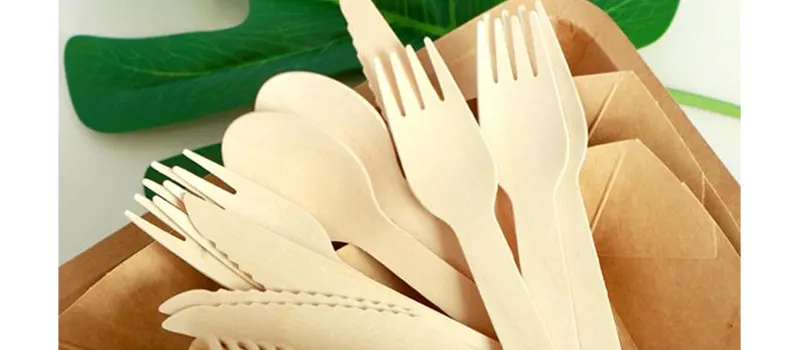
Wooden cutlery is typically made from sustainably sourced hardwoods such as birch, bamboo, or poplar. These materials are chosen for their strength, smooth grain, and ease of processing. Birch wood, in particular, is widely used due to its uniform texture, light color, and ability to withstand heat and moisture during use. The wooden cutlery manufacturing process involves cutting, shaping, sanding, and sometimes polishing the cutlery to ensure safe and comfortable handling.
Pros:
- Eco-friendly: Made from renewable resources and typically biodegradable or compostable.
- Aesthetic appeal: Natural, rustic appearance that enhances food presentation.
- No harmful chemicals: Free from BPA, phthalates, or synthetic additives.
- Sturdy performance: Less likely to snap compared to some thin plastic options.
Cons:
- Higher cost: Generally more expensive than plastic counterparts.
- Limited heat tolerance: Can become slightly soft or warped in very hot foods.
- Coarseness: May feel rougher to the touch compared to smooth plastic unless finely finished.
- Short shelf life: Sensitive to moisture, which may affect storage in humid environments.
What is Plastic Cutlery?
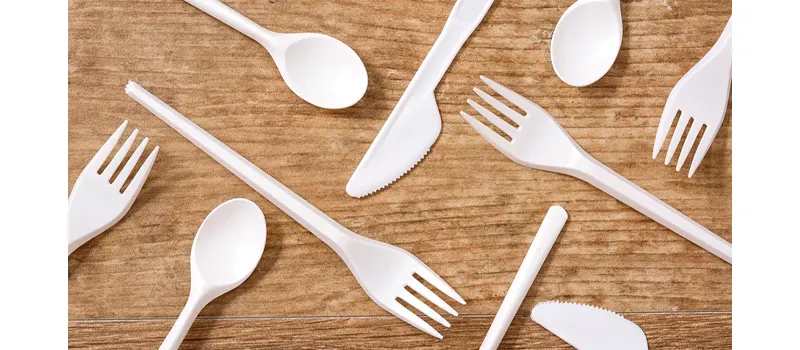
Plastic cutlery is manufactured from petroleum-based polymers such as polypropylene (PP), polystyrene (PS), or polyethylene (PE). These materials are selected for their lightweight properties, moldability, and durability. The cutlery is formed using high-heat injection molding, allowing mass production at very low cost.
Polystyrene is commonly used for its rigidity and glossy finish but is brittle and not suitable for high-heat applications. Polypropylene, in contrast, offers more flexibility and temperature resistance but may feel less premium. While some biodegradable plastics like PLA (polylactic acid) are emerging, conventional plastic cutlery remains dominant in the market due to its price and availability.
Pros:
- Low cost: Highly economical for large-scale events or takeout operations.
- Lightweight and disposable: Easy to use and transport in bulk.
- Wide availability: Accessible in various sizes, styles, and colors.
- Moisture and oil resistant: Performs well with saucy or greasy foods.
Cons:
- Environmental impact: Non-biodegradable and often ends up in landfills or oceans.
- Health concerns: May contain chemicals like BPA or other additives.
- Fragility: Cheaper plastics can break easily under pressure.
- Regulatory pressure: Increasingly restricted by government bans on single-use plastics.
Key Differences Between Wooden Cutlery vs Plastic Cutlery
We will compare wooden cutlery and plastic cutlery based on the key factors that matter most for daily food service, helping you understand which option works better for your specific needs.
1. Material Source and Manufacturing
- Wooden Cutlery
Made from renewable hardwoods like birch or bamboo, wooden cutlery is shaped through simple, low-impact processes such as cutting, sanding, and polishing. It requires no petrochemicals and avoids synthetic resins or dyes. - Plastic Cutlery
Manufactured from petroleum-based polymers such as polystyrene or polypropylene, plastic cutlery involves high-heat molding and complex chemical processing. Its production relies on non-renewable fossil fuels.
Summary: Wood is a natural, low-impact resource, while plastic relies on fossil fuels and industrial manufacturing.
2. Environmental Impact

- Wooden Cutlery
Wooden cutlery is biodegradable and compostable under appropriate conditions. After disposal, it can break down naturally and return to the soil without releasing microplastics or toxic residues. When made from responsibly managed wood sources, such as FSC-certified materials, wooden cutlery can support sustainable packaging goals and reduce reliance on fossil-based plastics. - Plastic Cutlery
Plastic cutlery is not biodegradable and is rarely recycled due to food contamination. Most plastic utensils end up in landfills or the natural environment, where they persist for decades or centuries. Over time, they contribute to microplastic pollution in soil and waterways.
Summary: Wooden cutlery supports zero-waste efforts; plastic cutlery contributes to environmental harm.
3. Cost and Availability
- Wooden Cutlery
Wooden cutlery is generally more expensive than plastic due to slower production, raw material sourcing, and sustainability certifications. However, its availability has grown with demand, and it is now widely distributed through eco-conscious suppliers, restaurants, and event services. - Plastic Cutlery
Generally, plastic cutlery has a lower unit cost because of its mature production process and widely available raw materials. They are mass-produced globally and are readily available in most markets, often sold in bulk at extremely low cost per unit.
Summary: While plastic cutlery still wins on price, wooden cutlery is gaining ground in availability and is increasingly seen as worth the extra cost due to its sustainability benefits.
4. Durability and Practicality
- Wooden Cutlery
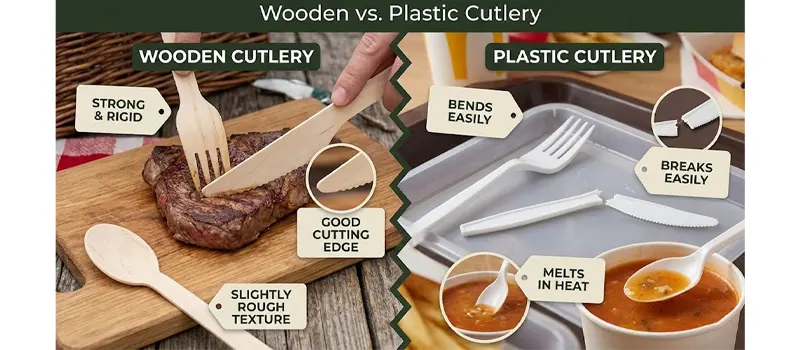
Wooden cutlery is generally rigid and resistant to snapping, especially when made from dense woods like birch. It performs well with solid foods such as meats, rice, and vegetables. However, prolonged exposure to liquids or very hot foods may cause softening or surface changes, making it less suitable for long-term contact with wet meals. - Plastic Cutlery
Plastic cutlery varies significantly in quality. Higher-grade plastic utensils can be flexible and durable, while cheaper options may bend or break easily. Plastic maintains its shape better in moist or oily conditions and is more suitable for sealed packaging or longer holding times.
Summary: Plastic performs better in sealed, moisture-rich environments; wood is sturdier for immediate use.
5. Safety and Healthy Use
- Wooden Cutlery
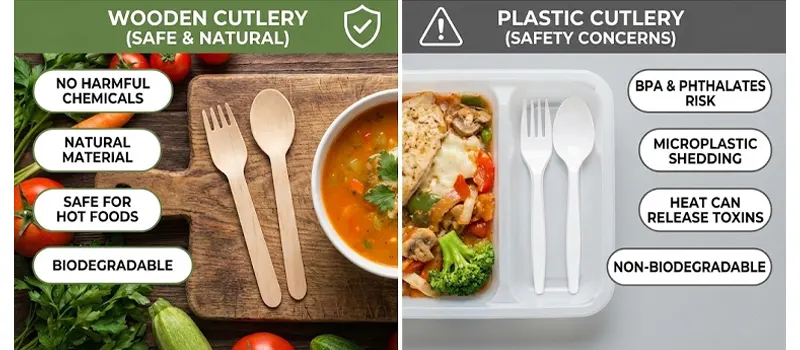
When produced to food-grade standards, wooden cutlery contains no synthetic chemicals, dyes, or plasticizers. It does not leach substances into food and is considered safe for hot, acidic, or oily meals. This makes it a preferred choice for children, schools, and health-conscious consumers. - Plastic Cutlery
Plastic cutlery may release trace chemicals when exposed to heat or fats, depending on material composition. Even products labeled BPA-free can degrade under certain conditions. Growing awareness of chemical migration and microplastics has increased scrutiny around plastic food-contact products.
Summary: Wooden cutlery is safer, especially for hot or oily foods.
6. User Experience (Comfort and Feel)
- Wooden Cutlery
Offers a natural, tactile grip with a neutral flavor. It’s quiet on dishes and feels more stable in hand, adding a premium, eco-conscious feel. - Plastic Cutlery
Lightweight and familiar, but can feel flimsy or synthetic. Some users report a slight aftertaste or odor, especially from cheaper materials.
Summary: Wooden cutlery offers a better sensory experience and visual quality.
7. Practical Performance
- Wooden Cutlery
Wooden cutlery performs well in dine-in settings, events, and short-duration meals. It is suitable for plated foods and controlled environments but less ideal for long-term storage inside packaged meals with high moisture content. - Plastic Cutlery
Plastic cutlery is widely used in takeout, delivery, and pre-packaged meals because it resists moisture and retains its shape during transport. Its performance remains stable across a wider range of storage and handling conditions.
Summary: Plastic is more practical for high-moisture or transport-heavy use cases.
8. Legal and Regulatory Considerations
- Wooden Cutlery
Complies with most plastic-ban legislation. Favored by green certification programs and sustainability-driven purchasing policies. - Plastic Cutlery
Increasingly restricted or banned in many regions. Regulatory pressure is growing across Europe, Canada, and parts of the US and Australia.
Summary: Wooden cutlery is future-proof; plastic faces legal and environmental headwinds.
9. Design and Aesthetic
- Wooden Cutlery
Offers a rustic, minimal, and premium look that aligns well with natural branding, upscale events, and sustainable packaging. - Plastic Cutlery
Available in many colors and finishes, but generally lacks the warmth or eco-value appeal. Glossy designs can look clean but also disposable.
Summary: Wooden cutlery enhances brand presentation and perception; plastic focuses on variety and cost.
How to Choose Between Wooden Cutlery vs Plastic Cutlery?
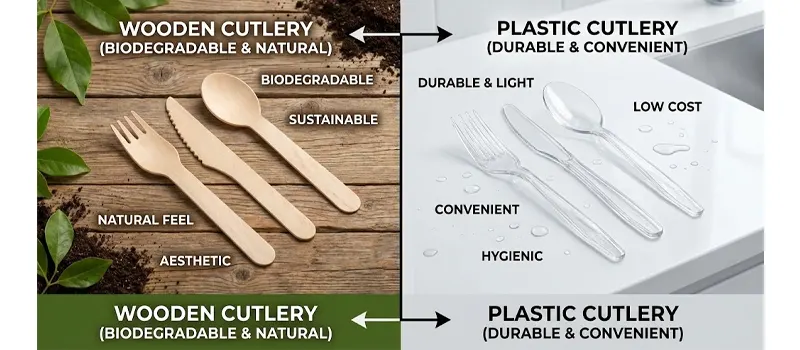
Choosing between wooden cutlery vs plastic cutlery starts with one simple question. What is your top priority in this situation. When you are clear about whether you care most about sustainability, cost, customer experience or convenience, the right option becomes much easier to see. You can use the following points to find the better option for your business.
Consider the Type of Food Being Served
Different materials react differently to temperature and moisture, directly impacting your customers’ dining experience.
If your menu features steaks, heavy fast food, or hot soups, prioritize durability and heat resistance. High-density wooden cutlery (like birch) will not soften or deform in high heat, while heavy-duty plastic provides a more direct cutting force.
For salads, ice cream, or light bento boxes, standard wooden cutlery works perfectly. Note that some untreated wooden utensils can release a slight woody taste when they absorb moisture. If your food has very delicate flavors, test the cutlery yourself before buying in bulk.
Calculate Your Budget and Cost Structure
Cutlery is a recurring consumable, so the numbers must make sense for your business model.
Traditional plastic cutlery holds a clear price advantage in bulk purchasing. If your business relies on high volume with thin margins, and your customers do not expect premium packaging, plastic will keep your daily overhead expenses low.
Wooden cutlery usually has a higher unit price. When evaluating this cost, ask yourself if your pricing can absorb it. If switching to wood noticeably upgrades the look and feel of your takeout orders, making customers feel they are getting better value, the extra expense functions as a brand asset.
Align with Your Brand Identity and Customer Preferences
Cutlery is a physical representation of your brand in the customer’s hands.
If your restaurant highlights green, healthy, or clean eating, wooden cutlery is a natural visual cue. It proves to your target audience that you practice sustainability, which builds brand trust and loyalty.
If your brand prioritizes speed and convenience, and your customers simply want utensils that won’t snap, consistent and moisture-resistant plastic directly meets their core needs.
Check Local Regulations
Compliance is a mandatory external factor you cannot ignore. Many regions are strictly enforcing bans on single-use plastics. If your local market already has these laws in place or is moving in that direction, switching your supply chain to wooden cutlery now ensures business continuity and prevents future fines or rushed transitions.
FAQs
Is wooden cutlery better than plastic?
It depends on what you’re optimizing for. Wooden cutlery is better for the environment, safer with hot foods, and offers a more natural look. Plastic, however, is cheaper and more moisture-resistant. Wooden options tend to win in terms of sustainability and brand perception.
Are all wooden cutlery fully compostable?
100% natural, untreated wooden cutlery is completely biodegradable and compostable. However, if the utensils are manufactured with synthetic adhesives or non-organic chemical coatings to increase durability, they cannot be processed in commercial composting facilities. You must verify supplier certifications (such as FSC or BPI) before marketing them as eco-friendly to your customers.
Does wooden cutlery splinter or break during use?
High-quality commercial wooden cutlery, typically manufactured from birch, is pressure-molded and sanded to prevent splintering. It safely handles standard cutting and scooping for most meals. However, wood lacks the flexibility of plastic; it will snap under heavy force rather than bend.
Can wooden cutlery be reused or washed for multiple uses?
Wooden cutlery is designed for single use, but in some cases, it can be gently cleaned and reused once or twice. However, since it’s porous, it may absorb moisture and food particles, making it less hygienic over time.
What should I look for when sourcing eco-friendly cutlery for my business?
Focus on materials that are certified compostable or biodegradable, and look for sustainability certifications like FSC. You’ll also want to check durability, food-safety compliance, and whether the supplier offers custom branding or bulk pricing that fits your operational needs.
Conclusion
Choosing between wooden cutlery vs plastic cutlery is not about finding a single winner for every situation. It is about matching the strengths and weaknesses of each option with your real needs, your budget and your values. When you look at the full picture, wooden cutlery vs plastic cutlery becomes a strategic decision rather than a simple swap of one material for another.
Million Pack provides scalable procurement solutions for both commercial wooden and plastic cutlery lines. By offering transparent material specifications, verifiable compliance documentation, and consistent global logistics, Million Pack ensures your choice aligns precisely with your operational needs and brand standards.