
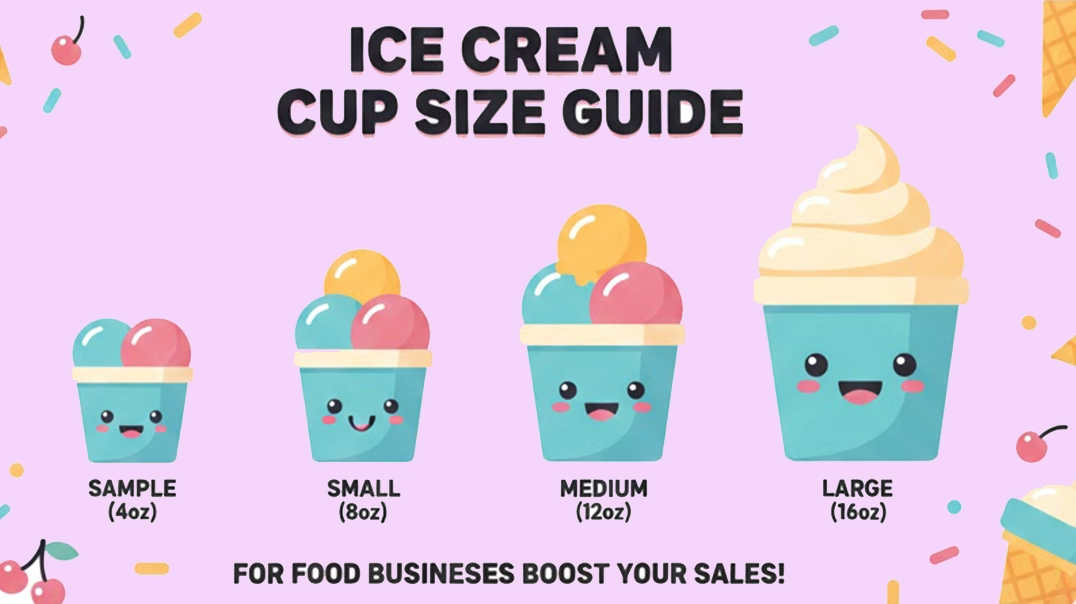
Many owners and purchasing managers know they need small, medium and large cups, yet feel unsure what those sizes should actually be in ounces and milliliters. A size that is slightly too small can make portions look disappointing, while a size that is too large pushes up food cost and creates unnecessary waste. When you understand how different ice cream cup sizes relate to portion weight, toppings, serving style and customer expectations, it becomes much easier to build a menu that feels generous and still protects your margins.
In this article, we will walk through the most common Ice Cream Cup Size options, explain how they convert between ounces and milliliters and show how each size fits different types of products. You will see how cup size choices connect with your portion planning, brand positioning and packaging materials. By the end, you will have a clear framework for choosing ice cream cups that match your recipes, your service style and the needs of your food business.
What Is Ice Cream Cup Size and Why It Matters
For food businesses, Ice Cream Cup Size is not just a number printed on a carton. It is a practical standard that affects portion control, pricing structure and how customers perceive value. When cup sizes are defined clearly, both staff and customers understand what each serving represents.
What Ice Cream Cup Size Really Means
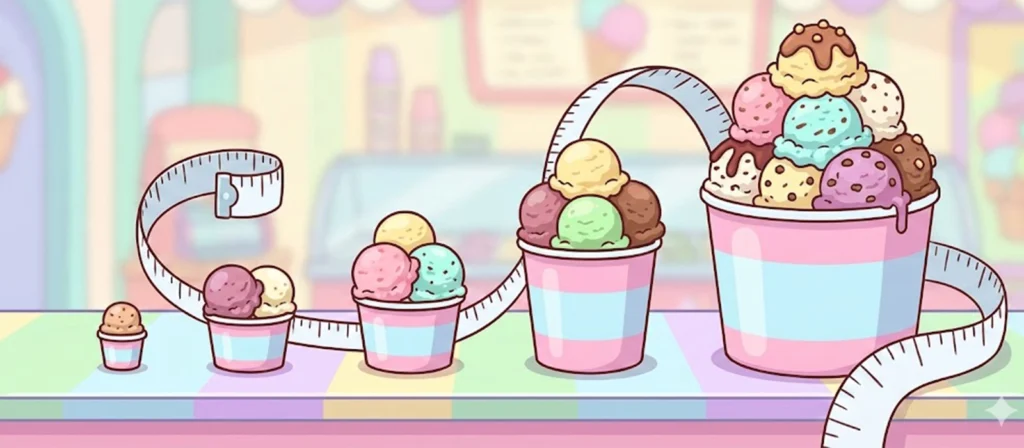
Ice Cream Cup Size refers to the internal capacity of a cup designed to hold a specific volume of ice cream or frozen dessert. In most food service settings, this capacity is measured in fluid ounces or milliliters. Common examples include 3 oz, 4 oz, 6 oz, 8 oz and larger sizes used for premium servings or takeaway orders. While these numbers look simple on paper, they represent how much space the cup provides for ice cream, air content, toppings and visual presentation.
It is important to understand that Ice Cream Cup Size is not the same as the final serving weight. Ice cream contains air introduced during churning, known as overrun, which means two cups of the same size can hold different weights depending on the recipe. Because of this, cup size is used as a consistent serving reference in food businesses, helping staff serve portions that look uniform even when product density varies.
From an operational point of view, Ice Cream Cup Size also affects how easily staff can scoop and serve. A cup that is too narrow may make it difficult to fit standard scoops or add toppings cleanly, while a cup with the right opening and depth supports faster service and a cleaner presentation. These small details matter when service speed and consistency are part of the customer experience.
Why Ice Cream Cup Size Matters for Food Businesses
- It defines portion consistency across different staff members and service locations, helping customers receive the same visual portion every time.
- It directly influences food cost control, since each Ice Cream Cup Size sets a clear limit on how much product is served per order.
- It shapes customer perception of value, as a well chosen cup size makes portions look balanced rather than too small or overly empty.
- It affects menu pricing decisions, because cup size often becomes the basis for small, regular and large pricing tiers.
- It plays a role in packaging efficiency, including storage space, lid compatibility and transportation for takeaway orders.
When Ice Cream Cup Size is chosen carefully, it becomes a tool that supports both customer satisfaction and business efficiency, rather than a detail decided at the last minute.
Standard Ice Cream Cup Sizes You Should Know
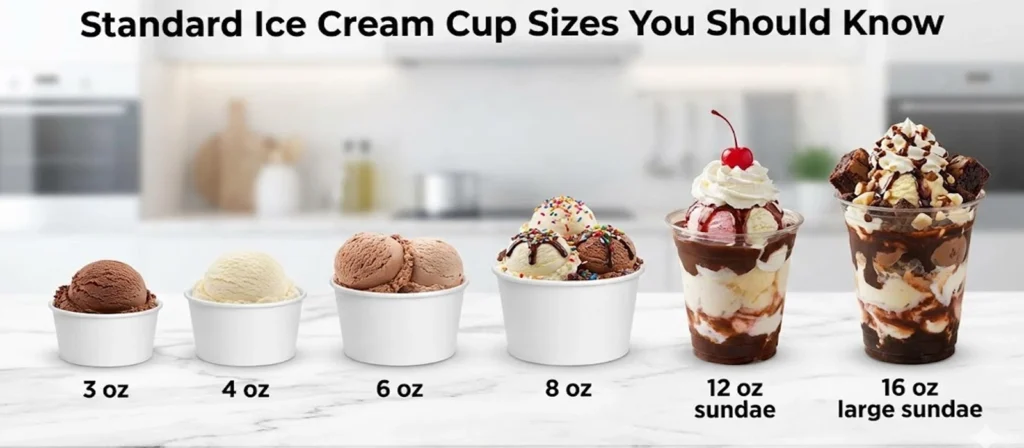
Knowing the most common Ice Cream Cup Size options allows food businesses to plan portions with confidence. These standard sizes form the basis of menu structure, pricing tiers and daily service efficiency.
Small Ice Cream Cup Sizes (3 oz to 4 oz)
Smaller Ice Cream Cup Size options such as 3 oz and 4 oz are widely used for tasting portions and light servings. These cups are ideal when the goal is portion control rather than visual impact, making them suitable for sample programs, children’s menus or add on scoops. In high volume settings, smaller sizes help manage cost while still offering customers a complete and satisfying portion.
Medium Ice Cream Cup Sizes (6 oz to 8 oz)
Medium Ice Cream Cup Size ranges from 6 oz to 8 oz and represents the most common choice for everyday sales. A 6 oz cup typically accommodates one to two scoops depending on scoop volume and ice cream density, while an 8 oz cup allows extra room for toppings and sauces. These sizes are often seen as balanced, offering good perceived value without excessive food cost.
Large Ice Cream Cup Sizes (12 oz to 16 oz)
Larger Ice Cream Cup Size formats such as 12 oz and 16 oz are designed for premium or shared servings. They are commonly used for sundaes, layered desserts or takeaway orders where presentation and abundance matter. Because these sizes hold significantly more product, they are usually priced higher and positioned as specialty items rather than standard servings.
Below is a summary of standard Ice Cream Cup Size options, including approximate metric conversions and typical usage scenarios.
| Ice Cream Cup Size (oz) | Approximate Capacity (ml) | Typical Use Cases | Recommended Scenarios |
|---|---|---|---|
| 3 oz | about 90 ml | Tasting portions, kids servings | Sampling stations, events, add on scoops |
| 4 oz | about 120 ml | Single small scoop | Children’s menus, controlled portions |
| 6 oz | about 180 ml | One to two scoops | Standard menu items, everyday sales |
| 8 oz | about 240 ml | Two scoops with toppings | Regular servings, customizable desserts |
| 12 oz | about 355 ml | Sundaes, large desserts | Premium items, takeaway orders |
| 16 oz | about 473 ml | Sharing portions, loaded desserts | Family sizes, delivery focused menus |
Using these standard Ice Cream Cup Size references makes it easier to align portion size with menu design, pricing logic and customer expectations across different service formats.

Popular Ice Cream Cup Uses
Choosing the right ice cream cup size depends not only on capacity but also on how the product is served. Different dessert styles require different cup volumes to balance presentation, portion control, and ease of consumption. Below are the most common and practical uses of ice cream cups in food service settings.
1. Single Scoop and Double Scoop Cups

Practical Use: These compact cups are ideal for everyday ice cream servings in parlors, cafés, and food trucks. The 4 oz option fits a perfect single scoop with minimal waste, while the 6 oz size provides extra space for double scoops or light toppings. Their manageable portion size helps businesses maintain consistency, reduce over-serving, and keep operations efficient during busy service hours.
Recommended Cup Size: 4 oz to 6 oz
Best For: Classic single scoops, double scoops, and small add-on toppings
2. Ice Cream Float Cups
Practical Use:
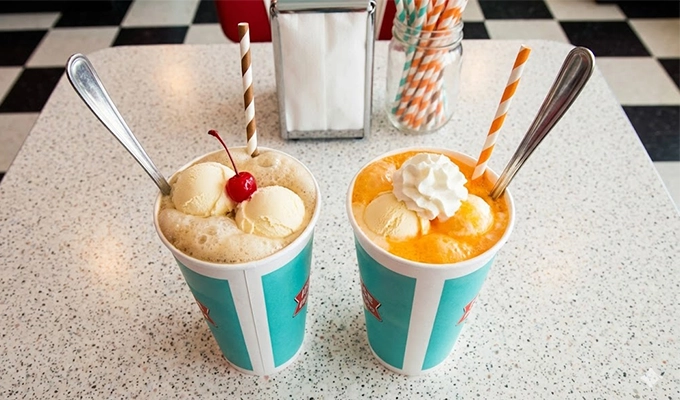
Float cups need extra space to hold both soda and ice cream while allowing carbonation to expand. These sizes help prevent spills and preserve the classic layered look of floats. They are especially useful in diners, themed restaurants, and outdoor events where presentation and convenience matter.
Recommended Cup Size: 12 oz to 16 oz
Best For: Ice cream floats made with soda and scoops
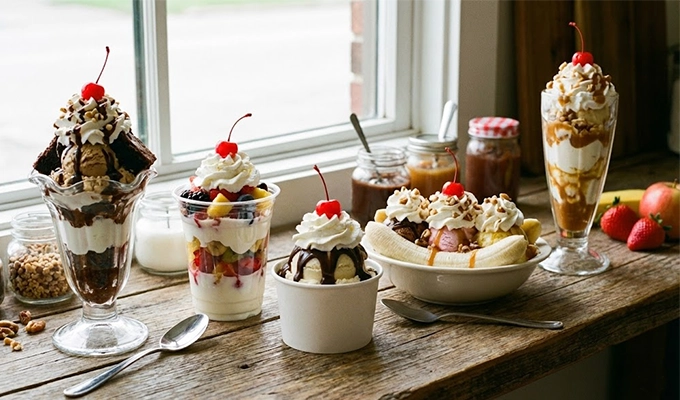
3. Sundae Cups
Practical Use:
Medium to larger cups give enough room for building visually appealing sundaes without spills. These sizes accommodate multiple scoops and generous toppings, making them a popular choice for dessert bars and dine-in ice cream shops. Their shape supports neat layering, elevating presentation and customer satisfaction for more indulgent menu items.
Recommended Cup Size: 8 oz to 12 oz
Best For: Layered sundaes with syrups, whipped cream, nuts, and mix-ins
4. Parfait Cups
Practical Use:
Medium-sized cups are well suited for parfaits, offering enough depth to highlight layered ingredients without over-sizing the portion. They balance visual appeal and practicality, making them a popular option for cafés, hotel buffets, and catering services that focus on presentation and portion control.
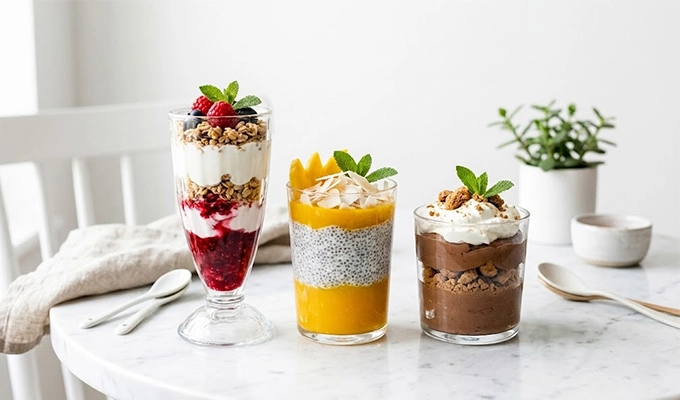
Recommended Cup Size: 8 oz to 12 oz
Best For: Layered parfaits with ice cream, fruit, yogurt, and mix-ins
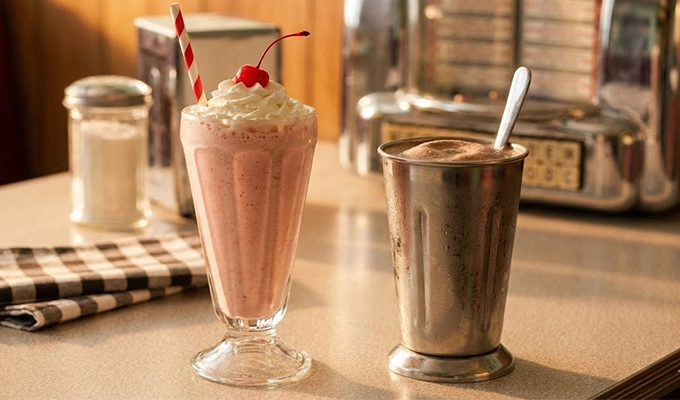
5. Milkshake and Malt Cups
Practical Use:
Larger cups work best for milkshakes because they allow enough volume for blending ice cream with milk, syrups, and mix-ins. The 12 oz and 16 oz sizes prevent overflow during blending and leave room for whipped cream or toppings. These cups create a smooth drinking experience for customers and support fast-paced beverage service in cafés and ice cream stores.
Recommended Cup Size: 12 oz to 16 oz
Best For: Thick milkshakes and blended ice cream drinks
Understanding how different ice cream cup sizes are used helps food businesses match the right container to each menu item. By aligning cup size with serving style, businesses can improve presentation, control portions, and create a better overall customer experience without increasing waste or cost.
Material Choices for Ice Cream Cups
Choosing the right material is just as important as selecting the correct Ice Cream Cup Size. Material affects insulation, appearance, sustainability claims and how well the cup performs in real service conditions. Below are the four most common material choices used in ice cream cups today, with a clear explanation of their strengths, limitations and best use scenarios.
1. Paper Ice Cream Cups
Paper cups are one of the most widely used options in the ice cream industry due to their balance of cost, flexibility and branding potential. They are typically made from food grade paperboard with an inner coating to prevent leakage and moisture absorption. Paper cups work well with most Ice Cream Cup Size ranges, from small tasting cups to large takeaway servings, making them a versatile choice for many food businesses.
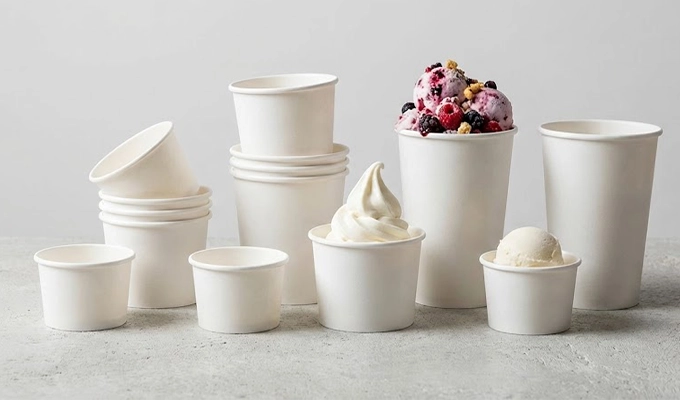
- Pros: Good insulation for cold products, easy to print custom designs, widely accepted by customers, compatible with many lid types
- Cons: Requires inner coating for liquid resistance, not recyclable without proper coating separation, less transparent for product display
- Use cases: Ice cream shops, cafés, dessert counters, branded takeaway programs
2. Plastic Ice Cream Cups
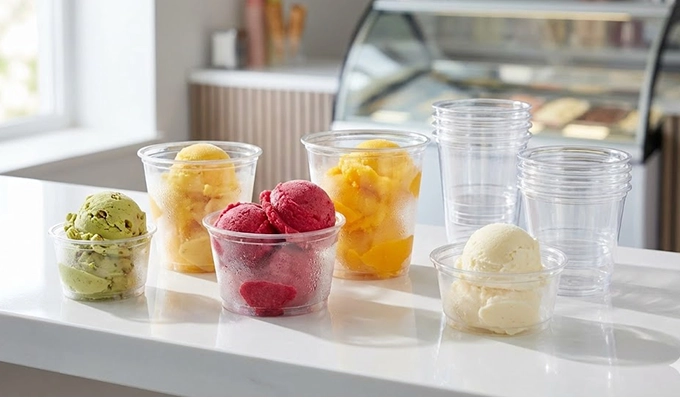
Plastic cups are commonly chosen when product visibility is a priority. Clear plastic allows customers to see layers, colors and toppings, which can increase perceived value for certain desserts. These cups are usually made from materials such as PET or PP and are available in many Ice Cream Cup Size options. They perform well in cold environments and maintain their shape even with dense or heavily topped products.
- Pros: Excellent clarity, strong structure, resistant to moisture, suitable for layered desserts
- Cons: Environmental concerns in some markets, limited branding space unless printed or labeled
- Use cases: Sundaes, parfaits, display freezers, premium visual desserts
3. Biobased and Compostable Materials
Biobased ice cream cups are designed to reduce reliance on conventional plastics by using renewable, plant derived materials. In practical applications, these materials often include options such as corn starch based bioplastics or molded plant fibers made from sugarcane bagasse. For food businesses focused on sustainability messaging, these cups can support environmental positioning when paired with an appropriate Ice Cream Cup Size and clear disposal guidance.

- Pros: Reduced fossil fuel use, strong sustainability appeal, suitable for eco focused branding
- Cons: Higher cost, limited heat and moisture tolerance depending on formulation, composting facilities may be required
- Use cases: Eco focused cafés, organic brands, events with controlled waste management
4. PLA Coated Paper Cups
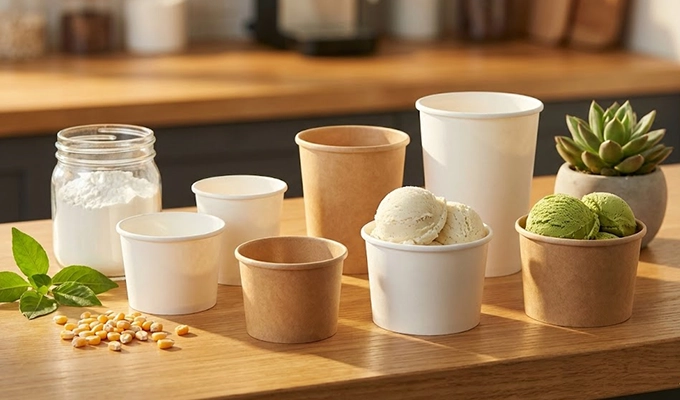
PLA coated paper cups combine a traditional paperboard structure with a thin inner coating made from polylactic acid derived from plant starch. This option is often used as an alternative to conventional plastic linings. PLA coated cups can handle most ice cream applications while supporting compostable claims under industrial composting standards. They are available across common Ice Cream Cup Size ranges and fit well into sustainability driven packaging programs.
- Pros: Plant based lining, suitable for cold foods, supports compostable messaging
- Cons: Requires industrial composting, limited heat resistance, higher unit cost than standard paper
- Use cases: Takeaway ice cream, environmentally conscious brands, regions with composting infrastructure
Material Comparison Summary
| Material Type | Performance with Ice Cream Cup Size | Key Strengths | Main Limitations | Typical Applications |
|---|---|---|---|---|
| Paper Cups | Stable across small to large sizes | Insulation, branding flexibility | Needs inner coating | Standard ice cream service |
| Plastic Cups | Excellent in medium to large sizes | Product visibility, strength | Environmental concerns | Sundaes, layered desserts |
| Biobased Materials | Best for small to medium sizes | Sustainability appeal | Higher cost, disposal limits | Eco focused menus |
| PLA Coated Paper | Suitable for most common sizes | Plant based lining | Composting required | Sustainable takeaway programs |
Selecting the right material alongside the correct Ice Cream Cup Size ensures your packaging supports product quality, brand values and operational needs without unnecessary compromise.
How to Choose the Right Ice Cream Cup Size for Your Menu
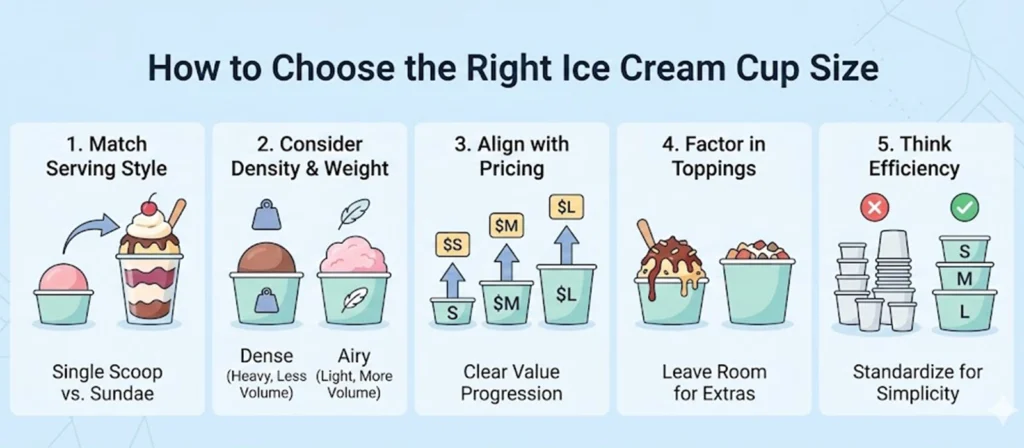
Choosing the right Ice Cream Cup Size should always start from your actual menu structure rather than from supplier defaults. A well matched cup size supports portion clarity, pricing logic and smooth service, while a poorly chosen size often leads to confusion, waste or inconsistent customer experience.
Match Ice Cream Cup Size to Serving Style
Ice Cream Cup Size should directly reflect how the product is served and consumed. Single scoop ice cream, layered sundaes, takeaway desserts and shared portions all require different spatial allowances. When cup size aligns with serving style, the product looks intentional and balanced instead of cramped or half empty, which helps reinforce perceived value at the counter.
Consider Portion Weight and Ice Cream Density
Not all ice cream fills a cup the same way. Ice Cream Cup Size must account for product density and overrun, since heavier ice cream occupies less visible volume than lighter formulations. Testing how your actual product sits in different cup sizes helps prevent underfilled appearances or forced overfilling that can increase food cost.
Align Ice Cream Cup Size with Pricing Strategy
Customers naturally associate Ice Cream Cup Size with price differences. If the visual gap between sizes is unclear, upgrades feel unjustified. Clearly defined cup sizes help communicate value without explanation and allow pricing tiers to feel logical, especially for small, regular and large options on the same menu.
Factor in Toppings and Customization
Menus that allow toppings, sauces or mix ins need additional space beyond the base portion. Choosing an Ice Cream Cup Size that only fits the ice cream itself often leads to spills or messy presentation. Slightly larger cups give room for customization while keeping the serving clean and visually appealing.
Think About Operational Efficiency
From storage to staff training, Ice Cream Cup Size affects daily operations. Offering too many sizes increases complexity, while too few sizes can limit menu flexibility. Most food businesses benefit from standardizing a small range of cup sizes that cover all menu items efficiently.
Key takeaways to guide Ice Cream Cup Size selection:
- Serving style: Match cup size to how the product is eaten and presented
- Product density: Test real ice cream volume rather than relying on theoretical capacity
- Pricing clarity: Use visible size differences to support menu pricing tiers
- Customization space: Allow room for toppings without overcrowding
- Operational simplicity: Limit cup size options to reduce errors and inventory pressure
When these factors are considered together, Ice Cream Cup Size becomes a strategic tool rather than a simple packaging choice.
Approximate Price Reference for Paper Ice Cream Cups by Size
| Ice Cream Cup Size | Typical Capacity (ml) | Estimated Unit Price Range | Common Order Context |
|---|---|---|---|
| 3 oz | about 90 ml | USD 0.03 – 0.05 | Sampling cups, kids portions |
| 4 oz | about 120 ml | USD 0.04 – 0.06 | Single scoop servings |
| 6 oz | about 180 ml | USD 0.05 – 0.08 | Standard menu items |
| 8 oz | about 240 ml | USD 0.07 – 0.10 | Regular servings with toppings |
| 12 oz | about 355 ml | USD 0.10 – 0.15 | Sundaes, takeaway desserts |
| 16 oz | about 473 ml | USD 0.14 – 0.20 | Large portions, sharing sizes |
Custom Printed Ice Cream Cups
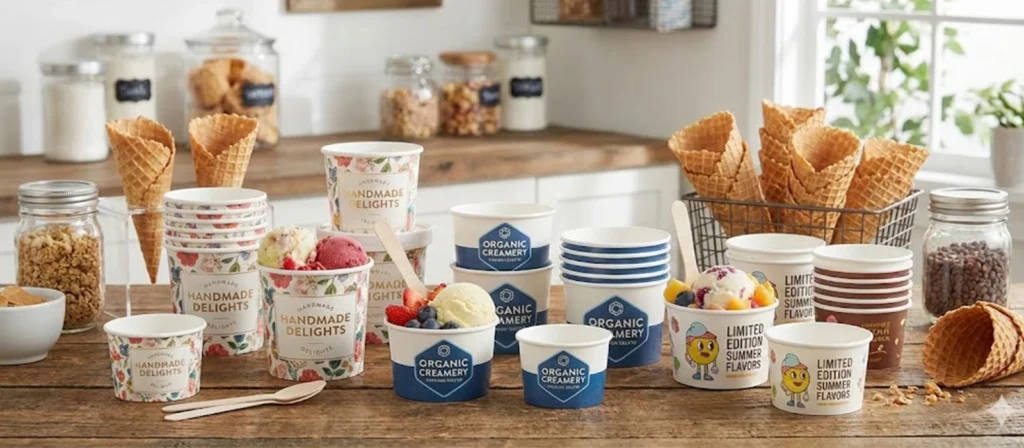
Custom printed ice cream cups turn a basic Ice Cream Cup Size into a visible marketing tool at the point of sale. Even simple designs can strengthen brand recognition and influence how customers remember the product
Marketing benefits of custom printed ice cream cups:
- Brand visibility: Your logo and colors stay in the customer’s hand throughout the eating experience
- Perceived value: Branded cups often make the same Ice Cream Cup Size feel more premium
- Menu clarity: Printed size indicators or flavor cues help customers quickly understand offerings
- Social sharing: Visually appealing cups encourage photos and organic online exposure
- Brand consistency: Packaging aligns with store design, signage and digital branding
Common printing methods for ice cream cups include flexographic printing and offset printing. Flexographic printing is widely used for large volume orders because it offers stable quality and cost efficiency. Offset printing is typically chosen for more detailed artwork and richer color control, making it suitable for premium or limited edition designs. Both methods support food safe inks and maintain print durability under cold and moist conditions.
Beyond visual appeal, custom printed ice cream cups also support operational and long term brand goals. Standardized printed designs help reinforce brand consistency across multiple locations, seasonal menus, and takeaway channels, reducing reliance on verbal explanations or extra signage. Over time, this consistency builds trust and familiarity, making customers more likely to recognize, remember, and return to the brand even in highly competitive food service environments.
Conclusion
Selecting the right Ice Cream Cup Size is a strategic part of building a successful ice cream or dessert business. Cup size influences how portions are perceived, how costs are controlled and how clearly a menu communicates value to customers. By understanding standard ice cream cup sizes, choosing suitable materials, aligning cup capacity with portion planning and using custom printing to strengthen branding, food businesses can create a serving system that is both efficient and appealing. When Ice Cream Cup Size is chosen with intention rather than habit, it supports consistent service, stronger brand presence and long term operational stability.
Q&A
1. What is the most common ice cream cup size for single servings?
The most common size is 4 oz for a single scoop. It offers good portion control and minimizes waste. Many shops also use 6 oz when light toppings are included.
2. Which ice cream cup size is best for sundaes?
Sundaes are typically served in 8 oz to 12 oz cups. These sizes allow space for multiple scoops, sauces, and toppings without spilling.
3. What cup size should be used for milkshakes and floats?
Milkshakes and floats usually require 12 oz to 16 oz cups. The larger capacity helps prevent overflow and supports add-ons like whipped cream.
4. Should ice cream cup size affect pricing?
Yes, cup size directly impacts portion cost and menu pricing. Using standardized sizes helps maintain consistency and protect margins.
5. Can one ice cream cup size work for all menu items?
Using one size may simplify inventory, but it often limits menu flexibility. Most food businesses benefit from offering at least two or three cup sizes.