
FSC operates a certification system that follows fiber from the forest through mills and converters to the final product. Only when every step meets the requirements can a company place the label on its FSC Certified Packaging. This process gives packaging buyers a reliable way to confirm responsible sourcing.
FSC has become especially important in food packaging, where paper cups, trays, cartons and molded fiber containers are widely used. Businesses want packaging that supports sustainability goals while remaining compliant, and FSC certified options offer a clear path. The next sections will explain What Is FSC in depth, how its certifications work and how companies can choose the right FSC Certified Packaging for their products.
Understand What Is FSC
What Is FSC refers to the Forest Stewardship Council, an independent organization that establishes standards for responsible forest management. Its goal is to ensure that wood based materials used in packaging come from forests managed with long term environmental and social care.
FSC’s Mission and Global Role
FSC works to protect forest ecosystems while allowing industries to use renewable resources responsibly. Its standards cover forest planning, conservation of biodiversity and fair treatment of workers. International auditors review certified operations to maintain consistency and credibility across different regions.
How the FSC System Works
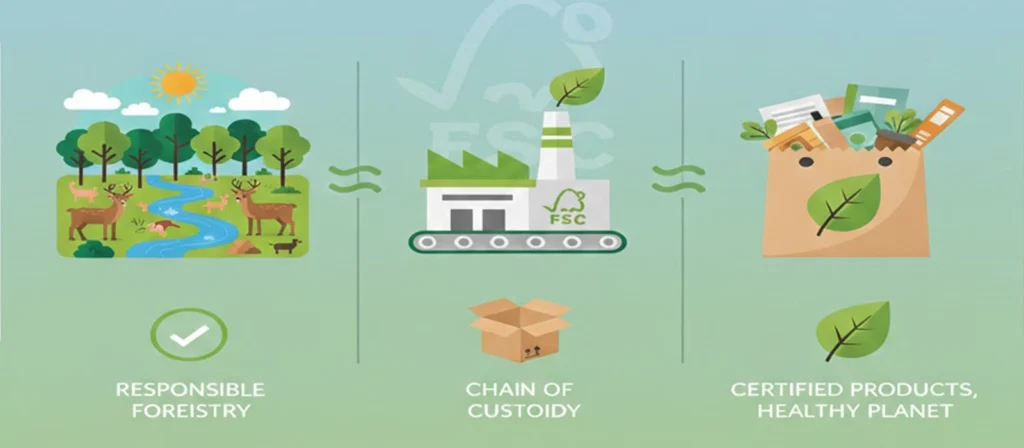
The FSC system functions through a chain of custody structure that tracks material from the forest to the final packaged product. Key steps include
- Verified forest operations that follow FSC standards
- Responsible harvesting with legal and documented practices
- Controlled processing at mills with traceable fiber flows
- Accurate tracking at every packaging conversion stage
- Independent audits that confirm each step before final labeling
Only when all parts of the chain follow these rules can a product be sold as FSC Certified Packaging.
Core Principles and Certification Types
The FSC system is built on principles that ensure forests are managed responsibly and that the fiber used in FSC Certified Packaging can be traced with confidence. These principles focus on legal compliance, protection of biodiversity, long term forest health and respect for Indigenous and community rights. They also require accurate tracking of wood based materials as they move through each stage of the supply chain.
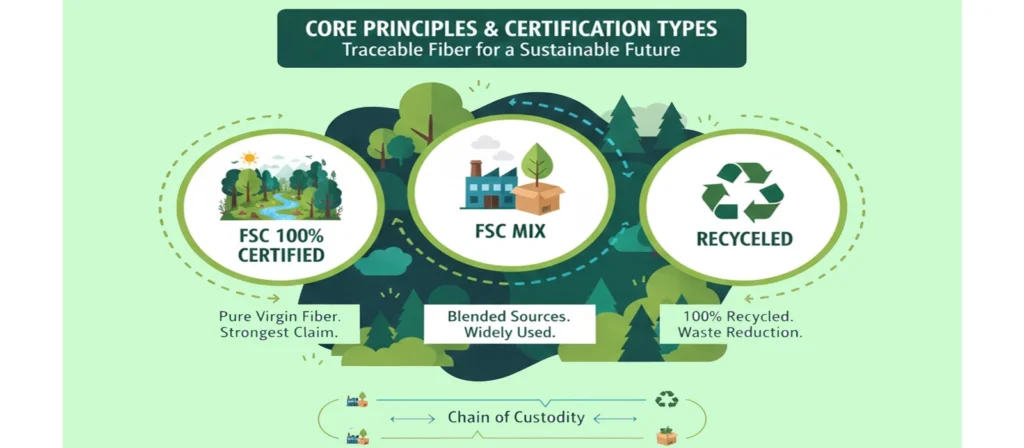
FSC certification for packaging falls into three main types. Each type communicates how the fiber was sourced and what percentage meets FSC requirements. Understanding these distinctions allows buyers to select packaging that aligns with their sustai
FSC Packaging Certification Types Explained
- FSC 100 Percent Certification: This label means all fiber in the product comes from FSC certified forests. These forests are audited for responsible management practices that protect ecosystems and support local communities. FSC 100 Percent packaging is often chosen by companies seeking the strongest sustainability claim.
- FSC Mix Certification: This option allows a combination of fiber from FSC certified forests, controlled sources and recycled material. It is widely used in packaging such as cartons, paper cups and molded fiber trays. Controlled sources must meet strict guidelines that prevent illegal harvesting and the use of high conservation value areas, giving suppliers flexibility while maintaining traceability.
- FSC Recycled Certification: This label confirms that one hundred percent of the fiber comes from verified recycled content, including post consumer and pre consumer material. It supports waste reduction by keeping fiber in circulation and reducing demand for virgin resources. This certification is common in shipping boxes, molded fiber trays and food packaging designed to lower environmental impact.
These certification types give businesses clarity when choosing FSC Certified Packaging for food service, retail or consumer products. They also help customers understand what the FSC claim represents, which strengthens trust in the brand’s sustainability efforts. Understanding What Is FSC becomes more practical once these certification categories are clear, since they guide how companies communicate their sourcing choices and measure their impact.
What FSC Certified Packaging Means?
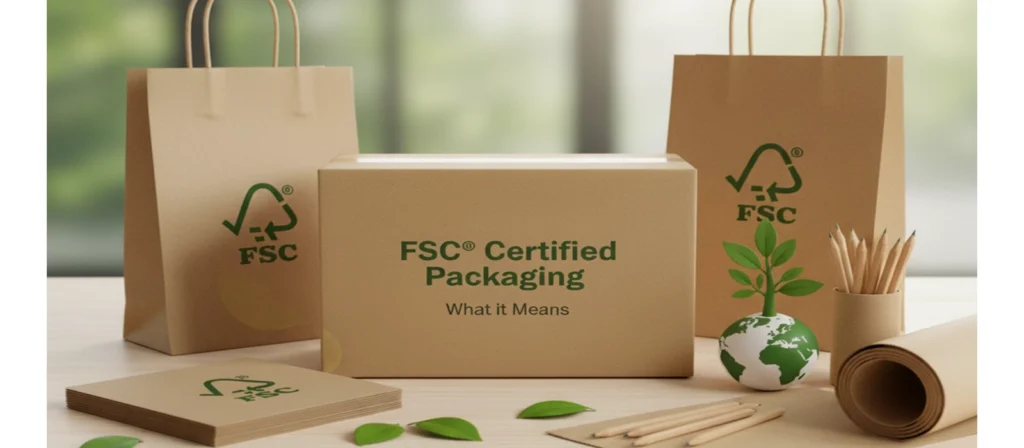
FSC Certified Packaging refers to packaging made with responsibly sourced fiber that has been tracked through the FSC chain of custody system. It offers buyers a clear and verifiable way to choose sustainable paper based materials for food and consumer products.
What counts as FSC certified packaging
Packaging can be considered FSC certified when all materials and production steps follow FSC requirements. Common qualifying products include
- Paper cups for hot and cold beverages
- Folding cartons used for retail and food service
- Corrugated shipping boxes and protective inserts
- Paper bags, wraps and envelopes
- Molded fiber trays and containers
- Labels and sleeves used in food and non food applications
Each product must be made from fiber that originates from approved sources and must be produced by suppliers holding valid FSC chain of custody certification.
FSC labeling rules for packaging products
1. Correct use of certification types
Labels must accurately reflect the material source, whether FSC 100 Percent, FSC Mix or FSC Recycled. The claim on the packaging must match the certification used during production.
2. Placement and visibility
FSC requires the label to appear in a clear and easy to see location so that buyers can identify FSC Certified Packaging without confusion.
3. License codes and approval
Every FSC label must include the supplier’s unique license code. This code links the product to a specific certified company and allows verification through public records.
4. Controlled wording
Any reference to FSC must follow approved language to prevent misleading claims. This ensures that the term What Is FSC remains associated with verified responsible sourcing.
FSC certified materials help companies communicate sustainability commitments with clarity. When these rules are followed, businesses can provide packaging options that customers trust and easily understand.
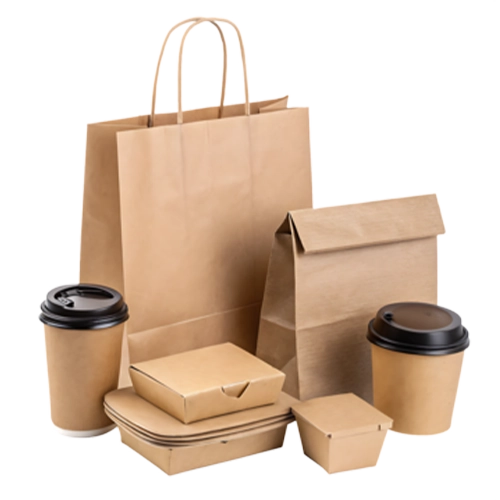
Common FSC Materials Used in Packaging
FSC Certified Packaging covers a broad set of paper based and plant fiber materials used across food service, retail and logistics. Each material interacts differently with FSC certification, mainly because FSC focuses on forest derived fiber. By understanding how each material fits into the system, businesses can select packaging that supports sustainability goals while still meeting functional performance needs.
1. Kraft Paper
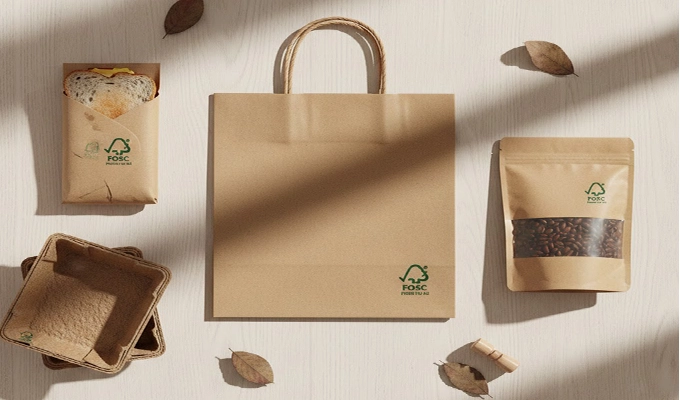
Kraft paper is widely valued for its strength and resistance to tearing, which makes it suitable for demanding food service environments. It maintains reliable performance even with minimal coating, and its natural appearance aligns with the growing interest in sustainable packaging aesthetics. Kraft paper is produced in large volumes globally, so certified options are accessible for both small and large businesses.
- Applicable packaging uses: paper bags, food wraps, carton liners, pouches
- Eligible FSC types: FSC 100 Percent, FSC Mix, FSC Recycled
2. White Paperboard
White paperboard provides a smooth surface for detailed printing, which is important for branding and product information. It maintains good rigidity, making it ideal for folding cartons and food sleeves that must hold their shape. Due to high demand in the cosmetics, food and consumer goods industries, many mills now offer a full range of FSC certified paperboard grades.
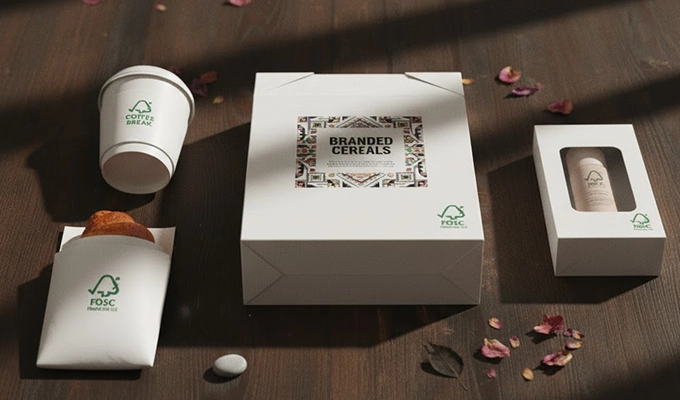
- Applicable packaging uses: folding cartons, cup sleeves, food sleeves, printed retail boxes
- Eligible FSC types: FSC 100 Percent, FSC Mix, FSC Recycled
3. Corrugated Cardboard
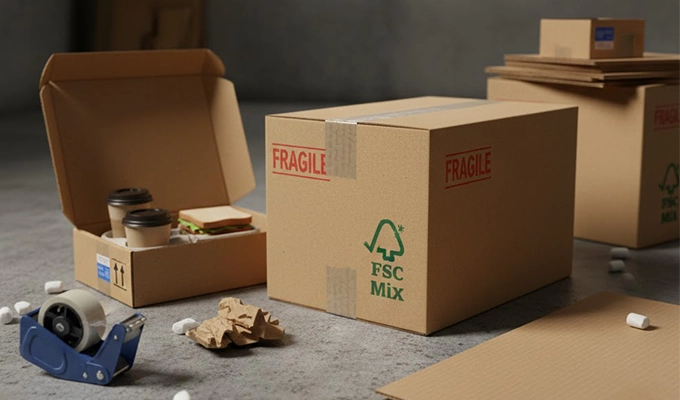
Corrugated cardboard combines strength, cushioning and relatively low weight, which makes it essential for shipping and takeaway packaging. Its structure allows manufacturers to adjust flute sizes to meet different performance needs. Corrugated board often contains a mix of recycled and virgin fiber, so FSC Mix and FSC Recycled certifications are widely used in the logistics and e commerce sectors.
- Applicable packaging uses: shipping boxes, takeaway trays, outer cartons, transport inserts
- Eligible FSC types: FSC Mix, FSC Recycled
4. Molded Fiber from Wood Pulp
Molded fiber from wood pulp is formed into trays, bowls and protective inserts using water and heat. It provides good shock absorption and is often chosen for fresh produce, eggs and takeout meals. Manufacturers can adjust thickness and density to meet various food service needs, making it a versatile option for FSC Certified Packaging.

- Applicable packaging uses: molded trays, produce containers, protective packaging, food bowls
- Eligible FSC types: FSC 100 Percent, FSC Mix, FSC Recycled
5.Bagasse Fiber from Sugarcane
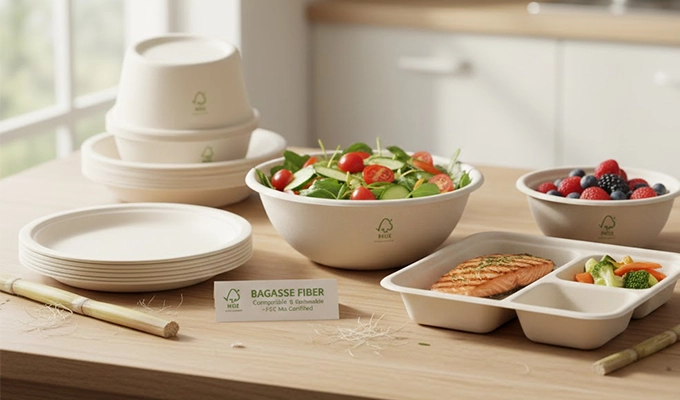
Bagasse is a by product of the sugar industry and is widely used for compostable food packaging. It offers strong heat resistance and performs well with both dry and moist foods. Although bagasse itself is not derived from forests and therefore cannot receive FSC certification alone, it can be used in FSC Mix products when blended with certified wood pulp. This allows packaging suppliers to combine high performance plant fiber with traceable forest derived material.
- Applicable packaging uses: bagasse trays, compostable plates, food bowls, blended fiber containers
- Eligible FSC types: eligible only within FSC Mix when combined with certified wood based pulp
Summary Table of Common FSC Materials Used in Packaging
| Material | Typical Packaging Uses | Eligible FSC Types |
|---|---|---|
| Kraft Paper | Bags, wraps, liners, pouches | FSC 100 Percent, FSC Mix, FSC Recycled |
| White Paperboard | Folding cartons, sleeves, printed boxes | FSC 100 Percent, FSC Mix, FSC Recycled |
| Corrugated Cardboard | Shipping boxes, takeaway trays, outer cartons | FSC Mix, FSC Recycled |
| Molded Fiber from Wood Pulp | Trays, bowls, produce packs, protective inserts | FSC 100 Percent, FSC Mix, FSC Recycled |
| Bagasse Fiber | Compostable bowls, trays, plates, blended containers | Only within FSC Mix when combined with certified pulp |
How to tell if your food packaging is FSC certified
Identifying FSC Certified Packaging is simple when you know what to look for.
- Look for the official FSC label printed on the packaging surface.
- Check whether the label includes the certification type such as FSC Mix or FSC Recycled.
- Confirm that a valid license code is displayed so the product can be traced.
- Review the supplier’s chain of custody number on invoices or product documents.
- Verify the license code or certificate through the public FSC database to ensure authenticity.
These steps help you confirm that the packaging truly follows FSC standards and provides reliable sourcing assurance.
PEFC Packaging vs. FSC Packaging
PEFC and FSC are the two most widely used forest certification systems in global packaging supply chains. Understanding their differences helps businesses select the system that aligns best with their sourcing goals.
| Comparison Topic | FSC Packaging | PEFC Packaging |
|---|---|---|
| Global Recognition | Strong recognition in North America, Europe, Australia and international retail markets | Broad adoption in Europe and Asia with growing global presence |
| Core Focus | Strict standards for environmental protection, community rights and long term forest stewardship | Endorses national certification systems and aims to promote sustainable forest management at regional levels |
| Chain of Custody Requirements | Highly detailed tracking rules that require documentation at every stage of the supply chain | Allows national systems to define some requirements, resulting in flexibility across regions |
| Label Types | FSC 100 Percent, FSC Mix, FSC Recycled | Several PEFC labels including certified, recycled and region influenced versions |
| Market Perception | Viewed as a premium sustainability label by many international brands | Seen as a reliable and flexible certification often preferred by suppliers working with domestic forestry programs |
| Packaging Applications | Widely used for food packaging, consumer goods, corrugated boxes, molded fiber and retail cartons | Common in paperboard, corrugated packaging and regional forest product markets |
| Verification Approach | Centralized global standards with consistent auditing procedures | Uses national frameworks endorsed under one umbrella system, which can vary by region |
PEFC and FSC both support responsible forestry, but companies often choose based on market expectations and certification availability in their supply chains. Understanding both systems helps brands select packaging that meets customer and regulatory expectations.
Benefits of Choosing FSC Certified Packaging
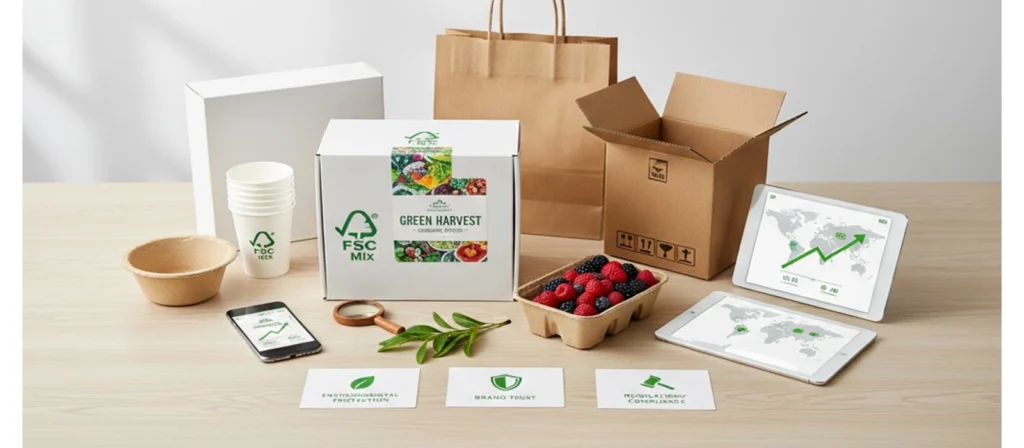
FSC Certified Packaging offers clear advantages for companies that want responsible sourcing, transparent communication and reliable material performance. Understanding What Is FSC also helps businesses strengthen their sustainability strategies and address growing expectations from regulators and consumers.
Environmental benefits
FSC certification supports forest conservation by requiring responsible harvesting, protection of sensitive areas and long term planning. Packaging made from certified fiber helps reduce pressure on unmanaged forests and encourages mills and converters to follow environmentally sound practices. This creates a traceable path from forest to finished packaging.
Business value and brand trust
Companies that use FSC Certified Packaging gain a credible way to communicate their commitment to responsible sourcing. The FSC label is widely recognized by consumers and retailers, which helps brands present a clear sustainability message. It also strengthens partnerships with distributors who increasingly request verified environmental claims.
Customer expectations in US, EU, and AU
Customers in major markets such as the United States, the European Union and Australia show strong interest in sustainable packaging. Many retailers and food service chains now prefer suppliers who can provide verified fiber sources. FSC helps companies meet these expectations by offering certification recognized across these regions and trusted by buyers who prioritize environmental responsibility.
Compliance advantages
Regulatory requirements for supply chain transparency and responsible material use have increased in many countries. FSC certification helps companies demonstrate that their packaging materials come from legal and well managed forests. This makes it easier to respond to audits, retailer requirements and environmental reporting obligations.
Key Takeaways
- Environmental protection: FSC supports forest health and biodiversity.
- Stronger brand credibility: The FSC label helps businesses present clear sustainability claims.
- Market aligned choices: Buyers in the US, EU and AU actively look for certified options.
- Regulatory confidence: Certification assists companies in meeting sourcing and reporting requirements.
Conclusion
Understanding What Is FSC helps businesses recognize how certified materials influence both sustainability and day to day operations. Choosing FSC Certified Packaging supports responsible forestry, strengthens brand credibility and meets the expectations of customers and retailers in major markets. These advantages improve compliance readiness, enhance market access and give companies a reliable way to communicate trustworthy sourcing. For many businesses, FSC certification becomes