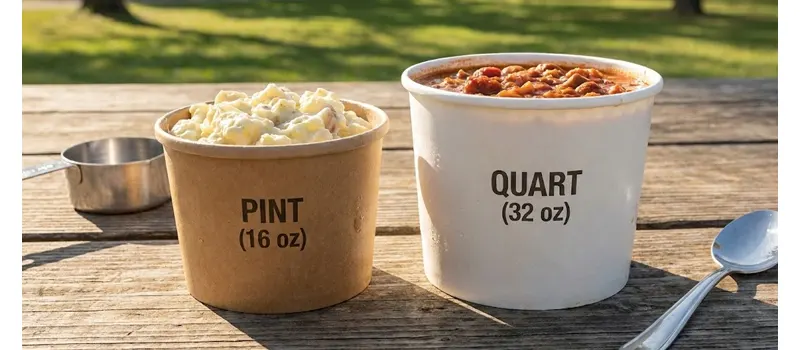
Understanding pint vs quart is essential for anyone working with food packaging, portion planning, or takeout service. A pint equals 16 fluid ounces, and a quart equals 32 fluid ounces, which means a quart is exactly twice the size of a pint. This simple difference affects how food is stored, served, and priced.
In many operations, packaging decisions influence freshness, customer satisfaction, and overall cost. A clear understanding helps balance these factors while keeping portions accurate. Businesses that rely on takeout or delivery will benefit even more from choosing the correct size.
From clear definitions and size comparisons to real-world applications and conversion charts, we aim to help you make informed choices for your foodservice business, manufacturing line, or product line planning.
What Is a Pint?
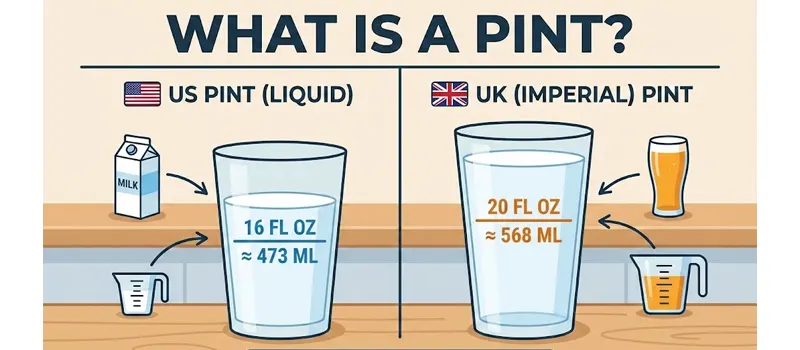
A pint is a unit of liquid volume commonly used in the United States and other countries with the imperial measurement system. In U.S. fluid measurements, one pint is equal to 16 fluid ounces, or approximately 473 milliliters. This size is widely used in the food and beverage industry, especially for packaging items like soups, sauces, ice cream, dressings, and drinks.
In food packaging, pint containers are often chosen for single-serving or small-portion items. They provide a practical balance between volume and portability, making them ideal for grab-and-go meals or retail products that require controlled portions. Pints are also popular for items that benefit from a compact presentation without sacrificing too much capacity.
Best for:
- Single-serving soups, stews, and chili
- Small portions of fruit, vegetables, or salads
- Individual ice cream or dessert servings
- Portion-controlled sides such as rice, pasta, or potatoes
- Small amounts of sauces, dips, and dressings
What Is a Quart?
A quart is a unit of volume commonly used in the United States to measure liquid and dry ingredients. It’s part of the U.S. customary system and is especially popular in food packaging, recipes, and grocery shopping. The word itself comes from the Latin quartus, meaning “a fourth,” because one quart is one-quarter of a gallon. In practical terms, a quart holds twice the volume of a pint, making it suitable for larger portions or multi-serving food items.
Quart containers are frequently used in the packaging of products like soups, salads, family-sized sides, beverages, and bulk sauces. They are a common choice for foodservice operations that require generous portions or plan-ahead packaging, such as meal prep kits, catering services, or takeout containers for groups.

Best for:
- Family-sized soups, broths, and stews
- Large salads, grain bowls, or mixed meals
- Bulk sauces, marinades, and dressings
- Multi-serving meal prep and catering portions
- Beverages or liquids requiring extra headroom
What’s the Difference Between Pint vs Quart?
The difference affects cost and storage efficiency. Choosing a quart when only a pint is needed can lead to unnecessary packaging expense and extra shelf space. On the other hand, selecting a pint for foods that naturally expand or have higher volume can result in spillage and poor presentation. Understanding this size difference allows food businesses to match containers to the exact needs of each product, improving consistency and customer satisfaction.
Size and Conversion
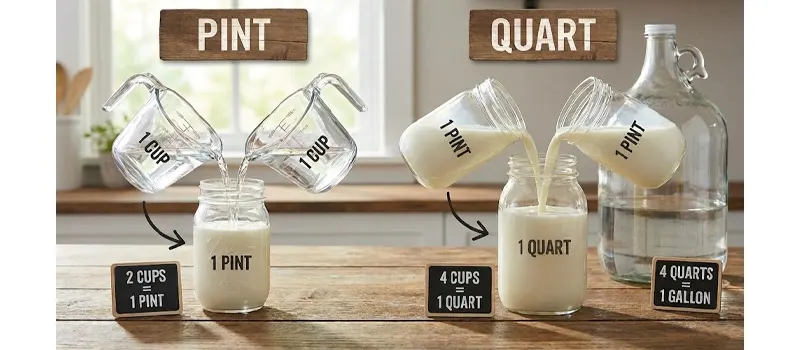
A quart is larger than a pint and holds twice the volume. The basic conversion is straightforward.
2 pints equal 1 quart, which forms the foundation for scaling recipes, controlling portions, and selecting suitable food packaging containers.
Relationship to Other Units
Pint
- 1 pint = 16 fluid ounces
- 1 pint = 2 cups
- 1 pint = 0.5 quart
- 1 pint = 0.125 gallon
Quart
- 1 quart = 32 fluid ounces
- 1 quart = 4 cups
- 1 quart = 2 pints
- 1 quart = 0.25 gallon
Portion Size and Usage
Pints are typically used for individual servings or small quantities such as berries, ice cream, or single portions of soup. Quarts are chosen for family-sized portions, bulk ingredients, or foods that require extra space, such as broths, salads, and marinated items.
Pints to Quarts Conversion Chart
Understanding how to convert between pints and quarts helps maintain accurate portioning and consistent packaging. The following chart provides a clear reference for common measurements used in cooking, food service, and takeout packaging.
| Pints | Quarts |
|---|---|
| 1 pint | 0.5 quart |
| 2 pints | 1 quart |
| 3 pints | 1.5 quarts |
| 4 pints | 2 quarts |
| 6 pints | 3 quarts |
| 8 pints | 4 quarts |
| 12 pints | 6 quarts |
| 16 pints | 8 quarts |
US vs Imperial Pints and Quarts
When discussing pint vs quart for food packaging, most conversions follow the US customary system, which is the standard in the food service and packaging industry. However, the Imperial system used in the United Kingdom has different volumes. Understanding the difference prevents confusion when reading international recipes or sourcing packaging from overseas suppliers.
Pint Comparison
- US pint = 16 fluid ounces
- Imperial pint = 20 fluid ounces
Quart Comparison
- US quart = 32 fluid ounces
- Imperial quart = 40 fluid ounces
Although the Imperial sizes are larger, the US system is the standard for food packaging, takeout containers, and volume labeling. Unless specifically stated, pint and quart measurements in packaged food products always refer to US customary units.
Pros and Cons: Pint vs Quart in Food Packaging
Choosing between pint and quart containers brings different advantages and limitations depending on portion size, food type, and operational needs. Understanding the strengths and drawbacks of each size helps businesses select the most efficient and cost-effective packaging for various menu items.
Pint Containers
Pros:
- Ideal for single servings, sides, and small quantities
- Takes up less space in refrigerators, freezers, and delivery bags
- More cost-effective due to smaller material usage
- Helps maintain consistent individual portions
- Reduces food waste when customers order smaller amounts
Cons:
- Not suitable for large meals or family-size portions
- Overflows easily when filled with liquid or bulky foods
- Limited headroom for foods that expand or contain sauces
- May require multiple containers for bigger orders
Quart Containers
Pros:
- Holds double the volume of a pint, ideal for large or shared portions
- Offers more headroom for liquids, soups, salads, and marinated foods
- Reduces the number of containers needed for bulk meals
- Suitable for family packs, meal prep, and catering
- Provides a better presentation for large servings
Cons:
- Takes up more storage and transport space
- Higher packaging cost compared to pint containers
- Can feel too large for customers ordering small portions
- Increases the risk of food waste if the portion exceeds what customers need
How to Choose the Right Size: Pint vs Quart for Food Packaging?
Selecting the correct container size is not just about understanding volume. It requires careful consideration of your product type, portion expectations, storage needs, and how your brand presents itself to customers. Both pint and quart containers serve important roles in food packaging, and the right choice depends on how and when your product will be used.
1. Portion Size
Pint containers are ideal for single servings. They provide just enough room for one person’s portion without creating unnecessary waste. Meals such as fried rice, lo mein, or pasta salad are commonly packed in pint containers for convenience and portion control.
Quart containers are better suited for larger portions or shared meals. They can hold generous servings of noodles, hearty soups, or a combination of entrees and sides. This size is often used for family meals, takeout for groups, or bulk food service.
2. Type of Food
Different types of food call for different packaging sizes. Pints are best for small items like spring rolls, dumplings, side vegetables, or cold appetizers. They are also a good choice for desserts or foods that are rich and best enjoyed in smaller quantities.
Quarts work well for main courses or saucy dishes that need more space. Meals like stir-fried beef with broccoli, creamy pasta, or shrimp with rice are more comfortably packed in quart containers to avoid spilling and to maintain presentation quality.
3. Dining Context
The occasion can also influence your container choice. A pint container is practical for a light lunch or single dinner, offering ease of storage and portability. It suits busy individuals or meal prep programs that focus on portion control and waste reduction.
Quart containers are often used for dinner deliveries, shared meals, or catered events. When a customer expects multiple servings or wants leftovers, this size delivers a better experience with fewer containers needed.
4. Storage and Operational Efficiency
Pint containers take up less space in refrigerators, warming cabinets, and delivery bags. They are easier to stack and more efficient for display in small retail fridges or food trucks. This can streamline operations and save on storage costs.
Quart containers occupy more space but reduce the total number of units in bulk orders. They are often preferred by kitchens that focus on large-volume service or need to consolidate packaging for cost savings and simplicity.
5. Brand Positioning and Customer Expectations
Packaging size also sends a message about your brand. Pint containers suggest thoughtful portions, premium ingredients, and a focus on quality over quantity. This appeals to health-conscious or upscale consumers who value precision and presentation.
Quart containers emphasize value and practicality. They are favored by customers seeking affordable quantity or family-size solutions. For brands that promote generous meals or group offerings, quart packaging supports that positioning effectively.
FAQs
Are pint and quart containers measured the same in all countries?
No. In the U.S., a pint is 16 fluid ounces and a quart is 32. However, in the UK and some other countries using the imperial system, the volume may differ slightly. Always confirm the measurement system before ordering packaging.
Why is a British pint 20oz?
The British pint is based on the imperial system, which was officially adopted in the United Kingdom in 1824. Under this system, one imperial gallon is defined as exactly 160 imperial fluid ounces. Since a pint is one-eighth of a gallon, that makes one imperial pint equal to 20 imperial fluid ounces.
Does the container size affect how customers perceive value?
Yes. A pint may feel more premium and personal, while a quart often signals value and abundance. Matching container size to your brand positioning can improve customer satisfaction.
Can I use both pint and quart sizes within the same menu?
Absolutely. Many restaurants and food manufacturers offer both sizes to meet the needs of different customers. Providing both options allows more flexibility in pricing, portions, and presentation.
Is there a cost difference between pints and quarts?
Yes. Quart containers typically cost more because they use more material. Choosing the correct size helps manage packaging expenses while maintaining proper portions.
Conclusion
Understanding the difference between a pint and a quart is essential for making smart food packaging decisions. While the pint offers a compact and convenient option for individual servings, the quart provides the extra space needed for shared meals or bulk portions. Each size serves a distinct purpose depending on the type of food, target audience, and operational goals.
By comparing volume, use cases, and cost considerations, businesses can align their packaging choices with product needs and customer expectations. Whether you operate a restaurant, run a catering service, or manufacture takeaway packaging, knowing when to use a pint versus a quart can improve efficiency, reduce waste, and enhance the dining experience.
As consumer preferences and food delivery trends continue to evolve, choosing the right container size is more than a technical decision. It is a strategic choice that reflects your brand, supports your sustainability goals, and ensures a positive customer experience from the first bite to the last.