What is varnish? Varnish is a clear, film-forming finish that dries into a hard, transparent layer over a surface. It’s usually made from resins, oils, and a liquid carrier, and it’s designed to seal, protect, and visually enhance materials such as wood, paper, metal, and printed graphics. Unlike paint, varnish lets the original surface show through while changing its gloss level from matte to high shine.
In practice, varnish is used across many industries, from furniture and musical instruments to magazines, product boxes, and flexible packaging. In packaging, varnish is a clear liquid coating. It helps shield the print from scuffs, moisture, and handling, while also changing how the surface looks and feels, from high-gloss shine to soft, low-sheen matte.
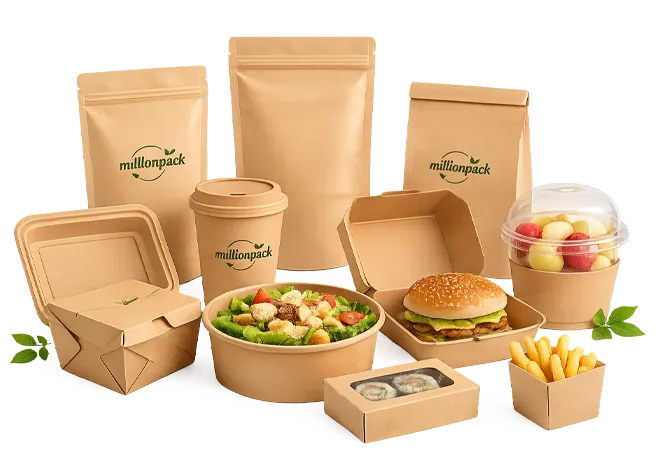
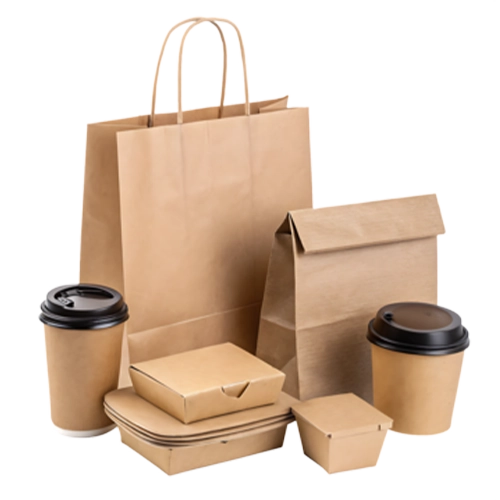
In food packaging, for example, a paper coffee cup with a clear varnish stays brighter and more resistant to condensation, a burger box with an interior food-safe varnish helps resist grease, and a glossy dessert box gives pastries a more premium “gift-like” presentation while keeping the printed design sharp during handling and transport.
Composition of Varnish
When you ask “What is varnish?” in a more technical sense, the answer starts with its basic recipe. Most varnishes, whether used on wood or packaging, follow the same logic: a film-forming resin, a solvent or carrier, and a set of additives that fine-tune performance. The balance between these three parts decides how the varnish behaves on press, how it dries, how it looks, and how well it protects the printed surface.
Resins
Resins are the backbone of varnish. They form the solid film that stays on the surface after drying. Once the solvent or water has evaporated, it is mostly the resin that you see and feel when you touch a varnished coffee cup, burger box, or dessert carton.
In modern varnish systems, you often see polyurethane resins, acrylic resins and modified natural resins. Polyurethane is known for durability and chemical resistance, acrylics for clarity and versatility, and modified natural resins can add warmth or specific handling properties. For printers and packaging buyers, the key point is simple: the resin choice defines how strong, clear, and attractive the final varnish film will be.
Solvents
Solvents (or liquid carriers in water-based systems) are what make varnish usable during application. They keep the resins and additives in a liquid state so the varnish can be spread evenly over a surface, whether by a printing press, roller, or spray system.
In packaging, especially for food, water-based varnishes are now widely used. Here, water is the main carrier, with small amounts of co-solvents and other ingredients helping the resin particles form a smooth, continuous film when the water evaporates.
So while the resin creates the protective film, the solvent system decides how easy it is to handle that varnish in real production.
Additives
Additives are the “fine-tuning tools” in a varnish formulation. They are used in smaller amounts, but they can dramatically change how the varnish performs on press and how the final packaging looks and feels in a customer’s hand.
In food packaging, certain additive choices are carefully controlled so the varnish can be formulated to meet relevant food-contact guidelines when used correctly. That is why you often see references to “food-safe” or “food-contact-approved” varnishes for the inside of burger boxes, dessert cartons or coffee cups.
Taken together, resins provide the structure, solvents carry the mixture and control drying, and additives[1] adjust the details. Understanding this basic composition helps clarify why not all varnishes behave the same, and why selecting the right varnish for packaging is really about choosing the right combination of resin system, carrier and additive package for the job at hand.
Types of Varnish
Once you understand the basic composition, the next step in answering what is varnish is to look at its main types. Different varnish systems are designed for different surfaces, environments and performance levels. In packaging and printing, you will often see some overlap with products originally developed for wood or general coatings, but the key principles stay the same.
Common Varnish Types
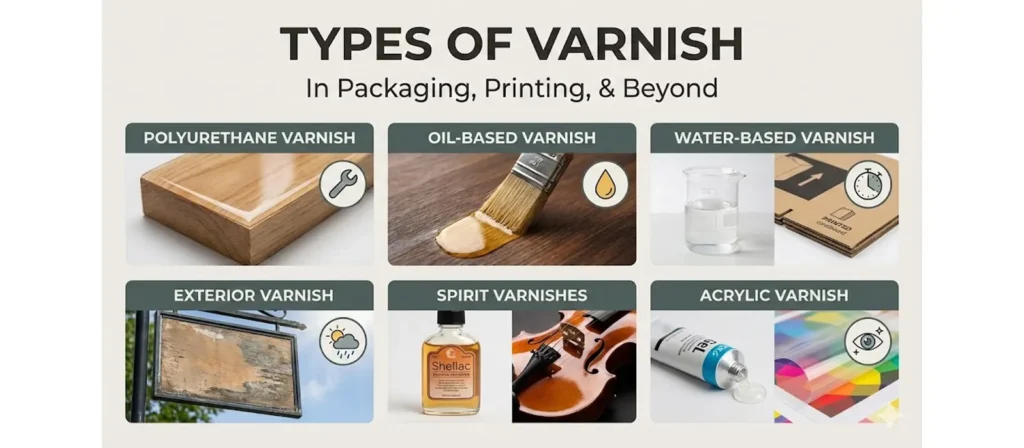
Below are some of the most commonly referenced varnish types and where they tend to be used.
- Polyurethane varnish
Polyurethane varnish is known for its toughness and resistance to abrasion and chemicals. It forms a hard, durable film that stands up well to frequent handling, cleaning, and everyday wear. - Oil-based varnish
Oil-based varnish traditionally uses drying oils (such as linseed or tung oil) combined with resins and solvents. - Water-based varnish
Water-based varnish uses water as its main carrier instead of purely organic solvents. It is popular in printing because it provides low odor, quicker drying times, and makes it easier to meet stricter environmental standards. - Exterior varnish
Exterior varnish is formulated to withstand outdoor conditions. It often includes UV stabilisers and other protective additives to help prevent cracking, peeling and fading. - Spirit varnishes
Spirit varnishes generally use alcohol or similar fast-evaporating solvents as the carrier. A well-known example is shellac-based varnish. These products dry quickly and can be polished to a high gloss. - Acrylic varnish
Acrylic varnish uses acrylic resins to form a clear, flexible, and non-yellowing film. It is valued for its clarity, color stability, and relatively low tendency to yellow over time.
Varnish Finishes in Food Packaging
In the food packaging industry, the type of varnish is only one of the influencing factors. Surface treatment effects, namely the appearance and feel of the surface, can directly affect brand recognition and actual performance. The same base varnish can achieve different surface effects through additives and formulation adjustments.
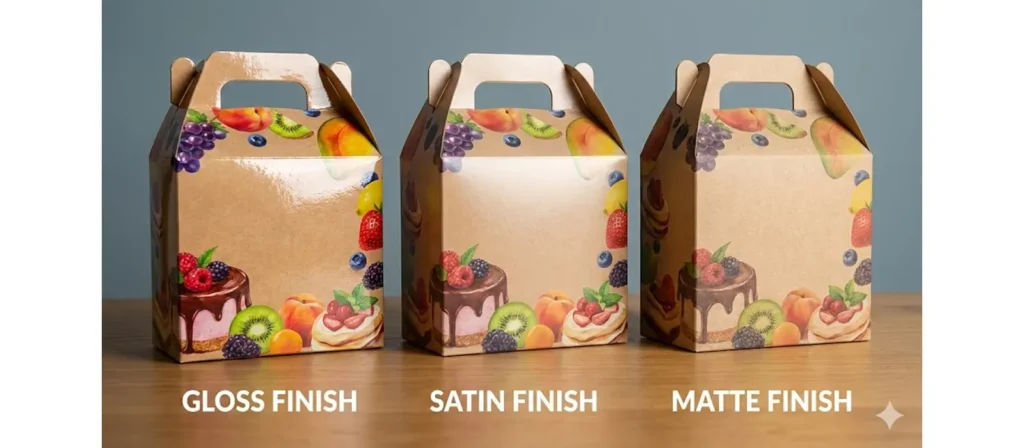
Common varnish finishes in food packaging include:
- Gloss
Gloss varnish gives packaging a shiny, reflective surface that makes colors pop and graphics look more vibrant. It is often used on dessert boxes, premium snack packaging, and promotional cartons where visual impact on the shelf is critical. - Matte
Matte varnish softens reflections and reduces shine, resulting in a more understated and refined look. It is popular for brands that want a natural, eco-friendly, or minimalist feel, such as specialty coffee, organic food, or artisanal bakery packaging. - Satin
Satin varnish sits between gloss and matte, offering a gentle sheen without full-on shine. It provides a balanced look that works well for mid- to high-end food packaging where you want both clarity and subtlety.
The Advantages of Varnish
When you look past the chemistry and ask why varnish is used so widely, the answer usually comes down to four things: longer life, sensible costs, flexibility, and the way it lifts perceived quality. Whether it is a wooden table in a café, a glossy dessert box, or a printed label on a drink, varnish quietly protects the surface and shapes how people see the product and the brand behind it.
Longevity
Varnish significantly extends the life of printed and coated surfaces by adding a thin, durable film that takes the first hit from everyday wear and tear. On a wooden store counter, the coating resists scratches from cups, trays, and cleaning tools, so the surface stays smooth instead of quickly looking worn. In packaging, a similar varnish layer protects inks on coffee cups, takeaway bags, and snack boxes from rubbing off during packing, shipping, and handling.
Even in publishing and commercial printing, magazines and brochures with a varnished cover tend to stay brighter and cleaner for longer, surviving trade shows, mailing, and repeated reading without the print breaking down as quickly.
Cost-Effective
Compared to more complex surface treatments, varnishing is a highly cost-effective method that enhances both the protective properties and appearance of a product. Printers can often complete the varnishing process on the same production line as the printing inks, reducing additional steps and saving time.
Versatility
In packaging, printers can choose between gloss, matte and satin looks, or apply spot varnish to only a logo or product image for extra emphasis. Furniture makers can use harder, more chemical-resistant varnishes in busy cafés and softer, more flexible versions on pieces that expand and contract with temperature changes. In the art and photography world, acrylic varnish helps protect prints and canvases from dust and light while preserving the original colors.
Increases the Perceived Value
Varnish also plays a powerful role in how customers judge quality at a glance. A glossy dessert box with rich, deep colors feels more premium than an uncoated, slightly dull alternative, even if the cake inside is the same.
Even in non-retail settings, such as corporate brochures or luxury hotel menus, a well-chosen varnish finish suggests care, cleanliness and attention to detail, all of which quietly increase the perceived value of the product or service being presented.
The Disadvantages of Varnish
While varnishes offer significant advantages in packaging and other applications, they are not a perfect solution for all situations. These disadvantages primarily lie in surface treatment options, processing time, compatibility, and the actual protective capabilities of these coatings compared to thicker coatings or laminates.
Limited Range of Finishes
Although varnish can be adjusted to gloss, matte, or satin, the overall range of visual and tactile effects is still more limited than some alternative finishing methods.
For packaging designers who want highly specialized finishes, such as metallic shimmer, soft-touch rubbery effects, or heavy texture, varnish usually needs to be combined with other techniques rather than acting as the sole solution.
Longer Drying Time
Depending on the formulation and application method, varnish can require longer drying or curing times compared with some modern coatings. Traditional oil-based or solvent-heavy systems, in particular, may slow down production because sheets have to be left longer before cutting, folding, or stacking to avoid smudging, sticking, or blocking.
This can be a drawback for operations that need very high throughput or just-in-time production, where every extra minute of drying time adds complexity and potential bottlenecks.
Not Suitable for All Applications
Varnish is not universally suitable for every surface, product, or regulatory requirement. Certain substrates, such as very low-energy plastics or heavily coated materials, can have adhesion issues if the varnish and surface are not properly matched. In sensitive areas like direct food contact, pharmaceuticals, or products for infants, only specific, carefully tested varnish types can be considered, and in some cases, a different barrier technology is preferred.
In these situations, more specialized coatings, laminations, or alternative finishes may be necessary to meet performance or compliance standards.
Limited Protection Compared with Heavier Coatings
Although varnish certainly adds a protective layer, its protection has limits because the film is relatively thin and primarily designed for surface-level defense. It can reduce scuffing, minor moisture contact, and everyday handling damage, but it does not provide the same level of barrier performance as full laminates, heavy-duty UV coatings, or multi-layer protective films.
For example, in very greasy or wet conditions, or for products that require strong oxygen, moisturizer, or aroma barriers, varnish alone is rarely enough. In short, varnish is best seen as a light to medium protection step, not a complete solution for every packaging challenge.
Varnish vs. Other Coating Methods
When you think about what is varnish in packaging, it helps to see it next to other common coating options.
The comparison below gives a practical snapshot so you can judge which option fits your packaging needs best, whether you are focused on food-safe coffee cups, retail cartons or general printed materials.
| Aspect | Varnish | Aqueous Coating | UV Coating |
|---|---|---|---|
| Basic nature | Clear, resin-based film, solvent or water carried | Water-based clear coating with polymer dispersion | Clear coating cured instantly with UV light |
| Typical look | Gloss, matte or satin; generally subtle | Usually smooth, medium to high gloss | Very high gloss or defined matte, strong “wet look” |
| Protection level | Light to medium scuff and moisture resistance | Medium protection; good rub and fingerprint resistance | High protection against scuffing, chemicals and rubbing |
| Drying / curing speed | Depends on type; can need more drying time | Dries relatively fast with heat and airflow | Cures almost instantly under UV lamps |
| Cost profile | Generally economical; low film weight | Slightly higher than basic varnish, still cost-effective | Typically higher cost due to inks, coatings and equipment |
| Environmental considerations | Varies by solvent or water base; traditional types tighter regulated | Water-based, usually favorable for emissions and odor | Low VOC during use but higher energy for UV curing |
| Food packaging suitability | Common on outer surfaces; food-safe versions available when specified | Widely used on food packaging exteriors; low odor | Used on some food packaging with proper formulation and controls |
| Design flexibility | Good for spot or overall coating; subtle effects | Best for overall coverage; limited for detailed spot work | Excellent for dramatic gloss, texture and special effects |
| Equipment requirements | Uses standard coating units on many presses | Similar units to varnish; often already integrated | Requires UV lamps and compatible press/coating system |
The comparison results show that varnish remains a reliable and flexible option if you need to balance cost, practical protection, and ease of use. Water-based coatings excel in protective performance and drying speed, especially suitable for food packaging outer layers; while UV coatings are better suited for projects requiring rapid delivery and a striking effect, offering a more impactful and high-performance option.
Application of Varnish in Food Packaging
When we move from the general question of what is varnish to real packaging on shelves, food packaging is one of the clearest examples. Here, varnish has to do two things at once: protect the print from heat, grease and handling, and support a clean, appetizing brand image. Different formats use varnish in slightly different ways, depending on where the coating sits (inside or outside), how the packaging is handled and what kind of visual impression the brand wants to create.
Paper Coffee Cups with Protective Varnish
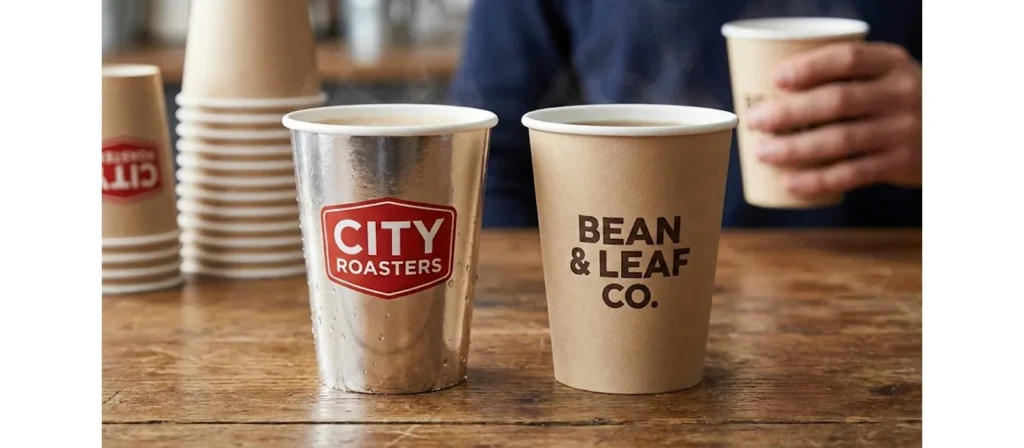
On paper coffee cups, varnish is mainly about standing up to heat, moisture and constant handling. A clear overprint varnish on the outside helps the printed design resist scuffing when cups are stacked, pulled apart and carried around. It also supports better resistance to condensation and minor spills, so the branding stays crisp instead of smudging or softening. At the same time, the varnish finish affects how the cup feels in the hand: a gloss surface can look bright and modern, while a softer matte finish can give a more natural, specialty-coffee look. In many cases, this protective layer is part of what keeps logo colors strong and legible from the first pour to the last sip.
Burger Boxes Using Food Safe Interior Varnish
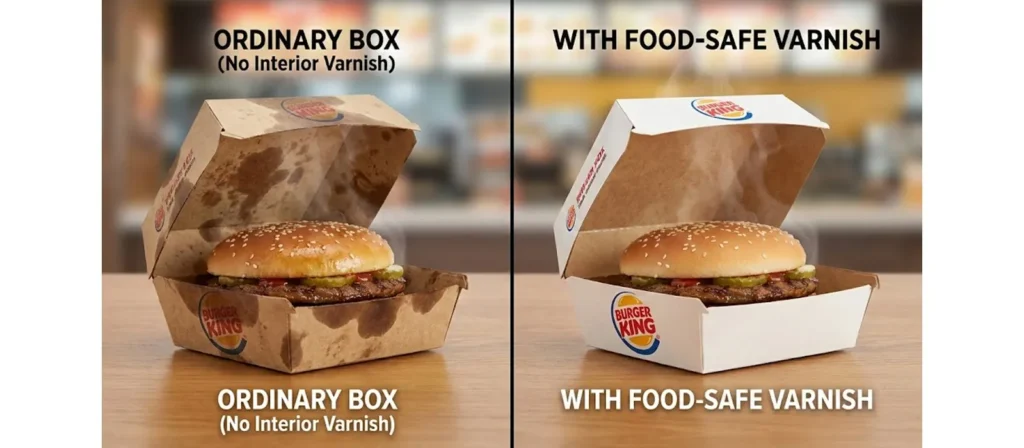
Burger boxes have a different challenge: they must deal with heat, steam and grease from the inside. Here, food-safe interior varnish is used as a thin barrier layer between the food and the paperboard. When properly formulated and certified, this type of varnish can help reduce grease penetration, keeping the box stiffer and less likely to become soggy or stained. That not only improves the eating experience but also helps the outer print stay cleaner and more attractive. For brands, this means the logo and messaging on the outside are not spoiled by visible oil patches soaking through. At the same time, using a tailored interior varnish can be part of a strategy to balance performance with material reduction, allowing lighter boards to perform better under real fast-food conditions.
Dessert and Pastry Boxes with Gloss Varnish Finish
Dessert and pastry boxes are all about presentation. A gloss varnish finish on the outside of these boxes can make printed images of cakes, tarts or macarons look richer and more tempting, with deeper colors and sharper contrast. The smooth, shiny surface gives a “gift box” feel, making even everyday items look more premium. From a practical standpoint, gloss varnish also offers decent resistance to fingerprints, small sugar or cream smears, and light moisture, which is useful in bakery environments. When customers carry a dessert box home for a celebration, that glossy, well-protected surface helps the packaging arrive looking as fresh as the product inside. The result is a stronger impression of quality and care, even though the added layer is just a clear, carefully chosen varnish film.

Food Labels Featuring Spot Varnish Accents
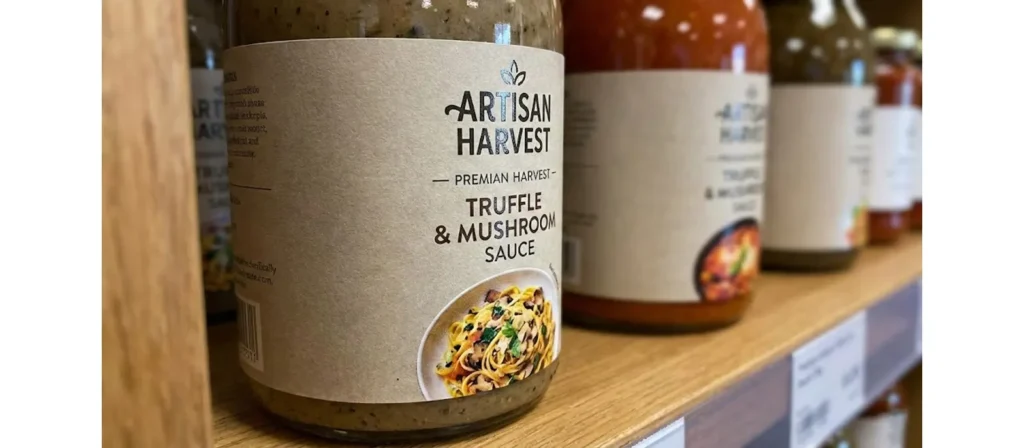
On food labels, varnish is often used more selectively. Instead of coating the entire surface, spot varnish is applied only to key elements such as logos, product names or appetizing images. This selective approach creates a subtle contrast between shiny and non-shiny areas, drawing the eye to the most important information without overwhelming the design. For example, a matte label on a sauce bottle might use spot gloss varnish over the brand mark and photograph of the dish, making those details stand out on a crowded shelf. Besides the visual effect, the varnished areas also gain extra rub resistance, helping critical text and graphics stay readable throughout transport and handling. This combination of emphasis and protection makes spot varnish a powerful tool in label design, especially for mid- to high-end food products.
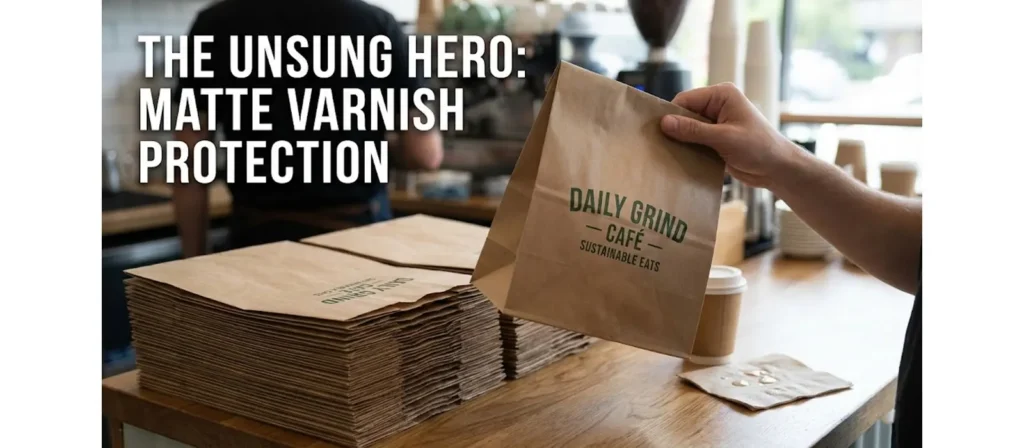
Takeaway Paper Bags with Matte Varnish Protection
Takeaway paper bags may look simple, but they face rough treatment: they are filled quickly, carried, squeezed in transit and sometimes exposed to light rain or spills. A matte varnish on the printed areas can provide a discreet layer of protection, helping the graphics resist rubbing and minor moisture without making the bag look overly glossy. The matte surface also supports brand stories that lean towards natural, eco-conscious or handcrafted positioning, which is common for cafés, bakeries and casual dining chains. At the same time, the varnish reduces the risk of ink offsetting or smearing when bags are stacked or stored. Customers may not consciously think about what is varnish doing on the bag, but they notice that the logo and message stay clean and legible from the counter to their home, reinforcing trust in the brand with every order.
Considerations for Using Varnish
When deciding whether to use a varnish on packaging, in addition to considering the basic question of what the varnish is, you should carefully examine the specific product, substrate, and printing setup. You need to check the compatibility between the varnish, ink, and materials, especially when using uncoated cardboard, recycled paper, or special coating materials. Drying conditions, printing speed, and stacking methods are also crucial, as improper control can lead to problems such as clumping, smudging, or uneven gloss. For food packaging, any varnish that may come into direct or indirect contact with food must be carefully selected and specified, complying with relevant regulations, and working with suppliers who can provide the correct documentation.
Brand and design goals are another key factor in the decision. The type of varnish and finish chosen should match the look and feel you want your customers to experience, whether it’s a glossy effect for enhanced shelf impact or a matte finish for a more natural, upscale impression. At the same time, you need to be realistic about the varnish’s protective capabilities; under very harsh conditions, you may still need an additional barrier layer or a different coating technology. Balancing appearance, performance, regulatory requirements, and cost will help you effectively use varnishes as a tool within a broader packaging strategy, rather than viewing them as a one-size-fits-all solution.
Conclusion
In summary, varnish is best understood as a transparent film-forming coating that protects and enhances the printed surface without obscuring the content underneath. In the packaging industry, especially in food packaging, varnish serves as a practical compromise: it’s more robust and durable than standard printing, yet often more economical and flexible than heavy laminates or highly specialized coatings. From paper coffee cups and hamburger boxes to dessert boxes, labels, and takeout bags, varnish helps designs remain clear, legible, and aesthetically pleasing during printing, shipping, and everyday use.
However, effective use of varnish also means being aware of its limitations. It provides light to moderate protection, not a complete barrier. It can impart a glossy, matte, or satin finish, but it cannot create all possible textures or special effects on its own. Choosing the appropriate varnish type, surface finish, and application method, combined with food contact requirements and production conditions, answers the question “What is varnish?” in a very practical way: it’s a targeted tool that balances performance, appearance, and cost in actual packaging projects.
FAQs
1. What is varnish in simple terms?
Varnish is a clear liquid coating that dries into a thin, transparent film on a surface. It protects and enhances materials such as paper, board, wood and printed graphics, so the original design or grain still shows through.
2. Why is varnish often used on food packaging?
Varnish is widely used on food packaging because it helps prints resist scuffing, light moisture and grease while improving the look and feel of cups, boxes, labels and bags. It keeps branding sharp and readable from production to consumption.
3. Is varnish enough on its own for demanding packaging conditions?
Not always. Varnish offers light to medium surface protection, but heavy grease, strong barrier needs or harsh outdoor conditions may require extra coatings, laminates or barrier layers on top of or instead of varnish.
4. What is varnish used for?
Varnish is used to seal, protect and visually upgrade surfaces. In everyday use, it appears on wooden furniture, musical instruments, printed packaging, labels, magazines and some metal or plastic parts, giving better durability and a chosen gloss, matte or satin look.
5. Is varnish the same as polyurethane?
No. “Varnish” is a broad term for clear film-forming finishes, while polyurethane is one specific resin type often used to make very tough, durable varnishes. All polyurethane finishes are varnishes, but not all varnishes are polyurethane-based.
6. What is the difference between varnish and lacquer?
Varnish usually dries by solvent evaporation and chemical curing to form a relatively flexible, durable film. Lacquer typically dries faster, mainly by solvent evaporation, and can be re-dissolved by its solvent. Lacquer often gives a very smooth, high-gloss finish but can be harder and more brittle than many varnish systems.
7. Can you varnish over paint?
In many cases you can, as long as the paint is fully dry, compatible with the chosen varnish and the surface is clean and stable. A clear varnish over paint can add protection and change the gloss level, but it is important to follow the coating manufacturer’s guidance and test on a small area first.