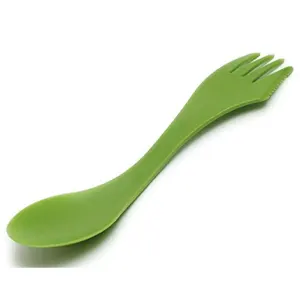
What is a spork in simple terms? A spork is a hybrid utensil that combines the functionality of a spoon and a fork into one compact tool. It typically has a shallow scoop shape with short tines at the end, allowing it to handle both liquids and solids with surprising efficiency.
Originally created for convenience, the spork has become a popular item in fast food restaurants, schools, outdoor activities, and even eco-conscious homes. Its clever design saves space, reduces waste, and often eliminates the need to carry multiple utensils.
In this article, we’ll break down exactly what are sporks, highlight the many ways it’s used in daily life, and take a closer look at the materials and benefits behind this hybrid utensil. By the end, you will not only be able to answer the question what is a spork with confidence, but you will also know how to choose the right one while keeping comfort and sustainability in mind.
The History of the Spork
While the spork may seem like a modern invention, its origins trace back much further than most people realize. The concept of combining a spoon and a fork into one tool dates to the late 19th century, when early patents began to appear in the United States and Europe. These early designs were often intended for specialized uses, such as serving or traveling, and featured variations in tine length, curvature, and materials.
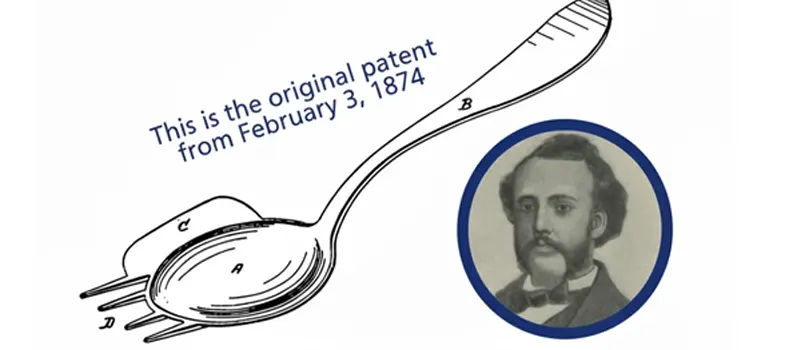
One of the first known patents resembling the modern spork was issued in 1874 to Samuel W. Francis, an American inventor who envisioned a single utensil that could serve multiple eating functions. His design incorporated a shallow spoon bowl with short tines at the tip, essentially the same idea we see today. Though it wasn’t widely adopted at the time, it laid the groundwork for future adaptations.
The Meaning of Spork
The word “spork” itself is believed to be a blend of “spoon” and “fork,” and began appearing in print during the 20th century. Spork meaning is a hybrid utensil that combines the flat surface of a spoon with the tines of a fork. By the 1950s and 60s, sporks had gained traction in institutional settings such as schools, prisons, and military mess kits due to their cost-effectiveness and convenience. Later, as fast food chains and eco-conscious consumers embraced multifunctional utensils, the spork became more mainstream.
By the late twentieth century, the spork had become firmly associated with takeout and disposable food service. Lightweight plastic versions made it easy for businesses to offer a single utensil for a wide range of meals. As sustainability grew in importance, new variations such as wooden and compostable sporks entered the market. Today, the spork is a familiar part of global food culture.
Key Design Characteristics of Sporks
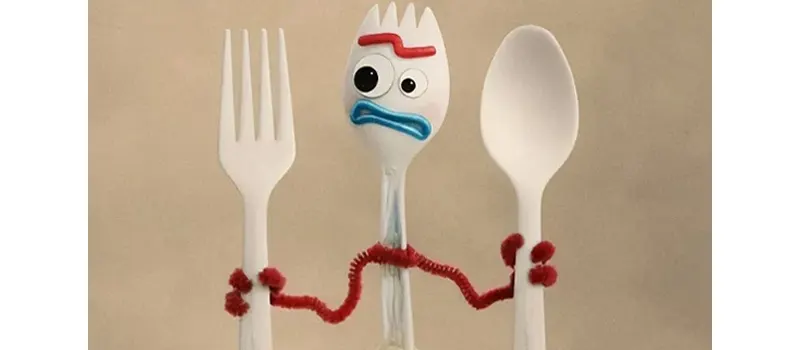
To understand what a spork is, it helps to look at the details that shape how it works. A traditional spork blends a spoon-like bowl with short fork tines and a simple, comfortable handle. These three parts work together so you can both scoop and spear food with one utensil. When each element is balanced in size and shape, the spork feels natural in the hand and can handle a wide range of everyday meals.
Bowl Shape and Depth
The bowl of a spork resembles that of a traditional spoon but is typically shallower and wider. This design allows it to scoop liquids and semi-liquids like soup, yogurt, or rice, while still accommodating the addition of tines at the front. A well-designed spork balances curvature and depth to hold food securely without compromising the fork-like functionality. Manufacturers often adjust the bowl depth depending on whether the spork is intended for single-use packaging, camping, or everyday dining.
Tines at the Front
What distinguishes a spork from a spoon is the presence of short, shallow tines on the front edge. These tines are designed to mimic a fork’s ability to pierce or pick up solid foods such as vegetables, noodles, or pieces of meat. Unlike a full fork, the tines on a spork are usually blunt and modest in length to maintain the bowl’s structural integrity. The tine configuration can vary—some sporks feature three or four tines, while others include a slightly serrated edge to assist with cutting soft foods.
Handle Length and Grip
Sporks come in a variety of handle lengths to suit different usage scenarios. Compact handles are ideal for travel and disposable sporks, while longer handles are preferred for meals that require reaching into deep containers, such as soup cups or dehydrated meal pouches. The grip design also plays an important role in user comfort. Some sporks feature ergonomic grips, thumb rests, or textured surfaces to improve handling, especially for outdoor or school use. Even in disposable models, comfort and practicality remain key considerations, particularly in fast food, catering, and delivery contexts.
Common Materials of Disposable Sporks
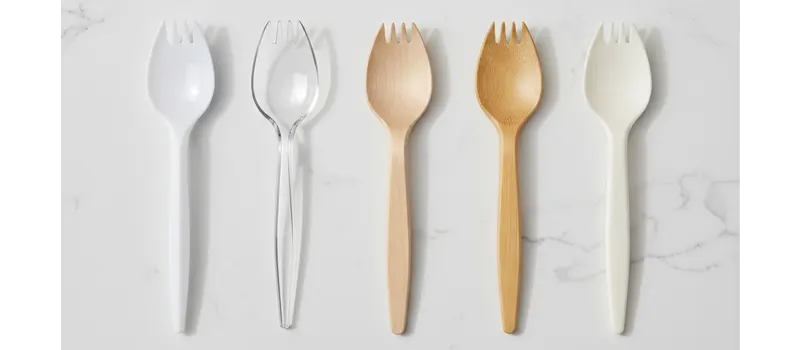
Disposable sporks are produced in a range of materials to suit different food service needs, cost targets, and sustainability goals. Each material influences the strength, comfort, and overall performance of the utensil. From traditional plastic to renewable plant-based choices, the material selection shapes how well the spork functions in various dining settings.
Polypropylene (PP) Sporks
Polypropylene is one of the most widely used plastics for disposable sporks. Known for its strength and flexibility, PP can withstand moderate heat, making it suitable for both hot and cold foods. It is lightweight and resistant to cracking, which helps reduce breakage during packaging and transportation. Additionally, PP sporks are cost-effective for large-scale food service operations and are often recyclable where facilities exist.
Polystyrene (PS) Sporks
Polystyrene sporks are valued for their rigidity and low production cost. They offer a smooth surface and crisp edges, making them ideal for quick-service meals. However, PS is more brittle compared to other plastics and can snap under pressure, especially with tougher foods. While widely used in the past, many foodservice providers are now moving away from PS due to environmental concerns and local bans in some regions.
Wood Sporks
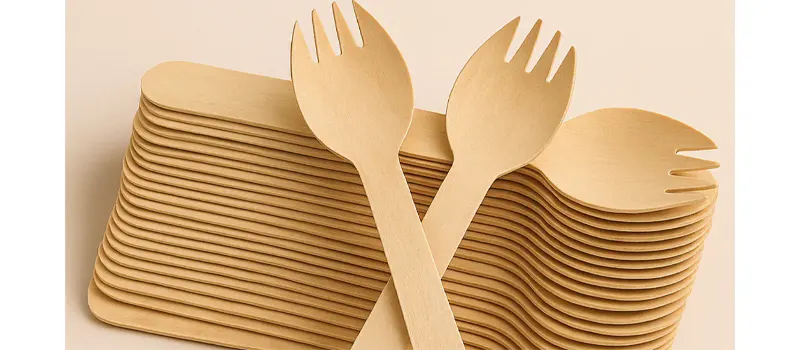
Wooden sporks are a popular choice for businesses looking for natural and biodegradable single use utensils. They are usually made from birch or other fast growing hardwoods that can be processed into smooth, food safe tools. Wooden sporks do not bend easily and offer a clean appearance that pairs well with eco conscious branding. Their texture is slightly firmer than plastic, and while they may not hold liquids as effectively as deeper plastic bowls, they work well for salads, rice dishes and general cafeteria meals.
Bamboo Sporks
Bamboo sporks provide a strong, lightweight and renewable alternative for disposable settings. Bamboo grows quickly and requires fewer resources than many traditional materials, which makes it attractive for sustainability focused businesses. These sporks have a natural finish and a sturdy feel, offering better strength than many wood or plastic options. They are a good fit for premium food packaging, outdoor dining events and brands that want an environmentally responsible image.
Plant-Based Bioplastic Sporks
Plant-based bioplastic sporks are made from renewable resources such as corn starch, sugarcane, or tapioca. These materials are developed to reduce reliance on petroleum-based plastics and to offer a more sustainable single-use solution. While still disposable, they are often marketed as compostable under industrial conditions and favored by eco-conscious brands.
- PLA (Polylactic Acid)
PLA sporks are produced from fermented plant sugars and are best suited for cold or room-temperature meals. They are lightweight, smooth to the touch, and often clear or translucent in appearance. However, PLA has a relatively low heat resistance and may warp or soften when exposed to high temperatures, limiting its use with hot dishes. - CPLA (Crystallized PLA)
CPLA is a modified version of PLA that has undergone crystallization to improve its heat tolerance. These sporks can withstand temperatures of up to 85°C, making them a suitable option for hot foods. CPLA sporks have a solid, matte finish and a more durable structure than regular PLA. They are commonly used in premium foodservice packaging where compostability and performance are both priorities.
Pros and Cons of Sporks
Like any multifunctional tool, the spork comes with its fair share of advantages and limitations. While it’s often praised for its convenience, there are situations where it may fall short compared to using a separate spoon and fork. Understanding the pros and cons can help you decide whether a spork is the right choice for your business.
Advantages of Sporks
1. Space and Material Efficiency
By merging two utensils into one, sporks reduce the need for separate forks and spoons. This helps save space in packaging and lowers material consumption, especially important in disposable foodservice operations.
2. Cost-Effective for Large-Scale Use
Sporks are often cheaper to produce and distribute than individual sets of cutlery. For businesses serving thousands of meals daily, this translates into significant savings on manufacturing, logistics, and inventory.
3. Convenient for Takeout and Travel
The multifunctional design of sporks makes them ideal for on-the-go meals. Whether packed with a school lunch, airline meal, or takeaway box, they offer a one-piece solution that covers a wide range of food types.
4. Simplifies Waste Sorting
For environmentally focused programs, using one utensil instead of two simplifies post-consumer sorting and can make composting or recycling more manageable when using eco-friendly materials.
Disadvantages of Sporks
1. Limited Functionality for Certain Foods
While versatile, sporks can struggle with some meals. The short tines may not effectively pierce tougher items like grilled meat, and the shallow bowl may not hold liquids as well as a dedicated spoon.
2. Reduced Eating Comfort
Compared to traditional cutlery, sporks may feel less natural to use, especially for adults. Their compromise in design can lead to awkward angles or inefficient scooping and stabbing motions.
3. Perceived as Low-End
In some contexts, especially fine dining or premium catering, sporks may be seen as too casual or even unprofessional. This perception can limit their suitability in high-end food presentations.
Practical Use Scenarios for Sporks
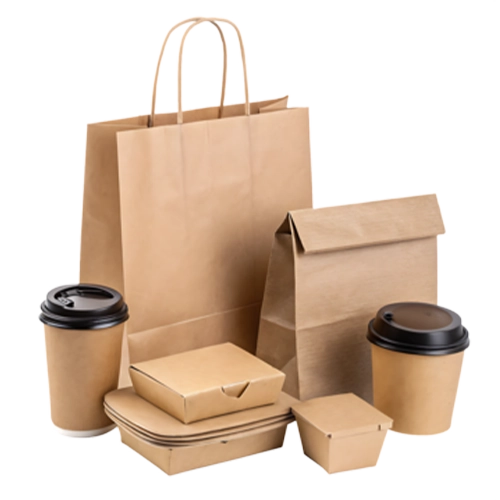
Sporks are widely used across many industries due to their versatility, compactness, and cost efficiency. Their hybrid design makes them particularly useful in disposable contexts, where minimizing utensil count and simplifying logistics are key.
Takeout and Delivery Services
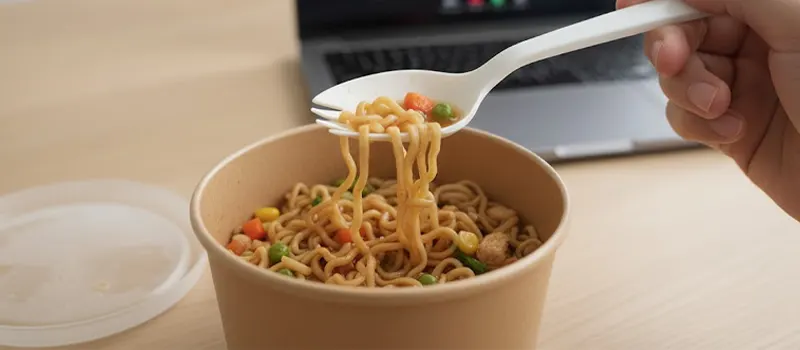
One of the most common uses of disposable sporks is in takeout and delivery packaging. Food vendors often include a spork as a standard utensil for meals that combine multiple textures, such as rice bowls, pasta with sauce, or soup with side dishes. Because the spork covers both scooping and piercing functions, it eliminates the need to include both a fork and a spoon, saving space and material costs in utensil kits.
School and Cafeteria Programs
Sporks are frequently used in schools, hospitals, and institutional cafeterias due to their safety and simplicity. For children and elderly users, a single, easy-to-handle utensil reduces confusion and promotes independence. In large-scale dining environments, using sporks streamlines utensil distribution and cleanup, especially when paired with compostable materials.
Outdoor and Travel Dining
For camping, hiking, airline meals, or emergency kits, sporks are a preferred option due to their compactness and multifunctionality. In these situations, users often have limited space and need lightweight tools. A well-designed disposable spork can serve as the only utensil needed for an entire meal, reducing packing bulk and waste.
Event Catering and Food Stalls
Sporks are a practical solution for high-traffic catering environments such as festivals, street markets, or office events. Vendors appreciate the speed and simplicity of offering a single utensil that works with a wide variety of dishes—from noodles and curries to grain bowls and desserts. Sporks made from sustainable materials also reinforce eco-conscious branding during public events.
How to Choose the Right Spork?
Choosing the right spork depends on the type of food being served, the dining setting and the overall image a business wants to present. Understanding what Is a spork in practical terms means considering how well the utensil performs for your customers and how it supports the goals of your food service operation. The choice of material, shape and size all influence comfort, stability and cost.
Material Selection
Material plays an important role in determining how well a spork performs in different food service settings. When choosing a spork, it is helpful to consider how the material supports your menu, customer expectations and environmental goals. Some materials offer a more natural look, others provide higher temperature tolerance and some align better with sustainability requirements. Evaluating these needs ensures the selected spork matches both operational demands and brand values.
Consider the Dimensions
Sporks come in a variety of sizes to match different types of meals and packaging formats. Common dimensions for disposable sporks include:
- Length: Typically ranges from 120 mm to 170 mm (approx. 4.7 to 6.7 inches). Shorter sporks (120–140 mm) are ideal for bento boxes, snack packs, and school meals. Longer sporks (150–170 mm) work better for takeout containers, deeper bowls, or travel meal kits.
- Bowl Width: Usually between 28 mm and 35 mm, depending on whether scooping or spearing is prioritized.A wider bowl is better for soups or rice, while a narrower one with sharper tines favors pasta and salads.
- Tine Depth: Often shallow, around 5–10 mm, to balance functionality without compromising the spoon shape.
Brand and Customer Experience
A spork can also support the overall image of a business. Natural wood or bamboo options enhance eco conscious branding, while matte CPLA sporks offer a polished appearance suited for modern cafes or premium meal kits. Smooth rounded designs are often preferred for settings with children, and reinforced shapes feel more secure for restaurant meals. Selecting a spork that reflects brand values helps create a consistent and memorable dining experience.
Environmental and Regulatory Considerations
If compostability or plastic reduction is a priority, verify certifications like EN 13432, BPI, or ASTM D6400. These ensure the materials meet commercial composting standards. Also check for local regulations restricting polystyrene or requiring compostable utensils in foodservice.
Hybrid Designs Beyond the Spork
While the spork remains the most recognizable hybrid utensil, it is not the only innovative design that combines multiple eating functions into one tool. Over the years, manufacturers have developed other creative utensils to meet the evolving needs of food service, outdoor dining, and minimalist lifestyles. These hybrid designs aim to reduce the number of items needed during a meal while enhancing portability and convenience.

Spife (Spoon + Knife)
A spife is a combination of a spoon and a knife. Typically, it features a spoon-shaped body with one serrated edge, allowing users to scoop and cut with the same tool. Spifes are often used for spreading condiments, slicing soft fruits, or handling meals like yogurt and melon where both scooping and gentle cutting are required.
Knork (Knife + Fork)
The knork integrates the tines of a fork with one slightly sharpened or beveled edge that can function as a cutting surface. Unlike a standard fork, a knork allows the user to apply slight pressure and cut through softer foods without needing a separate knife.
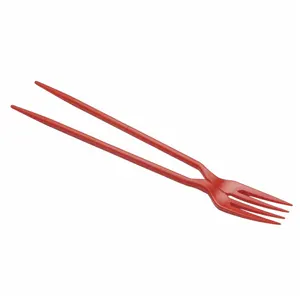
Chork (Chopsticks + Fork)
A chork combines chopsticks and a fork into a single utensil, typically with a fork on one end and detachable or hinged chopsticks on the other. This design caters to both Western and Asian dining preferences and is especially popular in fusion cuisine or fast-casual dining environments. The chork offers flexibility for users with different eating styles or for meals with mixed food types.
Spork with a Knife (Spoon + Fork + Knife)
The sporf is a more complex hybrid that attempts to combine all three primary utensils—spoon, fork, and knife—into one. These designs usually feature a spoon bowl with tines at the front and a serrated edge along one side. While they offer high utility, sporfs can be challenging to manufacture in a disposable format and may sacrifice comfort or performance in favor of multifunctionality.
FAQs
Are sporks safe for children to use?
Yes. Many disposable sporks are designed with smooth edges and no sharp points, making them safe and convenient for children, especially in schools and daycare settings.
Can a spork replace both a spoon and a fork entirely?
A spork can handle many everyday eating tasks and works well for meals that suit both scooping and light piercing. However, it may not perform as effectively as a deep spoon for soups or as a full length fork for foods that require firm piercing. It offers convenience rather than complete specialization.
Why do businesses choose sporks for takeout packaging?
Sporks simplify packaging by replacing two utensils with one. This reduces storage space, speeds up packing, lowers costs and improves customer convenience. Many businesses also prefer sporks because they pair well with compact meal boxes and travel friendly packaging.
How should a business choose the right type of spork?
A business should consider the foods being served, desired durability, temperature needs, budget and environmental goals. Material selection will influence performance, customer experience and brand presentation, so choosing the right spork enhances both practicality and sustainability.
Conclusion
Through this article, we’ve explored what a spork is, how it works, what materials it can be made from, and where it fits in real-world use. Whether produced from traditional plastics, natural materials like bamboo and wood, or modern plant-based bioplastics, each version serves a unique purpose depending on the meal type, service environment, and sustainability goals.
Understanding the spork’s design, strengths, and limitations allows businesses and consumers to make informed choices, especially when selecting disposable utensils. While it may not replace all cutlery in every situation, the spork remains a practical and thoughtful option where simplicity and convenience are key.
The spork is a reminder that the simplest solutions often have the most staying power. By blending familiar forms into something new, it reflects how design can solve real problems without adding complexity.