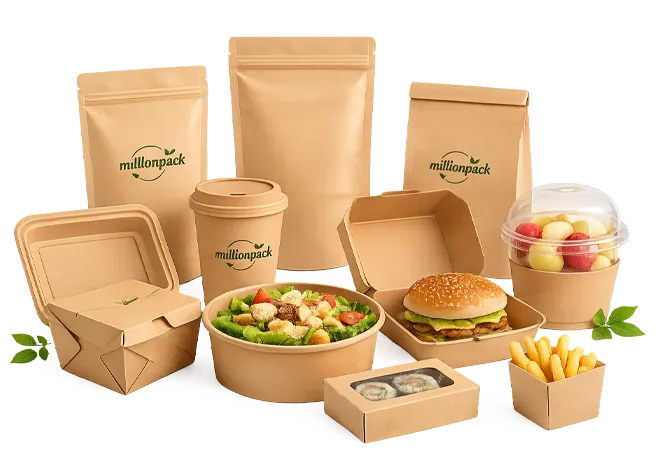
If you are asking which material is better for your packaging, kraft paper or cardboard, the honest answer is that neither one is always best. Kraft Paper vs Cardboard is really a choice between flexibility and structure. Kraft paper usually works better for bags, wraps, and liners, while cardboard is often better for rigid boxes that must protect heavier food items during delivery.
When you search for Kraft Paper vs Cardboard, you usually want to know three things. Which one is stronger, which one looks more premium for your brand, and which one is more sustainable? In this article, we will walk through these questions in simple terms, with real food packaging examples such as burger boxes, noodle bowls, and takeaway bags.
From a food delivery point of view, kraft paper is light, natural-looking looking and highly recyclable, which makes it a strong choice for eco-conscious brands and simple carry bags. Cardboard gives better shape, stackability, and crush resistance, which matters when you send multiple dishes in one order or work with third-party delivery platforms.
By the end, you will clearly see when kraft paper is enough, when cardboard is worth the extra cost, and how to combine both in a smart packaging system. This will help you choose designs that protect the food, match your brand image, and support your sustainability claims without wasting money.
Understanding Kraft Paper and Cardboard
Kraft paper is usually the base material that gives strength and a natural look, while cardboard is a broader term that covers thicker paper based boards and multi layer structures. Knowing this difference will make it easier to choose the right solution for bags, wraps, trays and boxes in your packaging range.
What Is Kraft Paper?
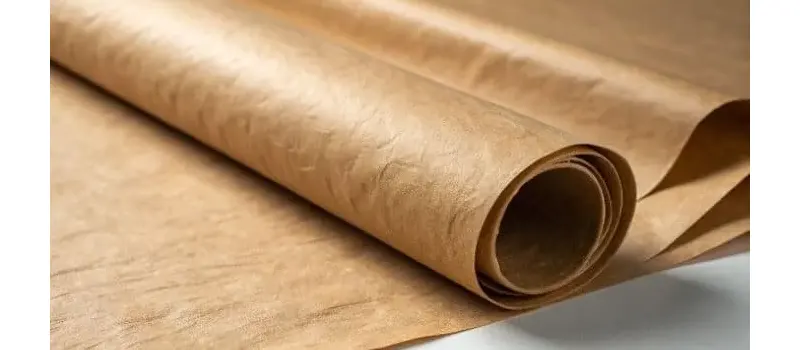
Kraft paper is a type of paper produced using the kraft process, which involves converting wood into wood pulp using chemical treatment. The result is a strong, durable paper with high tear resistance and a natural brown appearance. Kraft paper is known for its eco-friendly qualities, as it is often unbleached, biodegradable, and recyclable.
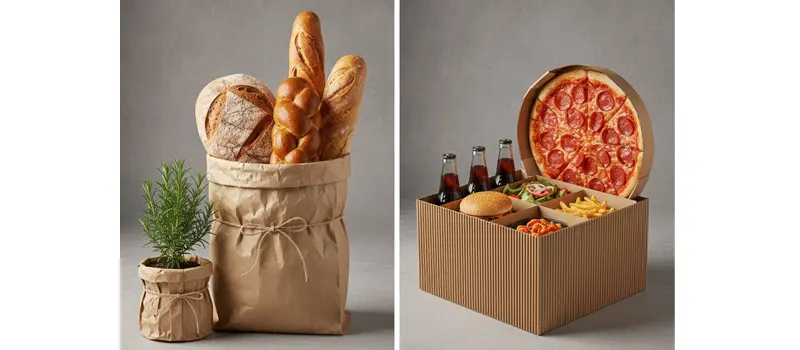
In packaging, kraft paper is commonly used for wrapping, lining, and making paper bags or pouches. Its flexibility and breathability make it ideal for packaging fresh food items like bread, sandwiches, or produce. It is also a popular choice for businesses that prioritize minimal, rustic, or sustainable branding.
What Is Cardboard?
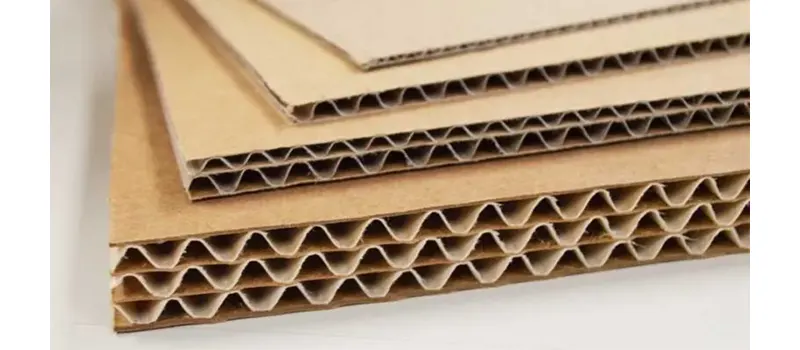
Cardboard is a thicker, more rigid material made by layering paper-based materials together, usually forming corrugated or solid board. Unlike kraft paper, cardboard provides structure and cushioning, making it suitable for protective packaging. It can support heavier items and maintain shape during transport, which is crucial for shipping boxes and takeout containers.
Cardboard can be made using virgin fibers, recycled paper, or a mix of both. Many types of cardboard are coated or treated to enhance durability, moisture resistance, or printability. Because of its rigidity, cardboard is widely used for food delivery boxes, pizza boxes, meal trays, and retail packaging.
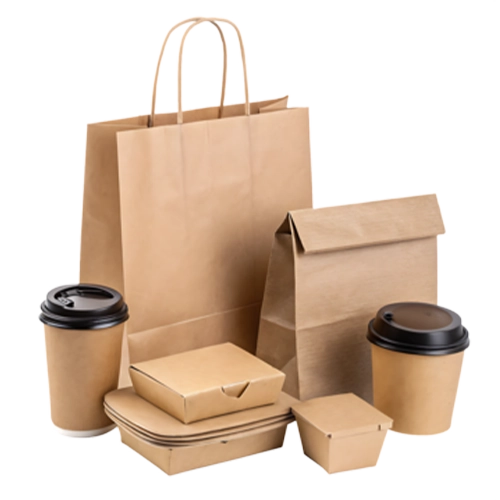
Key Differences Between Kraft Paper vs Cardboard
Choosing between kraft paper and cardboard depends on how the packaging is expected to perform rather than on which material is considered better overall. Although both are widely used paper-based materials, they differ in structure, strength, flexibility, protection level, printing behavior, and cost efficiency. Understanding these differences helps businesses select packaging that matches product requirements, logistics conditions, and branding goals.
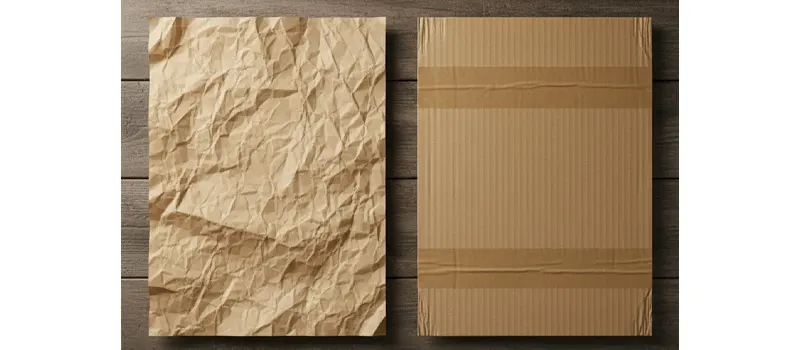
Material Structure and Thickness
- Kraft paper
Kraft paper is typically a single-layer sheet made from kraft pulp and is designed to remain flexible. Thickness varies depending on basis weight and grade, but even heavier kraft paper maintains its ability to bend and fold easily. This makes it suitable for wrapping, lining, and applications where adaptability is required, though it does not provide structural support on its own. - Cardboard
Cardboard is a broader category that includes paperboard and corrugated board, and it is engineered for rigidity through layered construction. Paperboard is dense and stiff, while corrugated board uses a fluted inner layer to increase thickness and stacking strength without excessive weight. This structural design allows cardboard to form boxes and cartons that hold shape and protect contents, but it also results in higher material usage and bulk.
Rigidity and Shape-holding Ability
- Kraft paper:
Kraft paper does not naturally hold a fixed shape unless it is converted into a formed product, such as a bag or sleeve. It folds well and adapts to different product shapes, but it offers limited resistance to compression or deformation when external pressure is applied. - Cardboard:
Cardboard is designed to maintain shape and structural integrity. Its rigidity allows it to create stable panels, edges, and corners, which are essential for cartons and shipping boxes. While this improves protection and stackability, it also reduces flexibility compared to kraft paper.
Strength and Resistance to Damage
- Kraft paper:
Kraft paper offers good tear resistance relative to its weight due to its long fiber structure. It performs well under pulling forces and light handling, but it provides limited protection against crushing or puncture, especially for heavier products. - Cardboard:
Cardboard provides stronger resistance to compression, impact, and puncture, particularly in corrugated formats. It is better suited for protecting products during transport and storage, though this strength comes with increased thickness and material consumption.
Weight and Space Efficiency
- Kraft paper:
Kraft paper is lightweight and space-efficient, typically supplied in rolls or flat sheets. It requires less storage space and can help reduce overall packaging weight, which may lower transportation costs for certain products. - Cardboard:
Cardboard packaging is heavier and bulkier, especially once converted into boxes. However, its structural strength can reduce the need for additional protective materials, which may offset the impact of higher weight in some logistics scenarios.
Printing and Visual Appearance
- Kraft paper:
Kraft paper has a natural texture that creates a muted and organic print appearance. It supports simple branding and messaging well, but fine details and highly saturated colors may be less consistent due to surface absorbency. - Cardboard:
Cardboard, especially coated paperboard, provides a smoother and more controlled printing surface. It supports clearer graphics and more consistent color reproduction, making it suitable for retail packaging where visual presentation is a priority.
Typical Packaging Applications
- Kraft paper
Kraft paper is commonly used for paper bags, food wraps, inner liners, cushioning layers, and lightweight takeaway packaging. It is best suited for products that do not require rigid protection. - Cardboard
Cardboard is widely used for folding cartons, shipping boxes, mailer boxes, and protective outer packaging. It is preferred when structure, stacking strength, and product protection are required.
Cost Considerations
- Kraft paper
Kraft paper often has a lower material cost and supports efficient storage and handling. It can be cost-effective for high-volume and lightweight packaging applications, though additional protection may be needed for fragile goods. - Cardboard
Cardboard may involve higher material and conversion costs, but it can reduce product damage and returns by offering better protection. Its overall cost effectiveness depends on product weight, shipping distance, and handling conditions.
Sustainability and Environmental Impact
- Kraft paper:
Kraft paper is often viewed as an environmentally friendly option because it typically uses fewer raw materials and has a relatively simple structure. It is widely recyclable and biodegradable when uncoated, and its lighter weight can contribute to lower transportation emissions. However, sustainability performance depends on responsible sourcing, fiber content, and whether coatings or treatments are applied for moisture or grease resistance. - Cardboard:
Cardboard also performs well from a sustainability perspective, particularly in corrugated formats with high recycled fiber content. It is widely accepted in recycling systems and supports reuse in some supply chains. While cardboard generally requires more material and energy to produce due to its thickness and layered structure, its durability can reduce product damage and waste, which is an important environmental consideration in logistics.
How to Choose Between Kraft Paper Vs Cardboard?
Selecting between kraft paper and cardboard isn’t about which material is objectively better; it’s about what works best for your specific packaging needs. Different products, industries, and customer expectations call for different solutions. So the right choice often depends on a mix of function, cost, and brand image.

What Are You Packaging?
Start with the product itself. Kraft paper works well for lightweight, low-risk items like pastries, wraps, or produce. If you’re packaging heavier, fragile, or multi-component meals, cardboard provides the rigidity and protection needed during transport. Always match the material to the product’s weight, shape, and vulnerability.
How Important Is Grease or Moisture Resistance?
Uncoated kraft paper is breathable but not moisture-proof. If your food is oily or contains sauces, you’ll need coated kraft paper or an inner liner. Cardboard, especially when laminated, handles moisture and heat better, making it suitable for hot meals, pizzas, or delivery boxes. Ask yourself: Will the packaging come into direct contact with wet or greasy food?
What Type of Customer Experience Do You Want to Deliver?
Kraft paper conveys simplicity and eco-conscious values. It gives a “hand-wrapped” feel and is ideal for artisanal or health-focused brands. Cardboard offers more options for printing, shaping, and branding a better fit for polished, premium presentations. Think about how you want your packaging to reflect your brand.
Are Cost and Storage Constraints a Factor?
Kraft paper is compact and typically more affordable, both in terms of materials and shipping. If space and budget are tight, it’s a smart solution. Cardboard, while bulkier and costlier, may reduce losses from damaged goods or poor stacking. Evaluate your full cost, including the impact of packaging failures or customer returns.
What Are Your Sustainability Goals and Legal Requirements?
Both kraft paper and cardboard can be recyclable or compostable, depending on coatings and local regulations. Kraft paper usually decomposes faster and is simpler to dispose of. Cardboard’s sustainability depends on its finish and fiber content. Check for certifications like FSC and ensure compatibility with your local recycling or composting systems.
How Is the Order Being Delivered?
If you’re hand-delivering in-store or over short distances, kraft paper adds charm and is easy to handle. For long-haul or third-party delivery platforms, cardboard offers more reliability, especially for stacking, protection, and visibility in transit. Consider the handling journey from kitchen to customer.
Packaging Case Studies: Kraft Paper vs Cardboard in Practice
Real packaging decisions are often shaped by practical constraints such as product type, logistics conditions, and sustainability goals. The following case illustrates how material selection between kraft paper and cardboard can influence packaging performance and operational outcomes.
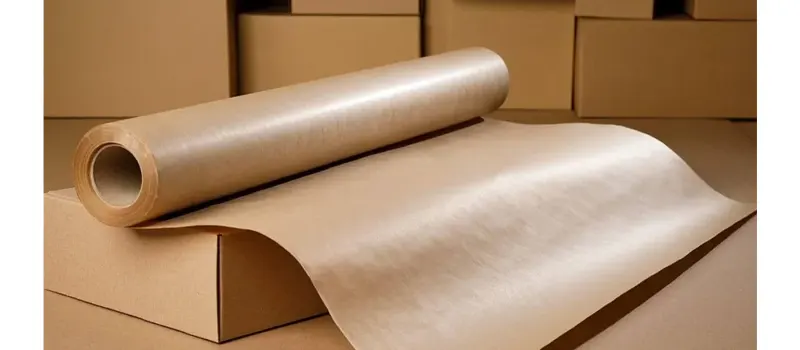
1. Case Study : Nordic Bean Coffee Roasters
Background
Nordic Bean is a specialty coffee roaster supplying ground coffee and coffee accessories to local cafés and online customers across Sweden. The company initially used small folding cardboard cartons with inner plastic liners for retail and shipping orders.
Challenge
While the cardboard cartons provided good structure, Nordic Bean identified two concerns. First, the combination of cardboard and plastic liners complicated recycling for customers. Second, the rigid cartons increased packaging volume for smaller orders, leading to higher shipping costs and excess material use.
Solution
The company adopted a mixed packaging approach. For in store retail packs, they transitioned to reinforced kraft paper bags with resealable closures and a thin aroma barrier layer. For larger wholesale and shipping orders, corrugated cardboard boxes were retained to ensure stacking strength and transport protection.
Results
- Packaging volume for retail orders was reduced, improving storage and shipping efficiency
- Customer feedback highlighted easier disposal and clearer recycling guidance
- The brand achieved better alignment between packaging format and product use without sacrificing protection where it was needed
Key takeaway
This case demonstrates that kraft paper and cardboard are not competing materials in all situations. When applied strategically, each material can serve a specific role within the same packaging system, balancing protection, sustainability, and cost efficiency.
2. Case Study: GreenFork Takeaway Kitchen
Background
GreenFork is a plant-based fast-casual restaurant chain offering eco-conscious meal deliveries across Australia. Initially, they relied on generic corrugated cardboard boxes for all delivery orders, regardless of meal type or size.
Challenge
While the cardboard boxes offered strong protection, GreenFork identified several problems. The boxes were bulky for single meals and lacked grease resistance, often leading to soggy packaging or visible stains. Additionally, the plain boxes offered no brand visibility and were difficult for delivery riders to stack or identify during peak hours.
Solution
GreenFork collaborated with their packaging supplier to create a dual-layer solution tailored for food delivery. They introduced custom-molded kraft paper trays with internal grease-proof lamination, shaped to hold specific meal items securely. These trays were then inserted into slim-fit cardboard sleeves featuring printed branding, QR codes for digital menus, and easy-grab side openings for couriers.

Results
- Package failure rate (leaks, collapsed trays) dropped by 42%
- Riders reported faster and more accurate deliveries due to clearer labeling and stackability
- Customer satisfaction scores for packaging aesthetics and functionality improved within 2 months
- Branded cardboard sleeves increased social media shares of unboxing moments
Key takeaway
This case shows that kraft paper and cardboard can be combined in highly functional ways when tailored to the unique needs of food delivery. With thoughtful structural design and brand integration, packaging becomes not just a container but a key part of the customer experience, reducing waste, enhancing logistics, and elevating brand visibility.
FAQs about Kraft Paper vs Cardboard
- Is kraft paper and cardboardaft paper better than cardboard for packaging?
Neither material is universally better. Kraft paper is more flexible and lightweight, making it suitable for wrapping, bags, and food contact applications. Cardboard provides rigidity and protection, which is better for boxes, stacking, and transport. The better option depends on the packaging purpose. - Which is more sustainable, kraft paper or cardboard?
Both can be sustainable choices when responsibly sourced and properly recycled. Kraft paper often uses less material and is widely recyclable when uncoated. Cardboard may use more material but offers durability that can reduce product damage and waste. Sustainability depends on design, coatings, and actual use. - How should businesses choose between kraft paper and cardboard?
Businesses should consider product weight, handling conditions, moisture and heat exposure, branding needs, sustainability goals, and total packaging cost. Evaluating how the package is used is more important than choosing based on material name alone. - Why do many packages use both kraft paper and cardboard?
Using both materials allows each to serve its strength. Kraft paper works well for food contact, wrapping, or cushioning, while cardboard provides structure, protection, and stackability. This combination often improves performance and efficiency.
Conclusion
Choosing between kraft paper and cardboard is not about identifying a single superior material, but about understanding how each performs in real packaging scenarios. Kraft paper offers flexibility, lightweight efficiency, and a natural appearance that works well for food contact packaging and applications where adaptability and material reduction matter. Cardboard provides structure, protection, and stability, making it essential for boxes, carriers, and situations where stacking and transport durability are required.
In practice, the most effective packaging solutions often combine both materials, assigning each one a clear role based on functional needs. Factors such as product type, temperature, moisture exposure, handling conditions, sustainability goals, and total packaging cost should guide material selection rather than assumptions about material categories.
Million Pack works closely with customers to evaluate these factors and recommend packaging solutions that fit specific products and use cases. By aligning material choice with real world requirements, businesses can achieve better performance, reduce unnecessary packaging, and deliver a more reliable experience to their end customers.