Choosing disposable bowls begins with evaluating how well each bowl performs with the foods you serve. The right choice depends on the bowl’s material, heat resistance, leak protection, and capacity, as well as whether it can maintain its structure when holding hot meals, soups, salads, or saucy dishes. A clear understanding of these factors ensures that the bowl performs reliably in real food service conditions.
The variety of bowl choices on the market can make this decision challenging. Paper bowls may require reliable coatings to prevent leaks, bagasse bowls provide natural strength, and plastic bowls offer lightweight convenience. Without understanding how each option behaves in practical conditions, businesses may struggle with returns, waste, or inconsistent presentation.
This guide breaks down the essential factors that determine which disposable bowls suit your menu and service style. You will learn how to match materials with food categories, identify the right bowl size, and balance cost, quality, and sustainability.
As a manufacturer that supports many foodservice businesses, we see how the right bowl choice improves customer satisfaction and reduces unnecessary waste. This article brings those insights together to help you make informed decisions.
Material Types and Properties
Choosing the right disposable bowls begins with understanding how different materials perform in real food service conditions. Each material offers unique strengths in heat tolerance, moisture resistance, structural stability, and environmental impact. By comparing these characteristics, you can determine which bowl type aligns best with your menu, presentation needs, and operational workflow.
Paper and Paperboard
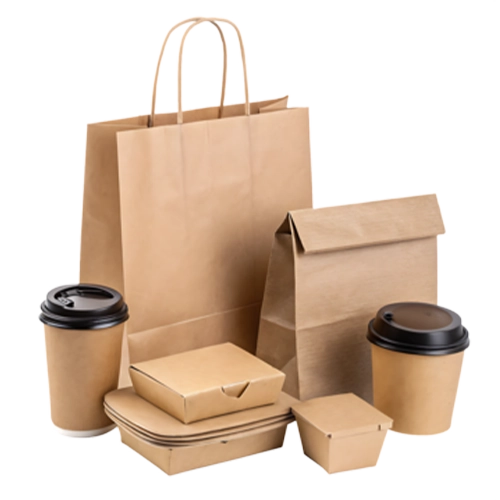
Paper and paperboard bowls are among the most widely used disposable options. They are lightweight, inexpensive, and generally biodegradable. Paper bowls often come with a thin lining of wax or plastic to prevent liquids from seeping through.
What they are good for:
- Cold salads
- Dry snacks
- Foods that are eaten quickly
Paper bowls without a strong lining tend to become soggy under hot or liquid‑heavy food. Even with a lining, they are not ideal for extended use with soups or stews because the lining can break down.
A key consideration is the lining material. Some linings are petroleum‑based, which complicates recycling. If sustainability is a priority, seek paper bowls with biodegradable linings.
Plastic Bowls
Plastic disposable bowls come in a wide range of varieties, including polystyrene (often recognized as foam plastic), polypropylene, and plant‑based plastics like polylactic acid (PLA).
Key differences:
- Polystyrene: Cheap and rigid, but difficult to recycle and not environmentally friendly.
- Polypropylene: Better heat resistance; can often handle hot and cold foods fairly well.
- PLA (Plant‑based plastic): Made from corn starch or sugarcane, marketed as biodegradable. However, PLA usually requires industrial composting conditions to break down.
Plastic bowls are strong and reliable, but environmental disposal issues remain a concern. If your priorities include reduced environmental harm, verify whether the product is truly compostable or recyclable.
Bagasse (Sugarcane Fiber)
Bagasse is the fibrous residue left after sugarcane stalks are crushed to extract juice. Manufacturers have turned this byproduct into disposable tableware, including bowls.
Advantages:
- Excellent heat resistance
- Works well with hot soups and heavy meals
- Stronger and more rigid than paper bowls
- Biodegradable and often compostable
Because bagasse is a natural fiber, bags made from it tend to have a more substantial feel, and can resemble traditional tableware. Many institutions that require eco‑friendly solutions prefer bagasse bowls because they provide performance without the environmental burden of plastics.
Bamboo and Other Plant Fibers
Bamboo is another plant‑based material used to make disposable bowls. It is naturally renewable, very strong, and biodegradable.
Benefits:
- Renewable and sustainable
- Good heat resistance
- Offers a premium appearance
Drawbacks:
- Generally more expensive than paper or basic plastic options
- Composting facilities are not always available
Other plant fibers like wheat straw and palm leaf are also used for disposable bowls and share similar advantages with slight differences in strength, weight, and texture.
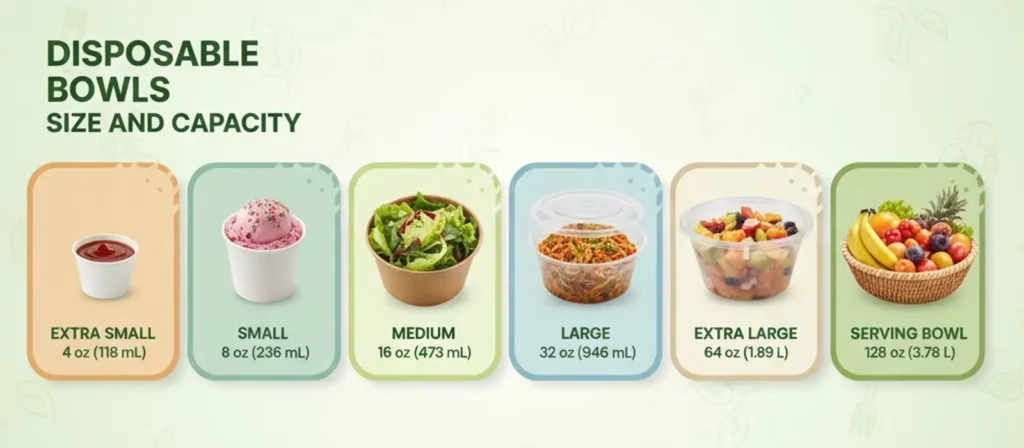
Size and Capacity
Size and capacity directly influence the user experience. If bowls are too small, food will overflow. If they are too large, portions may look sparse, leading to unnecessary waste and higher per‑serving cost.
1. Understanding Common Bowl Sizes
Disposable bowls are usually measured in fluid ounces (oz) or milliliters (ml). While exact sizes vary by manufacturer, you’ll often encounter these ranges:
- 6–8 oz: Suitable for desserts, small side dishes, appetizers.
- 12 oz: Good for soups, medium salads, snacks.
- 16 oz: Standard choice for main courses, larger salads, pasta.
- 20–24 oz: Used for large meals, family‑style portions, or meals with multiple components.
- 32 oz and above: extra-large bowls for sharing portions, family-sized salads, or combination dishes.
2. Matching Size to Your Food Type
- Soups and stews
These require enough height to contain liquid without splashing over the edge when moved. A deeper, slightly narrower bowl works better than a wide, shallow one. - Noodle dishes and pasta
They need enough volume for noodles, toppings, and broth (if present). If you underestimate, the bowl fills too quickly and becomes messy to eat from. - Salads
Salads benefit from wider bowls with room to mix dressing and ingredients. A narrow bowl packed tightly looks smaller and makes mixing inconvenient. - Rice and grain bowls
These often look best in bowls that emphasize surface area on top, so toppings are visible and appealing.
3. Shape, Depth, and Practical Handling
Two bowls may have the same capacity but very different shapes. This matters more than it seems.
- Depth vs width
A deeper bowl is better for deliveries and liquids, because there is more vertical space before food touches the lid. A wider bowl is better for salads or composed dishes where presentation matters. - Rim design
A slightly flared rim makes it easier to eat and helps prevent spills when carrying. It also improves lid grip on some designs. - Stacking and storage
If you’re in a commercial environment, check how many bowls stack in a given space. A design that saves just a few millimeters of height per bowl can significantly reduce storage requirements over thousands of units.
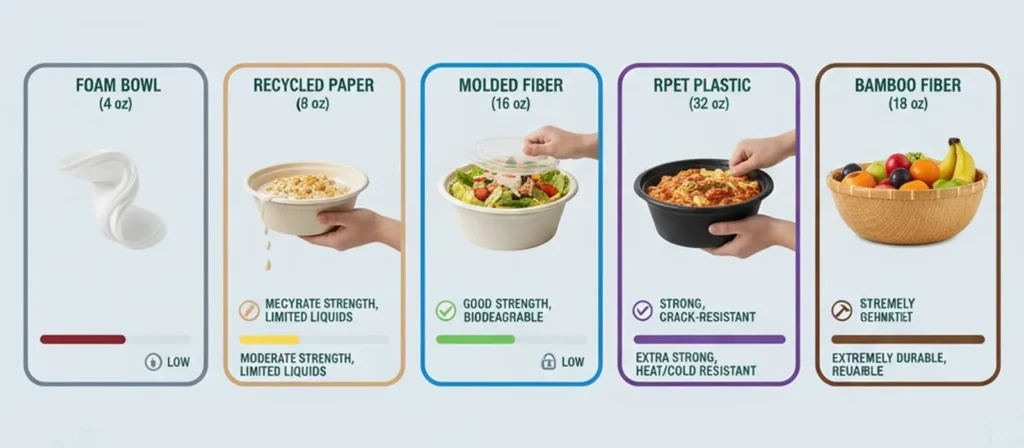
Strength and Durability
Strength and durability determine how well a disposable bowl performs when holding hot foods, liquids, or heavier ingredients. Understanding how different materials respond under pressure helps you choose bowls that support your menu without bending, leaking, or collapsing.
1. Structural Strength: Walls, Base, and Rim
A disposable bowl’s strength comes from the combination of its wall thickness, the shape of its base, and the stiffness of the rim.
Wall thickness
- Thicker walls generally mean better resistance to bending and collapse.
- But quality of the material also matters: some thin-walled bowls feel surprisingly firm because of good design and materials, while some thick but low-quality bowls still flex.
Base design
- A flat, solid base provides stability on tables and counters.
- A slightly raised or reinforced base helps prevent heat transfer to hands and surfaces, especially for hot foods.
Rim stability
- A well-designed rim stays firm when you pick up the bowl with one hand.
- A weak rim buckles, causing the bowl to deform and the contents to shift dangerously.
2. Heat Resistance and Liquids
- Choose materials with known heat resistance
- Avoid thin paper bowls unless they come with strong thermal linings
- Polypropylene and bagasse often outperform basic paper
3. Preventing Leakage and Spills
- Does the bowl have a reliable lining for liquids?
- Does the material resist soaking through?
- Does it keep its shape if held in hand?
If you are serving saucy foods or liquids, a lined paper bowl with a strong fiber base or a rigid plastic bowl is a wiser choice than unlined paper.
4. Testing Before Purchase
Reputable suppliers often provide samples. Use these to conduct real‑world tests: fill bowls with your intended food type, let them sit for the expected service duration, and observe any changes in structure or integrity. This testing ensures that bulk purchases meet expectations.
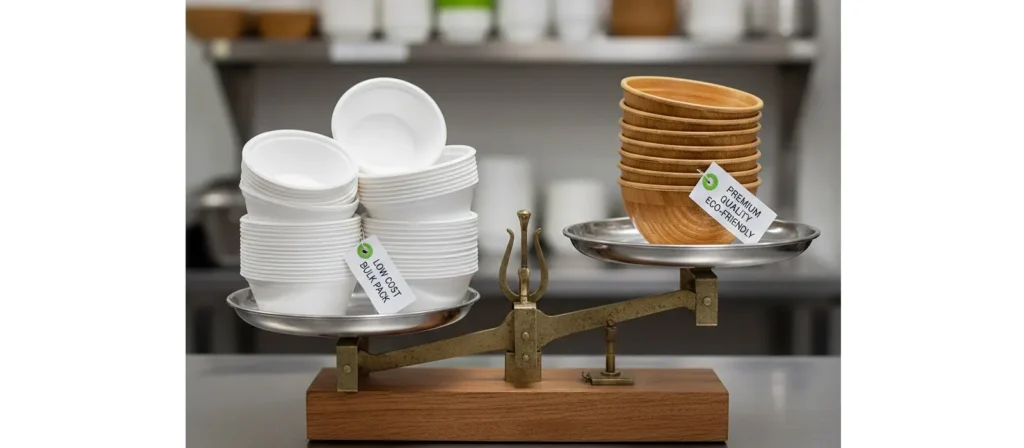
Balancing Cost and Quality
Cost is a reality for every buyer. But low cost does not automatically mean good value if the product fails in performance or creates waste.
Balancing cost and quality means choosing bowls that meet your menu needs without causing unnecessary waste or expense. Very cheap bowls may deform, leak, or collapse when holding hot foods, which leads to food loss and a poor customer experience. A slightly stronger bowl often performs better and reduces long term problems.
Mid range options usually offer the best value because they provide stable strength, good heat resistance, and reliable moisture control at a reasonable price. Eco friendly materials such as bagasse or certified bioplastic bowls may cost more upfront, but their durability and sustainability benefits can justify the investment.
Cost control also depends on avoiding hidden waste. Using the wrong bowl size, forcing mismatched lids to fit, or overpacking food can increase expenses. Selecting the right container and a lid that seals properly helps prevent leaks and simplifies daily operations.
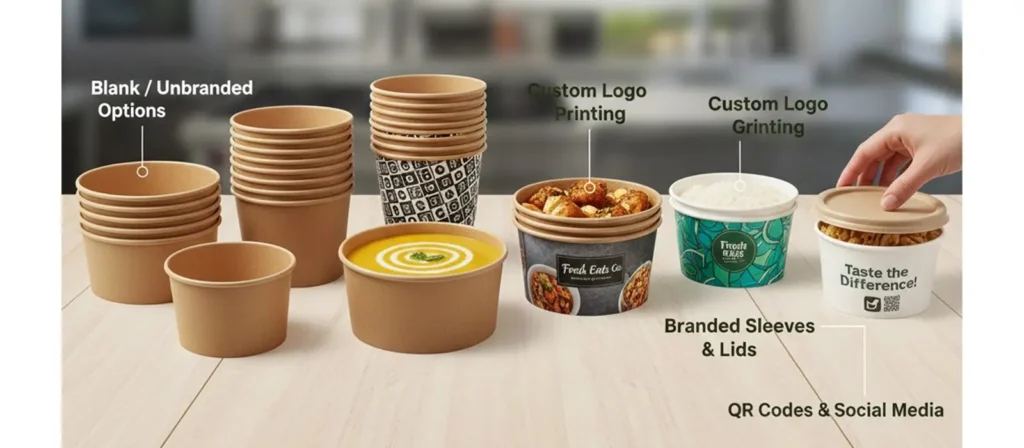
Brand Promotion and Customization Options
Many people start by thinking of disposable bowls simply as containers. But if you serve customers regularly, disposable bowls are also media. Every bowl a customer holds is a small advertising surface and a physical touchpoint for your brand.
If you ignore that, you miss a free opportunity to build recognition and trust. If you use it intelligently, your disposable bowls quietly support your marketing and make your business feel more professional and consistent.
1. Why Customization Matters
Imagine two similar noodle shops on the same street.
Both serve tasty soup at similar prices. One uses unprinted, generic bowls that look identical to any other takeout place. The other uses sturdy disposable bowls with a clear logo, brand colors, and a neat tagline that communicates freshness or quality.
The second shop has an immediate edge. Customers who walk past and see people holding branded bowls subconsciously connect that visual with the store. Over time, those bowls do the same job as a signboard or online ad, but without extra effort.
Branded disposable bowls can:
- Increase recall: When customers see the logo on their desk or kitchen counter, they remember where they ordered from.
- Improve perceived quality: A conscious design suggests that the business cares about details, not only about cutting costs.
- Support social media exposure: When people share food photos or videos, well-designed bowls make the brand visible and attractive in every frame.
Disposable bowls already exist in your budget. You are going to buy them anyway. Turning them into a brand asset is simply using that spend more intelligently.
2. Customization Levels: From Simple to Fully Tailored
You do not have to jump from plain bowls directly to fully custom molded shapes. There is a ladder of customization options, each with its own cost and flexibility.
| Level | Description | Pros | When to use |
|---|---|---|---|
| Basic | Standard bowl, single-color logo and short text | Low MOQ, easy to source, quick to launch | Best for small and medium businesses that want branding without extra complexity. |
| Intermediate | Standard bowl with full-color design, patterns, illustrations | Stronger brand impact, more visual personality | Risk of over-design; keep graphics clean and readable from a distance. |
| Advanced | Custom bowl shapes, special lids, unique structural features | Highly distinctive, instantly recognizable branding | High MOQ, longer lead time; suitable only for larger brands with stable demand. |
Application Scenarios
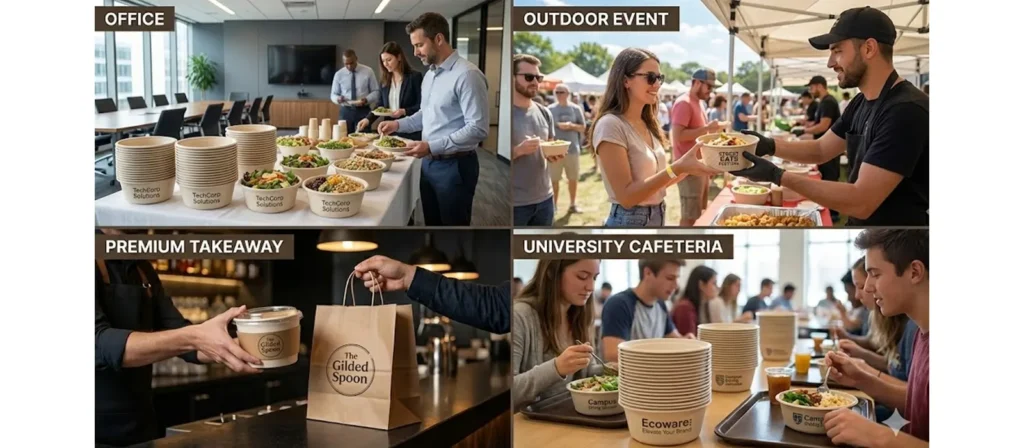
Disposable bowls are used across a wide range of food service settings, and the right choice depends on how and where the food is served. For dine in and takeaway restaurants, bowls must handle hot foods, liquids, and frequent handling without losing shape. Catering services often need bowls that stack well, remain stable during transport, and support efficient serving.
For delivery and takeaway orders, leak resistance and lid compatibility become especially important. Bowls must stay sealed during movement and maintain food quality from kitchen to customer. Clear labeling or simple branding can also help identify dishes and improve the overall presentation when multiple items are packed together.
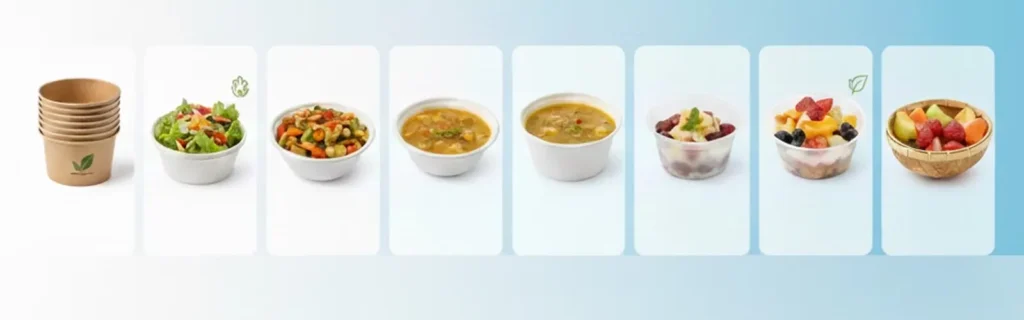
Cold food applications such as salads, fruit, or desserts place greater emphasis on appearance and portion clarity. In these cases, bowl shape, transparency, or clean presentation play a larger role than heat resistance. Matching the bowl type to each scenario ensures reliable performance and a consistent customer experience.
Regional Procurement Considerations
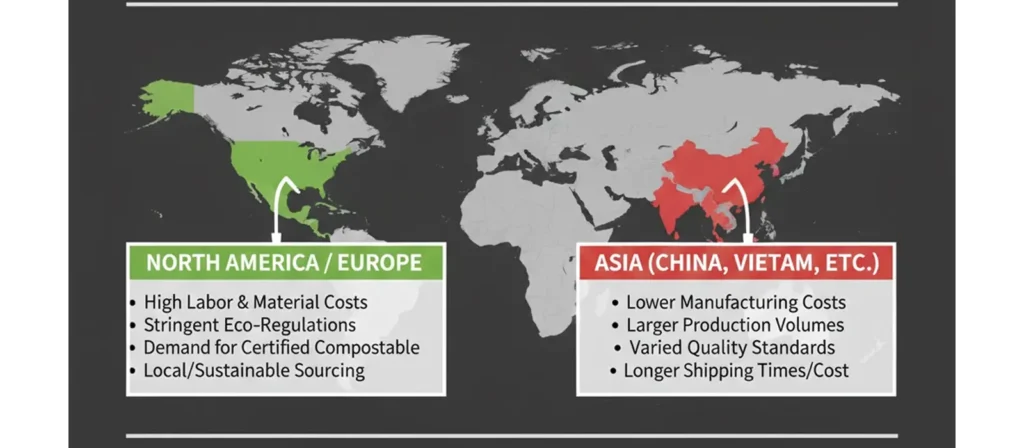
When sourcing disposable bowls, regional requirements play an important role in material choice and compliance. Different markets have their own regulations regarding food contact safety, material restrictions, and environmental standards. Understanding local rules helps ensure that the bowls you purchase are suitable for legal use and accepted by customers in that region.
1. Understanding Local Supply Chains
Regionally available products vary significantly. A disposable bowl that is commonplace in a metropolitan market may be difficult or expensive to source in a rural area. Similarly, imports may be restricted or incur additional cost due to tariffs or shipping.
Before establishing procurement practices, it’s important to assess:
- Local supplier networks
- Lead times for delivery
- Minimum order quantities
- Transportation and logistic costs
Longer lead times and delivery challenges can affect inventory planning and increase the risk of stockouts.
2. Regulatory and Compliance Variances
Different regions have varying regulations for food contact materials, labeling, recyclable labeling, and environmental claims. Some countries or states may ban certain plastics or restrict the use of polystyrene foam, while others require specific certification for compostable products.
For example:
- Certain jurisdictions mandate clear labeling of recyclable components.
- Some regions require biodegradable claims to be backed by independent testing.
- Specific materials may be prohibited based on environmental legislation.
Procurement managers should be aware of these rules so that products purchased align with local compliance requirements. Failure to do so can result in fines, reputational harm, or operational disruption.
3. Seasonal Demand Fluctuations
Seasonality affects demand and price. Regions that host seasonal tourism or large summer events will often see spikes in disposable bowl demand, which can strain inventory levels and push prices upward.
4. Cost Variation by Geography
Geographic price differences are significant for disposable products. Key cost drivers include:
- Raw material availability
- Transportation distance
- Local tax structures
- Market competition among suppliers
In some regions, materials such as bagasse or bamboo might be readily available due to local agricultural production, which can reduce cost and lead times. Conversely, regions without local manufacturing may rely on imports, which increases overall cost.
Environmental Choices and Certifications
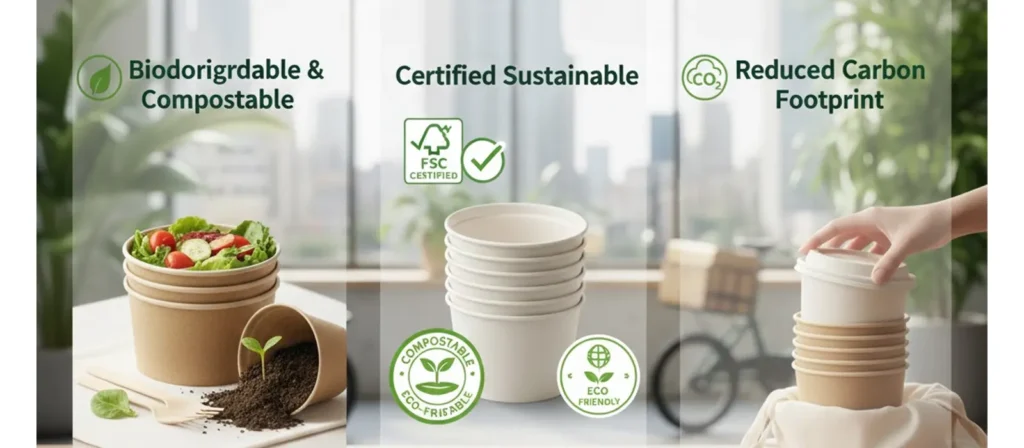
Environmental performance is no longer a niche concern in packaging; it is a mainstream expectation. Customers are increasingly sensitive to how their food is packaged, and businesses must be ready to answer questions like “Are these bowls recyclable?” or “What does compostable actually mean?”
1. What Environmental Responsibility Means for Disposable Bowls
Environmental considerations involve evaluating:
- Resource use (renewable vs non‑renewable)
- Waste streams and end‑of‑life processing
- Carbon footprint associated with production and transport
- Chemical constituents and food contact safety
- Potential for recycling or composting
Environmental responsibility doesn’t always mean selecting the most expensive option. Rather, it involves aligning product choice with actual waste processing infrastructure and meaningful sustainability outcomes.
2. Recognizing Meaningful Certifications
Environmental claims are meaningful only when backed by trusted certification standards. Common certifications include:
- ASTM D6400 / D6868: Indicates that the product is compostable under industrial conditions.
- EN 13432: European standard for compostability.
- BPI (Biodegradable Products Institute) Certification: Confirms compostability in industrial settings.
- FSC (Forest Stewardship Council): Ensures paper products come from responsibly managed forests.
Why Bulk Purchasing is Important for Businesses?
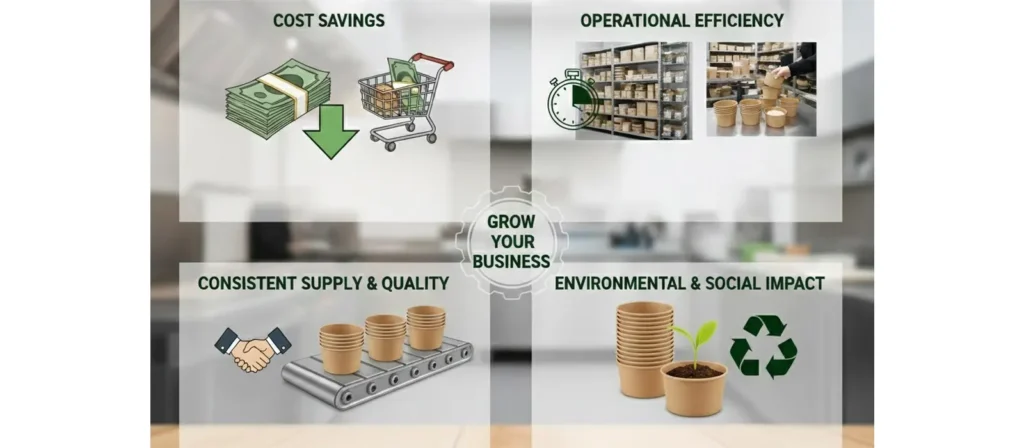
Bulk purchasing refers to the procurement of large quantities of goods at once, typically at a discounted unit price. This is common practice for businesses that require continuous consumption of items, such as food service companies, retailers, manufacturers, educational institutions, and healthcare operations.
Cost-effectiveness
Purchasing disposable bowls in bulk typically lowers the unit cost and reduces frequent reordering expenses. Larger order quantities allow businesses to benefit from better pricing, more efficient shipping, and fewer interruptions caused by small, repeated purchases. Over time, these savings can have a noticeable impact on overall packaging costs.
Frequent small purchases create repeated administrative tasks such as issuing purchase orders, processing invoices, coordinating deliveries, and managing inventory. Bulk purchasing consolidates these activities, reducing repetitive work and administrative overhead.
Supply Stability
Bulk purchasing helps ensure consistent availability, reducing the risk of running out of stock during peak periods or unexpected demand increases. It also minimizes the need for last minute sourcing, which often leads to higher costs or compromises in quality.
Large, consistent orders signal reliability to suppliers. Suppliers, in turn, are more likely to prioritize businesses that provide predictable demand and larger revenue streams. This relationship advantage often translates into preferential treatment, including priority supply allocation during shortages, flexible payment terms, or early access to new products.
Customization Advantages
Customization options such as logo printing or size standardization are more practical and cost efficient when ordered in bulk. Larger quantities make it easier to maintain consistent branding across locations and service channels. Bulk orders also allow suppliers to plan production more efficiently, resulting in better quality control and more reliable delivery timelines.
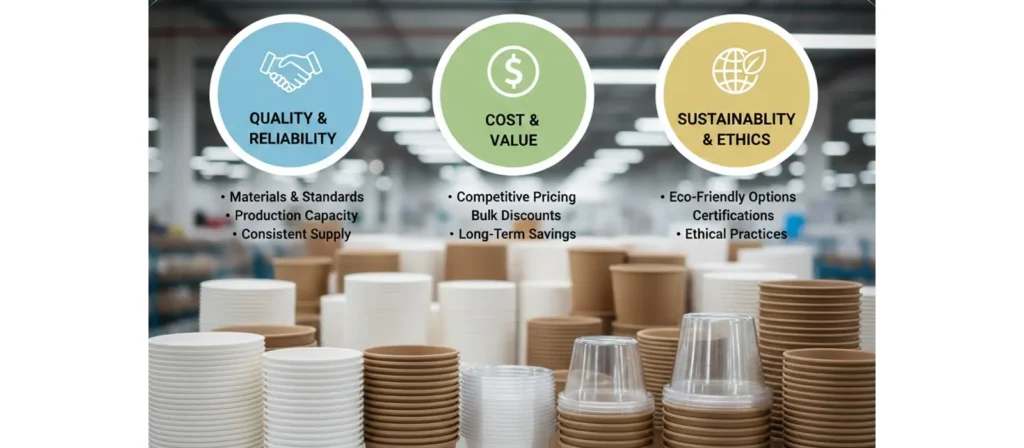
How to Choose the Right Supplier?
Once a business embraces bulk purchasing, the next strategic decision is selecting the right eco-friendly food packaging supplier. A poor supplier choice can negate the advantages of bulk buying, while a strong partnership can enhance value, reduce risk, and enable long‑term growth.
1. Start with Clear Requirements
Before engaging potential suppliers, define what your business needs. This initial step ensures that supplier evaluation is precise rather than based on assumptions.
Consider the following:
- Product specifications (materials, dimensions, performance requirements)
- Quantity forecasts and frequency of replenishment
- Customization or branding needs
- Budget constraints and pricing expectations
- Delivery logistics and storage capacity
Documenting these requirements creates a baseline against which all supplier proposals can be measured.
2. Specialization and Experience in Food Packaging
Suppliers who specialize in food packaging, and particularly in disposable bowls and containers, will typically understand your needs better than generic wholesalers.
Ask potential suppliers:
- What proportion of your business is food-service packaging?
- Which types of clients do you primarily serve: restaurants, hotels, caterers, retail brands?
- Have you supplied businesses with menus similar to ours?
A supplier used to working with soup chains, noodle shops, salad bars, or delivery-heavy kitchens will already know the typical pain points: lids popping off in transit, bowls deforming under hot oil, confusing volume labeling, and so on. They can recommend products that have already been proven in similar environments.
3. Pricing Structure and Transparency
Price matters, but it is how a supplier structures and communicates their pricing that tells you whether you can plan confidently.
- Clear unit prices for each bowl and lid, broken down by volume tiers
- Transparent shipping and handling fees
- Information about any surcharges, such as custom printing setup costs, plate fees, or rush order charges
- Reasonable validity periods for quotes, so you can plan a few months ahead
4. Quality Standards and Compliance
Businesses must ensure that suppliers adhere to relevant quality and safety standards. This concern is especially important for products related to food service, healthcare, or any application where material contact has safety implications.
Key considerations include:
- Certifications relevant to the product (e.g., food contact safety certifications, industry‑specific standards)
- Quality control processes in the supplier’s manufacturing facilities
- Testing protocols and third‑party validation
Reliable suppliers are transparent about their quality standards and willing to provide documentation upon request.
5. Logistics and Delivery Capabilities
Even the best product is ineffective if delivery is delayed or mishandled. Evaluate a supplier’s logistics capabilities by considering:
- Delivery networks and carriers used
- Realistic delivery timelines
- Packaging methods that protect products during transit
- Ability to schedule deliveries based on your operational needs
For businesses with limited storage space, suppliers who offer flexible delivery schedules and consolidation options provide added value.
6. Flexibility and Product Range
Your needs will evolve. Menus change, customer expectations shift, environmental regulations tighten. You do not want to switch suppliers every time you tweak a dish.
At the same time, you do not need to use every product they offer. The goal is to know that, within one supplier relationship, you can grow and adjust without having to redo all your homework every year.
7. Customer Service and Responsiveness
Strong customer service is a key differentiator in supplier partnerships. Suppliers should be accessible, responsive, and proactive in communicating about issues such as delays, order changes, or product updates.
The right supplier is not necessarily the one with the absolute lowest price, nor the one with the glossiest catalog. It is the one whose strengths match the way you want to run your business.
FAQs
- Can disposable bowls truly be eco‑friendly?
Yes. When matched with actual local waste processing systems (recycling or composting) and backed by certifications, disposable bowls can be environmentally responsible. Without applicable waste processing, even “eco” materials may not deliver the intended benefits. - Is customization worth the expense?
For businesses seeking to strengthen brand recognition, improve customer experience, and differentiate in competitive markets, customization often yields tangible value that outweighs additional cost. - What material is best for hot soups and stews?
Materials like bagasse and high‑temperature plastics (such as polypropylene) are better suited for hot liquids because they maintain structure and resist collapse. - Are plant‑based disposable bowls always compostable?
Not necessarily. Some plant‑based plastics require industrial composting facilities. Always check certification and local composting options before purchasing. - Do disposable bowls need to meet regional regulations?
Yes. Different regions have specific requirements for food contact safety, material use, and environmental compliance. Choosing bowls that meet local standards helps avoid legal issues and ensures acceptance in the target market. - Can disposable bowls be customized for branding?
Yes. Many disposable bowls support logo printing, brand colors, and standardized sizes. Customization is most cost effective when ordered in bulk and should focus on exterior printing to maintain food safety.
Summary
Effective selection and procurement of disposable bowls require a multi-dimensional approach that integrates functional performance, cost management, environmental responsibility, and brand positioning. Businesses must assess material properties for food safety and durability, align bowl sizes and shapes with usage contexts, and evaluate the environmental implications of compostability and recyclability based on local infrastructure.
Customization serves as both a branding tool and a competitive differentiator, especially when supported by consistent supply through strategic bulk purchasing. Bulk procurement enhances cost efficiency, ensures inventory stability, and enables scalable customization.
When these factors are considered holistically, disposable bowl procurement becomes a strategic asset that supports operational continuity, customer satisfaction, and long-term business growth.