Paper cup size affects how drinks are served, how customers perceive portion value, and whether lids, sleeves, and cup holders fit properly. For cafés, takeaway brands, and foodservice operators, cup size is not just a volume reference, but a practical decision that influences daily operations.
Paper Cup Size is commonly labeled in ounces, but this number alone does not always reflect how a cup performs in real use. Differences in milliliters, cup height, rim diameter, and overall proportions can lead to noticeable variations, even among cups with the same stated capacity. Understanding these differences helps avoid issues such as overfilling, lid mismatch, or inconsistent drink presentation.
This guide breaks down Paper Cup Size using clear comparisons in ml, oz, and inches. Once you understand these relationships, you can treat paper cup size as a precise tool for menu design and cost control. Instead of guessing, you will be able to specify exact sizes, request clear quotes from suppliers, and align your packaging with your brand and your local market.
What Does Paper Cup Size Really Mean?
Paper Cup Size is often understood as the volume printed on the cup, such as 8 oz or 12 oz, but in practice it represents more than a single number. A paper cup’s size reflects a combination of labeled capacity, usable fill volume, and physical dimensions, all of which affect how the cup performs in real use.
The labeled capacity usually refers to the maximum volume the cup can hold when filled close to the rim. In everyday service, however, cups are rarely filled to this level. Space is typically left for lids, foam, ice, or safe handling. As a result, the practical fill volume is often lower than the nominal capacity printed on the cup. This difference is especially noticeable in hot drinks with foam and cold drinks with ice.
Paper Cup Size also includes the cup’s dimensions, such as top diameter, bottom diameter, and height. These measurements influence how the cup feels in hand, how stable it is on flat surfaces, and whether it fits standard lids, cup holders, and takeaway trays. Two cups with the same labeled capacity may have very different shapes and proportions, leading to different user experiences.
Understanding Paper Cup Size as a combination of capacity and dimensions helps businesses choose cups that match their beverages, service style, and packaging systems more accurately, rather than relying on volume alone.
Standard Paper Cup Sizes Chart
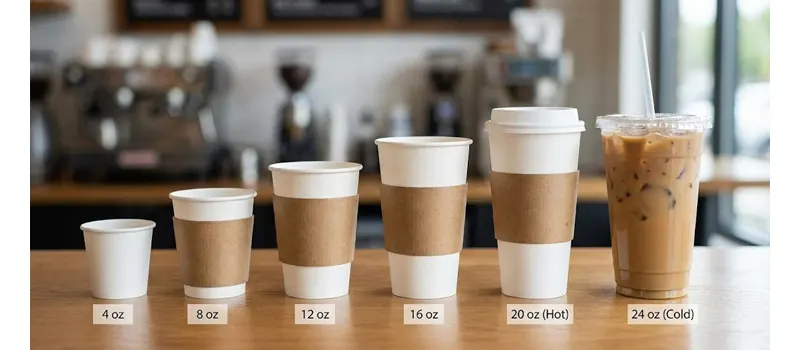
Standard Paper Cup Size refers to the most commonly used cup capacities adopted across coffee shops, takeaway brands, and foodservice operations. These sizes are typically expressed in ounces, but they can also be converted into milliliters for more precise volume control and international reference. Understanding these standard sizes helps create consistency in ordering, pricing, and drink preparation.
In most markets, paper cups follow a relatively stable size range, from small espresso cups to large cold drink cups. Each size corresponds to a general use case rather than an exact fill line. For example, a cup labeled 12 oz may be intended for a latte or iced drink, but the actual fill level will vary depending on foam, ice, or lid clearance. This is why capacity charts usually show both the nominal volume and its approximate metric equivalent.
The dimensions shown in the table below represent commonly used paper cup specifications in the foodservice and takeaway industry. While paper cups are typically labeled by capacity in ounces, actual cup size is defined by a combination of volume, height, and top and bottom diameters. These measurements are especially important for lid compatibility, cup holders, stacking stability, and real fill volume. Minor variations may exist between manufacturers, but the sizes listed reflect widely adopted standards used across coffee shops and beverage brands.
| Cup Size (oz) | Capacity (ml) | Top Diameter | Bottom Diameter | Height | Common Use |
| 4 oz | 118 ml | 2.5″ (62 mm) | 1.8″ (46 mm) | 2.4″ (60 mm) | Espresso, Sample tasting |
| 6 oz | 177 ml | 2.8″ (73 mm) | 2.0″ (51 mm) | 3.1″ (80 mm) | Flat White, Small coffee |
| 8 oz | 237 ml | 3.15″ (80 mm) | 2.2″ (56 mm) | 3.6″ (92 mm) | Standard Small, Coffee, Tea |
| 10 oz | 296 ml | 3.5″ (90 mm) | 2.3″ (60 mm) | 3.7″ (95 mm) | Short & Wide cup (Fits 12oz Lid) |
| 12 oz | 355 ml | 3.5″ (90 mm) | 2.3″ (60 mm) | 4.4″ (112 mm) | Standard Medium, Latte, Cappuccino |
| 16 oz | 473 ml | 3.5″ (90 mm) | 2.3″ (60 mm) | 5.3″ (135 mm) | Standard Large, Travel Coffee |
| 20 oz (Hot) | 591 ml | 3.5″ (90 mm) | 2.4″ (62 mm) | 6.3″ (160 mm) | Extra Large Coffee (Fits 12/16oz Lid) |
| 20 oz (Cold) | 591 ml | 3.9″ (98 mm) | 2.6″ (65 mm) | 5.7″ (145 mm) | Soft Drinks, Iced Beverages (Wide Mouth) |
| 24 oz | 710 ml | 4.1″ (104 mm) | 2.7″ (68 mm) | 6.9″ (175 mm) | Smoothies, Bubble Tea, Milk Tea |
Paper Cup Size Explained
Paper Cup Size is defined by a combination of capacity and physical dimensions. To correctly understand and compare paper cups, it is important to look at each parameter individually and know how it is measured. This helps avoid confusion when selecting cups, matching lids, or comparing products from different suppliers.

Paper Cup Capacity (oz and ml)
Capacity refers to the internal volume of the cup. Capacity is typically measured by filling the cup with water close to the rim, without a lid. In real use, cups are rarely filled to this maximum level, as space is needed for foam, ice, or safe handling. This is why labeled capacity should be understood as a reference value rather than the actual serving volume.
- oz (fluid ounces): The fluid ounce (oz) is a unit of volume commonly used in the United States and other countries that follow the imperial measurement system. It measures liquid capacity, not weight, and is a standard reference for beverage packaging in North America. When a paper cup is labeled as “12 oz,” it means the cup can hold approximately 12 fluid ounces of liquid, which is equivalent to 355 milliliters.
- ml (milliliters): The milliliter (ml) is a metric unit of volume and is widely used across Europe, Asia, Australia, and most of the world. It is part of the International System of Units (SI) and is based on the liter (1,000 ml = 1 liter). In packaging and foodservice, milliliters provide a precise and universally understood way to measure and compare liquid volume.
Conversion reference:
- 1 oz ≈ 29.6 ml
- 1 ml ≈ 0.034 oz
For practical use, this is often rounded to 30 ml.
Paper Cup Dimensions
Dimensions describe the physical shape of a paper cup. They are usually measured in inches and determine how the cup fits lids, holders, trays, and packaging systems. Inches are commonly used to describe paper cup dimensions such as height and diameter. This unit is widely accepted in packaging specifications and tooling references.
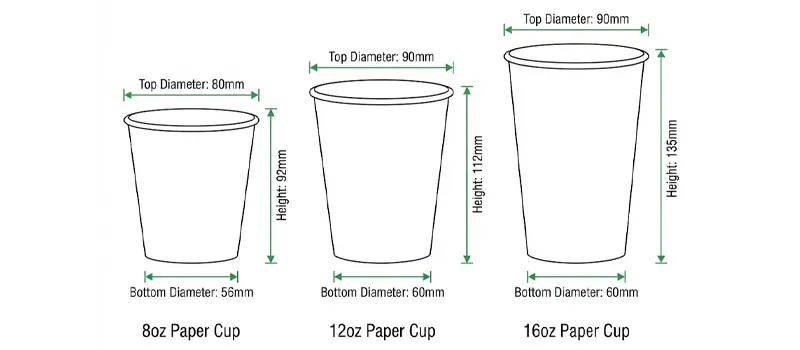
1. Cup Heigh
Height is the vertical distance from the base of the cup to the rim. It is measured in inches using a straight vertical line.
Cup height affects:
- Visual appearance of the drink
- Space available for ice or layered beverages
- Stacking and storage efficiency
Taller cups are often chosen for cold drinks and specialty beverages, while shorter cups are more common for hot drinks that need easier handling.
2. Top Diameter
Top diameter is the width of the cup opening, measured across the rim from one side to the other.
Top diameter affects:
- Lid compatibility
- Drinking comfort
- Sleeve fit
Cups with the same top diameter can usually share the same lid, even if their capacities differ. For this reason, top diameter is often more important than capacity when selecting lids.
3. Bottom Diameter
Bottom diameter is the width of the base of the cup. It is measured at the widest point of the bottom surface.
Bottom diameter affects:
- Stability on flat surfaces
- Compatibility with cup holders and trays
- Balance during transport
A wider bottom generally improves stability, especially for taller cups, but it must still fit standard holders and carriers.
Conversion reference:
1 inch = 25.4 mm
Millimeters are sometimes used in technical drawings, but inches remain the standard unit in most foodservice product descriptions.
How to Choose the Right Paper Cup Size?
Choosing the right paper cup size means matching real serving needs with what your customers expect and what your store can handle. You need to consider the drinks on your menu, the distinction between hot and cold items, how guests perceive small, medium, and large sizes, and how many lids and sleeves you can store. In the sections below, we break down the key factors that influence which paper cup size is right for your needs.

Beverage Type and Drink Composition
Different beverages require different amounts of space. Hot drinks with minimal foam need less headroom, while drinks with foam, ice, or toppings require additional volume above the liquid level. Selecting a Paper Cup Size that matches the drink composition helps maintain consistent presentation and prevents overfilling.
Service Style and Usage Scenario
The way drinks are served affects cup size selection. For dine-in service, moderate sizes are easier to handle and store. For takeaway and delivery, Paper Cup Size must account for movement during transport, making stability and secure lid fit more important than capacity alone.
Capacity Versus Practical Fill Volume
The labeled capacity on a cup does not always reflect how much beverage it can comfortably hold in real use. Space is often needed for foam, ice, or safe handling. Understanding this difference helps avoid choosing cups that appear suitable on paper but feel too small in practice.
Lid and Accessory Compatibility
Paper Cup Size should always be evaluated alongside lid compatibility. Cups with the same top diameter can share lids, even if their capacities differ. Choosing sizes that align with existing lids and sleeves reduces inventory complexity and minimizes fitting issues.
Handling, Stability, and User Experience
Cup height and bottom diameter influence how stable a cup feels and how comfortable it is to hold. Taller cups may need a wider base to prevent tipping, especially during takeaway. A well-balanced Paper Cup Size improves both safety and customer experience.
Brand and Presentation
Your cup size is part of your visual identity. A well-proportioned cup looks more professional and consistent with your brand image. For example, upscale cafés often opt for smaller, artisan-style cups that match the aesthetic of their drinks. Choosing a size that reflects your brand values can make your offering look intentional and thoughtful, not just functional.
Storage, Cost, and Waste
Larger cups take up more storage space and cost more to produce and ship. If you’re running a tight operation, smaller sizes can reduce waste and save money without compromising the customer experience, especially for free samples or small beverages. Also, smaller cups reduce the likelihood of overpouring, helping manage ingredient costs and portion control.
Paper Cup Size by Beverage Type
Different drinks need different cups, even inside the same store. A paper cup size that works perfectly for a small espresso will not suit iced tea with ice cubes, and a cappuccino needs a different shape to a smoothie. Looking at cup choice by beverage type makes it much easier to build a clear size ladder that fits your menu.

Espresso and Tasting Portions
Espresso and small tasting samples use the smallest paper cup size in your range. For a single espresso or a small shot of strong coffee, a cup of around 2 to 4 oz, roughly 60 to 120 ml, is usually enough. This gives the drink volume needed while keeping the liquid visually full in the cup, which matters for perception of value.
Standard Coffee and Tea
For regular black coffee, filter coffee, and standard tea, many operators use a paper cup size between 8 and 12 oz, around 240 to 350 ml. This range covers what most guests think of as a normal takeaway drink. A smaller 8 oz cup suits simple coffee without added milk, while a 10 or 12 oz cup suits coffee with milk, tea with milk, or a larger breakfast drink.
Specialty Coffee Drinks
Cappuccino, latte, flat white, and similar drinks place extra demands on cup shape and size. A cappuccino often needs more space for foam, while a latte may require a taller cup that highlights the volume of milk. Many cafes choose paper cup size options of 8, 12, and 16 oz for these specialty drinks, so they can offer small, regular, and large versions in a clear step.
Cold Drinks and Iced Beverages
Cold drinks such as iced coffee, iced tea, lemonade, and soft drinks usually need a larger paper cup size because of ice. When you fill a cup with ice, part of the volume is taken up before you pour the liquid. If the nominal capacity is too small, the drink can look half empty once the ice melts. For this reason, many businesses use 12, 16, 20, or even 22 oz cups for cold beverages.
Smoothies, Milkshakes, and Thick Drinks
Smoothies, milkshakes, bubble tea, and other thick drinks behave differently again. They are often sold as a treat, and customers expect them to come in a generous paper cup size, frequently 16 oz or more. The thicker texture also means the drink moves less inside the cup, so you can usually fill slightly higher without risk of spills.
Kids Menus and Small Drinks
Children’s drinks, short hot chocolates, and small juices often need a dedicated, smaller paper cup size. A cup around 6 to 8 oz is usually enough for a child portion, while remaining easy for small hands to hold. This also helps parents feel comfortable about sugar intake and avoids waste when children do not finish a larger drink.
FAQs
- What is the most common paper cup size for coffee?
The most common paper cup size for coffee is 12 oz. This size is widely used for standard brewed coffee, lattes, and cappuccinos because it balances drink volume with comfortable handling and fits standard lids and sleeves. Smaller sizes such as 8 oz and 10 oz are also common for regular coffee and flat whites, while larger sizes like 16 oz are often chosen for iced coffee or larger servings. - Why do cups with the same Paper Cup Size look different?
Cups with the same labeled capacity can differ in height and diameter. These design differences affect how the drink looks, how the cup feels in hand, and whether it fits standard lids or cup holders. This is why dimensions matter as much as capacity. - Should I choose Paper Cup Size based on capacity or dimensions?
Both matter. Capacity determines how much liquid the cup can hold, while dimensions affect lid fit, stability, and handling. The best approach is to evaluate Paper Cup Size using both factors together rather than relying on capacity alone. - Is Paper Cup Size based on the maximum fill level?
Yes, the labeled Paper Cup Size typically represents the maximum volume the cup can hold near the rim. In everyday use, cups are usually filled below this level to allow space for foam, ice, or safe handling, so the actual serving volume may be smaller.
Conclusion
Choosing the right Paper Cup Size involves more than selecting a volume number. Capacity, dimensions, lid compatibility, and real usage conditions all influence how a paper cup performs in daily service. Understanding these factors helps ensure consistent drink presentation, secure handling, and a better overall customer experience.
Million Pack supports businesses by offering customized paper cup solutions based on specific beverage requirements and usage needs. From size selection and dimensional matching to material and printing options, Million Pack helps identify paper cup sizes that fit your menu, service style, and branding goals, making cup selection clearer and more practical.