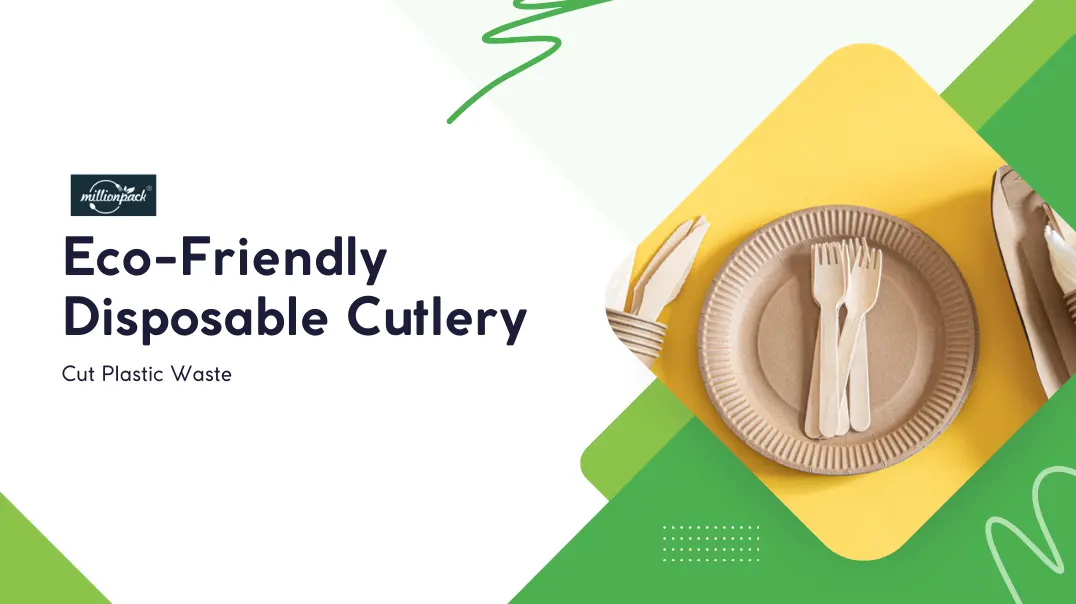
Eco-friendly disposable cutlery refers to single-use eating utensils made from renewable, plant-based, or natural materials that are designed to reduce plastic pollution and long-term environmental harm. These products are increasingly used in restaurants, takeaway services, catering, and events as alternatives to conventional plastic forks, knives, and spoons.
The problem is that traditional plastic cutlery is used for minutes but remains in the environment for decades. Most of it is never recycled due to contamination and low recovery value. Instead, it accumulates in landfills, waterways, and oceans, where it breaks down into microplastics that enter soil, food chains, and even drinking water. For food businesses, this creates growing regulatory pressure, reputational risk, and a widening gap between sustainability claims and actual impact.
Eco-friendly disposable cutlery offers a practical way forward. By switching to materials such as PLA, CPLA, wood, bamboo, or bagasse, businesses can cut plastic waste at the source without disrupting daily operations. When chosen correctly and matched with real disposal conditions, these alternatives reduce environmental burden, meet customer expectations, and support a more responsible food service model.
Understanding Disposable Cutlery Materials
Disposable cutlery looks simple on the surface, but the material behind it determines almost everything that matters in real use: strength, heat resistance, disposal outcome, environmental impact, and even customer perception. Before talking about benefits or strategies, it’s essential to understand what these utensils are actually made of and why material choice is the starting point for reducing plastic waste.
Below is a clear overview of the main disposable cutlery materials used today, moving from conventional options to eco-friendly alternatives.
- Conventional Plastic (PS, PP, PET)
Made from fossil fuels, cheap and widely available, but non-biodegradable. These plastics can persist in the environment for hundreds of years and are a major source of microplastic pollution. - PLA (Polylactic Acid)
Plant-based plastic derived from corn or sugarcane. Compostable under industrial conditions, suitable for cold or warm foods, but limited heat resistance. - CPLA (Crystallized PLA)
A modified version of PLA with improved heat resistance and rigidity. Designed for hot meals while maintaining compostability in industrial composting systems. - Wooden
Made from birch or other fast-growing woods. Naturally plastic-free, sturdy for most foods, and biodegradable without industrial processing. - Bamboo
Produced from rapidly renewable bamboo. Stronger than many wooden options, visually appealing, and biodegradable, with minimal agricultural impact. - Bagasse-Based
Made from sugarcane fiber, a byproduct of sugar production. Compostable and renewable, though less common for cutlery than for plates and bowls.
Comparison of Disposable Cutlery Materials
For most buyers, comparing disposable cutlery does not require exhaustive technical detail. What matters are a few decisive factors that affect daily use and environmental outcomes. The table below focuses on four key characteristics that most clearly differentiate disposable cutlery materials in real-world food service.
| Material Type | Heat Resistance | Strength in Use | Disposal Outcome | Typical Use Case |
|---|---|---|---|---|
| Plastic | High | Consistent but can bend | Persistent plastic waste | General food service with low cost focus |
| PLA | Low | Suitable for light foods | Industrial composting only | Cold meals, salads, desserts |
| CPLA | High | Rigid and stable | Industrial composting only | Hot meals, takeaway, catering |
| Wooden | Moderate | Naturally sturdy | Biodegradable | Dine-in, takeaway, eco-conscious brands |
| Bamboo | High | Very strong, premium feel | Biodegradable | Premium food service, events |
| Bagasse-Based | Low to moderate | Light-duty | Compostable | Short-term use, light meals |
This simplified comparison makes one point clear: switching to eco-friendly disposable cutlery is not about chasing labels, but about selecting materials that match food temperature, usage intensity, and disposal reality.
Plastic-Free Alternatives to Conventional Tableware
When people talk about switching to Eco-Friendly Disposable Cutlery, they are usually referring to plastic-free or plant-based alternatives that can replace conventional petroleum-based utensils without disrupting food service operations. Each material below represents a different approach to reducing plastic waste, and each comes with its own strengths, limitations, and ideal use cases. Rather than treating these options as interchangeable, it helps to understand how and where each one fits best.
PLA Cutlery
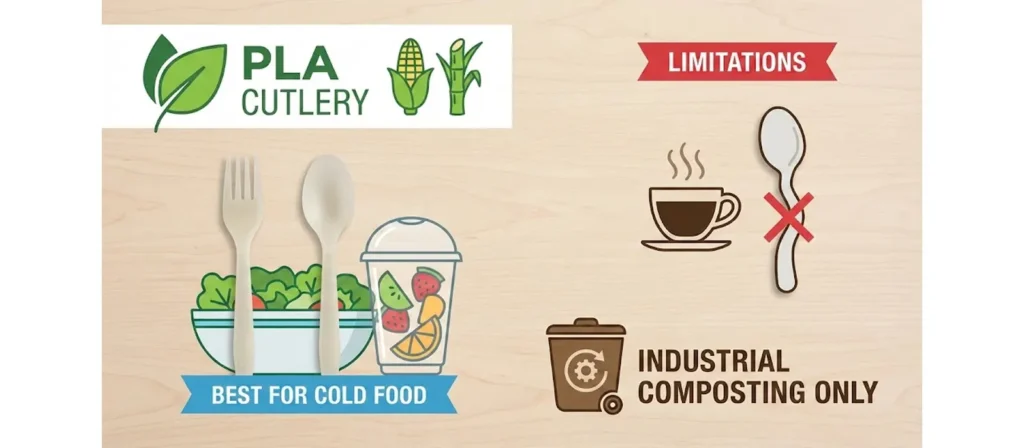
PLA cutlery is one of the most widely used forms of eco-friendly disposable cutlery made from renewable plant sources such as corn starch or sugarcane. It looks and feels similar to plastic, which makes it easy for customers to accept, especially in cold food settings.
In practice, PLA works best for salads, fruit cups, desserts, and chilled takeaway meals. Its main limitation is heat sensitivity. When exposed to hot foods or liquids, PLA can soften or lose shape, which affects user experience. From a waste perspective, PLA is compostable only in industrial composting facilities, meaning its environmental benefit depends heavily on local disposal infrastructure.
CPLA Cutlery
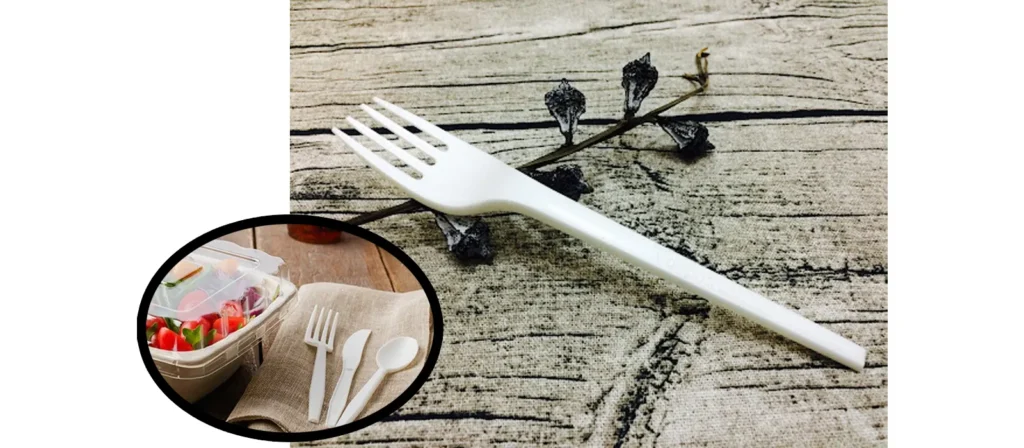
CPLA cutlery was developed to solve the performance limitations of standard PLA. Through a crystallization process, CPLA becomes significantly more heat resistant and rigid, making it suitable for hot meals and more demanding food service environments.
Among eco-friendly disposable cutlery options, CPLA is often chosen by restaurants and caterers that want plastic-like performance while reducing fossil-based plastic use. Like PLA, it requires industrial composting to fully break down, so proper waste handling remains essential to achieve its intended environmental benefit.
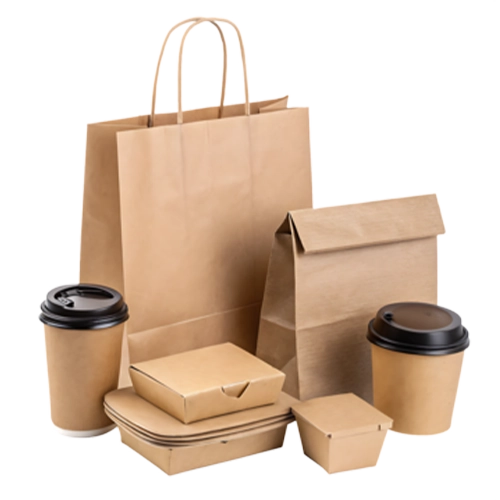
Wooden Cutlery
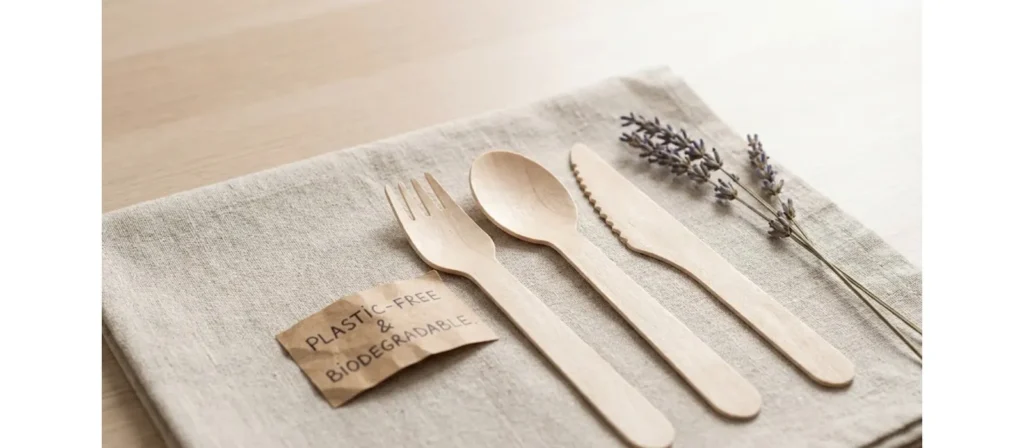
Wooden cutlery represents one of the most straightforward plastic-free alternatives available today. Typically made from birch or similar fast-growing woods, it does not rely on synthetic polymers or chemical processing to achieve usability.
This type of eco-friendly disposable cutlery performs reliably with both hot and cold foods and biodegrades naturally over time. While the texture may feel different from plastic, many customers associate wooden cutlery with sustainability and simplicity, making it a popular choice for cafes, takeaway brands, and environmentally conscious food services.
Bamboo Cutlery
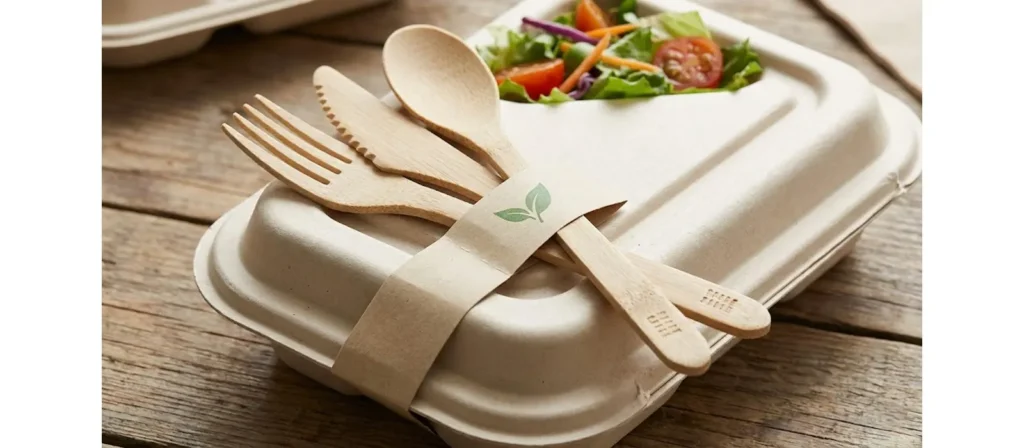
Bamboo cutlery is often positioned as a premium form of eco-friendly disposable cutlery due to its strength, smooth finish, and visual appeal. Bamboo grows rapidly and requires fewer resources than traditional timber, which gives it a strong sustainability profile.
In use, bamboo cutlery handles hot foods well and offers a sturdier feel than many wooden alternatives. It is commonly used in higher-end takeaway, catering, and event settings where both durability and presentation matter. Like wood, bamboo biodegrades naturally without requiring specialized composting facilities.
Bagasse-Based Cutlery
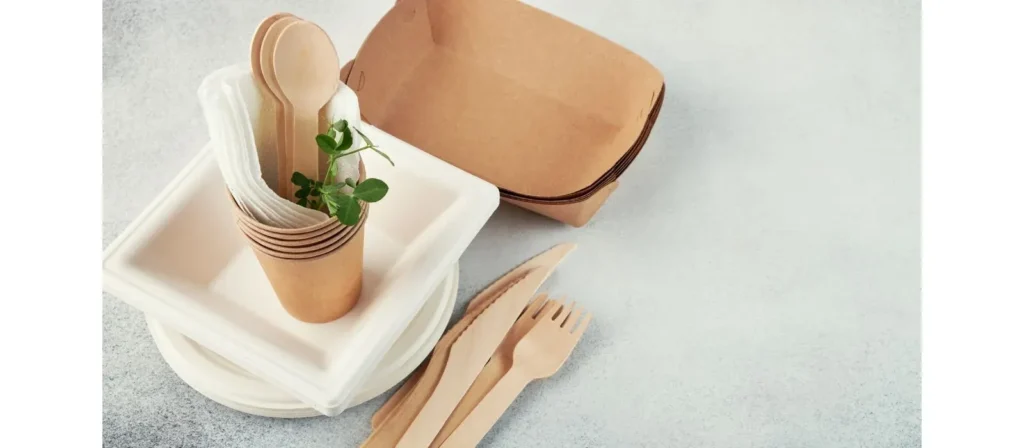
Bagasse cutlery is made from sugarcane fiber, a byproduct of sugar production. While bagasse is more commonly used for plates and bowls, it is increasingly appearing in disposable cutlery as part of broader eco-friendly tableware systems.
This form of eco-friendly disposable cutlery is compostable and renewable, but generally better suited for lighter food applications. Its appeal lies in utilizing agricultural waste rather than virgin raw materials, contributing to a more circular resource model.
This breakdown shows that plastic-free alternatives are not defined by a single “best” material. Each option supports the broader goal of reducing plastic waste in a different way.
How Eco-Friendly Disposable Cutlery Reduces Plastic Waste
Switching to Eco-Friendly Disposable Cutlery is often discussed as a symbolic sustainability move, but its real value lies in how it changes the flow of materials through the food service system. Plastic waste is not just a disposal problem. It begins at production, grows during use, and persists long after a single meal is finished. Replacing conventional plastic cutlery interrupts that cycle at several critical points.
Reducing Single-Use Plastic at the Source
Conventional plastic cutlery is designed for convenience but leaves a permanent footprint. Every plastic fork or spoon introduced into circulation increases the volume of waste that cannot safely return to nature. By replacing these items with Eco-Friendly Disposable Cutlery, businesses directly reduce the amount of fossil-based plastic entering food service systems.
This kind of reduction is more effective than relying on recycling. Disposable cutlery is rarely recycled due to contamination and low material value. Eliminating plastic at the purchasing stage prevents waste before it has a chance to accumulate.
Preventing Microplastic Pollution
Over time, discarded plastic cutlery does not disappear. It fragments into microplastics that migrate into soil, waterways, and eventually the food chain. These particles persist long after the original product is forgotten.
Materials used in Eco-Friendly Disposable Cutlery, such as wood, bamboo, and plant-based fibers, follow a different path. Instead of breaking into microplastics, they decompose through biological processes, significantly reducing long-term environmental contamination.
Supporting Circular Waste Systems
Eco-friendly disposable cutlery also supports a shift toward circular waste systems. Compostable options like PLA and CPLA are designed to return to the soil when processed through appropriate industrial composting facilities.
Even where composting systems are still developing, the use of eco-friendly disposable cutlery encourages better waste separation and awareness. Over time, this shift helps move food service away from persistent plastic waste and toward materials that fit within natural cycles.
This shows that cutting plastic waste is not only about what happens after disposal, but about choosing materials that are not designed to last forever in the environment.
Environmental Benefits Beyond Plastic Reduction
Reducing plastic waste is often the main reason businesses consider switching materials, but the impact of Eco-Friendly Disposable Cutlery extends further than what ends up in the trash. Material choices influence carbon emissions, resource consumption, and long-term environmental pressure across the entire product lifecycle.
Lower Carbon Footprint
Traditional plastic cutlery is derived from fossil fuels, and its carbon footprint begins with extraction and refining. From there, energy-intensive manufacturing and global transportation add to total emissions. Even after disposal, plastic continues to impose an environmental cost through long-term degradation and pollution management.
Eco-friendly disposable cutlery made from plant-based or fiber-based materials follows a different pathway. Renewable raw materials such as corn, sugarcane, wood, or bamboo absorb carbon during growth. While production still requires energy, the overall lifecycle emissions are typically lower, especially when materials are locally sourced or processed efficiently.
Renewable and Plant-Based Material Sourcing
Another advantage of Eco-Friendly Disposable Cutlery is its reliance on renewable inputs rather than finite resources. Fossil-based plastics depend on oil and gas extraction, which brings environmental risks well beyond waste generation, including habitat disruption and emissions from drilling and transport.
Materials like bamboo and bagasse stand out because they regenerate quickly or make use of agricultural byproducts. Bamboo grows rapidly without intensive chemical inputs, while bagasse repurposes waste from sugar production. These sourcing models reduce pressure on natural resources and improve material efficiency.
Reduced Long-Term Environmental Burden
Plastic’s environmental cost does not stop at disposal. Cleanup efforts, landfill management, and ecosystem damage continue for decades. These long-term impacts are difficult to quantify but very real, especially in marine and urban environments.
Eco-friendly disposable cutlery reduces this burden by using materials designed to break down through natural processes. While not every option decomposes perfectly in every setting, replacing persistent plastics with biodegradable or compostable alternatives lowers the cumulative environmental load over time.
Taken together, these benefits show that eco-friendly disposable cutlery is not only a waste reduction tool, but also a way to reduce emissions, conserve resources, and limit long-term environmental damage.
The Future of Eco-Friendly Disposable Cutlery
The future of eco-friendly disposable cutlery is closely tied to material innovation. Manufacturers are improving plant-based polymers and fiber blends to deliver better heat resistance, strength, and texture without relying on fossil-based plastics. As performance gaps narrow, eco-friendly disposable cutlery will continue to replace plastic in more demanding food service scenarios, including hot meals, delivery, and large-scale catering.
Regulation is another powerful driver shaping what comes next. Governments around the world are tightening restrictions on single-use plastics, pushing businesses to adopt alternatives faster than market demand alone would dictate. As compliance becomes mandatory rather than optional, eco-friendly disposable cutlery will shift from a niche sustainability choice to a standard operational requirement across many regions.
Consumer expectations are evolving alongside these changes. Customers increasingly associate eco-friendly disposable cutlery with responsible brands and modern food service values. Transparency, clear disposal guidance, and visible material differences will matter more than generic eco claims. In the long run, businesses that adapt early will be better positioned as sustainability becomes a baseline expectation rather than a differentiator.
Conclusion
Switching to eco-friendly disposable cutlery is not a cosmetic sustainability move. It is a material decision that directly affects waste generation, carbon emissions, and how food service fits into broader environmental systems. Throughout this article, one theme remains consistent: plastic waste is best reduced at the source, not managed after the fact.
Eco-friendly disposable cutlery offers multiple pathways to do that. Plant-based materials like PLA and CPLA reduce reliance on fossil resources. Wood, bamboo, and bagasse remove plastic entirely from the equation and align more naturally with biological cycles. None of these options are perfect in every scenario, but each represents a meaningful step away from disposable plastics designed to last far longer than their actual use.