Choose the right disposable food container starts with understanding your menu and service model. The correct container should fit the food type, temperature, portion size, and handling process from kitchen to customer. When these factors are aligned, the result is consistent performance, reduced waste, and a reliable customer experience.
For many businesses, the challenge is not the container itself but the hidden cost of using the wrong one. A package that leaks, softens, or arrives opened during delivery affects reputation, increases complaints, and leads to product loss. These issues often cost more than the price difference between containers. This is why selecting the right solution is a practical business decision rather than just a packaging choice.
This article provides a clear framework for selecting disposable food containers in a commercial setting. We explain the key materials, coating options, sizes, heat resistance levels, and how they connect to operational needs. By choosing the right process, you can better ensure product quality, enhance brand consistency, and control costs more effectively.
Understanding Disposable Food Containers
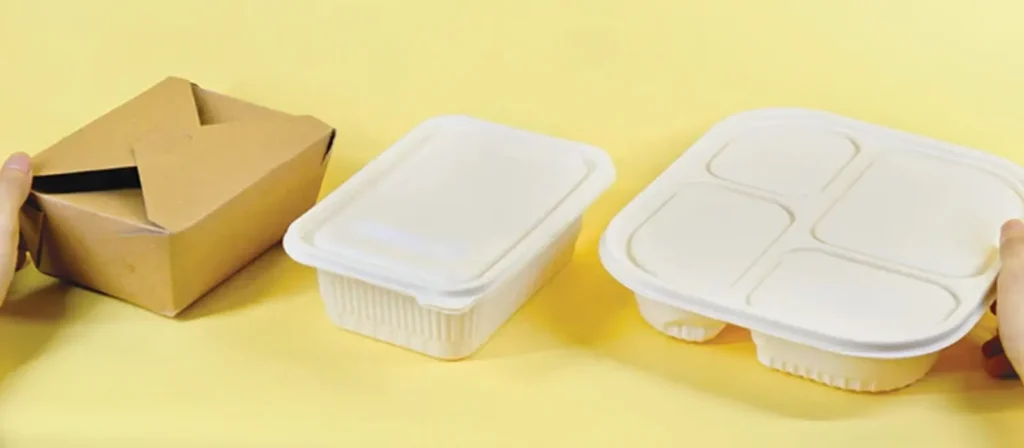
Disposable food containers are foundational to modern food service. It is a single-use package designed specifically for holding, protecting, and serving food during storage, takeaway, or delivery. Their value lies in balancing strength, safety, and cost so that food can be handled efficiently without leaking, softening, or losing freshness. In commercial settings, containers are expected to support fast preparation, secure transport, and consistent presentation.
For a deeper explanation of materials, formats, and categories, you can refer to the detailed guide: What Is a Disposable Food Container?
Important Considerations for Wholesale Food Packaging Containers
Choosing a disposable food container at wholesale scale introduces additional complexities compared to selecting containers for small restaurant operations. Bulk decisions must consider not only the immediate functional requirements of the packaging but also long-term supply chain logistics, cost-per-unit margins, and shifting customer preferences.
1. Material Selection
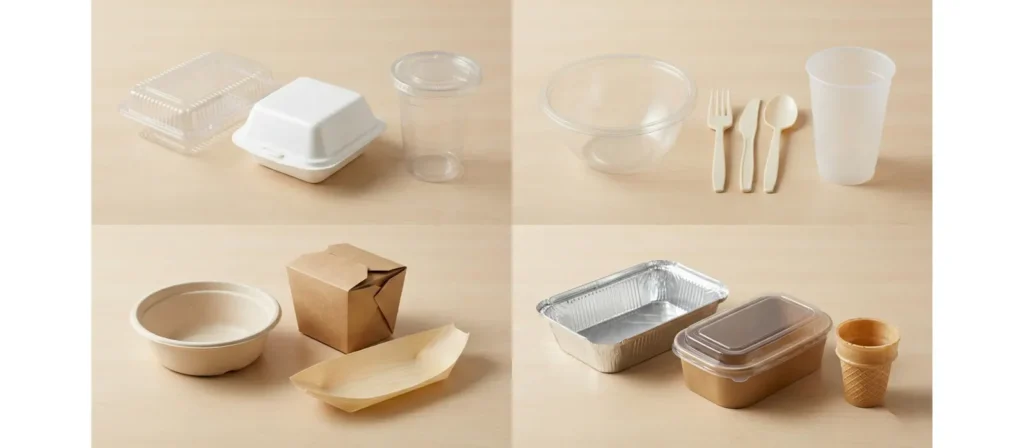
Material is arguably the single most important decision in food container selection. It directly impacts food safety, durability, sustainability, heat resistance, and end-of-life disposal.
1. Plastic (PP, PET, PS)
- Pros: Inexpensive, strong, moisture-resistant, suitable for a wide range of foods.
- Cons: Non-biodegradable, risk of chemical leaching (especially under heat), many types are non-recyclable in practice.
- Best Use: Cold foods, dry snacks, sealed lids for delivery.
2. Aluminum
- Pros: Oven-safe, recyclable (if clean), excellent for heat retention.
- Cons: Not microwave-safe, higher cost, potential for sharp edges.
- Best Use: Hot entrees, baked dishes, catering trays.
3. Paperboard
- Pros: Compostable (sometimes), printable surface for branding, lightweight.
- Cons: Needs lining for wet food, may leak or lose integrity with hot/oily meals.
- Best Use: Dry or semi-dry foods, branded takeaway meals.
4. Bagasse (Sugarcane Pulp)
- Pros: Naturally biodegradable, heat-tolerant, microwave-safe.
- Cons: Expensive, performance can degrade with very oily or wet foods.
- Best Use: Eco-conscious brands, premium takeout.
5. PLA and Bioplastics
- Pros: Compostable, visually similar to clear plastic, perceived as “green.”
- Cons: Not suitable for high-heat foods, requires industrial composting.
- Best Use: Cold food packaging, especially in regulated eco-markets.

2. Size Determination
Wholesale food packaging must accommodate a variety of portion sizes, from single-serve entrees to multi-compartment family trays. Choosing container sizes strategically reduces waste, improves customer experience, and optimizes storage and shipping.
Key factors to consider:
- Food volume vs. container capacity: Avoid oversized packaging that leads to empty space and perceived under-portioning.
- Stackability: Uniform sizing supports efficient packing, both in delivery and on shelves.
- Standardization: Having 3–5 core sizes simplifies inventory and ordering, while meeting 80–90% of use cases.
For example, a standard 650 ml plastic clamshell may be sufficient for salads and pasta, while heavier entrees (like biryani or roast meals) might require a 1000 ml option with reinforced lids.
Restaurants may also prefer containers with compartments to separate sauces or sides. In these cases, size must account for both overall volume and the usability of each section.
3. Consider Your Customer Base
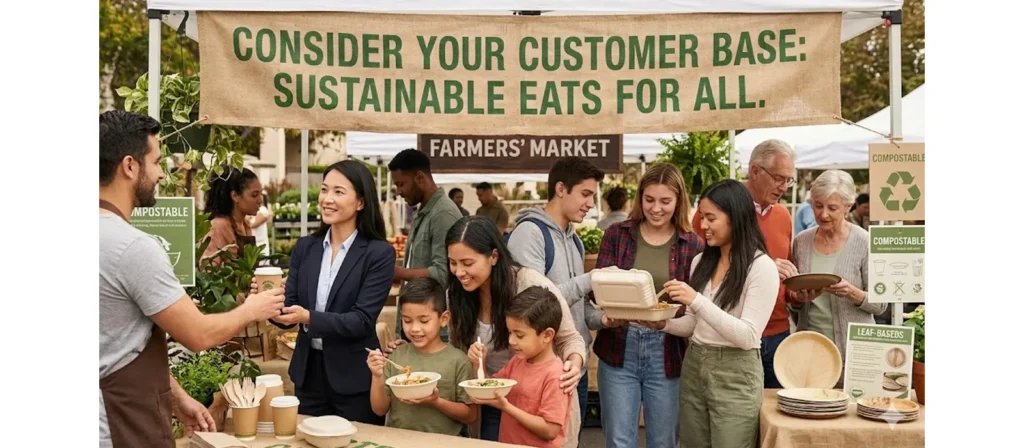
Packaging affects how customers perceive food quality. A durable container that keeps the meal intact during transportation builds confidence and encourages repeat orders. The people who actually receive and use your disposable food containers matter as much as the food inside them. Their expectations, habits, and limitations should influence your choices.
Understand How and Where Customers Eat
Ask yourself:
- Do most customers eat on-site, nearby, or at home?
- Do they usually eat immediately or later in the day?
- Do they often reheat the food in the container?
- Are they commuters, office workers, students, or families?
For example, office workers who eat at their desks might appreciate containers that can be opened easily and used as a plate without making a mess. Families might care more about reheating and storing leftovers. Students may be more price-sensitive but still notice if the container feels flimsy.
4. Budget Costs
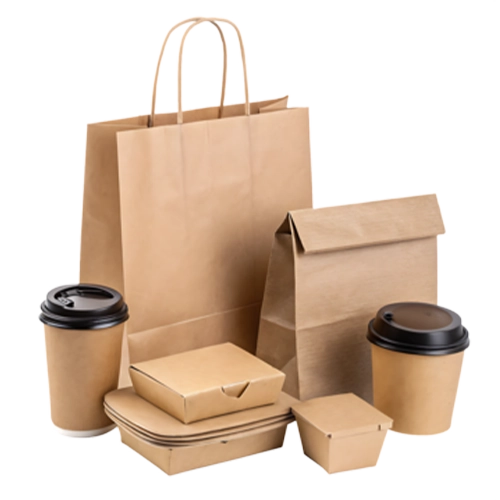
Cost is a determining factor in large-scale food packaging decisions. However, lowest cost per unit does not always mean the best long-term value. Hidden costs can arise from customer dissatisfaction, food waste due to poor insulation or leakage, and damage during transit.
The Difference Between Price and Value
There are two sides to the cost of wholesale food packaging:
- Direct costs: Unit price, shipping, customs (if applicable), taxes, and storage.
- Indirect costs: Food waste due to leaks or breakage, time spent dealing with complaints, damage to brand reputation, and operational inefficiencies.
A slightly more expensive container that almost never leaks, stacks efficiently, and supports fast packing might reduce indirect costs enough to be cheaper overall.
If a lower-cost option noticeably increases failure rates or requires more space and handling, your total cost may actually rise. When comparing offers from suppliers, viewing cost as “price per successful delivery” can be more realistic than just looking at price per unit.
Wholesale suppliers usually offer tier pricing, so volume planning is helpful. Buyers can reduce price by ordering core sizes in larger quantities and keeping specialty sizes as smaller stock. Good packaging prevents leakage, protects the food, and reduces customer claims, which leads to better cost control in the long run.
5. Choosing a Reliable Food Packaging Supplier
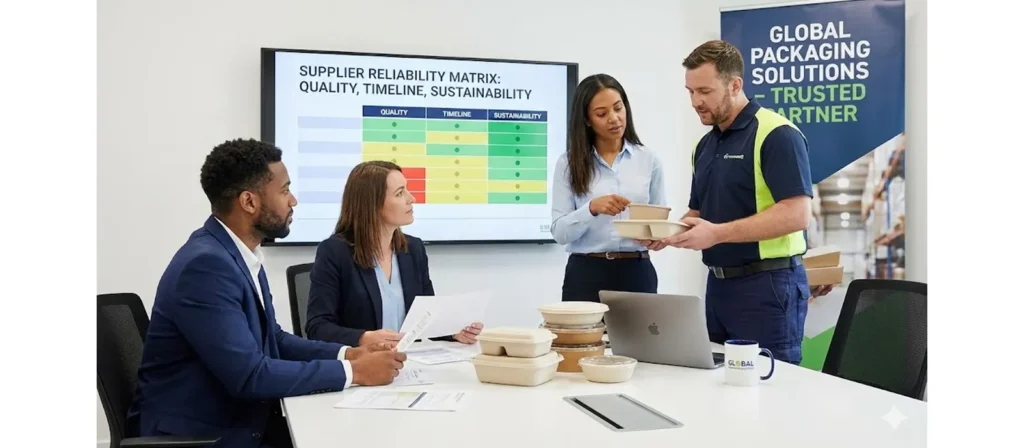
A reliable supplier offers stable quality, consistent stock, and clear communication. When choosing a partner, buyers can look for evidence of manufacturing control, compliance certificates, material testing, and product traceability. A strong supplier should provide technical support and samples so buyers can test containers with real menu items before placing a large order.
Consider lead time, packaging and labeling, minimum order quantity, and after sales service. It is beneficial when the supplier can customize printing, design, or size for branding needs. Reliable supply allows the food business to focus on operations rather than worrying about shortages or performance issues. A good supplier relationship is a long term asset for any business that relies on packaging.
Million Pack works as a long term packaging partner for many food businesses. Our factory specializes in disposable food packaging and supports customers from sample development to bulk production. We offer stable supply, competitive wholesale pricing, and flexible customization options. This allows clients to focus on running their business while we take care of packaging quality and logistics.
6. Consider Function and Design
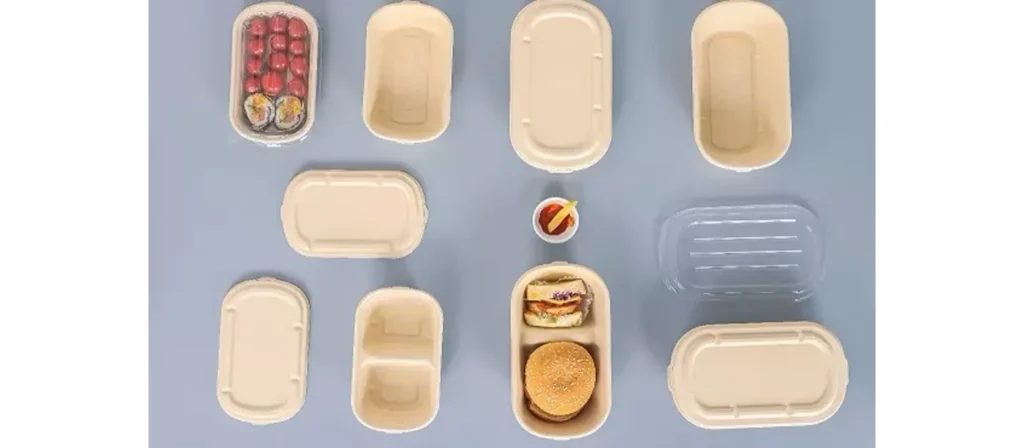
Function and design are closely linked because packaging needs to be practical during preparation, transport, and consumption. Good design helps staff fill containers quickly, close lids securely, and stack items without damage. A strong structure prevents bending or leaking, especially for hot and oily dishes. Lids are equally important. Snap-fit or vented lids can manage steam and prevent pressure from building up, which helps keep food fresh during delivery.
Design also affects the customer experience. A well-shaped container presents food neatly and makes it easy to eat on the go. Simple features like a wider opening, sturdy sidewalls, or secure corners make a noticeable difference.
Especially in the delivery and takeout era, your packaging is often the first impression a customer has of your food. Whether you’re a central kitchen serving corporate clients or a chain of restaurants expanding into new markets, consistent and attractive presentation builds trust and repeat business.
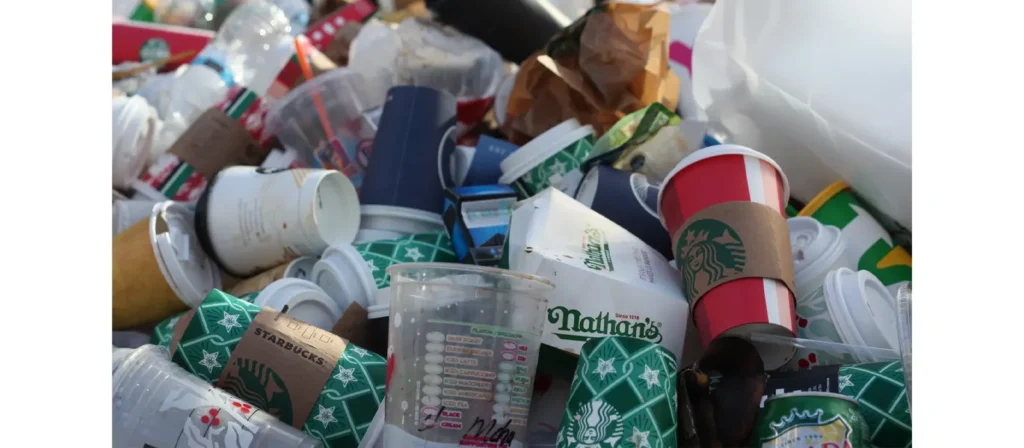
7. Environmental Impact
The global food packaging industry is under increasing scrutiny for its environmental impact. From plastic bans to consumer-led boycotts, the pressure to adopt sustainable packaging practices is no longer optional. This is especially true for wholesalers who serve multinational clients or export to regions with strict environmental regulations.
Global Trends in Packaging Regulations
Several regions have introduced packaging-specific legislation, including:
- EU Single-Use Plastics Directive: Bans certain plastic items, requires clear labeling on compostability and recyclability.
- India’s ban on single-use plastics: Prohibits polystyrene and thin plastic containers.
- California and New York state laws: Restrict expanded polystyrene foam, promote compostable alternatives.
- China’s national plastic policy: Gradual elimination of non-degradable single-use plastics.
Wholesalers serving international markets must stay ahead of these changes to avoid loss of compliance and stranded inventory.
Businesses that adopt sustainable packaging often see positive reactions from customers and gain an advantage in competitive markets. It is important to choose products that balance sustainability with performance because environmentally friendly options should still be strong enough for real use.

8. Brand Customization
Packaging is part of brand communication. Custom printing, labels, and colors create a consistent identity and help customers remember where the food came from. Even simple branding such as a logo, color scheme, or short message can elevate presentation and build trust. Branded containers are especially useful for delivery services and events because they stand out visually.
When planning customization, businesses should consider minimum order quantities, lead time, and whether the supplier supports multi-color printing. A practical approach is to customize a few core sizes that represent the majority of sales. This keeps cost manageable while ensuring that most meals leave the kitchen in branded packaging. Durable printing and food-safe inks are essential to protect quality and safety.

9. Compliance and Safety
No matter how attractive or cost-effective a food container might be, it’s worthless if it fails to meet safety standards.
Food-Grade Certification
All food packaging must be certified food-safe by relevant authorities. Common international certifications include:
- FDA (U.S. Food and Drug Administration): Covers migration limits and acceptable materials.
- EFSA (European Food Safety Authority): Provides guidelines on food contact materials (FCMs).
- CFIA (Canadian Food Inspection Agency) and equivalents in other countries.
Verify supplier documentation, especially for plastic, coated paperboard, or imported biodegradable materials. Food-grade inks and glues used in printed packaging also require verification.
Heat and Chemical Safety
Containers used for heating food, especially in microwaves or ovens, must be specially tested to ensure they do not leak harmful chemicals or deform at high temperatures. Please pay special attention to the following points:
- Microwave-safe symbols
- Oven-safe certification
- Migration testing reports for BPA, phthalates, heavy metals
Labeling and Traceability
Many regions now require labeling on packaging to inform consumers about:
- Recyclability
- Compostability
- Disposal instructions
- Origin of materials
FAQs
- Are all plastic disposable food containers unsafe?
Not necessarily. Some plastics, such as polypropylene (PP) or certain PET containers, are relatively safe if used properly (e.g., avoiding overheating) and are food-grade certified. - What should I check if I plan to reheat food inside the container?
Confirm that the container is labeled microwave- or oven-safe, and made of heat‑resistant, food‑safe material (e.g., PP plastic or aluminum intended for reheating). Avoid using ordinary polystyrene foam or coated paper containers, which can deform or leach chemicals under heat. - What should I consider before adding brand customization to my containers?
Brand customization works best when applied to high volume items. Before customizing, evaluate minimum order quantity, printing method, color durability, and lead time. Also consider how branding aligns with your broader marketing strategy. High quality printing strengthens brand recognition, especially in delivery-heavy markets. Testing printed samples ensures color accuracy and material compatibility. - What are signs of a reliable wholesale food packaging supplier?
Reliable suppliers demonstrate consistent manufacturing quality, transparent communication, and predictable lead times. They provide test reports, offer samples, maintain product traceability, and support customization requests. Strong suppliers also manage inventory well so clients do not face unexpected shortages. Choosing the right supplier reduces operational disruptions and ensures consistent packaging performance. - What are the common mistakes businesses make when selecting disposable food containers?
Common mistakes include choosing containers based only on price, not considering the long-term cost, and failing to test them under real-world conditions. It’s also easy to overlook the importance of customer experience—containers that are difficult to open, leak, or don’t fit the food properly can damage your brand’s reputation. Another mistake is not aligning packaging material with local waste management practices. - Should I prioritize cost over sustainability when selecting disposable food containers?
While cost is always a factor, sustainability is becoming increasingly important for businesses that want to align with customer values and stay ahead of regulations. Sustainable packaging options, such as recyclable, compostable, or bio-based materials, may be slightly more expensive upfront but can reduce waste and improve brand perception in the long run. - Is it worth customizing food containers with my brand logo?
Yes, especially at scale. Custom-branded containers enhance customer perception, promote brand consistency, and can encourage social sharing. Many suppliers offer affordable printing options for bulk orders, with opportunities for seasonal promotions or QR code integration. - Which disposable food container is best for international shipping or exports?
Choose durable, stackable containers that meet international safety and labeling standards. Avoid materials restricted in the destination country (e.g., polystyrene in the EU). Bagasse or lined paperboard containers often perform well across diverse regulatory environments.
Conclusion
Choosing the right disposable food container is not about finding a “perfect” box that solves every problem. It is about making informed trade-offs: between cost and presentation, between convenience and sustainability, between innovation and reliability.
For most businesses, the best approach involves:
- Understanding the basic types and materials of disposable food containers.
- Mapping your menu and operational realities before ordering.
- Selecting materials that are safe, suitable for your temperatures, and aligned with customer expectations.
- Choosing container sizes that match your portions and stacking needs.
- Considering who your customers are, how they eat, and what they care about.
- Evaluating the total cost of ownership rather than just the unit price.
- Partnering with suppliers who are transparent, responsive, and forward-looking.
If you treat packaging as a strategic decision rather than a last-minute purchase, your disposable food containers will quietly support everything you are trying to achieve: consistent quality, strong branding, better sustainability, and a smoother operation.