What is a microwave safe symbol?
The microwave safe symbol is a visual indicator that tells you a product has been designed for use in a microwave. It’s commonly found on food containers, cookware, and packaging made for reheating or cooking. The symbol is typically printed, embossed, or molded onto the bottom of the item, allowing users to quickly identify whether it’s microwave-ready.
This symbol exists to simplify decision-making in the kitchen. Rather than second-guessing whether a container might melt, leach chemicals, or become damaged under microwave heat, the symbol offers immediate clarity. It reflects that the product meets certain durability and safety standards for use with microwave energy.
While it’s most often seen on plastic or glass containers, the presence of the microwave safe symbol can also appear on ceramic ware and even some types of packaging. It has become a universal shorthand in food safety and product design, a quick visual cue that supports both convenience and confidence when heating food.
The Most Common Microwave Safe Symbol
Three Wavy Lines Alone
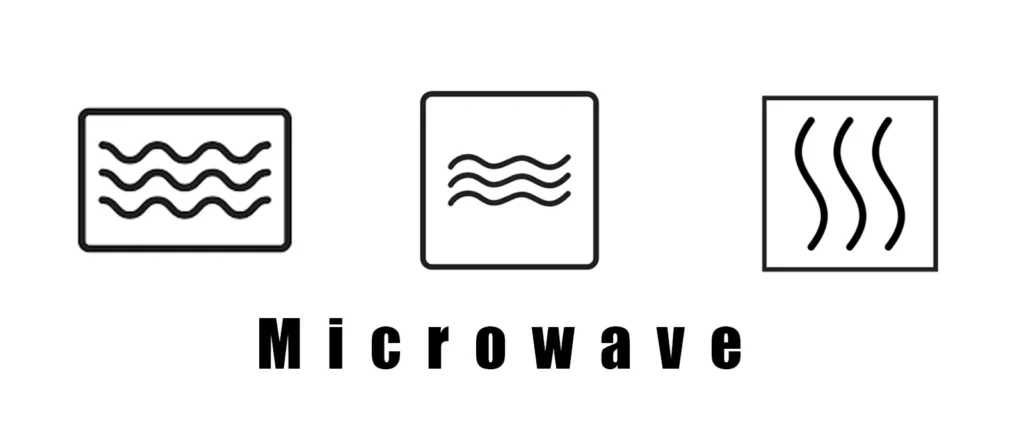
This is the most widely used microwave safe symbol. The three horizontal wavy lines represent microwave energy. If you see this on the bottom of a container, it generally means the product can be safely used in a microwave under normal heating conditions.
Box with Wavy Lines Inside
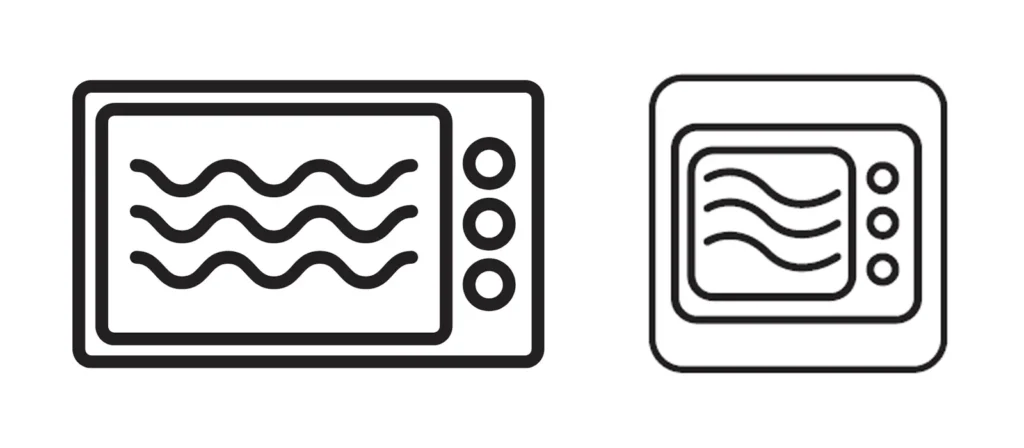
This version features a square or rectangle, representing a microwave oven, with wavy lines inside. It’s common on packaging labels and emphasizes that the container is built to withstand microwave heating.
Bowl with Waves Above It
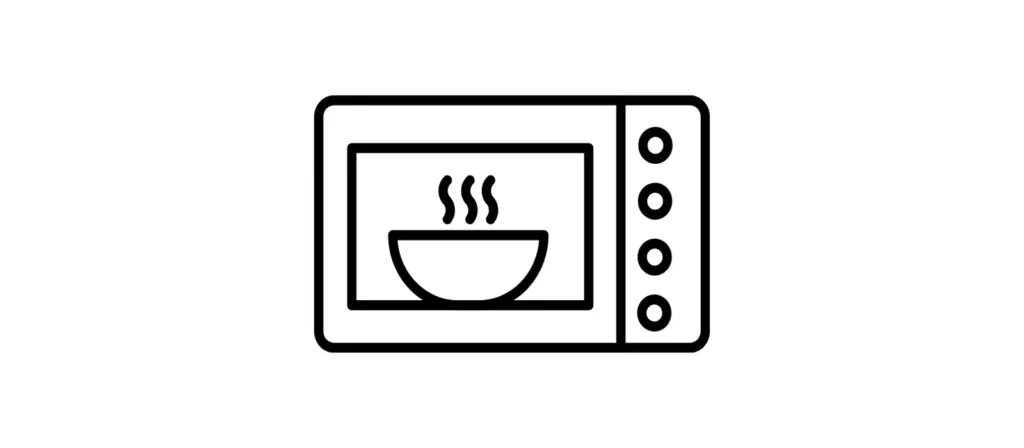
This symbol depicts a bowl with rising wavy lines, suggesting food being heated. It’s a clear, intuitive visual used to indicate that the dish or container is microwave safe.
Container or Tray Base with Curved Waves Inside
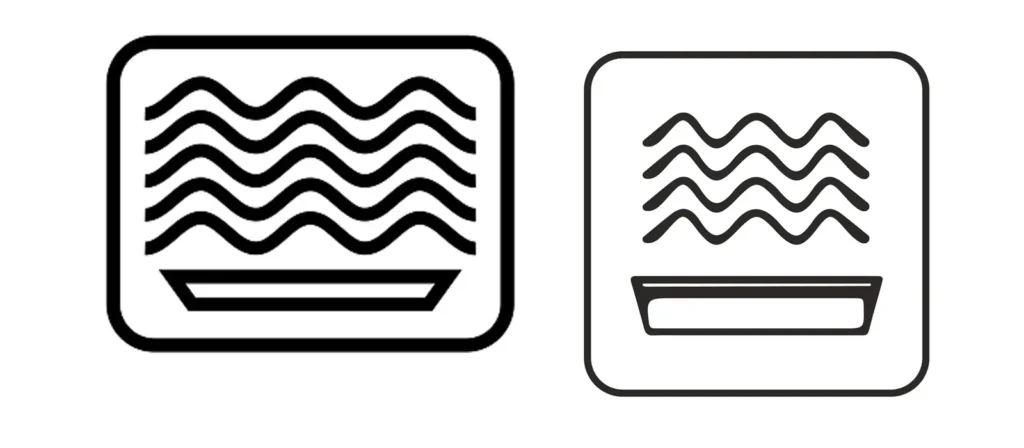
This variation shows a base-like shape, often representing a tray or container bottom, with curved waves rising inside it.
Common Variations of the Microwave Safe Symbol
Text-Based ‘Microwave Safe’ with Logo
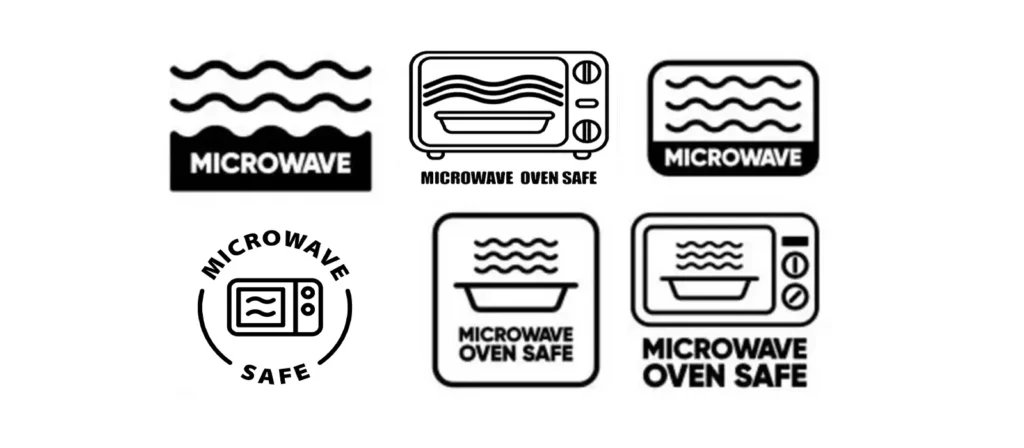
This variation features the words “Microwave Safe” (or similar) combined with a simple icon often wavy lines or a micro‑wave oven outline. It appears on packaging and containers when the manufacturer wants to make the message very clear. It signals that under standard microwave conditions the product has been tested or designed for microwave use.
Crossed-Out Microwave or Waves
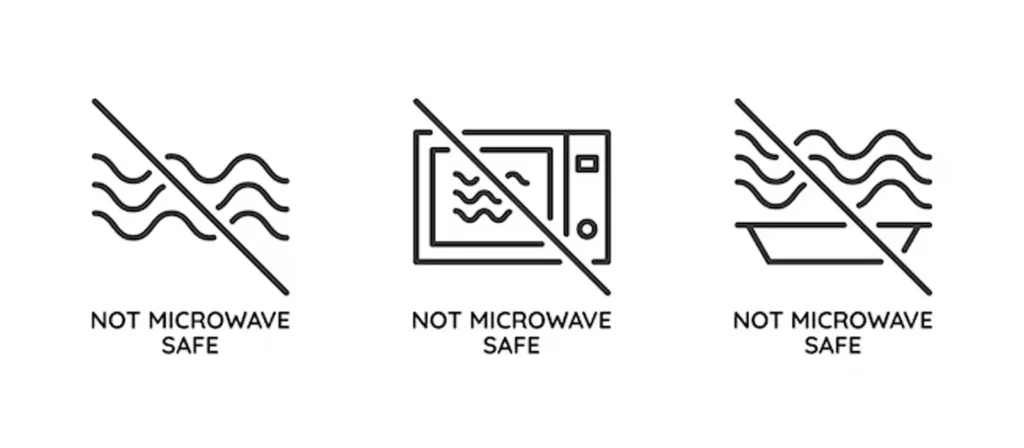
This variation of the symbol communicates the opposite of microwave safety. It typically features a microwave icon or a set of wavy lines with a bold diagonal slash running through it. This graphic is used to indicate that the item should not be used in a microwave under any circumstances.
Warning: These Packaging Materials Are Not Microwave Safe
Metal Containers and Foil Packaging
According to the Food and Drug Administration (FDA),Metal should never be used in a microwave and that includes all forms such as aluminum foil, metal trays, or containers with metallic trim. When metal is exposed to microwave energy, it can reflect the waves rather than absorb them. This creates sparks, heat buildup and in some cases may even lead to a fire.
Some people mistakenly assume that thin layers of foil are safe, especially when covering food partially. However, even small amounts of foil can cause arcing, damage the microwave’s magnetron and potentially lead to an electrical hazard. Additionally, metal containers prevent food from heating evenly as the microwaves are blocked by the reflective surface.
Products like takeout containers with metal handles or metallic labels fall into this category as well. Even if the container is paper-based or plastic, the presence of any metal makes it unsuitable for microwave use. The risks outweigh any perceived convenience.
In short, if you see any sign of metal no matter how small do not put it in the microwave. Always transfer your food to a microwave safe dish before heating.
Styrofoam and Polystyrene Food Trays
Styrofoam containers, often made from expanded polystyrene, are widely used in packaging because they’re lightweight, inexpensive, and disposable. They’re commonly seen in takeout clamshell boxes, instant noodle cups and meat trays. But when it comes to microwave use, they are far from ideal even if some carry a microwave safe label.
Polystyrene is not naturally heat resistant. It can warp, soften or even melt when exposed to microwave temperatures. During this process, chemicals in the foam may leach into your food especially when heating items that are high in fat, oil or moisture. These conditions accelerate heat absorption putting more strain on the material.
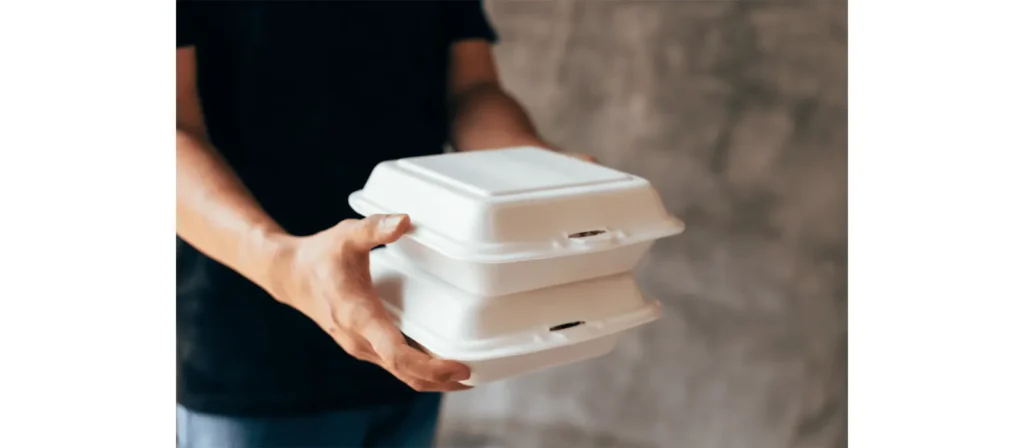
What many people don’t realize is that microwave safe testing doesn’t guarantee zero chemical migration. It simply means the product falls below a defined threshold considered acceptable. But that doesn’t mean it’s risk free. If you’re reheating food daily or for children, even low level exposure to substances like styrene can raise valid health concerns.
So while you might see a microwave safe label on some Styrofoam products, the better choice is to transfer your food to a container made of glass or ceramic. These materials are more reliable, stable and better suited for safe microwave heating.
Disposable Containers with Printed Ink or Coatings
Some disposable containers may look harmless on the outside but can carry hidden risks when used in a microwave. One of the most common problems comes from surface printing and internal coatings, both of which are frequently applied to enhance appearance, resist grease, or preserve structure. But these additions aren’t always designed to handle heat.
Printed inks can break down when exposed to high temperatures, especially if they were not formulated for microwave use. This can lead to chemical residues transferring to your food. In some cases, the ink may visibly smear or cause odors, but the more serious issue is what you can’t see volatile compounds that could affect your health over time.
Coatings are another concern. Many paper-based containers are treated with water-resistant or oil-repellent layers that give them a shiny finish or a waxy feel. These coatings can melt or leach substances into your food when microwaved, especially if the container wasn’t designed for heat exposure.
Paper Bags and Recycled Paper Packaging
Paper may seem like a safe and harmless material for microwaving but not all paper products are created equal. Plain white paper towels or microwave safe parchment paper can be suitable for short heating tasks but other paper-based items like brown paper bags or recycled paper containers can pose real risks in the microwave.
Brown paper bags in particular are not designed to withstand microwave heat. They can easily ignite if overheated especially if they’re empty or contain dry food. Unlike commercial microwave popcorn bags which are manufactured with specific heat resistant coatings and vents regular paper bags lack those safety features. The uneven heating can lead to hot spots scorching and in rare cases fire.
Recycled paper packaging may also include more than just pulp. It can contain residual inks adhesives or other contaminants from previous use. These substances aren’t always visible but can be activated under high temperatures potentially leaching into your food or emitting harmful fumes.
If a paper product doesn’t explicitly state that it is microwave safe it’s best not to assume. When dealing with recycled or unverified materials err on the side of caution. Heating food should never involve a compromise on safety or health.
Conclusion
The microwave safe symbol is a useful guide but it shouldn’t be your only consideration. Some materials can still pose risks even if they carry the symbol. When heating food choosing the right container matters just as much as spotting the right icon.
For better safety and fewer long term concerns glass and ceramic are often the best choices. Avoid using materials like metal styrofoam coated paper or questionable plastics especially if they lack clear labeling.When in doubt switch to something you trust. A small habit like that can protect both your health and your microwave.
With Millionpack, safety and sustainability go hand in hand. Each product is thoughtfully designed with trusted materials, ethical sourcing, and your long-term well-being in mind.