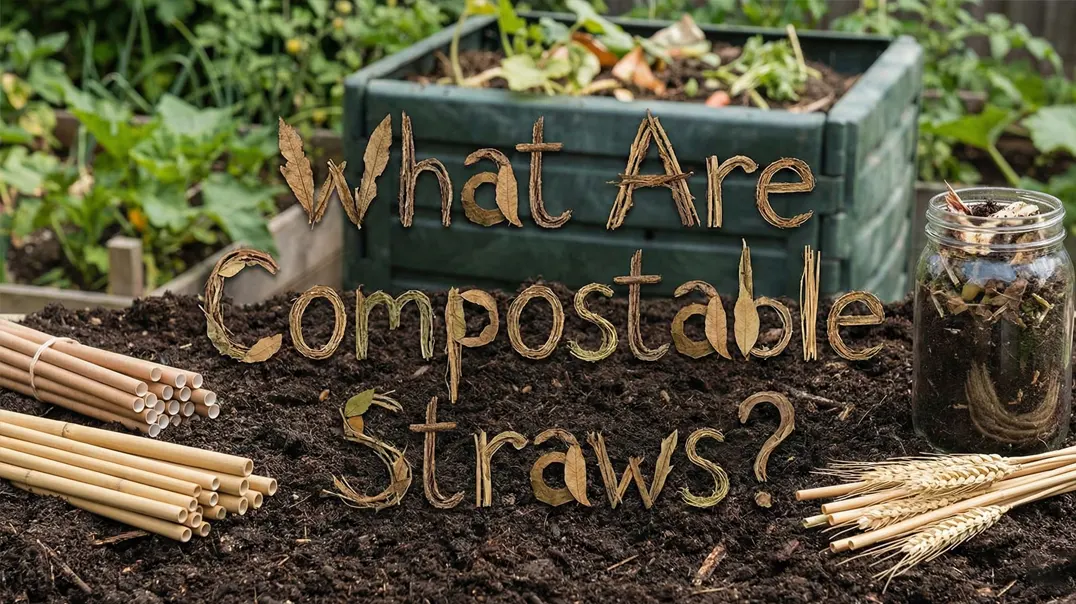
Compostable straws are drinking straws made from plant-based materials that fully break down into natural substances under composting conditions, leaving no harmful residue.
They are defined by the following characteristics:
- Made from renewable materials such as paper, PLA derived from corn starch, or sugarcane fiber
- Designed to decompose into water, carbon dioxide, and organic matter
- Certified to meet compostability standards such as ASTM D6400 or EN 13432
- Break down within a specific timeframe under industrial or approved composting systems
- Do not leave toxic or microplastic residues after decomposition
Because of growing restrictions on single-use plastics, compostable straws are widely used in restaurants, cafés, catering services, and environmentally responsible food packaging solutions.
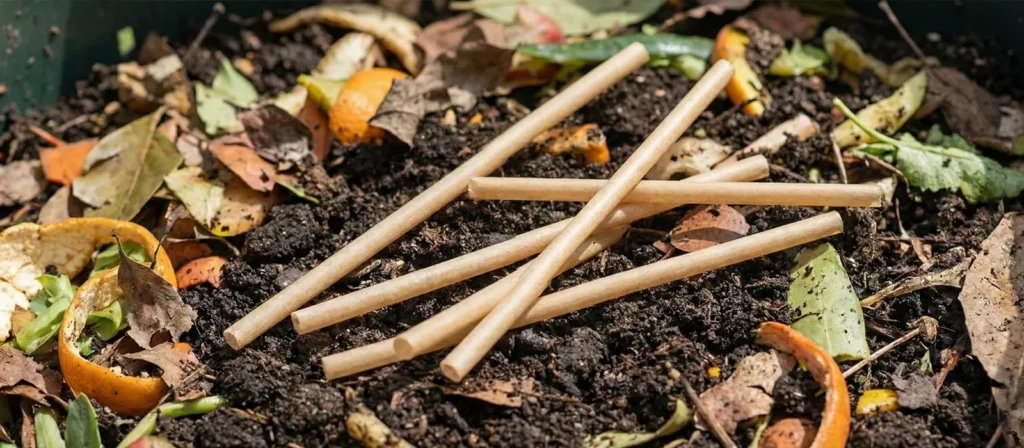
What Are Compostable Straws, Really?
Compostable vs Biodegradable vs “Plant-Based”. These three terms are often mixed up on packaging, sometimes intentionally:
- Biodegradable simply means microorganisms can break the material down at some point. It doesn’t say how long it will take, at what temperature, or what’s left behind. A “biodegradable” straw might technically break down over many years in a warm, moist environment, which is not very helpful in real-world conditions.
- Plant-based describes where the carbon comes from (corn, sugarcane, etc.), not what happens at the end of life. A plant-based straw can still behave like traditional plastic if it’s not engineered for compostability.
- Compostable is the most specific claim. For packaging, it usually means the product:
- Disintegrates into small pieces in compost within a defined time
- Biodegrades into CO₂, water, and biomass
- Leaves no toxic residues
- Passes recognized standards such as EN 13432, ASTM D6400, or equivalent, often verified by third-party certification.
In other words, compostable straws are a subset of straws that are engineered and certified to perform well in composting systems.
What Are Compostable Straws Made Of?
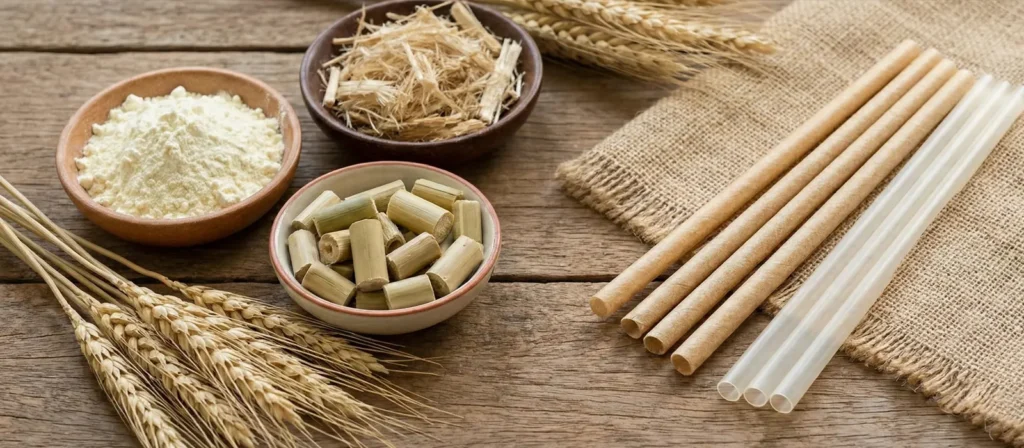
Compostable straws are not a single product. They are a family of materials that behave differently in production, in drinks and in composting systems. Understanding what they are made of is the fastest way to avoid disappointment and pick the right straw for your drinks.
1. PLA Straws (polylactic acid)
- Source: Usually derived from corn starch or sugarcane sugar, and classified as a bio-based plastic.
- Features: The appearance is very similar to traditional plastic straws, with high transparency and a hand feel close to plastic. They perform well in cold drinks.
- Key point: Most PLA straws are only compostable under industrial composting conditions (high temperature, controlled humidity, sufficient microorganisms). In home composting and in the natural environment, they degrade very slowly.
2. PHA Straws
- Source: PHA is a family of polymers produced by microorganisms fermenting renewable raw materials such as vegetable oils.
- Features: They usually have better biodegradability in a wider range of environments, including some marine environments and some home composting environments (depending on the specific formulation and certification).
- Drawback: At present, the cost is relatively high and supply is relatively limited.
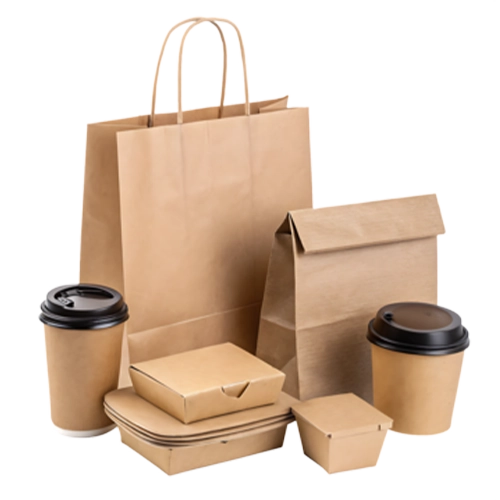
3. Paper Straws
- Source: Pulp, usually used together with compostable water-based glue or bio-based coatings.
- Features: The most familiar form of compostable straws for the general public. They can be printed with branding, offer rich colours, and are easy to degrade in home and industrial composting, as long as there is no additional plastic coating.
- Pain point: If the production process is not up to standard, they can easily become “soggy” and “fall apart after just a few sips”, which negatively affects the user experience.
4. Other Plant-Fiber Straws (wheat stalks, bamboo fiber, sugarcane bagasse, etc.)
- Most of them make use of renewable agricultural waste, with a strong natural feel and a “raw” or “unprocessed” look.
- Food safety and stability depend on the processing technology; some products can be reused several times.
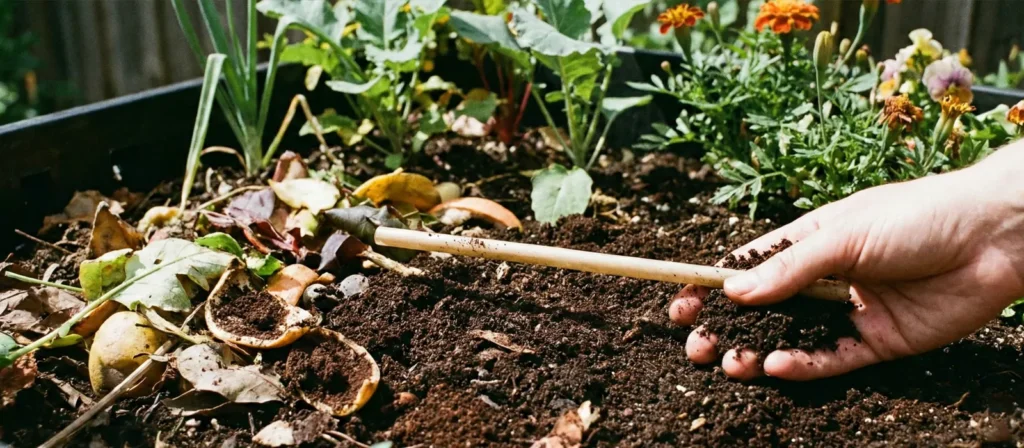
Benefits of Compostable Straws
The main reason businesses and individuals switch to compostable straws is not that they are trendy, but that they can help solve several real environmental and customer-experience problems at once.
- Reduced Plastic Pollution
Compostable straws are made to break down instead of staying in the environment for decades like traditional plastic straws. When they are sent to proper composting facilities, they turn into compost instead of long-lasting waste. - Microplastic-Free
Unlike regular plastic straws that slowly turn into tiny plastic pieces, good compostable straws are designed to fully break down into natural materials. They do not leave behind microplastics when composted correctly. - Lower Carbon Footprint
Most compostable straws are made from plant-based or agricultural by-product materials. These plants absorb CO₂ while growing, and using them can reduce reliance on fossil fuels compared with traditional plastic. - Safe and Hygienic
Quality compostable straws are produced to food-contact standards and are used once, then discarded, just like normal disposable straws. This keeps usage hygienic while offering a more environmentally responsible option.
How Long Does It Take for Compostable Straws to Decompose?
There is no single exact number, but you can think in simple ranges:
- In industrial composting facilities:
Most certified compostable straws break down in a few weeks to a few months, depending on the material and the facility’s process. - In home compost:
Paper and plant-fiber straws can decompose within a few months in a well-managed home compost pile. Many compostable plastic straws (like PLA) break down much more slowly and may not fully decompose in home compost. - In landfill or general waste:
Decomposition is very slow because there is little oxygen and poor conditions for microbes. Even compostable straws can take many years to break down. - If littered in the environment:
They will eventually degrade, but not quickly or predictably. Compostable straws should still be collected and sent to the correct composting or waste system, not thrown into nature.
Differences Between Biodegradable and Compostable Straws
Here is a simple comparison to clarify the two terms. This is important, because many misleading products rely on this confusion.
| Aspect | Biodegradable straws | Compostable straws |
|---|---|---|
| Basic definition | Can be broken down by microorganisms at some point in the future | Designed to break down into natural substances under specific composting conditions |
| Timeframe | Often undefined; may take years or longer | Timeframe is tested and limited by a standard (usually months, not decades) |
| Conditions required | Not clearly specified; any natural environment is often implied | Clear requirements such as temperature, moisture, oxygen and composting system |
| Final residues | May leave microplastics or unknown residues | Must break down without leaving harmful residues; compost must be safe for plants |
| Standards and certification | Often not linked to independent standards | Typically backed by recognised compostability standards and third-party certification |
| Disposal recommendation | Usually vague; often marketed as “just throw away” | Should be directed into a defined composting stream (industrial or home, if suitable) |
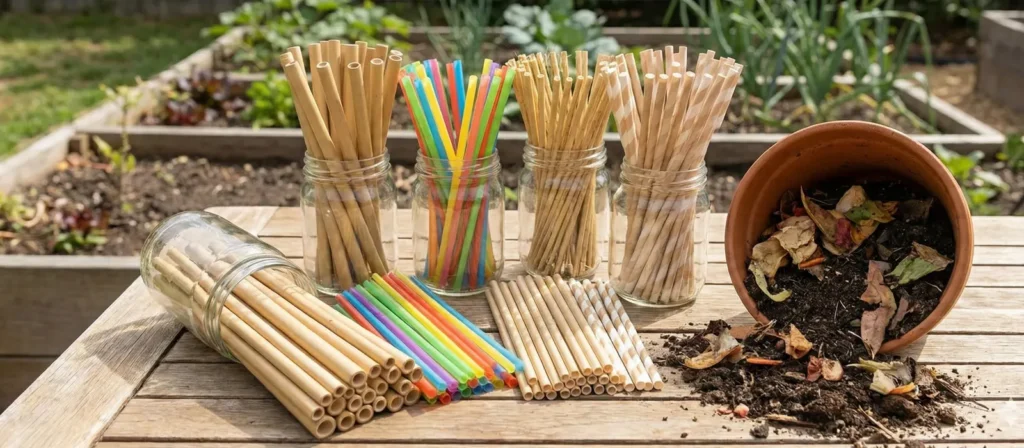
What Are the Different Types of Compostable Straws?
From a user’s perspective, compostable straws are not just about material; they also come in different product formats to suit different drinks and venues. Here are some of the main straw types you will see on the market.
1. Standard Straight Drink Straws
- The familiar, medium-diameter straws used for water, soft drinks, juices and cocktails.
- Available in paper, bagasse fibre, PLA, PHA, bamboo and other plant-based blends.
- Often sold in both wrapped and unwrapped versions.
2. Jumbo and Smoothie Straws
- Wider diameter for smoothies, milkshakes and drinks with pulp or small fruit pieces.
- Typically made from thicker paper, sturdy bagasse fibre or stronger bioplastics such as PHA.
- Needs good rigidity to cope with viscous drinks without collapsing.
3. Bubble Tea (Boba) Straws
- Extra-wide, sometimes with a slanted or pointed tip to pierce a sealed lid.
- Designed to allow tapioca pearls or popping boba to pass through easily.
- Often produced from reinforced paper or robust compostable plastics to avoid bending or splitting.
4. Cocktail and Stirrer Straws
- Shorter straws or sipper sticks used in small glasses or for mixed drinks.
- Available in paper, bamboo, agave blends and bioplastics.
- Sometimes chosen more for appearance and brand feel than for functional necessity.
5. Wrapped Compostable Straws
- Individual paper wrapping around each straw for added hygiene, especially in hotels, airlines and healthcare settings.
- The wrapper itself should also be made from compostable paper or film to keep the overall product consistent.
6. Flexible and Bendable Compostable Straws
- Designed with a bendable segment similar to traditional flexible plastic straws.
- More complex to manufacture in fully compostable materials, but increasingly available for hospitals and care settings where flexibility helps with accessibility.
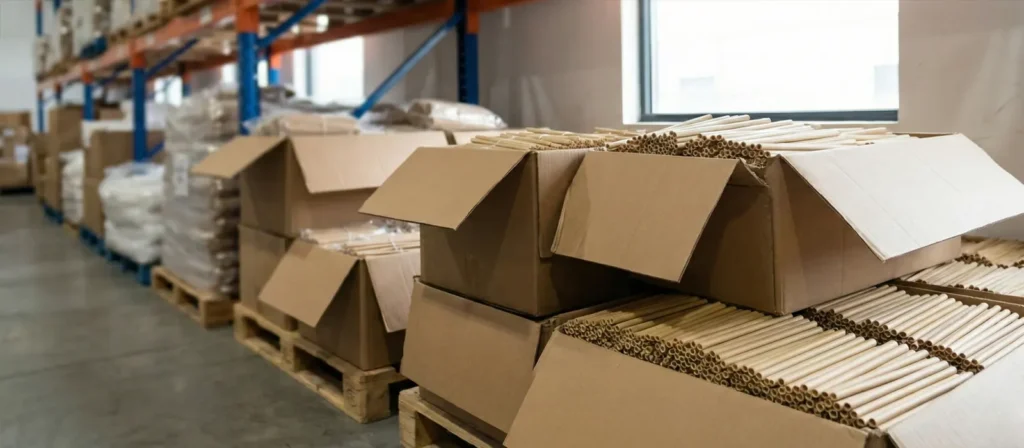
Buying Compostable Straws in Bulk
When you buy compostable straws in bulk, a few clear checks will save you a lot of trouble later. You do not need a long checklist, just the essentials.
Key Points to Check
- Make sure the straws are certified compostable
Ask which standard they meet (for example, industrial compost or home compost) and request the certificate, not just a claim on the box. - Confirm they fit your waste system
If your used straws go with food waste to an industrial compost facility, choose industrially compostable products. If everything currently goes to landfill, focus on reducing use and choosing simple, fibre-based options like paper or bagasse. - Match the straw to your drinks
For water and soft drinks, a standard paper or bagasse straw is usually enough. For smoothies or bubble tea, you need stronger and wider straws that do not collapse quickly. - Test before a big order
Always try samples in real service for a few days. Check if the straws stay firm long enough, feel comfortable, and do not create complaints.
Why Choose Million Pack
million pack keeps things straightforward for bulk buyers:
- We offer certified compostable straws and can provide the documents you need.
- Our products are designed for real use in cafés, restaurants and hotels, not just for show in a catalogue.
- We help you choose the right type based on your drinks and your waste situation.
- You can test samples first, then place a bulk order only when you are confident the straws work for your business.
In short, when you buy compostable straws in bulk from million pack, you are not guessing. You know what you are getting, how to use it, and how to explain it to your team and your customers.
FAQs
- Are compostable straws always better than paper straws?
Not always. Paper straws are a type of compostable straw when made with suitable inks and adhesives. In some contexts, a high-quality paper straw with strong composting performance may be better than a bioplastic straw that ends up in landfill. - Can compostable straws go into the recycling bin?
Generally, no. Compostable plastics like PLA or PHA are not compatible with standard plastic recycling streams and can contaminate them. They should go into the organics/compost bin if your facility accepts them, or into general waste if composting isn’t available. - Do compostable straws break down in the ocean?
They are not designed for marine environments. Even certified compostable straws require controlled compost conditions (temperature, oxygen, microbes) to break down properly. In cold, salty ocean water, they can still persist for a long time.