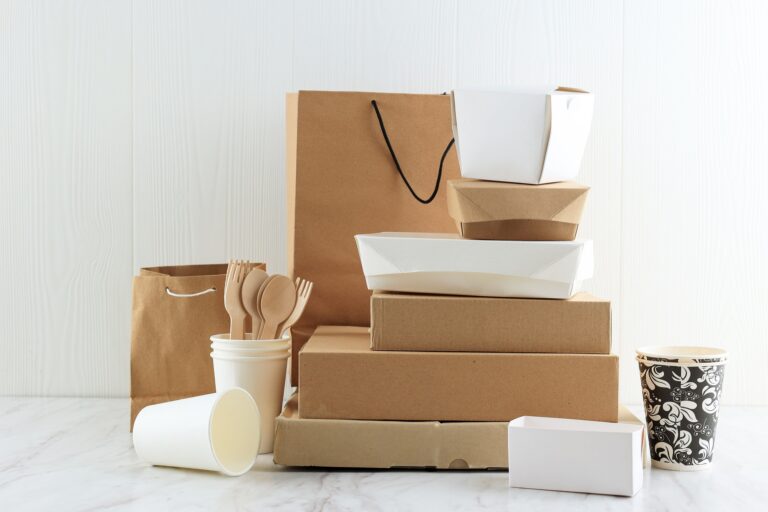
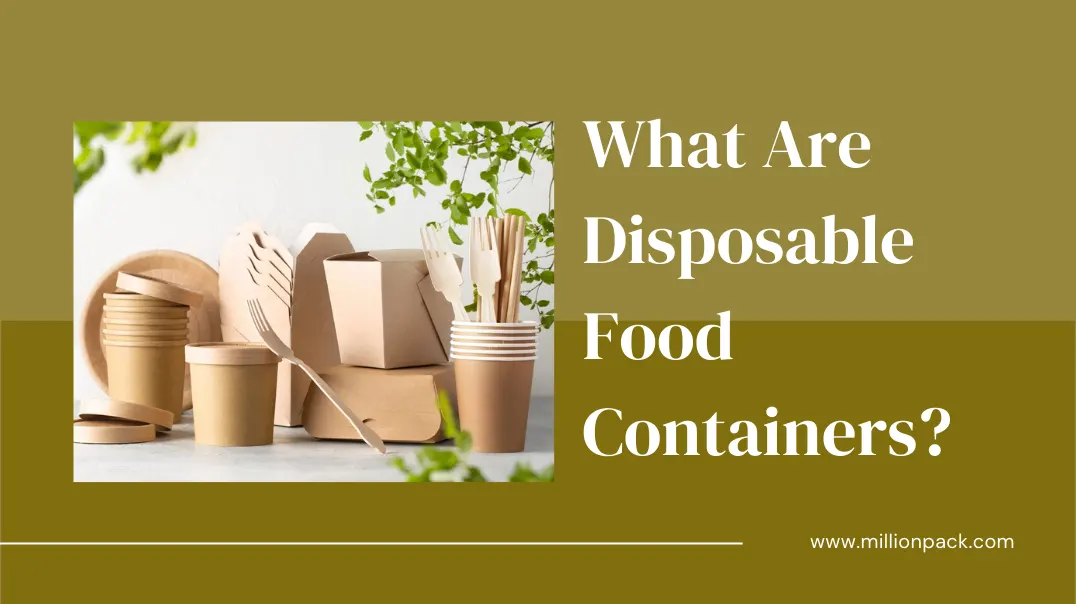
A disposable food container is a purpose built package intended for single use to store or transport food in a safe, hygienic, and convenient way. It covers a broad family of items, including paper bowls, takeaway boxes, plastic cups, and molded pulp trays, widely used in food service and delivery. These containers help protect freshness, maintain temperature, and enhance operational efficiency in food businesses.
As consumer demand for convenience continues to grow, disposable food containers have become standard in restaurants, bakeries, supermarkets, and quick service brands. They help reduce cross contamination risks, simplify service workflows, and meet the mobility needs of today’s food delivery economy.
Manufacturers use different materials, including paperboard, PET, PP, sugarcane bagasse, and PLA to balance strength, heat resistance, and sustainability. Each material suits different food types, from hot soups to fried meals or cold desserts.
In this article, you will learn the definition, functions, material options, common formats, and selection considerations that define today’s disposable food containers.
The Evolution of Disposable Food Containers
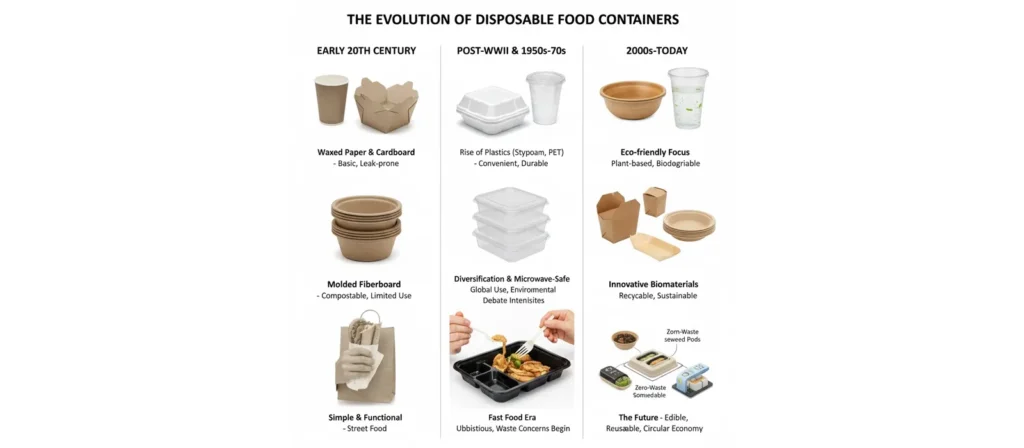
Disposable food containers have gradually developed alongside changes in food service models, hygiene standards, and consumer expectations. Early versions of single use packaging were simple paper wraps and lightweight tins used primarily for portability, but they lacked the barrier properties required to protect food quality. As takeaway and street food became more common, businesses needed packaging that could preserve temperature, prevent leakage, and maintain sanitation during transport.
In the mid twentieth century, advances in paperboard forming and plastic molding reshaped the industry. Paper cups, folding cartons, and thermoformed plastic containers created new possibilities for serving beverages, snacks, and full meals in a convenient single use format. These products supported emerging fast food chains and influenced the growth of modern delivery and catering systems. Their durability and low production cost made them a reliable option for high volume food operations.
In the 2000s, a shift began to emerge. Concerns over plastic pollution, landfill overloads, and marine debris prompted a reevaluation of disposable packaging. This has rekindled interest in biodegradable, compostable, and recyclable packaging, as well as reusable container systems.
Materials of Disposable Food Containers
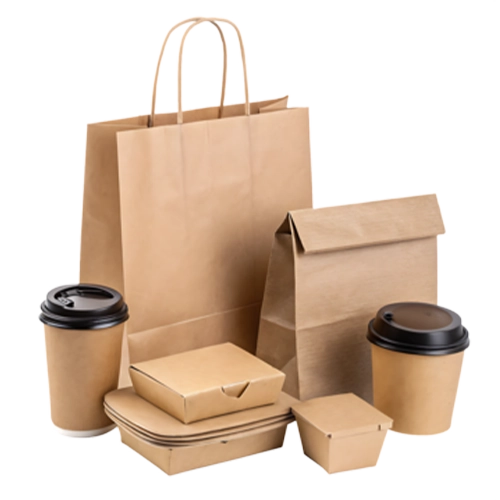
Disposable food containers can be made from several types of materials, each offering different strengths in terms of durability, heat resistance, barrier performance, environmental impact, and cost. Understanding these materials helps businesses match products with the specific requirements of their menu.
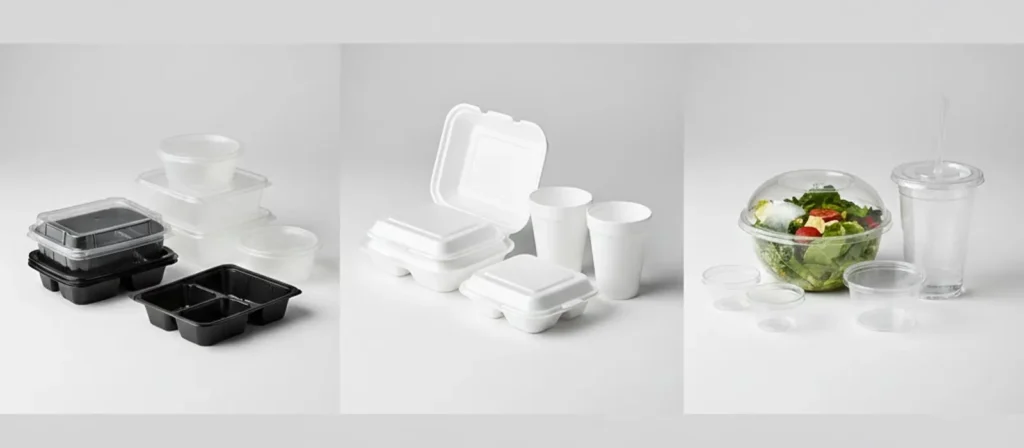
1. Plastic
- PET (Polyethylene Terephthalate): Clear, lightweight plastic commonly used for salad boxes and drink containers. Recyclable but only under clean, specific conditions.
- PP (Polypropylene): Microwave-safe and heat-resistant, used in hot food trays and lidded meal containers. Tough and reusable in some cases.
- PS (Polystyrene): Rigid or foamed plastic found in utensils and clear clamshells. Lightweight but rarely recycled and environmentally persistent.
Plastic offers durability and flexibility but poses challenges in terms of biodegradability and pollution, especially when contaminated by food residue.
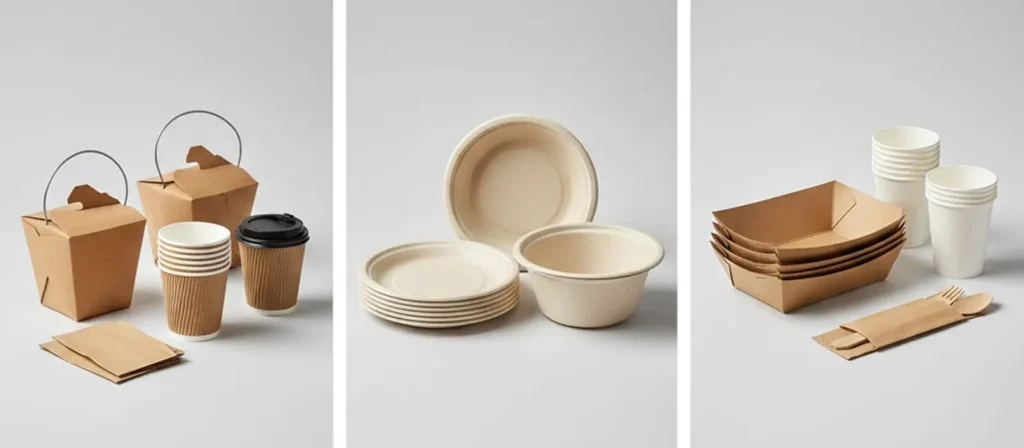
2. Paper and Cardboard
- Kraft Paper: Strong, uncoated brown paper ideal for wraps and eco-themed packaging. Biodegradable and recyclable when uncontaminated.
- Poly-Coated Paper: Paper lined with a thin plastic layer to resist moisture, used in cups and soup containers. Effective for liquids but difficult to recycle.
- Wax-Coated Paper: Paper treated with wax for grease resistance in bakery or fast food packaging. Not recyclable in most systems.
- Corrugated Cardboard: Used for pizza boxes and large trays. Sturdy and often recyclable if free of food or oil.
Paper-based containers are light, printable, and often perceived as eco-friendly, but coatings can compromise their recyclability and compostability.
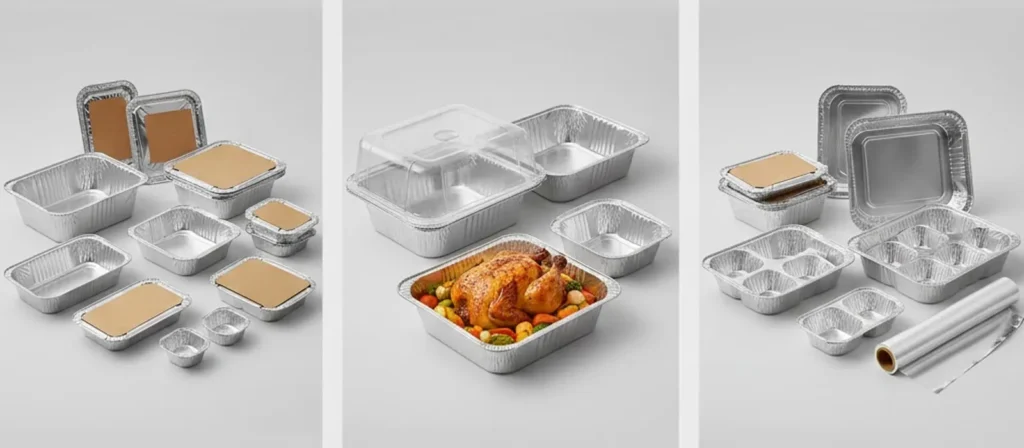
3. Aluminum
- Used in foil trays, takeout pans, and oven-ready meals. Excellent at retaining heat and maintaining structure.
- Fully recyclable and durable, but energy-intensive to produce and unsuitable for microwave use.
Aluminum is a practical option for hot food and reheating, though less favored for cold or delicate items due to its rigid structure and higher cost.
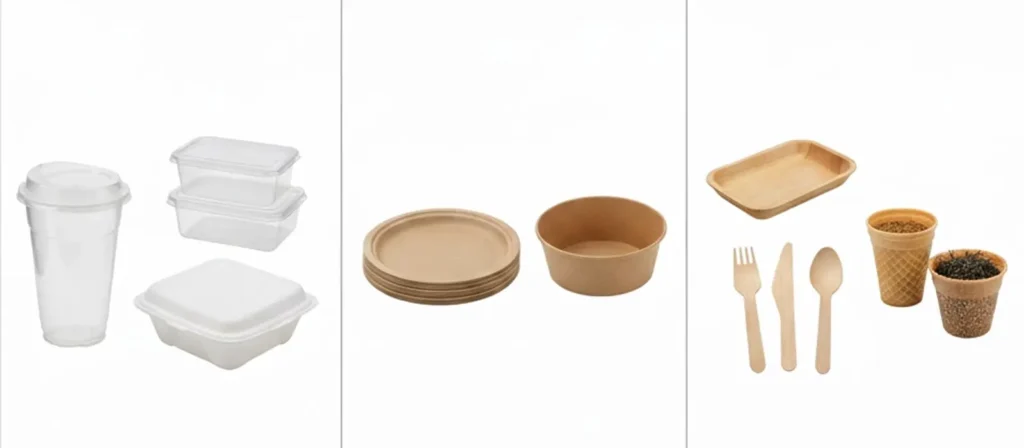
4. Bioplastics and Plant-Based Materials
- PLA (Polylactic Acid): A clear, plant-based plastic alternative used for cups, deli containers, and utensils. Compostable in industrial facilities but not in home composting.
- Bagasse: A by-product of sugarcane processing, molded into clamshells, bowls, and plates. Compostable, heat-resistant, and increasingly
used in eco-conscious packaging.
- Wheat Straw, Bamboo, or Palm Leaf: Molded or pressed into sturdy containers, plates, or cutlery. Naturally biodegradable and suitable for both hot and cold food.
These materials provide renewable alternatives to petroleum-based plastics, but their real-world compostability often depends on local waste infrastructure and proper sorting.
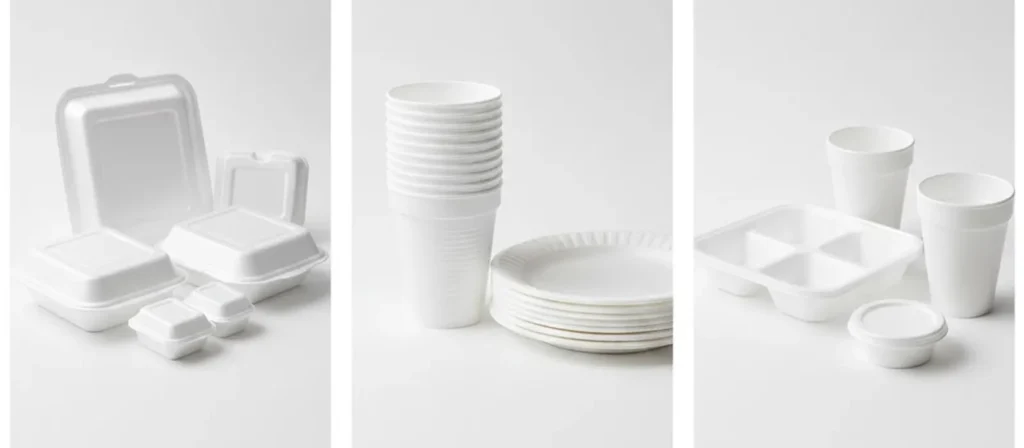
5. Foam (Expanded Polystyrene)
- Lightweight, insulating material used in clamshells, trays, and hot beverage cups.
- Extremely cheap to produce and provides excellent heat retention, but is non-biodegradable and nearly impossible to recycle in most waste systems.
Foam containers are increasingly restricted or banned in many regions due to their environmental impact and long decomposition time.
Comparison of Disposable Food Container Materials
| Varies by type; recyclable in many regions, but it depends on local facilities | Key Characteristics | Heat Resistance | Sustainability Profile | Typical Food Applications |
|---|---|---|---|---|
| Plastic (PET, PP) | Strong, durable, leak resistant; PET offers high clarity; PP suitable for hot foods and microwaving | PET works best for cold items; PP handles medium to high heat | Varies by type; recyclable in many regions but depends on local facilities | Salads, desserts, deli items, hot meals, delivery packaging |
| Paper and Cardboard | Lightweight, printable, cost effective; often coated for moisture and grease resistance | Suitable for warm foods; performance improves with PE or water based coatings | Available in recyclable, compostable, and FSC certified options | Fast food, bakery items, noodle boxes, takeaway meals |
| Aluminum | Rigid, strong, and excellent at retaining heat; oven safe | Very high heat tolerance including oven use | Fully recyclable when collected properly | Baked meals, roasted dishes, catering trays, meal prep |
| Bioplastics and Plant Based Materials (PLA, bagasse blends) | Made from renewable resources; clean natural appearance; good structural performance | PLA is suitable for cold foods; bagasse handles hot and cold dishes | Compostable under the right conditions; strong eco focused option | Cold drinks, salads, hot meals, eco friendly delivery |
| Foam (Expanded Polystyrene) | Lightweight, highly insulating, low cost | Works for hot and cold foods but melts under high heat | Poor sustainability profile; restricted in many regions | Coffee cups, takeaway boxes, budget food service items |
Types of Disposable Food Containers
Disposable food containers come in a wide range of formats designed to support different food service needs, portion sizes, and delivery requirements. Each type offers unique functional advantages based on its shape, closure system, and material.
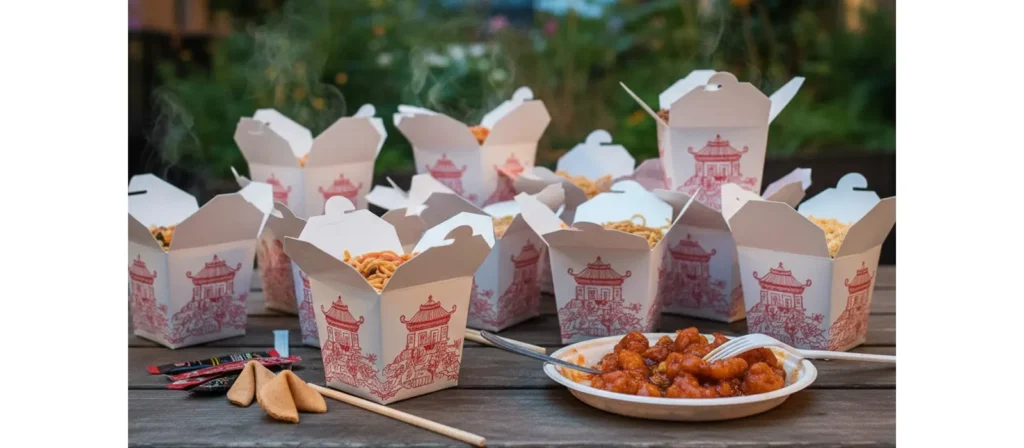
1. Takeout Boxes
Takeout boxes are versatile containers, often rectangular or square with foldable lids, designed for convenient food transportation. They’re made from materials like paperboard, plastic, or bagasse, and are commonly used in restaurants and delis.
Best For:
- Rice dishes
- Noodles
- Full meal combinations
Advantages:
- Stackable and compact
- Can include compartments for different foods
- Often microwave-safe and leak-resistant
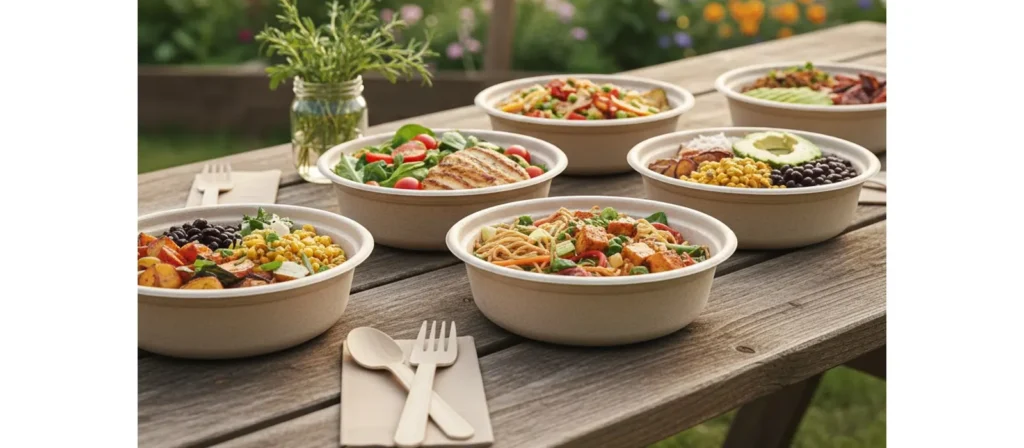
2. Compostable Bowls
These are round, durable containers made from plant-based materials such as bagasse or PLA. They serve as eco-friendly alternatives to plastic bowls and are used widely in health-conscious food service.
Best For:
- Soups
- Salads
- Pasta or grain bowls
Advantages:
- Compostable under industrial conditions
- Heat-resistant and moisture-tolerant
- Compatible with compostable lids for transport

3. Tray & Plate
Trays and plates are flat or compartmentalized containers made from plastic, pulp, or aluminum. They’re ideal for serving full meals with separate food items, especially in institutional settings.
Best For:
- Cafeteria meals
- Airline food service
- Microwave or oven-ready meals
Advantages:
- Keeps food items separate
- Good for meal portion control
- Stackable and easy to label
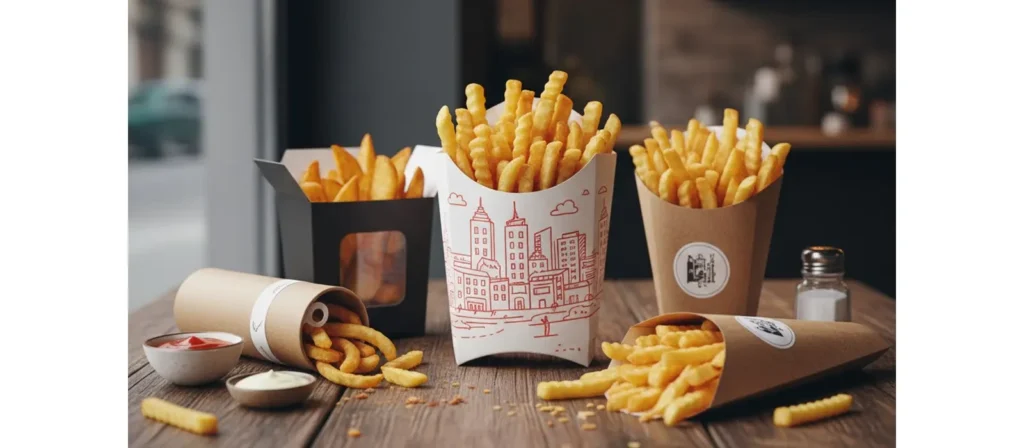
4. French Fries Packaging
These are open-top, scoop-style containers typically made of coated paperboard. They’re designed to hold fried foods without trapping too much moisture.
Best For:
- French fries
- Fried chicken bites
- Onion rings
Advantages:
- Allows airflow to keep food crisp
- Easy to hold and eat from
- Printable for branding
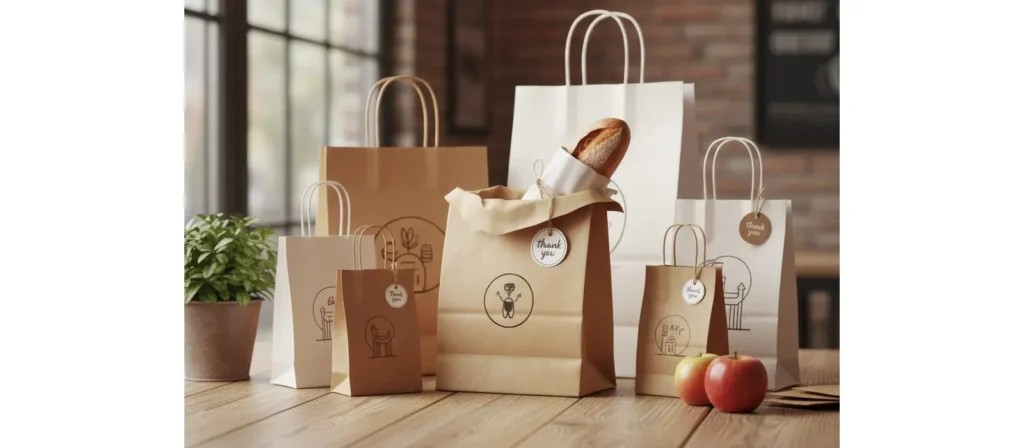
5. Paper Bags
Simple, foldable bags made from kraft or recycled paper, available in various sizes with or without handles. They are a staple in takeaway and delivery services.
Best For:
- Packing multiple small containers
- Baked goods
- Grab-and-go orders
Advantages:
- Recyclable and biodegradable
- Affordable and easy to store
- Printable for logos and marketing
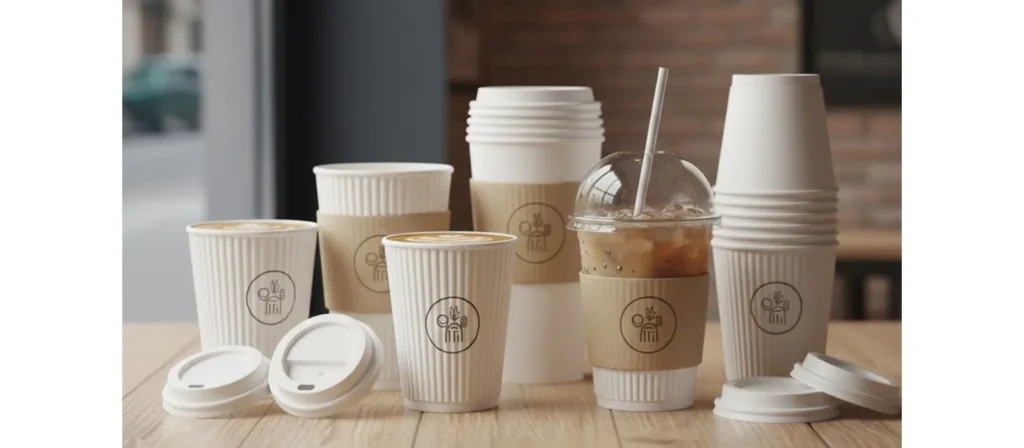
6. Cups & Lids
Disposable cups are used for hot and cold beverages and are typically made from paper (with a lining), PET, or PLA. Lids vary in design to accommodate different drinking styles and prevent spills.
Best For:
- Coffee and tea
- Iced beverages
- Takeout soups
Advantages:
- Available in compostable and recyclable versions
- Secure lids minimize spills
- Customizable sizes and branding options
Benefits of Disposable Food Containers
Disposable food containers are more than a matter of convenience—they’re a practical solution that meets the demands of fast-paced lifestyles, food safety requirements, and diverse business models. Below are the core benefits that make disposable containers essential in modern food service.
1. Convenience and Portability
Disposable containers make food service faster and easier by eliminating the need for washing or returning items. Lightweight and easy to carry, they help ensure meals travel safely, making them ideal for takeout, delivery, and events.
2. Hygiene
Hygiene remains a top priority in the food industry, particularly in the post-pandemic world. Disposable containers minimize cross-contamination risks because they are designed for single use and do not require washing or re-use.
Restaurants, hospitals, schools, and airline services depend on disposable packaging to ensure that each meal is served in a clean, untouched environment. For consumers, this guarantees peace of mind, especially when ordering from unfamiliar vendors or handling food on the go.
3. Versatility of Applications
Disposable containers are available in a wide variety of forms—from soup cups to multi-compartment trays—making them suitable for almost every type of cuisine or service model. They are used across:
- Street food stalls
- Full-service restaurants
- Institutional kitchens (schools, prisons, military)
- Event catering
- Meal delivery and prep services
This versatility makes them indispensable in a global food system with ever-evolving needs.
4. Cost Savings
In many cases, disposable containers offer operational savings. Businesses reduce costs associated with dishwashing, labor, breakage, and even utility usage (such as water and energy).
For food startups and pop-up vendors, the initial investment in disposable packaging is often far more affordable than building infrastructure to support reusable ware.
While sustainable materials may have a higher unit cost than conventional plastic or foam, the absence of maintenance costs often makes disposables a practical choice, especially at scale.
5. Food Visibility
Clear plastic or windowed containers let customers view the contents without opening them. This improves trust, enhances product appeal, and supports better merchandising in retail and takeaway environments.
Regulations and Safety Standards
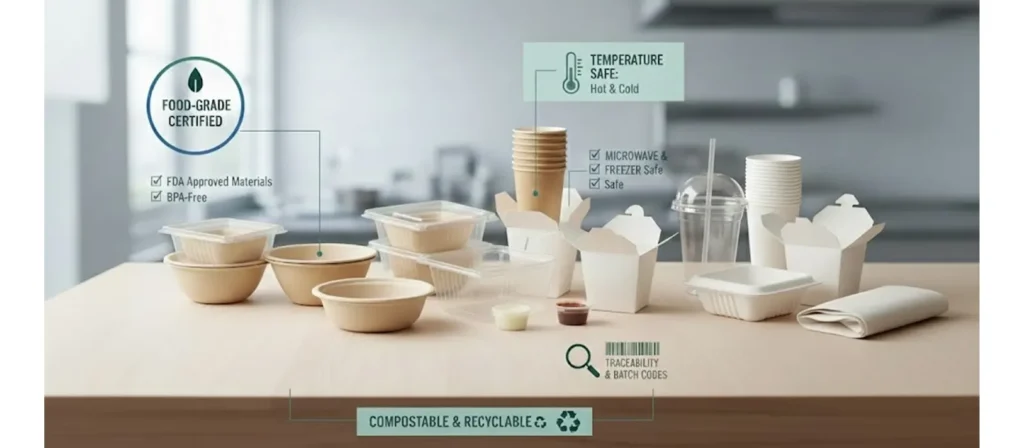
Disposable food containers must comply with a range of regulations to ensure they are safe for direct food contact. These standards protect consumers from chemical migration, contamination, and improper material handling. Understanding the main requirements helps businesses source packaging that meets legal and operational expectations.
- Food Contact Compliance
Materials must meet national and regional food contact rules such as FDA regulations in the United States or EU Framework Regulation 1935/2004. These standards limit chemical migration and ensure that containers do not alter the taste, smell, or safety of the food. - Material Testing and Certification
Containers often require testing for heavy metals, overall migration, and heat resistance. Many manufacturers provide documentation such as Certificates of Compliance, SGS test reports, or third party audits that verify safety performance. - Temperature and Performance Requirements
Regulators expect containers to perform safely under intended conditions. Hot food packaging must withstand heat without deforming or releasing harmful substances, while cold food packaging must remain stable during refrigeration or freezing. - Allergen and Contamination Controls
Production environments must follow hygienic manufacturing standards to avoid contamination from allergens, dust, or foreign materials. Facilities often operate under GMP or HACCP systems to maintain consistent quality. - Environmental Regulations
In many regions, disposable packaging must follow recycling or compostability guidelines. Some jurisdictions restrict foam products or require clear labeling to help consumers dispose of packaging correctly.
Environmental Impacts and Sustainability
While disposable food containers have revolutionized convenience and food accessibility, their environmental consequences are significant. From production to disposal, each stage of a container’s life cycle carries an ecological cost. Understanding these impacts is essential for individuals and businesses looking to make informed, responsible choices.
1. Waste Generation and Landfill Overflow
One of the most visible impacts of disposable containers is the sheer volume of waste they generate. In many urban areas, food packaging accounts for a substantial portion of daily trash. Since many of these containers are single-use and often contaminated with food, they are rarely recycled and usually end up in landfills.
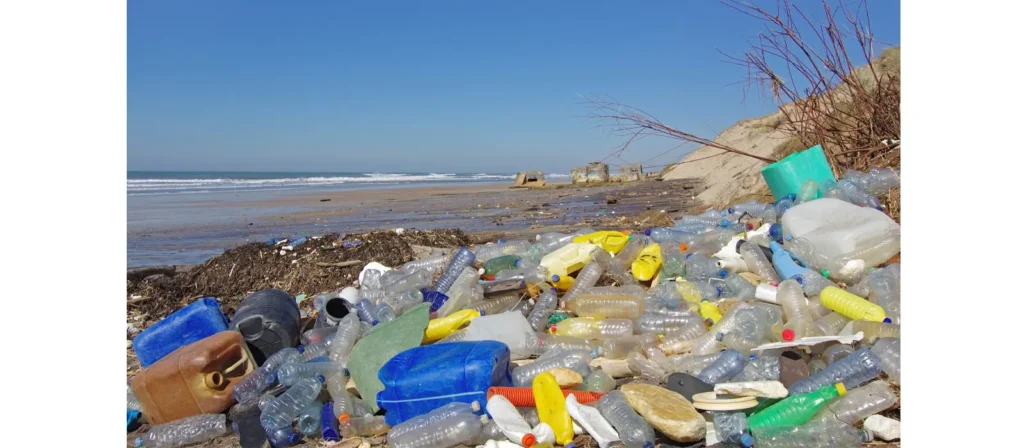
2. Pollution and Marine Debris
Improperly disposed disposable containers, particularly plastics and foam, often make their way into rivers, oceans, and coastal environments. Once in these ecosystems, they break down into microplastics that are ingested by marine life, ultimately entering the human food chain.
3. Carbon Footprint of Production
Manufacturing disposable food containers consumes significant energy and raw materials. The extraction of petroleum for plastic production, deforestation for paper, and mining for aluminum all contribute to carbon emissions and resource depletion.
4. Challenges in Recycling and Composting
Despite the availability of recyclable and compostable materials, real-world outcomes often fall short. Recycling systems are complex and inconsistent across regions, and many consumers lack the knowledge or access to proper disposal methods.
5. Legislation and Bans on Single-Use Plastics
In response to environmental concerns, governments around the world are enacting laws to limit or ban the use of non-biodegradable disposables. Bans on polystyrene foam containers and plastic straws are now common in cities like New York, San Francisco, and entire countries such as India and the UK.
6. Emerging Trends in Eco-Friendly Packaging
The sustainability movement has prompted rapid growth in alternative packaging technologies. From seaweed-based containers to edible packaging films, innovations are reshaping the way food is served and transported.
Notable developments include:
- Compostable containers certified by ASTM D6400 or EN 13432 standards
- Programs promoting reusable takeout containers with deposit-return models
- Food brands publicly committing to zero-waste packaging by 2030
Environmental sustainability is no longer a fringe concern—it is becoming central to the future of food packaging. Both businesses and consumers are expected to align with greener practices and contribute to reducing the ecological footprint of disposable containers.
Market Analysis of Disposable Food Containers in Major Countries
The demand for disposable food containers is closely tied to urbanization, food delivery trends, and environmental policies. Here is a snapshot of how the market is performing and evolving in several major economies.
Global market overview
Globally, demand for disposable food containers is driven by five main forces:
- Growth of food delivery platforms and quick-service restaurants.
- Increasing urbanization and on-the-go consumption.
- Rising middle-class incomes in emerging markets.
- A shift toward convenience foods, meal kits, and ready-to-eat products.
- Regulatory and consumer pressure to move toward more sustainable single-use packaging.
Industry analyses estimate that the disposable food containers segment will grow steadily over the coming decade. One forecast projects that the global disposable food container market will expand from about 21.8 billion USD in 2025 to around 42.5 billion USD by 2035, with a compound annual growth rate (CAGR) near 6.9 percent.
| Region / Country | Market Characteristics | Material Preferences | Regulatory Influence |
|---|---|---|---|
| United States | Large and mature market with strong demand from fast food, supermarkets, and delivery platforms | Mix of plastic, paperboard, and molded pulp; growing use of recyclable and compostable options | Restrictions on foam and certain plastics vary by state, encouraging sustainable alternatives |
| European Union | Highly sustainability driven market with strong focus on waste sorting and recycling | Paperboard, molded fiber, certified compostable materials | EU wide bans and strict rules on single use plastics shape purchasing choices |
| United Kingdom | Strong delivery and takeaway demand; brands prioritize sustainable packaging upgrades | Paperboard, hybrid paper plastic solutions, compostable options | National restrictions on foam and single use plastics influence product selection |
| China | Rapid expansion of food delivery platforms increases container usage | PP for hot foods, paperboard for value products, molded pulp adoption growing | Policies limiting certain plastics stimulate interest in alternative materials |
| Asia Pacific Emerging Markets | Fast growing urban takeaway market; cost sensitivity in many regions | Plastic and foam for budget segments; paper and eco options rising in premium areas | Environmental policies developing but not as strict; transitions happening gradually |
FAQs
- Are disposable food containers recyclable?
Some are recyclable if they are clean and made from recyclable materials like PET or paper, but contamination and mixed materials can complicate recycling. - What’s the difference between biodegradable and compostable containers?
Biodegradable containers break down over time, while compostable containers break down into non‑toxic components under specific composting conditions. - What’s the most eco-friendly disposable food container?
There’s no single best answer. The greenest disposable food container depends on your local recycling or composting infrastructure, the type of food, and how customers dispose of it. - Are disposable food containers safe for hot food?
Most disposable food container products are safe for the temperature ranges they’re designed for, but not all can handle very hot or oven-level heat. Always check manufacturer guidelines. - Are there eco-friendly alternatives to plastic containers?
Yes. Options include bagasse (sugarcane fiber), bamboo, PLA (corn starch-based plastic), and molded pulp. These are biodegradable and compostable under certain conditions. - Why are foam containers being banned in many places?
Foam containers (usually made from polystyrene) are non-biodegradable, difficult to recycle, and harmful to marine life. Many jurisdictions have banned them to reduce plastic pollution. - Why are sustainable food containers becoming more popular?
Many countries are restricting certain plastics, and consumers increasingly prefer eco friendly options. This drives demand for molded pulp, compostable packaging, and recyclable materials.
Conclusion
Disposable food containers have become essential to the way food is prepared, served, and consumed in today’s fast-paced world. From their early development to the wide variety of materials and designs available today, these containers continue to meet the evolving demands of convenience, hygiene, and efficiency. However, with growing awareness around environmental impact and sustainability, the industry is now at a turning point.
Businesses must not only consider functionality and cost, but also regulatory compliance, safety standards, and the long-term effects of packaging waste. Fortunately, the global shift toward biodegradable and recyclable materials, along with stronger regulations, is driving innovation in the right direction.