
Every action we take—driving to work, charging a phone, or even eating lunch—has an impact on the environment. That impact is often measured in what’s known as a carbon footprint. But what exactly does this term mean, and why has it become so central in discussions about climate change and sustainability?
As global temperatures rise and extreme weather events become more frequent, understanding and reducing our carbon footprint is no longer optional; it’s essential. From the energy used in homes and transportation choices to industrial production and supply chain logistics, nearly every aspect of modern life contributes to a carbon footprint. By analyzing and reducing these emissions, individuals and businesses can play a crucial role in mitigating climate change and promoting sustainable development.
In this article, we’ll break down the science and significance of carbon footprints, explore where emissions come from, how they are measured, and what you can do to reduce them. This guide will give you the clarity and tools you need to make more sustainable choices.
What is a Carbon Footprint?
A carbon footprint refers to the total amount of greenhouse gases—primarily carbon dioxide (CO₂), but also including methane (CH₄), nitrous oxide (N₂O), and others—that are emitted directly or indirectly by human activities. These emissions are typically expressed in units of carbon dioxide equivalent (CO₂e), which allows different greenhouse gases to be compared on a common scale based on their global warming potential.
Carbon footprints can be attributed to individuals, households, companies, events, products, or even entire countries. For example, driving a gasoline-powered car, using electricity generated from fossil fuels, purchasing imported goods, and consuming animal-based foods all contribute to a person’s or organization’s overall emissions.
The concept is rooted in life cycle assessment (LCA), which examines the environmental impact of a product or activity from start to finish. This includes everything from raw material extraction, manufacturing, and transportation, to usage and disposal. By calculating a carbon footprint, we gain a clearer understanding of how our decisions affect the environment and contribute to climate change. As a result, the carbon footprint serves as a practical tool for identifying major sources of emissions and targeting them for reduction, making it central to both personal sustainability goals and global climate policies.
Examples of Your Carbon Footprint
| Activity | Estimated Emissions (kg CO₂e) |
|---|---|
| Driving a gasoline car (1 mile / 1.6 km) | ~0.4 kg |
| Flying economy, one-way New York → London | ~1,600 kg |
| Eating 1 kg of beef | ~27 kg |
| Using an electric clothes dryer (per load) | ~2.5 kg |
| Heating a home with natural gas (per year, U.S. average) | ~4,000 kg |
| Streaming video for 1 hour (HD) | ~0.15 kg |
| Wasting 1 kg of food | ~4.5 kg |
| Buying a new cotton T-shirt | ~2.5 kg |
How Does Carbon Affect Climate Change?
Carbon plays a central role in climate change because it directly influences the Earth’s energy balance. When carbon dioxide (CO₂) and other greenhouse gases are released into the atmosphere, they trap heat that would otherwise escape into space. This phenomenon, known as the greenhouse effect, leads to a gradual warming of the planet’s surface.
In addition to CO₂, other carbon-based gases such as methane (CH₄) and black carbon (soot) amplify warming. Methane, while less abundant, has a global warming potential more than 25 times higher than CO₂ over a 100-year period. Black carbon, released from incomplete combustion, absorbs sunlight and directly warms the atmosphere and ice surfaces.
Once released, carbon dioxide can remain in the atmosphere for hundreds of years. Its long residence time means that today’s emissions will continue to affect the climate far into the future. The cumulative buildup of atmospheric CO₂ has already resulted in rising global temperatures, melting ice sheets, ocean acidification, shifting weather patterns, and more frequent extreme weather events.
The scientific consensus is clear: unless we drastically reduce carbon emissions, climate change will accelerate and its impacts will intensify. Understanding how carbon affects the climate is the first step toward building effective mitigation strategies on both local and global scales.

Major Sources of Carbon Emissions
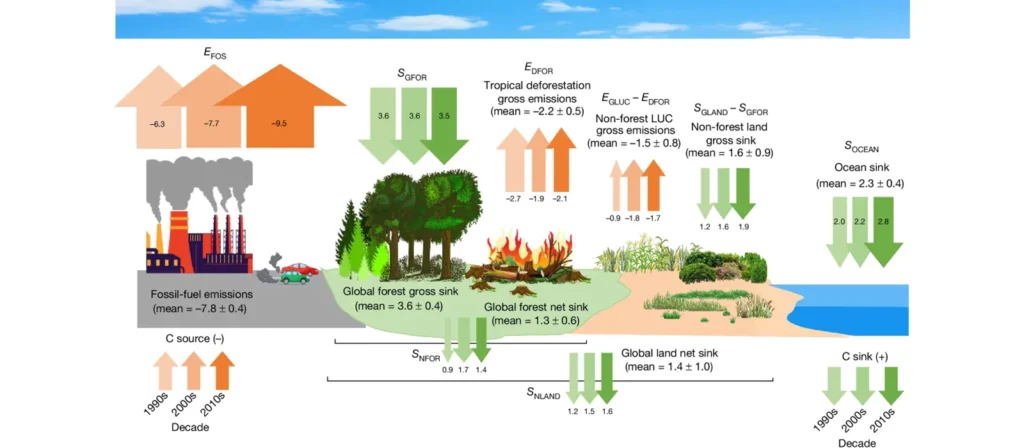
Carbon emissions primarily originate from human activities that involve the combustion of fossil fuels and changes in land use. These emissions are often categorized into direct and indirect sources. Understanding the major contributors is essential for creating effective mitigation strategies and reducing the global carbon footprint.
Fossil Fuel Combustion
The single largest source of carbon emissions globally is the burning of fossil fuels. These include coal, oil, and natural gas, primarily used for electricity generation, industrial processes, transportation, and residential heating. When fossil fuels are burned, carbon that was previously stored underground is released into the atmosphere as carbon dioxide (CO₂).
- Electricity and heat production: Coal-fired and gas-fired power plants account for a significant portion of global CO₂ emissions.
- Transportation: Vehicles powered by gasoline and diesel are responsible for a large share of urban carbon emissions.
- Industry: Cement, steel, chemical, and aluminum manufacturing all require large amounts of energy, leading to substantial CO₂ emissions.
Deforestation and Land Use Changes
Forests act as carbon sinks, absorbing CO₂ from the atmosphere. When forests are cleared for agriculture, logging, or development, not only is this carbon-absorbing function lost, but the carbon stored in trees and soil is also released.
- Agricultural expansion: Slash-and-burn practices emit both CO₂ and methane.
- Urban development: Expanding cities replace carbon sinks with carbon-emitting infrastructures.
Agriculture and Livestock
Although not all agricultural emissions are CO₂, the sector contributes significantly to the overall greenhouse gas inventory. Livestock such as cows produce methane (CH₄), a potent greenhouse gas. Fertilizer application and rice paddies also release nitrous oxide (N₂O), another high-impact GHG.
Waste Management
Decomposing organic waste in landfills releases methane, especially when there is limited oxygen (anaerobic conditions). Inadequate waste treatment practices, especially in developing countries, contribute to growing emissions.
Why Carbon Footprint Is Important?
The concept of a carbon footprint serves as a powerful lens through which we can measure and understand our impact on the planet. By quantifying greenhouse gas emissions, individuals, businesses, and governments can identify where their greatest impacts lie and take targeted steps to reduce them. But beyond being just a metric, the carbon footprint is a vital tool for climate accountability, awareness, and action.

1. Connect Everyday Actions to Global Climate Change
From driving to work and eating meat, to using electricity and buying new clothes, many seemingly small choices contribute to carbon emissions. Understanding your carbon footprint helps reveal how ordinary activities directly influence rising global temperatures, extreme weather events, and ecological disruptions.
2. Encourage Conscious Decision-Making
By tracking and reducing carbon output, individuals and organizations can identify areas where sustainable alternatives make a real difference. Whether it’s choosing public transport over driving or switching to renewable energy, carbon footprint awareness encourages more intentional and responsible behavior.
3. Drive Policy and Innovation
Carbon footprint data helps policymakers, researchers, and businesses target high-impact areas and develop effective climate strategies. It informs legislation, urban planning, energy standards, and transportation systems that reduce national and global emissions.
4. Support Global Emission Targets
International climate agreements like the Paris Agreement rely on emission tracking and reduction commitments. The carbon footprint is central to achieving goals such as keeping global warming below 1.5°C. Personal and corporate emission reductions contribute directly to meeting these global climate targets.
5. Reflect Environmental and Social Equity
Carbon footprints differ vastly between countries and income levels. While industrialized nations and wealthier populations contribute the most to emissions, vulnerable communities often suffer the greatest consequences. Understanding carbon footprints helps highlight these imbalances and promote climate justice.
How to Calculate Your Carbon Footprint?
Calculating your carbon footprint involves estimating the total greenhouse gas emissions associated with your daily activities or business operations. This measurement typically focuses on carbon dioxide equivalents (CO₂e), which standardize the impact of various gases—such as methane (CH₄) and nitrous oxide (N₂O)—based on their global warming potential. A comprehensive carbon footprint assessment generally includes three types of emissions:
Three Types of Emissions
Carbon emissions are categorized into three types based on how directly they are linked to the person or organization being assessed. This classification is widely used in environmental reporting and helps clarify responsibility and reduction strategies.
1. Direct Emissions (Scope 1)
Direct emissions are those that occur from sources you personally own or control. These emissions are the most tangible because they result directly from your behavior or infrastructure. For individuals, this includes burning gasoline in a private car or using natural gas for home heating. For businesses, it may involve the fuel used in delivery vehicles, generators, or onsite industrial processes. Because these emissions are under direct control, they are often the first and most straightforward target for reduction efforts, such as switching to electric vehicles or improving fuel efficiency.
2. Indirect Energy Emissions (Scope 2)
Indirect energy emissions come from the production of electricity, heat, or cooling that you purchase but do not generate yourself. These emissions do not occur directly in your home or building, but rather at the power plants that supply your energy. For example, when you use an electric oven or run a computer, your carbon footprint includes the emissions from the coal or gas burned to generate that electricity. In regions where power is heavily fossil-fuel-based, Scope 2 emissions can account for a significant portion of an individual or organization’s footprint. Reducing these emissions often involves energy efficiency improvements or switching to renewable energy providers.
3. Other Indirect Emissions (Scope 3)
Scope 3 emissions are the most complex and often the largest component of a carbon footprint, especially for businesses. They encompass all other emissions that are a consequence of your actions but occur from sources you do not own or directly control. This includes emissions from the production and transportation of goods you buy, business travel, employee commuting, food supply chains, digital infrastructure, and even waste disposal. For example, the carbon footprint of ordering a product online includes emissions from manufacturing, packaging, shipping, and returns. These emissions are difficult to measure precisely but are crucial for a full understanding of environmental impact.
Key Steps in the Calculation Process
Whether you are an individual or a corporation, calculating a carbon footprint follows a systematic approach. While the complexity may vary, the methodology is grounded in the same principles:
1. Identify Emission Sources
Begin by listing all relevant activities that generate emissions. These may include vehicle use, electricity consumption, air travel, food intake, purchased goods, or supply chain operations.
2. Gather Usage Data
Collect measurable data for each source. This can include fuel consumption in liters or gallons, kilowatt-hours (kWh) of electricity, number of flights taken, weight of food consumed, or monetary value of purchased products.
3. Apply Emission Factors
Multiply each activity by its corresponding emission factor. For example, driving one kilometer in a gasoline car emits approximately 0.24 kg of CO₂e. Emission factors are typically published by national agencies or environmental organizations.
4. Calculate Total Emissions
Sum all individual emissions to calculate a total carbon footprint, typically expressed in metric tons of CO₂e per year. For businesses, this may be broken down by department, product, or facility.
Tools and Resources for Personal and Business Use
Numerous tools are available to help estimate carbon footprints at different levels of complexity. These tools are designed to simplify data collection, apply regional emission factors, and sometimes offer reduction recommendations. There are several well-established calculators and tools available:
| Tool / Platform | Target Audience | Features |
|---|---|---|
| EPA Carbon Footprint Calculator | Individuals (U.S.) | Easy household-based inputs |
| WWF Footprint Calculator | Individuals | Lifestyle-focused, visual interface |
| Carbon Trust Calculator | Businesses | Corporate-level analysis with reporting support |
| CoolClimate Calculator | Individuals & SMEs | Customizable based on zip code and behavior |
| GHG Protocol Tools | Corporations | International standard for emissions accounting |
How to Reduce Carbon Footprint?
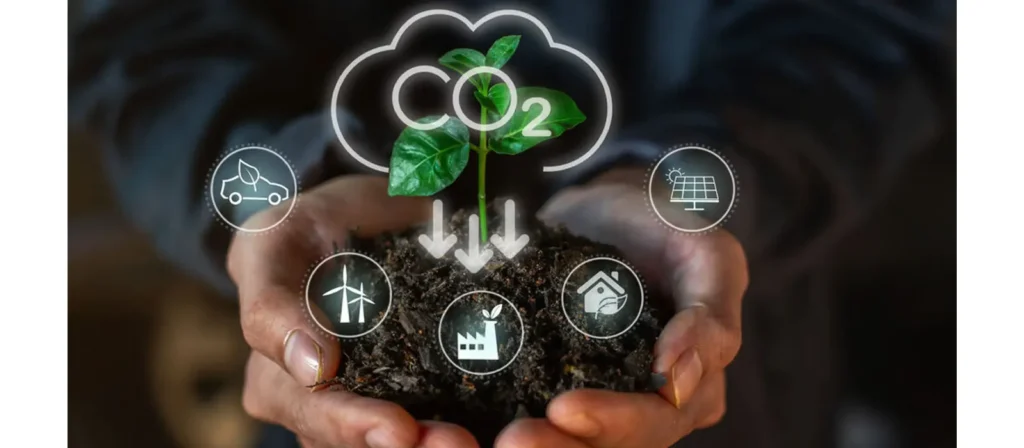
Reducing carbon emissions is essential for slowing global warming and achieving long-term environmental sustainability. Whether at home, in the workplace, or across entire economies, meaningful reductions in carbon footprint can be achieved through deliberate choices, innovative technologies, and supportive policies. The strategies vary by context, but the goal remains the same: to lower greenhouse gas emissions and transition toward a low-carbon future.
1. Individual
Individuals play a critical role in climate mitigation. While one person’s emissions may seem small in isolation, collective behavioral change across millions of people can lead to substantial impact. Key strategies include:
- Transportation
Shift from private fossil-fuel vehicles to public transit, biking, walking, or electric vehicles. Carpooling and reducing unnecessary travel also help lower emissions. - Energy Efficiency at Home
Upgrade to energy-efficient lighting and appliances, insulate homes, and use smart thermostats. Choosing electricity providers that source from renewable energy also reduces indirect emissions. - Sustainable Diet Choices
Reducing the intake of red meat and dairy significantly lowers methane emissions. Adopting a plant-based or flexitarian diet, and minimizing food waste, can substantially shrink one’s food-related footprint. - Conscious Consumption
Choose products with lower environmental impact. Support companies with transparent sustainability practices. Reduce, reuse, and recycle to avoid unnecessary resource extraction and emissions from manufacturing.
2. Business
Companies can drive large-scale impact by transforming their operations, supply chains, and customer engagement strategies. Common approaches include:
- Energy Audits and Green Infrastructure
Conduct regular energy assessments and invest in renewable energy sources such as solar or wind. Retrofitting buildings with high-efficiency systems reduces operational emissions over time. - Carbon Accounting and Reporting
Use frameworks such as the GHG Protocol to measure Scope 1, 2, and 3 emissions. Set science-based targets and report progress through ESG disclosures. - Sustainable Supply Chain Management
Choose local and low-carbon suppliers, reduce packaging waste, and optimize logistics. Engaging suppliers in emissions reduction programs amplifies downstream impact. For example, manufacturers like Million Pack, which specializes in eco-friendly packaging, help clients transition toward lower-carbon operations through sustainable material choices and optimized production practices. These partnerships not only reduce Scope 3 emissions but also align with rising consumer demand and global ESG expectations. - Employee Engagement and Remote Work
Promote low-carbon commuting, incentivize telecommuting where possible, and integrate climate goals into corporate culture and training programs. - Carbon Offsetting (with transparency)
Where reductions are not yet feasible, high-quality carbon offsets—such as reforestation or renewable energy projects—can help neutralize remaining emissions. However, these should not replace actual reduction efforts.
3. Governmental and Industrial
System-level changes require coordinated policies and technological innovation. Governments and industries must work together to decarbonize key sectors:
- Transition to Renewable Energy
Phase out coal-fired power plants and invest in solar, wind, hydro, and energy storage. Incentivize community-level clean energy projects to expand access. - Sustainable Transportation Systems
Expand mass transit networks, implement fuel economy standards, and promote the electrification of fleets, including buses, trucks, and ships. - Industrial Decarbonization
Encourage innovation in low-emission manufacturing processes, such as green steel, low-carbon cement, and carbon capture and storage (CCS) technologies. - Urban Planning and Land Use Reform
Create walkable, energy-efficient cities. Protect natural carbon sinks such as forests, wetlands, and soils through land conservation policies and reforestation programs. - Legislation and Carbon Pricing
Implement carbon taxes, emissions trading schemes (ETS), and regulatory mandates to create financial incentives for emissions reduction across sectors.

Common Misconceptions About Carbon Footprints
Despite growing awareness of climate change, misunderstandings about carbon footprints remain widespread. These misconceptions can lead to misplaced efforts, missed opportunities for meaningful action, and skepticism toward sustainability initiatives. Clarifying the most common myths is critical for enabling informed decisions at both personal and institutional levels.
1. Carbon Offsets Alone Are Enough to Solve the Problem
Carbon offsets are often promoted as a convenient solution to neutralize emissions. While they can play a role in broader sustainability strategies, offsets should not be viewed as a substitute for direct emissions reduction. Many offset programs lack transparency, long-term accountability, or verification of actual carbon removal. Offsets are most effective when used after all reasonable internal reductions have been made. Relying on them prematurely may create a false sense of progress and delay necessary structural change.
2. Individual Actions Don’t Make a Real Difference
A common belief is that climate change is too large a problem for individual actions to matter. However, consumer behavior drives market trends, shapes political priorities, and influences corporate strategies. Choices such as adopting a plant-based diet, reducing energy use, or supporting sustainable brands can collectively lead to systemic impact. Moreover, personal actions often inspire community-level change and increase pressure on governments and industries to act.
3. Electric Vehicles Have Zero Emissions
Electric vehicles (EVs) produce no direct emissions while driving, but that doesn’t mean they are entirely emission-free. The production of EV batteries involves significant energy use and mining, which can carry a large carbon footprint. Additionally, the environmental benefit of EVs depends on the electricity mix used to charge them. In regions where power still comes from coal or gas, the indirect emissions can be substantial. Nonetheless, over their lifetime, EVs tend to have a lower overall footprint than gasoline vehicles—especially when powered by renewables.
4. Recycling Is the Most Effective Way to Reduce Your Footprint
While recycling helps conserve resources and reduce landfill waste, it is not the most impactful carbon reduction strategy. Manufacturing, energy consumption, and transportation typically contribute far more to a person’s or company’s footprint than waste disposal. The waste hierarchy prioritizes actions in the following order: reduce, reuse, then recycle. Choosing not to generate waste in the first place—such as by avoiding single-use plastics or unnecessary packaging—has a much greater environmental benefit.
5. Only Large Industries Are Responsible for Climate Change
It is true that sectors like energy, cement, aviation, and agriculture contribute heavily to global emissions. However, these industries respond to demand created by individuals, governments, and businesses. Residential energy use, car travel, food choices, and consumer goods collectively account for a significant share of emissions. Climate change is a shared responsibility, and meaningful progress requires action across all levels of society.
6. Carbon Footprint Is the Only Environmental Impact That Matters
The carbon footprint is a critical metric for assessing climate impact, but it does not capture the full scope of environmental degradation. Other important factors include water consumption, biodiversity loss, land use change, plastic pollution, and chemical contamination. A comprehensive sustainability approach considers all ecological pressures, not just greenhouse gases.
7. Green Products Are Always Low-carbon
Not all products labeled as “eco-friendly” have a low carbon footprint. For example, a reusable product may have a high initial footprint due to materials and manufacturing, only becoming more sustainable over time with repeated use. Life cycle analysis (LCA) is necessary to understand a product’s true environmental impact. Marketing claims should be evaluated critically, and consumers should look for third-party certifications where possible.
Frequently Asked Questions (FAQ)
1. What is carbon footprint in simple words?
A carbon footprint is the total amount of greenhouse gases, mainly carbon dioxide (CO₂), released into the atmosphere because of our activities. It includes things like driving cars, using electricity, producing goods, and even the food we eat.
2. Is carbon footprint good or bad?
A carbon footprint itself is just a measure—it’s not “good” or “bad.” However, the higher the footprint, the greater the impact on climate change. Lowering your carbon footprint is important because it helps reduce global warming and protects the environment.
3. Does diet affect my carbon footprint?
Yes. What you eat has a big influence on your carbon footprint. Animal-based foods, especially red meat and dairy, usually have higher greenhouse gas emissions than plant-based foods because of farming practices, land use, and methane emissions from livestock.
4. What food has the biggest carbon footprint?
Beef has one of the largest carbon footprints of any food—producing 1 kilogram of beef can release around 27 kilograms of CO₂e. Lamb, cheese, and butter are also high. By contrast, beans, grains, fruits, and vegetables generally have much lower footprints.
5. What is carbon offsetting, and does it work?
Carbon offsetting means compensating for your emissions by funding projects that reduce or capture CO₂, such as reforestation or renewable energy. It can help, but experts recommend focusing on real reductions first and using offsets only for unavoidable emissions.
6. What everyday habits can lower my carbon footprint?
Simple actions like turning off unused lights, switching to LED bulbs, eating more plant-based meals, using public transit, and avoiding fast fashion can all make a difference.
Conclusion
Reducing carbon footprints is not a task for governments or corporations alone—it is a shared responsibility that begins with awareness and leads to action. From the materials we choose to the systems we support, every decision can either contribute to the problem or become part of the solution.
Meaningful change happens when individuals, businesses, and institutions align daily operations with long-term environmental goals. In sectors like transportation, energy, agriculture, and packaging, even incremental improvements can lead to significant collective impact.
Addressing climate change requires more than pledges. It demands action—measurable, continuous, and collaborative. The tools exist. The knowledge is available. What’s needed now is commitment. The future depends on what we choose to do today.