
What Is Zero Waste?
Zero Waste is a design goal and lifestyle that keeps materials circulating so that almost nothing ends up in landfill or incineration. In simple terms, what is zero waste It is the shift from a take, make, throw away model to a circular model where waste is prevented first and any remaining materials are reused, repaired, recycled or composted instead of becoming zero garbage in a dump or burner.
A practical zero waste definition or definition of zero waste focuses on how products, services and systems are created and managed. Companies and cities are expected to design packaging, materials and collection programs so resources stay in use longer, while individuals move toward a waste-zero lifestyle by buying less, choosing durable and refillable options and avoiding single use items. Together, these choices support a broader zero waste movement that treats waste as a design flaw, protects communities and ecosystems, and keeps the idea of what is zero waste anchored in real daily behavior rather than abstract slogans.

History of Zero Waste
The history of Zero Waste is the story of people trying to replace a take, make, throw away economy with something more circular. From scattered experiments in recycling and resource recovery, the idea grew into a recognizable zero waste movement with a shared vision of a future zero waste world where landfills and incinerators are a last resort rather than the default answer to what is zero waste in practice.
“There is no such thing as ‘away’. When we throw anything away, it must go somewhere.”
In the 1970s and 1980s, communities and activists began to question overflowing dumps and toxic incinerators, launching early curbside recycling and composting projects. These local efforts did not yet use the phrase Zero Waste, but they laid the groundwork by proving that high recovery of materials was possible and by reframing garbage as a resource that could be collected and reused instead of becoming permanent zero garbage mountains.
During the 1990s and early 2000s the term Zero Waste entered policy documents, corporate strategies and city plans. Municipalities started adopting formal Zero Waste goals, companies experimented with closed loop production and campaigners framed what is zero waste as both a technical target and a social vision. As more cities set ambitious diversion rates and more businesses reported success with resource efficiency, the zero waste movement shifted from a fringe idea to a credible roadmap for long term environmental and economic resilience.
Zero Waste Principles: The 5R Framework
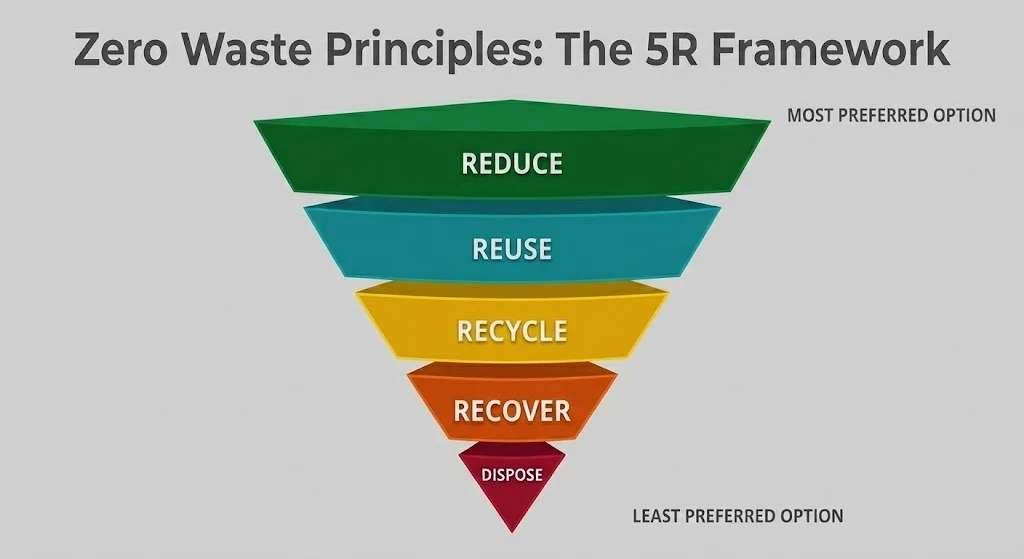
The 5R framework is the core set of Zero Waste principles that turn the concept into clear daily actions. In order of priority, the rules are: Refuse, Reduce, Reuse, Recycle and Rot. Following this order keeps you focused on preventing waste first and only then managing what is left, which is the fastest way to move toward a realistic waste zero lifestyle supported by practical zero waste ideas.
- Refuse
Refuse is the first filter. You simply do not accept what you do not need: flyers, branded freebies, hotel mini bottles, disposable cutlery and unnecessary packaging. Each item you refuse never has the chance to become zero garbage in a landfill or incinerator. This step answers what is zero waste at the source, before waste even exists. - Reduce
Reduce means intentionally using and owning less. You cut back on impulse purchases, choose digital over paper when possible and avoid buying multiple versions of the same product. By reducing, you lower demand for new materials and shrink the overall flow of items moving through your life, which makes every other Zero Waste action easier. - Reuse
Reuse extends the life of products and packaging. You carry refillable bottles and coffee cups, use sturdy shopping bags, repair clothing and electronics and choose second-hand items instead of new ones. Many of the most effective zero waste ideas live in this step because reusing combines convenience, cost savings and strong environmental benefits. - Recycle
Recycle comes after refusing, reducing and reusing. You separate paper, metal, glass and accepted plastics so they can return to manufacturing instead of being buried or burned. Good recycling habits support what is zero waste management at the city level, but they work best only when earlier Rs have already reduced the volume of materials entering the system. - Rot (Compost)
Rot deals with organic leftovers such as food scraps, coffee grounds and yard waste. Through home composting, community drop-off or municipal programs, these materials break down into nutrient-rich soil rather than producing methane in dumps. Composting closes the loop on organic matter and shows how Zero Waste can mimic natural cycles where nothing is truly wasted.
Why Is Zero Waste So Important?
Zero Waste matters because it directly reduces pollution, protects limited resources and makes communities fairer and healthier. Instead of accepting overflowing bins as normal, a Zero Waste approach and the question of what is zero waste push households, businesses and governments to redesign systems so that materials stay in circulation and a truly zero waste world becomes possible.
Cutting climate and pollution impacts
Landfills release methane, incinerators emit toxic gases and both keep the old pattern of take, make and throw away in place. By following the zero waste hierarchy and focusing first on refusing, reducing and reusing, Zero Waste reduces the total volume of rubbish that needs disposal. Less waste means fewer trucks on the road, fewer dumps and burners and lower greenhouse gas emissions that drive climate change.

Protecting finite resources
Every product represents energy, water and raw materials such as metals, forests and fossil fuels. Zero waste ideas like refill systems, repair services and durable design make those materials work longer instead of being discarded after a single use. At the system level, effective zero waste management turns discarded items into inputs for new products, which supports a circular economy and slows the pressure on mines, forests and oil fields.
Supporting justice and healthier communities
Waste facilities are often located near low income or marginalised neighbourhoods, so these communities carry more of the health risks from pollution. The zero waste movement highlights this imbalance and links local lifestyle choices with policy changes that reduce overall waste and improve how it is handled. When cities and regions act on what is zero waste through better planning and fairer zero waste management, the result is cleaner air, safer water and a more just living environment for everyone.
What Is the Zero Waste Hierarchy?
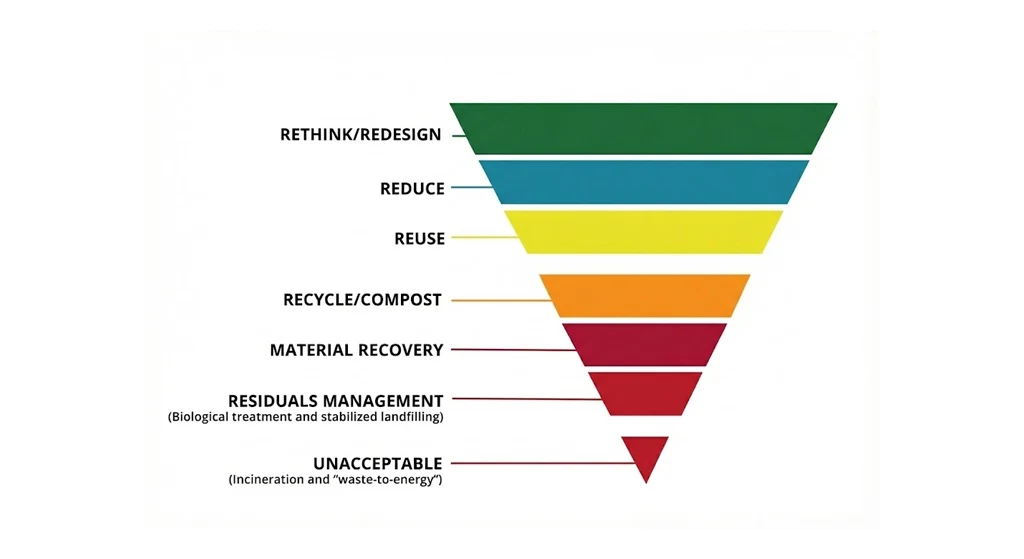
The zero waste hierarchy is a step by step guide for deciding what to do with materials. It ranks actions from most to least desirable so that prevention comes first, recovery comes next and only a very small leftover stream goes to final zero waste disposal. In practice this hierarchy turns the abstract definition of zero waste into a concrete zero waste management definition that cities, companies and households can follow when they want real waste management zero waste results instead of slogans.
Rethink and Redesign
The top level is rethink and redesign. Here products, packaging and services are planned so that waste is avoided from the start. Designers choose long lasting materials, simple constructions and non toxic components, and they make items easy to repair, refill or disassemble. Governments support this with rules on producer responsibility and clear labels. When rethink and redesign are done well, many later waste problems never appear at all, which is the most efficient form of zero waste management.
Reduce
The second level is reduce. This step focuses on using fewer resources overall. People cut non essential purchases, avoid overpackaged goods and choose shared or digital options where possible. Organisations remove single use items from offices and events and tighten control of stock so that less material is wasted. Reduction shrinks the total flow of goods through the system, which lowers costs and makes every later stage of the zero waste hierarchy easier to manage.
Reuse
The third level is reuse. Here the goal is to keep products working at their full value for as long as possible. Households rely on refillable bottles, durable bags and repairable appliances. Businesses use reusable shipping containers, pallets and crates and support repair services. Community tools such as rental systems, sharing platforms and second hand markets also belong here. Strong reuse systems are a central part of effective zero waste management because they save money, create local jobs and avoid the need for new raw materials.
Recycling and Composting
The fourth level is recycling and composting. Materials that cannot be prevented, reduced or reused are collected and processed into new inputs. Clean paper, metals, glass and acceptable plastics go into recycling streams, while food scraps and yard waste go to composting systems that return nutrients to soil. Good sorting, reliable collection and stable markets are essential at this level. Recycling and composting are important tools in any plan that claims to follow zero waste management definition, but the hierarchy reminds us that they are support steps, not the main solution.
Material Recovery
Below clean recycling sits material recovery. This level focuses on pulling useful materials out of mixed waste that was not sorted at the source. Sorting facilities may recover metals, glass and some plastics from general rubbish, and specialised plants may dismantle electronics or construction debris to harvest valuable components. Material recovery saves additional value but is less efficient than good prevention and source separation, so it must work together with the higher levels of the zero waste hierarchy rather than replace them.
Residual Management
Residual management deals with what is left after every realistic option for prevention, reuse, recycling, composting and recovery has been used. In a serious zero waste strategy this residual stream is kept as small as possible, carefully measured and regularly reviewed. Problematic items in the residual mix are flagged for redesign or regulation so that over time more of them can move upward into reuse or recycling categories. Residual management is therefore a temporary holding place, not a comfortable final answer.
Unacceptable Options
At the bottom are unacceptable options. Uncontrolled dumping, open burning and long term reliance on poorly managed landfills or mass burn incinerators do not fit within responsible zero waste disposal because they waste resources and harm health. A credible zero waste hierarchy treats these options as last resort emergency measures at most, and sets clear timelines and policies to phase them down. By drawing this line, the hierarchy keeps the idea of what is zero waste honest and ensures that progress is judged by real environmental and social outcomes, not by shifting waste from one harmful method to another.
Five Zero Waste Communities
These five communities show how Zero Waste becomes a real practice rather than a slogan and together they give concrete answers to what is zero waste in different social and economic contexts.
Zero Waste International Alliance ZWIA
Zero Waste International Alliance is a global network that defined a widely used definition of zero waste, promotes the zero waste hierarchy and supports cities, companies and community groups to build strong zero waste management systems through training, standards and peer learning.
SLUMS GOING GREEN AND CLEAN SGGC Kenya
SLUMS GOING GREEN AND CLEAN works in Kenyan informal settlements, turning discarded materials into income through sorting, recycling and composting and using local zero waste ideas such as door to door collection and neighbourhood cleanups to link Zero Waste with cleaner streets, safer public spaces and social justice.
Health Environment and Climate Action Foundation HECAF 360
HECAF 360 in Nepal helps hospitals and municipalities redesign waste systems around Zero Waste principles by improving separation, cutting disposables and managing hazardous materials safely so that less waste is burned or dumped and staff have clear procedures that show what is zero waste in healthcare practice.
Zero Waste France
Zero Waste France combines citizen education and policy advocacy, teaching households everyday zero waste ideas like reduction and reuse while pushing for national laws that embed the zero waste hierarchy and make waste management zero waste a mainstream political goal instead of a niche issue.
Global Alliance for Incinerator Alternatives GAIA
Global Alliance for Incinerator Alternatives is a worldwide alliance that supports communities opposing polluting incinerators and landfills and promotes Zero Waste solutions based on reduction, reuse, recycling and composting, strengthening the global zero waste movement and keeping the vision of a real zero waste world in climate and development debates.
Some Zero Waste Lifestyle Examples
- Carry a daily reusables kit
Keep a lightweight bag with a bottle, cup, cutlery and a small container so you can support zero waste wherever you go and avoid most single use items. - Use what you already have first
Before buying new “eco products”, finish existing shampoo, cleaners and notebooks so your zero waste ideas start with real reduction, not extra shopping. - Buy loose produce and say no to bags
Choose unpackaged fruit and vegetables, skip produce bags when possible and use your own cloth bags for a simple 0 waste living habit. - Switch to refill or bulk for basics
Refill dish soap, laundry liquid or dry staples like rice and oats where you can so packaging per use drops and your kitchen moves closer to zero waste. - Store food in reusable containers
Reuse jars and boxes for leftovers, lunch and snacks so you avoid cling film and disposable takeaway packs while keeping food fresh. - Choose bars instead of bottles in the bathroom
Bar soap and shampoo bars or refills cut several plastic bottles each year and are one of the easiest zero waste lifestyle swaps. - Use cloth instead of disposable wipes
A few washable cloths can replace kitchen paper and cleaning wipes which reduces trash and supports a more sustainable zero waste routine. - Print less at work
Share documents digitally, print double sided only when needed and reuse single sided sheets as notes so office habits match your zero waste goals. - Repair before you replace
Mend simple clothing tears, change batteries, fix loose screws and ask local repair shops for help so items stay in use and do not become zero garbage in landfill. - Buy second hand for big items
Look for used furniture, electronics and sports gear first which saves money and keeps valuable materials circulating in a practical zero waste system.
Conclusion
Zero Waste is a practical direction, not an impossible finish line. It means reshaping how we design, buy and use things so that resources stay in circulation and only a very small fraction ever needs disposal. In this article you have seen what is zero waste as a definition, how it developed into a global zero waste movement, why it matters for climate and justice, and how the zero waste hierarchy and 5R principles turn that vision into daily choices.
This is exactly where Million Pack fits in. Sustainable packaging is one of the fastest ways to cut waste at scale, because every product you ship or sell carries a box, a mailer or a wrapper. By choosing eco friendly solutions from Million Pack that are reusable, recyclable or compostable, you support real zero waste management instead of single use habits. Right sized designs reduce unnecessary material, smart structures protect products without excess plastic and carefully selected fibres make it easier for customers to recycle or compost at the end of life.
FAQs
Is zero waste really possible in everyday life?
Zero Waste as an absolute “no trash ever” goal is not realistic for most people, but Zero Waste as a direction is. The aim is to dramatically reduce what you send to landfill or incineration by refusing what you do not need, reducing consumption, reusing what you have, and then recycling or composting the rest. Progress matters more than perfection.
What is the difference between zero waste and recycling?
Recycling is just one tool inside a larger Zero Waste approach. Zero Waste puts prevention first: rethink, refuse, reduce and reuse come before recycling. If you only recycle but keep buying lots of single-use items, you are not really changing the system. Zero Waste focuses on not creating waste in the first place, then using recycling and composting for what cannot be avoided.
How can beginners start zero waste on a budget?
Start with habits that save money instead of spending it: use what you already have, finish products before buying “eco” versions, cook more at home, avoid impulse purchases, bring a reusable bottle and bag, and buy second hand when possible. These steps cut waste, lower costs, and make a waste-zero lifestyle more realistic than buying lots of new “zero waste” products.
Does zero waste mean being completely plastic free?
No. Plastic reduction is important, but what is Zero Waste is broader than “no plastic”. The real question is how to design systems so materials stay in circulation and do not end up as pollution. That can include glass, metal, paper, biodegradable materials and sometimes carefully managed plastic. The priority is avoiding unnecessary single-use items in any material.
What is Zero Waste management for businesses?
Zero Waste management for businesses means redesigning operations so that materials are prevented, reused, recycled or composted instead of treated as rubbish. This can include right-sizing and simplifying packaging, using reusable transport packaging, improving internal sorting systems, partnering with recyclers and composters, and measuring waste streams so they continuously shrink over time.