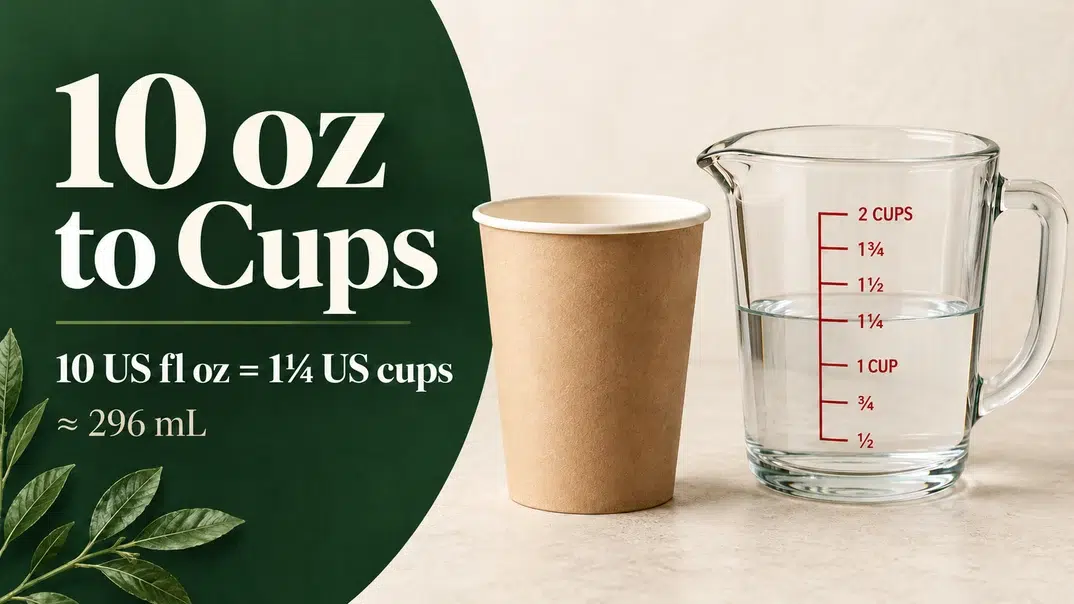
If “10 oz” means 10 US fluid ounces, it equals 1¼ US cups, or about 296 mL. This answers a liquid-volume question, but a paper cup labeled 10 oz may not leave enough room above a 10 fl oz drink for a lid, foam, or transport. Check the units first, then test the cup’s actual serving fill before choosing packaging.
This guide explains the conversion, common measurement differences, and what 10 oz means when choosing cups for drinks.
How Many Cups Is 10 oz?
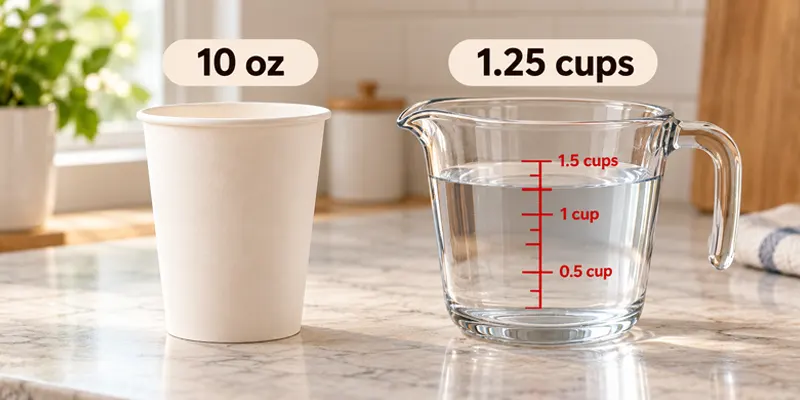
10 US fluid ounces equals 1.25 US cups (1¼ cups), or approximately 296 milliliters. This conversion applies to liquids such as water, coffee, milk, and juice.
According to the National Institute of Standards and Technology (NIST), 1 US cup equals exactly 8 fluid ounces. To convert fluid ounces to cups, simply divide by 8.
Conversion formula:
10 fl oz ÷ 8 = 1.25 cups
Here are the equivalent measurements for 10 US fluid ounces:
| Unit | Equivalent |
|---|---|
| US Cups | 1.25 cups (1¼ cups) |
| Milliliters (mL) | 295.74 mL |
| Liters (L) | 0.296 L |
| US Tablespoons | 20 tbsp |
| US Teaspoons | 60 tsp |
These values apply to US fluid ounces. If you’re measuring 10 oz by weight rather than volume, the number of cups depends on the substance being measured.
Oz to Cups Conversion Chart
The chart below shows common fluid ounce conversions to US cups and milliliters. In the US measurement system, 1 cup equals 8 fluid ounces (fl oz). To convert fluid ounces to cups, simply divide by 8.
| Fluid Ounces (fl oz) | US Cups | Milliliters (mL) |
|---|---|---|
| 1 oz | 0.125 cup | 29.57 mL |
| 2 oz | 0.25 cup | 59.15 mL |
| 3 oz | 0.375 cup | 88.72 mL |
| 4 oz | 0.5 cup | 118.29 mL |
| 5 oz | 0.625 cup | 147.87 mL |
| 6 oz | 0.75 cup | 177.44 mL |
| 7 oz | 0.875 cup | 207.01 mL |
| 8 oz | 1 cup | 236.59 mL |
| 9 oz | 1.125 cups | 266.16 mL |
| 10 oz | 1.25 cups | 295.74 mL |
| 12 oz | 1.5 cups | 354.88 mL |
| 16 oz | 2 cups | 473.18 mL |
| 20 oz | 2.5 cups | 591.47 mL |
| 24 oz | 3 cups | 709.76 mL |
| 32 oz | 4 cups | 946.35 mL |
These conversions use US fluid ounces. If you’re comparing disposable drink cup sizes, remember that a cup’s labeled capacity may differ from its recommended serving volume.
When Does “10 Oz” Mean Something Else?
“10 oz” can mean 10 ounces by weight, not 10 fluid ounces. Ten ounces by weight is about 283.5 g; you cannot turn that into one fixed number of cups without knowing the ingredient and how it is packed. For flour or sugar sold by weight, use a scale or a reliable ingredient-specific conversion.
If a recipe uses Imperial fluid ounces, 10 fl oz is about 284 mL, not 296 mL. The 1¼-cup result applies only to US fluid ounces and US measuring cups.
How Much Liquid Can a 10 oz Cup Actually Hold?
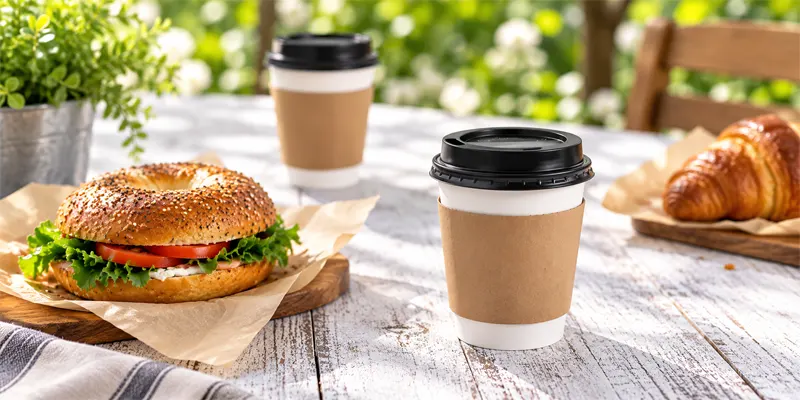
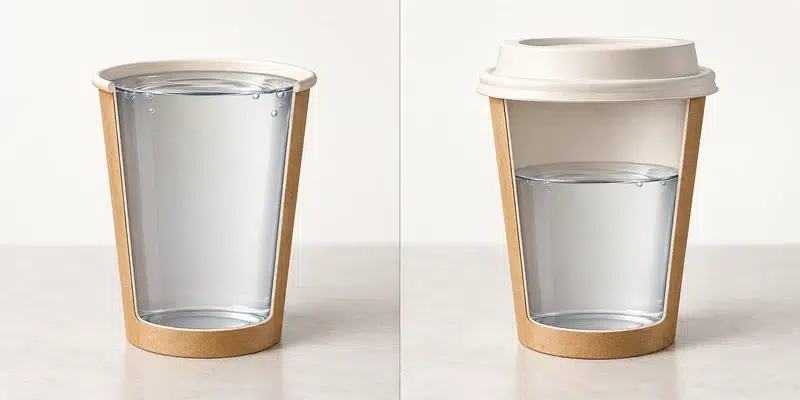
A 10 oz cup has a nominal capacity of approximately 296 mL (1.25 US cups). However, that doesn’t necessarily mean you should pour 10 oz of liquid into it. The actual serving volume depends on the cup’s design, how much space you leave at the top, and what you’re serving.
For example, when serving hot coffee, leaving some space below the rim helps reduce spills when customers pick up the cup or put on a lid. For iced drinks, the ice takes up part of the cup’s capacity, leaving less room for the beverage itself.
There are three practical factors to consider:
- Cup design: A cup’s advertised capacity may refer to its brimful volume rather than its recommended serving volume. Always check the manufacturer’s specifications.
- Headspace: Hot beverages need enough room below the rim for safer handling and lid placement.
- Drink ingredients: Ice, milk foam, whipped cream, and other additions occupy space that would otherwise hold liquid.
For coffee shops and beverage businesses, this distinction matters when choosing disposable cups. If your standard drink recipe contains 10 oz of liquid before adding ice or foam, a 10 oz cup may be too small.
Before ordering cups in bulk, confirm whether the stated capacity is measured to the brim or to a recommended fill line, and test the cup with your actual drink recipe.
What Should You Specify When Ordering Cups?
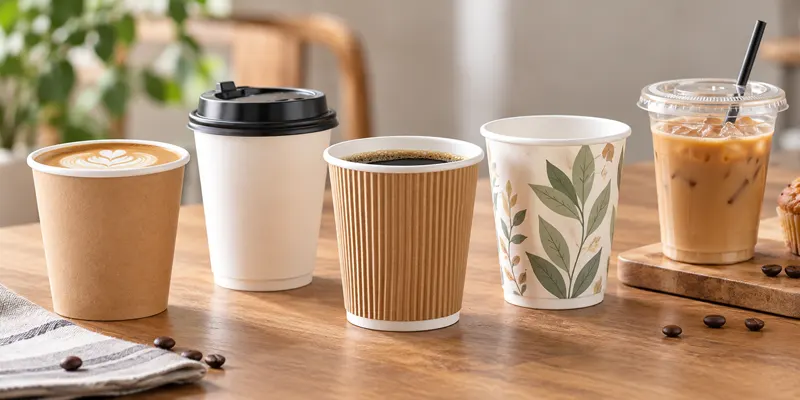
When ordering 10 oz cups in bulk, capacity is only one part of the specification. Two cups labeled 10 oz may differ in their dimensions, materials, and lid compatibility. Confirming these details with your supplier helps ensure the cups work with your drinks and serving requirements.
Here are the key specifications to provide:
| Specification | What You Should Confirm |
|---|---|
| Cup Capacity | Specify 10 US fl oz (approximately 296 mL) and confirm whether this is the brimful or recommended fill capacity. |
| Cup Dimensions | Request the top diameter, bottom diameter, and height, especially if you use existing lids or cup holders. |
| Cup Material | Choose paper or plastic based on the beverage temperature and intended use. For food-contact materials, check that the cup is suitable for its intended use and meets applicable requirements. The FDA’s guidance on food-contact materials explains how packaging components are evaluated under US regulations. |
| Wall Construction | For paper cups, specify single-wall, double-wall, or ripple-wall construction according to your insulation needs. |
| Lid Compatibility | Confirm the lid type and fit rather than assuming all 10 oz cups use the same lid. |
| Printing Requirements | Provide your logo artwork, printing colors, and any specific branding requirements. |
| Order Quantity | Confirm the minimum order quantity (MOQ), packaging quantities, and expected delivery schedule. |
If you’re purchasing cups for a coffee shop or beverage chain, request samples before placing a bulk order. Test them with your actual drinks to check the fill level, lid seal, handling comfort, and compatibility with your equipment.
Million Pack’s disposable coffee cup range lists 10 oz options in single-wall, double-wall, and ripple-wall styles. Your choice of wall style affects hot-drink handling; it does not change the volume conversion.
FAQs
Is 10 oz the Same as 10 Ounces by Weight?
No. Fluid ounces (fl oz) measure volume, while ounces (oz) measure weight. You cannot convert 10 ounces by weight directly into cups without knowing the density of the substance.
Can the Same 10 oz Cup Fit Different Types of Lids?
Not necessarily. Lid compatibility depends on the cup’s rim diameter, rim shape, and construction. Cups from different manufacturers may require different lids, even when they have the same 10 oz capacity.
Is a 10 oz Cup Considered Small or Medium?
It depends on the beverage and the business. A 10 oz cup is often considered a small serving for takeaway coffee, but cup size categories vary between coffee shops and beverage chains.
How Do You Measure 10 oz Without a Measuring Cup?
Without measuring tools, you can use a container with a known capacity. For example, a 500 mL water bottle holds about 17 US fluid ounces, so 10 oz is approximately 60% of the bottle.
Is 10 oz the Same as 300 mL?
Not exactly. 10 US fluid ounces equals 295.74 mL, about 4.26 mL less than 300 mL. You can round it to 300 mL for everyday use, but use the exact value when precise measurements matter.
Conclusion
Converting 10 oz to cups is straightforward, but understanding how that measurement applies to actual drink cups is equally important. For takeaway businesses, choosing the right cup means considering more than its labeled capacity. Your drink volume, lid fit, and serving requirements all affect which size works best.
If you’re sourcing disposable cups for your business, Million Pack can help you find suitable cup sizes, materials, and custom printing options based on your needs.