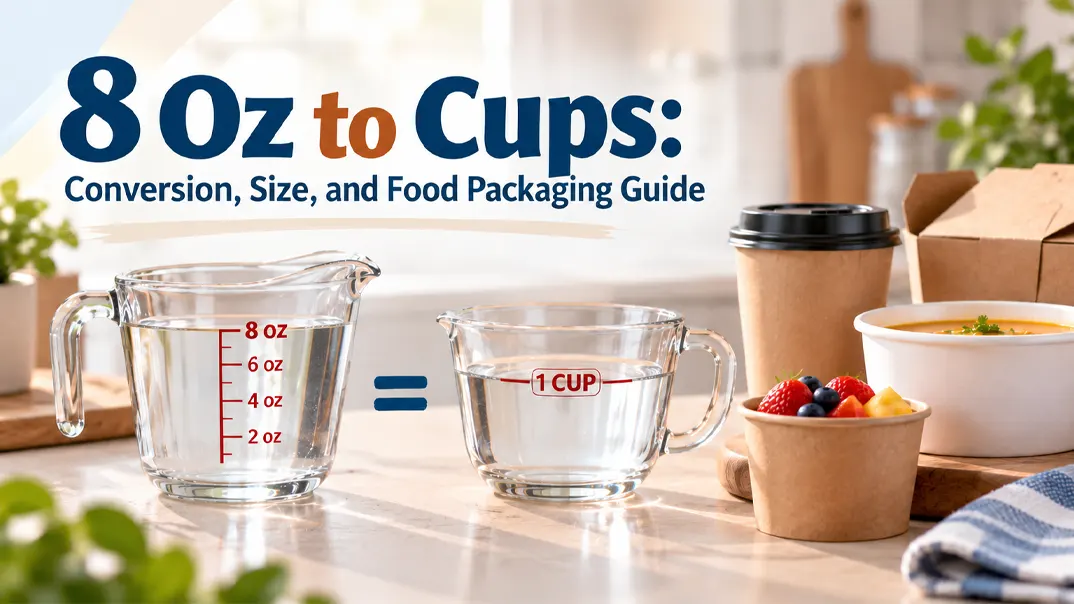
If you are converting 8 oz to cups, the answer is simple: 8 US fluid ounces equals 1 cup, or about 236.6 mL. But when 8 oz refers to weight, the result can vary by food.
In food packaging, 8 oz is also a common size for cups and containers. This guide explains the conversion, common 8 oz container sizes, and how to choose the right packaging for different foods.
8 Oz to Cups: How Many Cups Is 8 Oz?
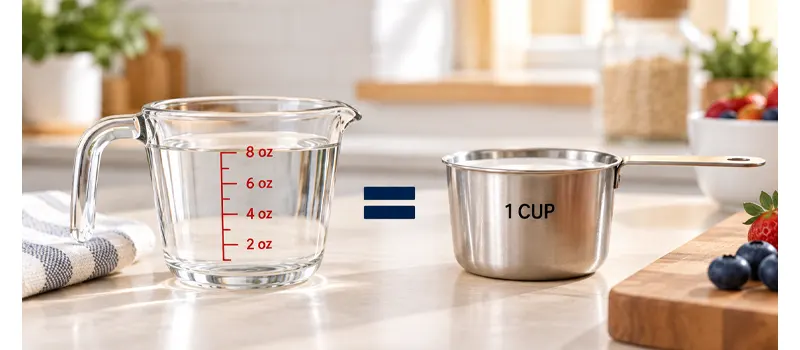
8 US fluid ounces equals 1 US cup. It is also about 236.6 milliliters or 16 tablespoons.
The basic formula is:
Cups = Fluid Ounces ÷ 8
So, 8 ÷ 8 = 1 cup.
| Measurement | 8 fl oz Equals |
|---|---|
| US Cups | 1 cup |
| Milliliters | 236.6 mL |
| Tablespoons | 16 tbsp |
| Pints | 0.5 pint |
| Liters | 0.237 L |
However, the actual dimensions of an 8 oz container are not fixed. One container may be tall and narrow, while another may be short and wide. Both can still hold the same 8 oz volume.
Is 8 Oz Always Equal to 1 Cup?
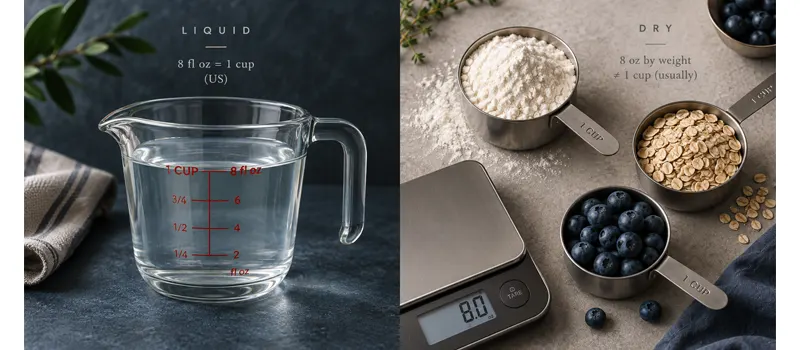
No. 8 fluid ounces equals 1 cup only when measuring volume. If 8 oz refers to weight, the cup measurement depends on the food. For example, 8 oz of flour, sugar, or nuts will not all fill the same volume because their densities are different. In food packaging, 8 oz usually describes container capacity, not the exact weight of the food inside.
This is one of the most common points of confusion in commercial food portioning and packaging procurement. The key to understanding this lies in the difference between measuring volume versus weight.
- Fluid Ounces (fl oz) Measure Volume: This measures the amount of physical three-dimensional space an item occupies. In the food packaging industry, when a container is sold as an “8 oz paper bowl,” it is referring to its volumetric capacity. It holds exactly 1 cup of physical space.
- Dry Ounces (oz) Measure Weight: This measures how heavy an item is. Because different foods have wildly varying densities, 8 ounces of weight will yield completely different volumes.
Tips: When sourcing disposable packaging for takeout and delivery operations, remember that the manufacturer’s “8 oz” rating strictly dictates liquid volume. If your kitchen uses a kitchen scale to measure portions by weight to control food costs, you must physically test your specific menu items inside the packaging. You want to ensure the portion looks visually full and appetizing to the customer without preventing the lid from sealing securely.
Visualizing 8 Oz: Dimensions of Standard Food Containers
8 oz describes capacity, not a fixed container size. An 8 oz package can be tall and narrow, short and wide, or slightly tapered, depending on how it will be used.
Understanding the physical dimensions is important for storage, stacking, lid matching, and carton planning. Common industry examples include:
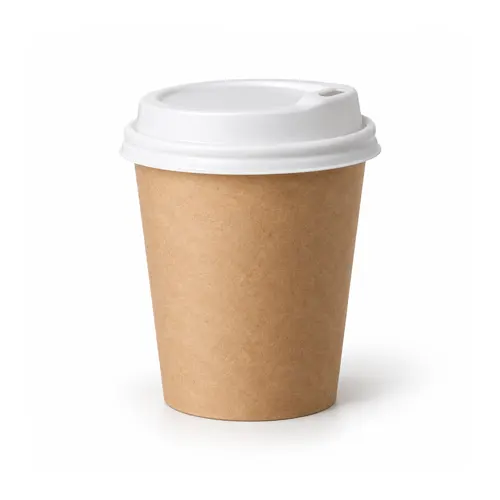
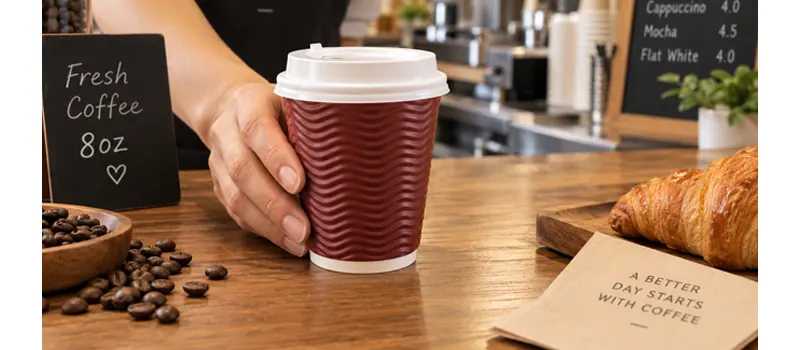
- Hot Paper Cup: Approximately 80 mm top diameter, 56 mm bottom diameter, and 90–92 mm height. This tall, tapered format is widely used for coffee, tea, and other hot drinks.
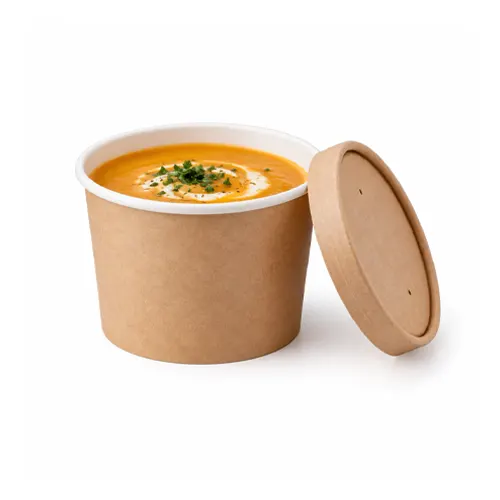
- Soup Cup: Common 8 oz formats are around 90 mm top diameter, 72–75 mm bottom diameter, and 60 mm height, giving them a wider opening and lower profile.
- Ice Cream or Dessert Cup: These are often wider and shorter, with examples around 90–96 mm top diameter and 52–75 mm height, depending on the design.
These dimensions are common industry references rather than universal standards. You should always confirm the exact top diameter, bottom diameter, height, and lid size before ordering.
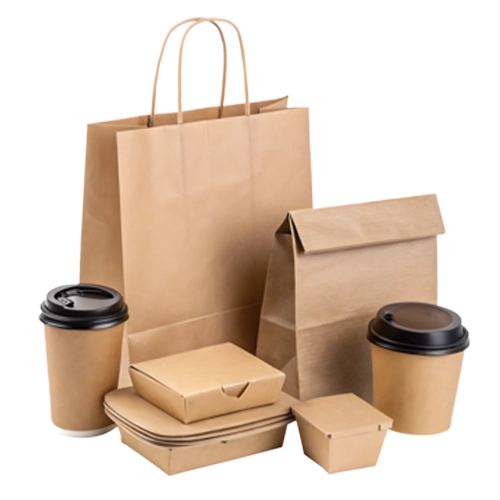
How to Choose the Right 8 Oz Food Packaging?
Selecting the ideal 8 oz container for your business requires matching the physical properties of the packaging to your specific menu items.
Match the Material to the Food
- For hot soups, sauces, and side dishes, use paper containers with a suitable food-contact barrier such as PE. The coating helps resist moisture and grease while maintaining the container’s structure during filling and delivery.
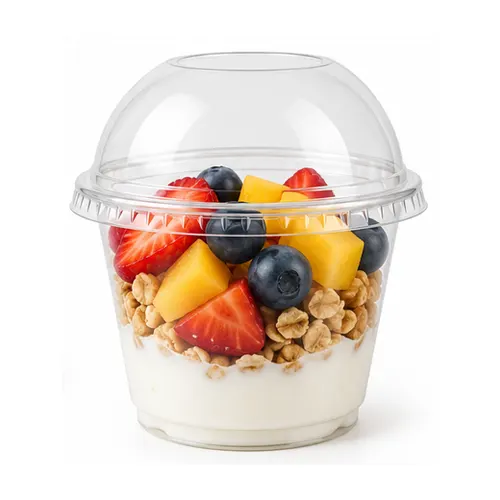
- For ice cream and frozen desserts, use moisture-resistant cups designed to maintain strength when exposed to condensation. A well-coated paper structure prevents the container from softening during storage and serving.
- For businesses using compostable packaging, PLA-lined paper cups are an option for suitable applications. Their disposal route should match local commercial composting requirements.
Choose the Right Lid for Takeaway and Delivery
The lid should match both the food and the container rim. For hot soup and other steaming foods, a vented lid allows steam to escape and helps reduce condensation inside the package. For ice cream, yogurt, and desserts with toppings, a clear PET dome lid provides extra vertical space while keeping the product visible.
Always confirm the lid diameter and product series before ordering. An 8 oz capacity alone does not guarantee lid compatibility.
Consider Shape, Stability, and Storage
Shape affects both customer use and back-of-house efficiency.
A wide, lower-profile container works well for soup, ice cream, sides, and other foods eaten with a spoon. It provides easier access and a stable footprint during takeaway service. A taller, tapered format is better suited to beverages and applications where hand-held use is more important.
For bulk purchasing, also check whether different container sizes share the same rim diameter. Using one lid across several sizes can reduce the number of SKUs you need to stock and simplify storage.
Check the Full Specification Before Ordering
Before confirming a commercial order, check:
- Top diameter
- Bottom diameter
- Height
- Lid diameter
- Material and coating
- Temperature suitability
- Stackability
- Pieces per carton
- Carton dimensions
These specifications determine whether the packaging works efficiently in filling, storage, transport, and daily service.
Test With the Actual Food
Before confirming a large order, fill the container with the real product and test it under normal operating conditions.
Check the portion size, headspace, lid fit, stacking, sealing, and transport performance. This gives you a much more reliable basis for bulk purchasing than choosing by capacity alone.
How to Measure 8 Oz When You Do Not Have a Measuring Cup?
In a busy commercial kitchen, a food truck, or a fast-paced takeout counter, stopping to find a standardized measuring cup isn’t always practical. If you need to quickly estimate 8 fluid ounces (1 cup) without professional measuring tools, here are a few reliable reference points:
- The Water Bottle Method: A standard plastic water bottle typically holds 16.9 fluid ounces. Pouring out slightly less than half of a full bottle will give you a very accurate 8 oz liquid measurement.
- The Coffee Mug Rule: A traditional diner-style ceramic coffee mug holds roughly 8 to 10 ounces of liquid. Filling a standard mug and leaving a small gap at the top usually nets exactly 1 cup.
- The Tablespoon Conversion: If you only have smaller culinary utensils available, remember the exact conversion: 16 standard tablespoons of liquid equal exactly 8 fl oz; 48 standard teaspoons of liquid equal exactly 8 fl oz;
- The Visual “Baseball” Trick: For portioning semi-solid foods like macaroni salad, mashed potatoes, or sticky rice, an 8 oz volume is roughly the physical size of a standard baseball or an average adult’s closed fist.
Standardizing Your Portions
While these estimation tricks are helpful in a pinch, relying on visual guesswork in a commercial food service operation can lead to inconsistent portioning, which directly eats into your profit margins.
This is exactly why high-volume restaurants and delivery operations invest in standardized packaging. By utilizing accurately manufactured 8 oz food containers, your kitchen staff can completely bypass the measuring process. Filling the container to its natural rim guarantees a perfect 8 oz portion every single time, speeding up the packing line while maintaining strict food cost controls.
FAQs
Is an 8 Oz US Cup the Same as a Metric Cup?
No. One US cup equals 8 US fluid ounces, or about 236.6 mL, while a metric cup is usually 250 mL. This difference matters when converting recipes or comparing packaging specifications from different markets.
What Is the Difference Between Rated Capacity and Brimful Capacity?
Rated capacity is the intended usable volume of the container. Brimful capacity is the maximum amount it can hold when filled to the rim. For food packaging, use the rated capacity when comparing products. Brimful capacity does not leave enough space for lids, toppings, or foam.
How Many 8 Oz Servings Are in One Gallon?
One US gallon contains 128 fluid ounces, so it provides:
128 ÷ 8 = 16 servings
Why Do Some 8 Oz Containers Look Larger Than Others?
Container shape changes how the volume is distributed. A wide, shallow cup can look larger than a tall, narrow cup even when both have the same stated capacity. This is why you should compare the actual dimensions and usable fill capacity instead of judging size only by appearance.
Is 8 Oz Suitable for a Single Serving?
For many foods, yes. It is commonly used for individual desserts, small soups, snacks, sauces, and side portions.
Conclusion
The 8 oz to cups conversion is simple: 8 US fluid ounces equals 1 US cup. In food packaging, however, capacity is only one part of the decision. The same 8 oz volume can come in different shapes, dimensions, materials, and lid systems, so the best option depends on the food, serving style, and delivery requirements.
Million Pack offers a range of 8 oz cups and food containers for beverages, soups, desserts, sides, and other food-service applications, making it easier to match the right format to your product and operational needs.