

Corrugated flutes are the internal wave shaped structure found between the outer layers of corrugated packaging. They determine how much pressure a box can handle, how well it cushions products and how smooth the surface appears for printing.
Many brands struggle with packaging damage, excessive material use, or poor print quality because they choose flutes without understanding their differences. Each corrugated flute type varies in height and density, and these variations affect cushioning, rigidity, and appearance.
To avoid these questions, we offer a clear guide to the most common corrugated flutes and the role each one plays. By understanding these profiles, you can match packaging performance to your product requirements with confidence.
What Are Corrugated Flutes?
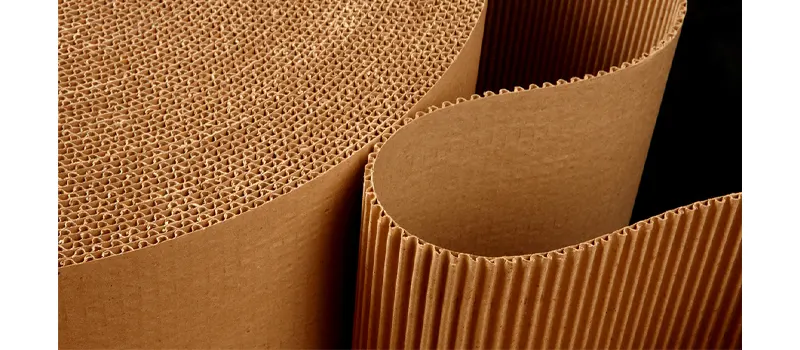
Corrugated flutes are the curved, wave-shaped inner layer found between two pieces of linerboard in corrugated packaging. This fluted structure creates air pockets that provide strength, cushioning, and rigidity, which is why corrugated packaging performs well during stacking and transport. In simple terms, corrugated flutes are a part of the board that helps a box resist pressure and absorb impact.
To create these flutes, manufacturers use a material called flute paper. Flute paper is a specially selected grade of kraft paper or recycled paper that is fed through heated corrugating rollers to form uniform waves. Once shaped, this fluted layer is immediately bonded to linerboards to become single wall, double wall, or triple wall corrugated board.
Each flute acts like a column, designed to absorb impact and resist pressure. Corrugated flutes serve several functions depending on their profile. Taller flutes offer stronger cushioning, while smaller flutes provide better print surfaces and higher compression strength. The basic concept remains the same: combining strength and lightweight construction for effective packaging.
In modern packaging, corrugated flutes are widely used in shipping cartons, food packaging, retail displays, and custom-branded boxes. Their ability to balance protection, cost efficiency, and sustainability makes them one of the most important components in the global packaging industry.
Flute paper is the wavy and corrugated medium placed inside a corrugated board to create strength, cushioning, and rigidity. It forms the curved arches between linerboards and helps the material absorb impact, resist compression, and protect packaged goods.
When paired with one or more liners, flute paper becomes a complete corrugated structure such as single face, single wall, double wall, or triple wall. Although some people use the term as if it means the same as corrugated flutes, flute paper technically describes the raw paper material before it is shaped into specific flute profiles like B, C, or E.
Types of Flute in Corrugated Packaging
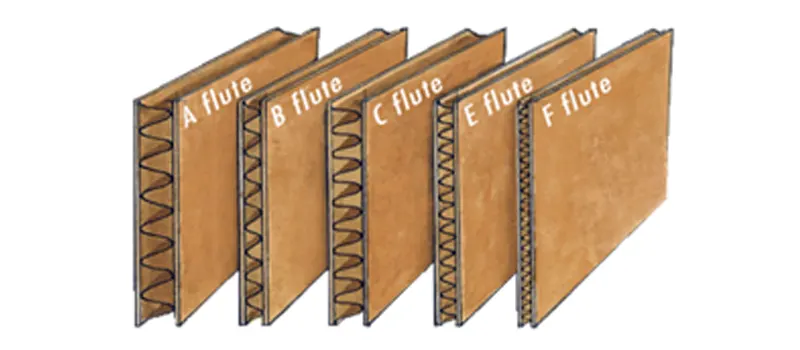
Corrugated flute types are named according to the order in which they were developed rather than their size. The earliest version was A flute, followed by B, C, E and F as packaging needs evolved. Each new corrugated flute profile was designed to solve a different problem, such as improving printability, increasing puncture resistance, reducing board thickness or enhancing cushioning.
Because of this historical naming sequence, the letters do not represent size differences directly but instead reflect the development timeline of corrugated technology. Understanding the unique structure, performance and best uses of each flute type helps manufacturers and buyers select the most suitable corrugated material for their packaging needs.
A Flute
Size: Approximately 4.8 mm (3/16 inch) thick; about 33 flutes per foot
A flute is the thickest corrugated flute profile and provides strong cushioning and excellent rigidity. Its larger flute height helps the board absorb shocks and protect fragile items during shipping. Because of its structure, it offers high compression strength but a rougher printing surface.
Benefits:
- High cushioning performance due to greater flute height
- Good thermal insulation from air-trapping wave structure
- Enhanced rigidity helps reduce product damage during transit
Applications:
A flute is commonly used for traditional shipping cartons, industrial packaging and protective packaging where extra cushioning is required. It is ideal for fragile goods that need more shock absorption during transport.
B Flute
Size: Approximately 3.0 mm (1/8 inch) thick; about 47 flutes per foot
B flute has a thinner profile than A flute but features more corrugated flutes per foot, which contributes to better puncture resistance and a smoother surface for printing. Despite its reduced thickness, B flute still offers good stacking strength and rigidity, making it a versatile choice for a variety of packaging applications where both strength and printability are required.
Benefits:
- Strong puncture resistance due to dense flute structure
- Smoother surface enhances print quality and visual appeal
- Good strength-to-thickness ratio makes it space-efficient
Applications:
B flute is commonly used in retail packaging, canned goods packaging, and folding cartons. It is ideal for items that require strong protection with a more refined print surface, such as food products, consumer electronics, and custom printed boxes.
C Flute
Size: Approximately 4.0 mm (5/32 inch) thick; about 39 flutes per foot
C flute offers a balance between A and B flutes in both thickness and flute density. It provides good cushioning and compression strength, while also supporting adequate printability. This makes it the most widely used flute type in standard corrugated packaging and one of the most versatile options in the industry.
Benefits:
- Balanced performance for cushioning and stacking strength
- Suitable for heavier contents and standard shipping needs
- Offers good surface for printing while maintaining structural durability
Applications:
C flute is frequently used in shipping cartons, packaging for consumer goods, and standard corrugated boxes. It performs well for moderate to heavy products and is a reliable choice for a broad range of industries, including logistics, manufacturing, and e-commerce.
E Flute
Size: Approximately 1.6 mm (1/16 inch) thick; about 90 flutes per foot
E flute is a fine corrugation with closely spaced flutes that create a thinner profile and smooth outer surface. This structure supports high-resolution printing and precise die-cutting, making it especially valuable in applications where design and branding are important. Despite its slimness, it still offers enough strength for lightweight product protection.
Benefits:
- High flute density provides a flat, smooth surface for premium printing
- Reduces overall packaging thickness and saves shelf space
- Lightweight yet offers reasonable strength for small, lightweight products
Applications:
E flute is commonly used in fast food containers, cosmetics packaging, and printed presentation boxes. It is ideal for packaging that prioritizes visual appeal and compactness, especially in industries where branding and design play a crucial role in the consumer experience.
F Flute
Size: Approximately 0.8 mm (1/32 inch) thick; about 125 flutes per foot
F flute features ultra-fine, shallow corrugations that result in a very thin profile with a highly uniform surface. While it lacks the cushioning strength of thicker corrugated flutes, its main advantage lies in precision and print quality. It enables crisp folds and seamless die-cuts, making it ideal for premium packaging formats.
Benefits:
- Exceptional surface smoothness supports high-quality graphics
- Thin profile reduces material waste and environmental impact
- Enhances the unboxing experience with a sleek, luxury presentation
Applications:
F flute is widely used in luxury packaging, cosmetics, electronics accessories, and gift boxes. It is especially valuable for premium retail products that need to make a strong visual impression while staying environmentally conscious.
Combined Corrugated Flutes Types Comparison Table
| Flute Combination | Approx. Thickness | Composition | Key Benefits | Typical Applications |
|---|---|---|---|---|
| BC Flute | 6.0 – 7.0 mm | B flute + C flute | Excellent stacking strength and cushioning; reliable for transport | Industrial packaging, export cartons, heavy-duty shipping boxes |
| EB Flute | 4.0 – 4.5 mm | E flute + B flute | Strong crush resistance with smooth surface; good for branding and protection | Retail-ready packaging, small electronics, POS displays |
| AC Flute | 7.0 – 8.0 mm | A flute + C flute | Maximum strength and impact resistance; heavy-duty structure | Export packaging, large machinery, crate replacement |
| AE Flute | 5.5 – 6.0 mm | A flute + E flute | Combines high protection with better printability | Consumer electronics, fragile retail items, e-commerce branded packaging |
Common Corrugated Board Constructions
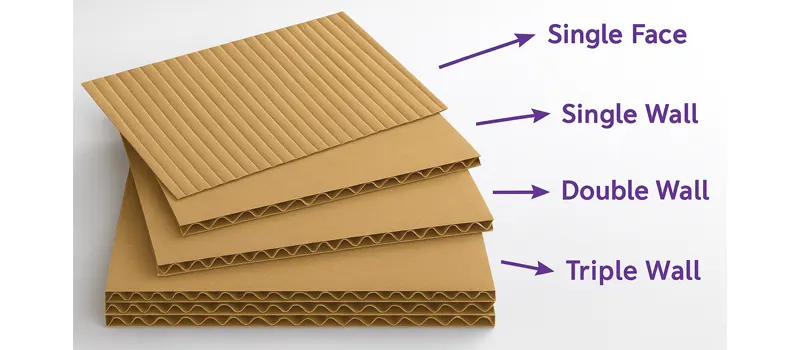
Corrugated board constructions vary in strength and durability depending on the number of linerboards and fluted mediums they contain. The most common types include single-face, single-wall, double-wall, and triple-wall boards. Each structure serves a different purpose based on the level of protection, cushioning, and stackability required.
Single Face
A single face board is made of one layer of fluting attached to one liner. Because it does not include a second liner, it offers limited strength but remains flexible and lightweight. This construction is widely used for internal cushioning, product wrapping, and protective padding placed inside larger boxes. Its flexibility makes it especially suitable for wrapping irregular shapes or adding shock absorption within packaging.
Single Wall
A single wall board features one layer of fluting sandwiched between two liners. This is the most commonly used corrugated structure, offering a reliable balance of compression strength, cushioning, and printability. Single-wall boards are used for standard shipping cartons, e-commerce packaging, retail boxes, and general consumer goods packaging. They provide strong performance for day-to-day shipping and storage needs.
Double Wall
A double-wall board contains two layers of fluting separated by three liners. This construction provides significantly higher strength, increased crush resistance, and improved rigidity compared to single-wall structures. Double-wall boards are ideal for heavier products, stacked pallet shipments, industrial parts, and situations requiring durable protection during long-distance transit or warehouse storage.
Triple Wall
A triple-wall board is composed of three fluted layers supported by four liners. It is the thickest and strongest standard corrugated construction, offering strength levels comparable to wooden crates in many applications. Triple-wall boards are used for extremely heavy or bulky items, export shipments, industrial machinery, chemical containers, and other high-load applications where maximum stacking strength and protection are required.
How to Choose the Right Corrugated Flutes for Your Packaging?
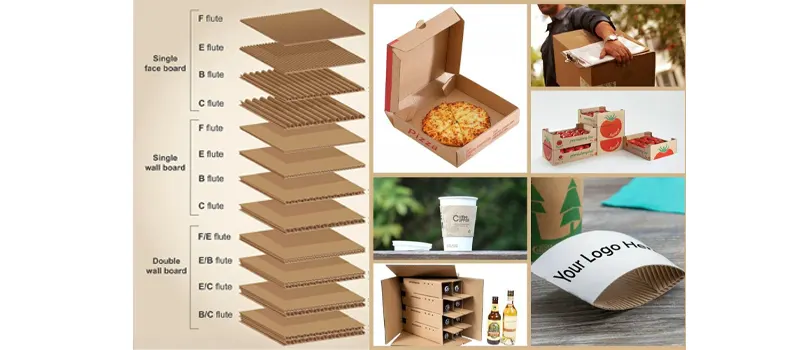
To choose the right corrugated flutes for your packaging, you need to balance product protection, printing needs, and cost efficiency, etc. The ideal flute depends on what you’re packaging, how it’s shipped or displayed, and the impression you want to leave on customers. Below are the key considerations to help guide your selection:
1. Product Weight and Fragility
The weight and fragility of your product directly influence the level of protection needed during shipping and handling. Fragile items such as glassware, ceramics, or electronics require better shock absorption to avoid damage. Heavier items also put more pressure on the packaging itself, increasing the need for structural rigidity and compression resistance.
For these situations, A flute and C flute are the most suitable options. A flute has a thicker profile that provides excellent cushioning, while C flute offers a balance between strength and moderate thickness. These corrugated flute types are widely used for industrial goods and protective shipping boxes where performance takes priority over visual appeal.
2. Protection During Transit
Packaging that moves through long or complex supply chains is at higher risk of compression, vibration, and impact. Frequent loading, unloading, or carrier transfers can expose packages to physical stress, making transit protection a key concern, especially for valuable or delicate products.
In such cases, C flute or double-wall combinations like BC flute are ideal. They offer added thickness and multiple layers of protection, making them resistant to crushing and suitable for international shipping. B flute can also be used for lighter items that need moderate protection over shorter routes.
3. Storage and Stacking Needs
If your boxes will be stored in warehouses, stacked on pallets, or held for long periods before delivery, vertical load-bearing capacity becomes important. Boxes at the bottom of a stack must maintain their shape and protect the contents without collapsing under pressure.
C flute and B flute both offer strong vertical strength, making them reliable for stacking. For bulk packaging or export pallets, double-wall combinations ensure durability during extended storage. Choosing a flute with high stacking resistance helps preserve packaging integrity and prevents damage in transit or storage.
4. Packaging Design and Print Quality
Packaging that reaches the end customer often doubles as a marketing tool. Whether used in retail displays or direct-to-consumer shipping, the appearance and precision of the packaging affect brand perception. A smoother surface allows for better color, clarity, and visual impact in printing.
For detailed graphics, clean folds, and professional finishes, E flute and F flute are the best choices. Their fine structure produces an even surface, ideal for high-resolution printing and custom die-cut designs. B flute also performs well when durability is needed along with a decent print surface.
5. Flute Line Visibility
In some packaging, especially with solid color printing or minimalist design, the underlying flute pattern may become visible through the printed outer layer. This can disrupt the clean appearance and reduce the perceived quality of the product.
E flute and F flute minimize this issue due to their high flute density and smoother finish. They are ideal for applications where aesthetics are critical, such as luxury goods, cosmetics, or electronics. Reducing flute visibility ensures a more premium look and a better first impression.
6. Industry-Specific Standards
Certain industries follow established practices regarding which flute types to use. This is often based on regulatory needs, supply chain norms, or long-standing functional advantages of specific flute profiles within that product category.For example, the food industry frequently uses E flute for bakery boxes, frozen food cartons, and beverage trays due to its puncture resistance and space efficiency. F flute are preferred by premium retail brands for packaging items like cosmetics, tech accessories, or fashion items, where printability and aesthetics matter more.
7. Environmental Goals and Material Use
If your business is aiming to reduce its environmental footprint, the choice of flute type can support that objective. Lighter flutes use less fiber, reduce overall material consumption, and help lower shipping emissions due to decreased weight.
E flute and F flute are ideal when sustainability and efficiency are top concerns. These profiles consume less paper while still offering sufficient strength for many consumer products. When combined with recycled or FSC-certified liners, they support eco-friendly packaging strategies without sacrificing quality.
8. Cost Considerations
Flute selection also has a direct impact on cost. Thicker flutes may enhance protection but require more material and result in larger packaging volumes, which can increase production and shipping costs. Choosing the most protective option without over-specifying is essential.
For cost-effective performance, B flute is a reliable all-purpose option that balances strength and savings. E flute and F flute are excellent for reducing material use while maintaining strong print results. Selecting the right flute ensures the packaging meets performance needs without overspending on unnecessary thickness.

Conclusion
Understanding the different types of corrugated flutes is essential for designing packaging that meets the specific demands of your product, supply chain, and brand image. From thick and durable A flutes to ultra-thin and elegant F flutes, each profile offers unique advantages in terms of protection, printability, material efficiency, and cost.
When choosing corrugated flutes, buyers should consider the weight of the product, transportation demands, storage conditions, branding requirements and sustainability goals. Understanding how different flute profiles work makes it easier to match the right structure to the right application, ensuring products remain protected while keeping packaging efficient and cost effective.
If you are looking for reliable, high-quality corrugated packaging solutions, choose Million Pack to support your next project with professional materials, consistent quality, and trusted manufacturing expertise.