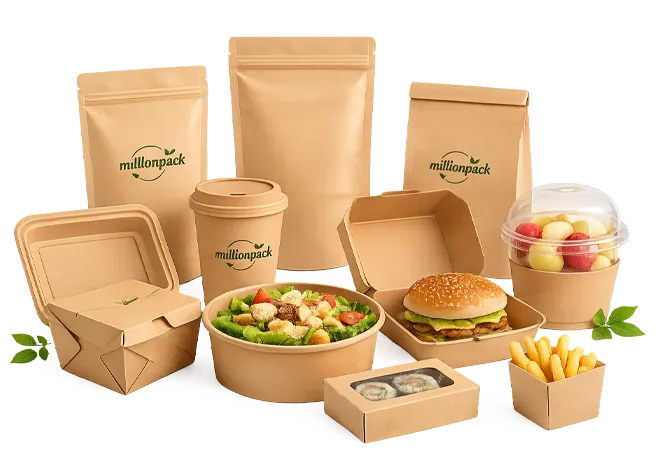
Water-based coating is a water-based functional layer applied on paper to make it suitable for food packaging. Instead of using thick plastic films, it relies on polymer dispersions and additives carried in water to create a thin barrier on the paper surface. Once dried, this layer helps the paper resist liquids, oils, and heat, while still looking and feeling like a fiber-based pack rather than a plastic cup or box.
For brands and converters, water-based coating in paper food packaging sits right at the crossroads of performance, sustainability, and regulation. Coffee cups, soup bowls, takeaway boxes, bakery cartons, and even some frozen-food packs now need to handle hot and cold, fat and moisture, tight safety rules, and rising expectations around recyclability and “less plastic.” Water-based systems are attractive because they can often run on existing coating lines, support food-contact compliance, and work more smoothly with paper-recycling infrastructure than classic PE or PLA laminates.
This article walks through the full picture of water-based coating in paper food packaging: what it is made of, how the film forms and dries on paper, and which technical characteristics really matter in daily production. It explains the core advantages and realistic limits, compares water-based coatings with PE and PLA systems, outlines a typical production process, and shows where these coatings already work well in real applications. Finally, it gives a practical decision framework and answers common questions so technical teams, buyers, and sustainability managers can judge when water-based coating is the right tool—and when it should be combined with other packaging technologies.
What Is Water-Based Coating
Water-based coating in paper food packaging is an engineered “barrier paint” made from polymer dispersions, additives, and sometimes pigments, all dispersed in water. Once the water leaves the system during drying, the polymers form a continuous film on the paper surface, locking in performance features like resistance to coffee, soup, oil, or sauces. Compared with PE extrusion coating or PLA films, water-based systems are much thinner, more closely integrated with the fiber surface, and usually easier to repulp in standard paper recycling processes.
When people talk about water-based coating in paper food packaging, they usually mean a thin functional layer applied to paper or paperboard that is formulated in water instead of organic solvents. After coating and drying, this layer gives the paper new properties such as liquid resistance, grease resistance, and better heat-sealing, while still aiming to be recyclable and food-safe.
Because the formulation is waterborne and typically low in volatile organic compounds (VOC), water-based coating in paper food packaging is increasingly chosen by brands and converters that want to reduce environmental footprint, maintain compliance with food-contact regulations, and still meet demanding performance requirements in hot and cold food applications.
Composition of Water-Based Coating
At a high level, a water-based coating in paper food packaging looks simple: it is just a milky liquid applied to paper. Under the hood, though, it is a carefully balanced chemical system where each component plays a specific role. A typical formulation can be grouped into the following building blocks:
Water (continuous phase)
Water is the primary carrier. It provides a fluid medium that allows all other components to be dispersed and enables the coating to be pumped, metered, and applied using standard paper coating equipment. During the drying process, most of the water is removed, leaving behind a functional film.
Polymer binders and dispersions
These are the main film-forming materials, typically in the form of polymer dispersions or latexes. Common chemical compositions include: styrene-acrylate or pure acrylate dispersions, polyurethane dispersions (PUDs), ethylene-vinyl acetate (EVA), or other modified copolymers. The adhesive network largely determines barrier properties, flexibility, adhesion to paper, and resistance to hot liquids or greases.
Coalescing agents and plasticizers
These small molecules help polymer particles flow together and form a continuous film at realistic drying temperatures. Without them, the coating might dry to a brittle, cracked, or porous structure, which would seriously hurt liquid and oil barrier performance.
Functional additives
A broad range of additives fine-tune the behavior of water-based coating in paper food packaging during application and in end use:
- Wetting and dispersing agents to ensure even coverage and good anchoring on different paper grades
- Defoamers and deaerators to control foam on high-speed coating lines
- Rheology modifiers and thickeners to adjust viscosity and prevent sagging or misting
- Slip and anti-block additives to prevent coated surfaces from sticking together in stacks or rolls
- Waxes or specialty polymers to enhance grease resistance and heat-seal performance
Pigments and fillers (optional)
Some water-based barrier coatings are nearly clear, while others include pigments or fillers:
- White or colored pigments for coverage or specific branding needs
- Plate-like fillers (e.g., certain clays or talc) to improve tortuosity and barrier behavior
- When pigments and fillers are used in water-based coating in paper food packaging, they must be carefully selected to maintain good film integrity and compatibility with the recycling and pulping processes
Film-Forming and Drying Mechanism
The working principle of water-based coatings is based on a simple yet carefully controlled process: application, water evaporation, and film formation. The coating is typically applied to the paper substrate using roller coating, blade coating, or similar methods, after which the coated paper enters the drying stage.
During drying, water gradually evaporates under controlled temperature and airflow conditions. As the water leaves the system, the dispersed polymer particles move closer together. Eventually, they coalesce and form a continuous film across the paper surface. This film is what provides resistance to liquid penetration, oil migration, and surface degradation during use.
Unlike extrusion-based plastic coatings, film formation in Water-Based Coating systems does not involve melting or solidifying thick plastic layers. Instead, performance comes from the uniformity and integrity of a relatively thin film. This difference has important implications for energy use, equipment requirements, and the final structure of the coated paper.
Key Technical Characteristics
- Film Continuity
The effectiveness of a Water-Based Coating depends on its ability to form a uniform, continuous film across the paper surface without pinholes or weak spots. - Barrier Efficiency at Low Coating Weight
Performance is achieved through formulation and film quality rather than thickness, allowing functional barriers with relatively low coating weight. - Adhesion to Paper Fibers
The coating bonds securely to the paper substrate, supporting structural stability during forming, filling, and short-term food contact. - Flexibility and Crack Resistance
Properly designed systems maintain flexibility during folding and creasing, reducing the risk of cracking at stress points. - Surface Smoothness and Print Compatibility
The coated surface supports consistent printing and graphics without compromising barrier performance. - Sealing and Converting Compatibility
Water-based coated papers can be integrated into standard converting and forming processes when coating properties are matched to equipment requirements. - Controlled Moisture Sensitivity
Residual moisture levels are managed during drying to ensure stable performance without affecting downstream processing.
Advantages of Water-Based Coating for Paper Packaging
When evaluating coating technologies for paper food packaging, advantages should be discussed in terms of outcomes rather than promises. For converters, brand owners, and buyers, the real question is not how the coating is formulated, but how it performs once the package is filled, handled, transported, and briefly exposed to real food conditions. In this section, the advantages of Water-Based Coating are discussed from a functional and operational perspective, focusing on what the coating delivers in practical use rather than theoretical claims.

Liquid and Oil Barrier Performance
A well-designed water-based coating in paper food packaging builds a continuous, low-porosity film that keeps coffee, soup, and sauces from soaking into the paper and weakening the structure. By matching polymer type and coat weight to the end use, converters can reach the wet strength and hold time needed for everyday scenarios such as hot drinks or noodle bowls, without resorting to thick plastic laminates.
For oily or greasy foods, barrier performance can be tuned using grease-resistant polymers and specialty additives, often in fluorine-free formulations. This lets water-based coating in paper food packaging handle burgers, fries, baked goods, and other high-fat products with far less visible staining and leakage, while responding to brand and regulatory pressure to move away from PFAS-based chemistry.
Thermal Stability and Heat Resistance
In typical use conditions, water-based coating in paper food packaging can maintain film integrity and adhesion under hot-fill or hot-serve temperatures, so cups, bowls, and trays do not soften prematurely or release noticeable odors. By selecting binders with appropriate glass transition temperatures and, where needed, light crosslinking, the coating stays stable during short microwave or reheating cycles, and remains flexible enough to avoid cracking in chilled or frozen storage.
Food Contact Compliance
Food contact safety is a fundamental requirement in paper packaging, and Water-Based Coating offers advantages in this area through formulation transparency and regulatory alignment. Because water is used as the primary carrier, these coatings typically avoid the use of aggressive solvents associated with higher regulatory scrutiny.
When properly formulated and tested, water-based coatings can be designed to comply with major food-contact regulations in different markets. This simplifies compliance management for converters and brand owners, especially when packaging is distributed across multiple regions with varying regulatory frameworks.
Manufacturing Compatibility
Another practical advantage of Water-Based Coating is its compatibility with conventional paper coating and converting equipment. Application methods such as roll coating or blade coating can be integrated into existing production lines with relatively minor adjustments.
Because film formation relies on controlled drying rather than high-temperature extrusion, manufacturing processes can be more flexible. This compatibility allows converters to adapt water-based coating systems without completely restructuring their production setup, supporting smoother transitions from traditional coating technologies.
Recyclability and Pulping Performance
Because the barrier layer is thin and closely integrated with the fiber surface, water-based coating in paper food packaging tends to behave more like a functional surface treatment than a separate plastic film when it hits the pulper. This usually allows fibers to be released and recovered with less complex separation, and helps coated grades meet recyclability guidance from industry groups and mills. In practice, that means less friction when brands want to claim fiber-based recyclability in markets where infrastructure already exists.
Low VOC and Environmental Profile
From an environmental and workplace perspective, water-based coating systems generally offer a lower VOC profile compared to solvent-based alternatives. Reduced emissions during application and drying support safer production environments and align with stricter environmental regulations.
Comparison with PE and PLA Coatings in Paper Packaging
When selecting a coating technology for paper food packaging, most decisions are made by comparing realistic alternatives rather than idealized concepts. In commercial use today, PE coating, PLA coating, and Water-Based Coating represent three different technical routes to achieve barrier performance on paper. Each option delivers results through a different structure, processing method, and end-of-life pathway.
Instead of framing the comparison in terms of “better” or “worse,” the table below focuses on functional differences that affect real-world use, including production compatibility, regulatory handling, recycling behavior, and application suitability. This comparison helps converters, brand owners, and procurement teams evaluate which coating system aligns best with their product requirements and operational constraints.
| Technical Aspect | Water-Based Coating | PE Coating | PLA Coating |
|---|---|---|---|
| Barrier Structure | Thin surface film | Plastic laminated | Bioplastic laminated |
| Application Process | Liquid coating + drying | High-temp extrusion | High-temp extrusion |
| Heat Performance | Stable for typical use | High heat tolerance | Limited heat resistance |
| Recyclability | Better pulping design | Separation required | Composting-dependent |
| Typical Positioning | Plastic-reduction | Traditional choice | Bio-based alternative |
PE remains the benchmark for very high and robust barrier performance, especially for long dwell times, aggressive fats, or demanding heat-seal conditions. PLA can offer good stiffness and clarity in specific structures, though it may be sensitive to heat and some fats. A water-based coating in paper food packaging usually targets “good enough” barrier levels for mainstream uses like hot and cold cups, takeaway boxes, and bakery packs, rather than competing with thick plastic laminates in extreme scenarios.
This trade-off is often acceptable because the usage window for many fiber packs is relatively short, and the food is consumed quickly. Brands gain easier recyclability and a stronger sustainability story, while still keeping leaks and grease marks under control. The key is to define performance boundaries clearly and specify where water-based coating in paper food packaging is suitable, and where long-term, high-pressure barrier tasks should still rely on more robust multilayer or plastic-heavy solutions.
Typical Production Process Using Water-Based Coating
A technical overview of the transition from liquid coating to functional barrier.
Paper Substrate Preparation
Fiber density and surface porosity are pre-screened to ensure the barrier layer sits uniformly on the paper surface.
Coating Application
Precise roll or blade methods apply the water-based formula, maintaining tight control over coating weight and viscosity.
Drying and Film Formation
Thermal control removes water, allowing polymer particles to coalesce into a continuous, non-porous functional film.
Forming and Converting
The dried paper is folded and sealed into final shapes. The coating is engineered to resist cracking at stress points.
Quality Control
Final testing for liquid hold-out and barrier integrity to ensure reliable performance across production batches.
Application Scenarios of Water-Based Coating Paper Packaging
As brands move away from heavy plastic laminates, water-based coating in paper food packaging is being slotted into very specific roles along the food chain. Instead of trying to cover every possible use, converters usually target clearly defined formats where dwell time, temperature, and grease load are well understood. That way the coating can be tuned to “just right” performance and give a reliable, repeatable user experience from factory to table.
Paper Cups for Hot and Cold Beverages
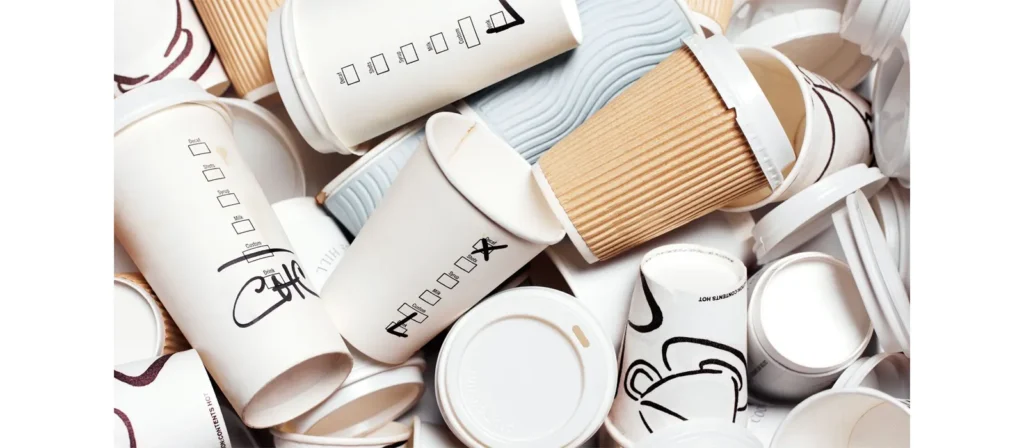
Paper cups are one of the most established applications for Water-Based Coating, especially in short-duration beverage use. Hot coffee, tea, and cold drinks all expose paper to moisture and temperature changes, but usually for limited serving times. Water-based coatings provide sufficient liquid resistance to prevent leakage and loss of rigidity during consumption, without relying on thick plastic layers.
For hot beverages, the coating helps maintain cup structure under heat while avoiding the softening associated with unprotected paper. For cold drinks, it reduces condensation-related absorption. In both cases, the coating supports functional performance while aligning with plastic-reduction goals increasingly demanded by brands and food-service operators.
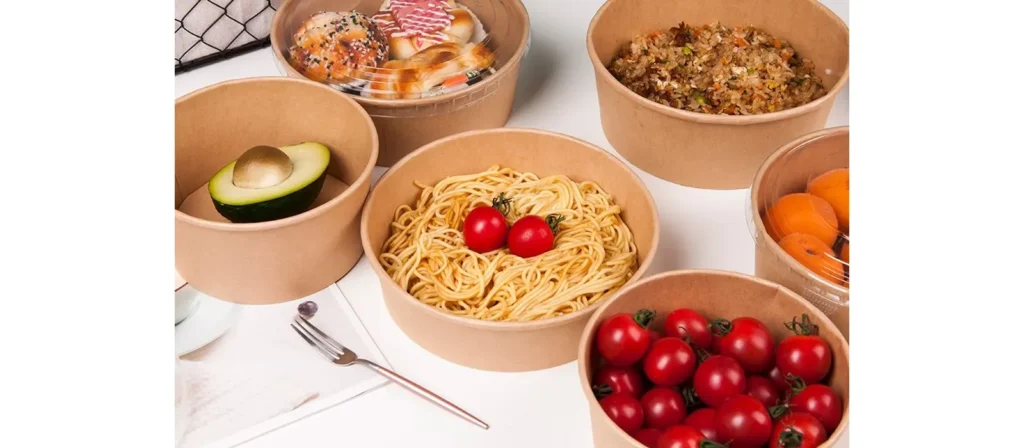
Paper Bowls for Soups and Prepared Foods
Paper bowls for soups, noodles, and ready-to-eat meals place higher demands on heat and liquid resistance, especially when the product is hot-filled or microwaved. Here, water-based coating in paper food packaging is formulated with stronger thermal stability and enhanced wet barrier so it can handle broths, sauces, and mixed ingredients for the intended eating window. When specified correctly, it offers a practical balance between leak protection and fiber-based recyclability.
Food Takeaway Boxes and Containers
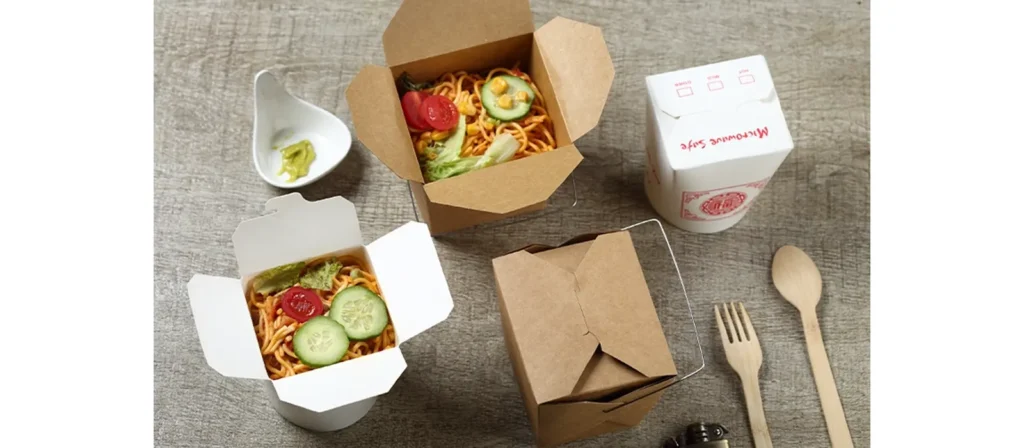
Takeaway packaging faces mixed challenges, including moisture, oil, and brief heat exposure. Water-Based Coating is frequently applied to paper-based takeaway boxes where foods such as rice dishes, pasta, or sauced meals are packed for short-distance transport.
In these applications, the coating supports grease resistance and surface integrity while allowing folding, locking tabs, and forming features to function without cracking. This combination is particularly valuable for packaging designed for immediate consumption rather than extended storage.
Paper Trays and Plates for Ready-to-Eat Foods
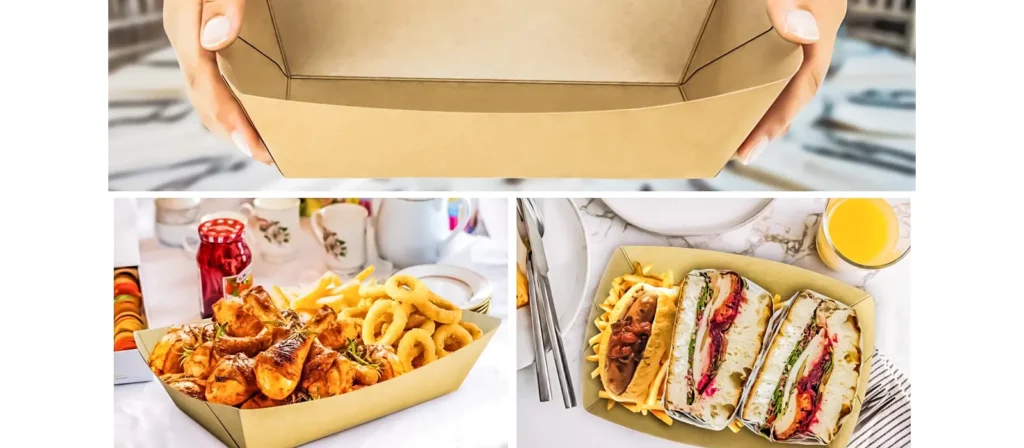
Paper trays and plates used in canteens, convenience stores, and events rely on simple, dependable barrier performance rather than extreme long-term protection. A thin layer of water-based coating in paper food packaging can keep sauces, dressings, and light oils from soaking through, allowing the tray or plate to stay firm for the duration of the meal. After use, the item behaves more like standard paperware in many waste and recycling systems, depending on local rules.
Bakery and Confectionery Packaging
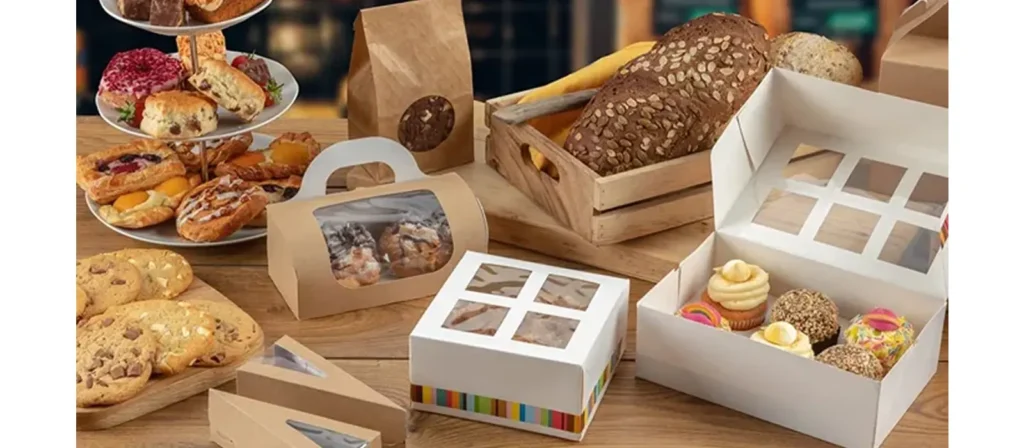
Bakery bags, cake boards, and pastry cartons often need moderate grease resistance and clean presentation rather than full liquid tightness. In these formats, water-based coating in paper food packaging is typically applied at lower coat weights to stop butter, cream, or chocolate from migrating into visible stains, while maintaining good print quality and a pleasant hand feel. The result is packaging that looks premium on shelf yet still aligns with fiber-based sustainability narratives.
Frozen and Refrigerated Food Packaging
For frozen snacks, ice cream novelties, and chilled ready meals, coated paper packs must tolerate low temperatures without cracking and withstand some condensation when products thaw. Properly formulated water-based coating in paper food packaging retains flexibility in the cold and offers sufficient moisture and grease resistance for the expected storage and handling period. It suits brands seeking to shift certain frozen SKUs away from full plastic trays or pouches toward more visible paper-based formats.
Secondary Food Packaging with Oil Resistance Requirements
In secondary packs like pizza collars, donut boxes, or multi-pack wraps that do not always touch food directly but still face stray oil or sauce, water-based coating in paper food packaging acts as a light protective shield. It helps outer boxes stay clean and structurally intact during transport and handling, reducing complaints about greasy outer surfaces. At the same time, the coating level can remain modest, keeping costs under control and supporting recyclability in fiber-stream-focused recovery systems.
Limitations and Considerations of Water-Based Coating
Although Water-Based Coating is widely used in paper food packaging, it is important to evaluate it with realistic expectations. Its performance depends not only on formulation, but also on how it is used, processed, and tested. The points below summarize the most common limitations and practical considerations in plain language.
- Not Designed for Long-Term or Extreme Use
Water-Based Coating works well for short- to medium-duration food contact, but it is not meant for long-term liquid storage, extended soaking, or continuous high-temperature exposure. If a package must hold liquid for a long time or withstand harsh conditions, other barrier solutions may be more appropriate. - Drying Must Be Well Controlled
Because the coating relies on water evaporation, proper drying is critical. If drying is insufficient, leftover moisture can weaken performance. If drying is too aggressive, energy use increases and surface defects may appear. Stable drying conditions are essential for consistent results. - Even Coating Matters More Than Thickness
Unlike thick plastic layers, Water-Based Coating depends on uniform coverage. Small uneven areas, especially near edges or seams, can become weak points. This means production quality and control are more important than simply applying more material. - Production Lines May Need Adjustment
Although many coating lines can handle Water-Based Coating, equipment originally designed for extrusion coatings may need tuning. Drying sections, forming tools, and sealing settings must match the coating’s behavior to avoid cracking or weak seals. - Results Vary by Coating Formula
Not all water-based coatings perform the same. Barrier strength, flexibility, and heat resistance depend heavily on the specific formulation used. Performance should never be assumed based on the coating type alone. - Real-Use Testing Is Necessary
To avoid surprises after launch, Water-Based Coating should be tested under real conditions, including actual food type, temperature, handling time, and disposal method. This step takes time but greatly reduces application risk.
Current Industry Adoption and Development Trends
In the last few years, water-based coating in paper food packaging has shifted from pilot projects to mainstream rollouts in cups, takeaway boxes, and bakery formats. Large brand owners now routinely run regional launches or A/B tests where water-based lines sit alongside classic PE-coated SKUs, using real-world performance and consumer feedback to decide which designs stay in the long-term portfolio. That pragmatic, stepwise adoption is replacing earlier “all or nothing” plastic-reduction promises.
At the manufacturing level, adoption trends reflect a shift toward process flexibility rather than radical equipment replacement. Converters with existing coating lines are integrating Water-Based Coating through controlled upgrades to drying capacity and process control, rather than building entirely new extrusion-based setups. This has lowered the barrier to entry and accelerated uptake among mid-sized producers who need compliance-ready solutions without major capital disruption.
From a development perspective, ongoing work focuses less on redefining the concept and more on refining performance consistency. Suppliers are improving formulation stability, expanding heat and oil resistance ranges, and tailoring coatings for specific paper grades and applications. As recycling systems and regulations continue to evolve, Water-Based Coating is increasingly positioned not as a universal solution, but as a mature, application-driven technology aligned with realistic use conditions and infrastructure limits.
How to Choose the Right Coating Technology for Paper Packaging
Choosing between PE, PLA, and water-based coating in paper food packaging is really about matching the coating to what the pack must survive in real use. Instead of chasing a single “perfect” material, it works better to define your product’s temperature range, shelf life, grease level, and branding needs, then see which option meets those requirements with the simplest, most future-proof structure.
For many short-life foodservice packs like cups, takeaway boxes, and bakery cartons, water-based coating in paper food packaging often gives enough barrier, cleaner recyclability, and a stronger sustainability story. For long-life, high-barrier tasks, traditional plastic-heavy or multilayer designs may still be necessary, so you usually end up with a mixed portfolio rather than a one-material world.
What Does the Packaging Need to Do?
Start from the food and the use scenario: hot or cold, greasy or lean, quick consumption or long storage. If your product is a coffee, soup, or fast-food item eaten within minutes, water-based coating in paper food packaging often delivers sufficient liquid and grease barrier with good forming and printability. If the pack must endure weeks of distribution, extreme temperatures, or repeated heating, you may need to keep PE, PLA, or more complex barriers in certain lines.
Can Local Recycling Handle This Pack?
Next, look at how your key markets actually recycle paper packaging, not just what is technically possible. Where mills already accept coated boards and focus on fiber recovery, water-based coating in paper food packaging tends to fit more smoothly than thick plastic laminates, because the thin functional layer is easier to handle in pulping. This makes it a strong candidate for SKUs positioned as “paper-first” or “recyclable in standard paper streams,” as long as local guidelines support that claim.
What Do the Rules in Your Markets Say?
Regulation around plastics, PFAS, and food-contact materials is tightening fast, and each region plays by slightly different rules. Because it is waterborne and can be formulated without fluorinated additives, water-based coating in paper food packaging usually aligns well with newer “low-plastic” and “safer chemistry” expectations. You can keep the same basic converting concept and adjust the exact recipe per region to meet local positive lists, migration limits, and labeling rules.
Will This Choice Pay Off at Your Scale?
Finally, the coating choice has to make sense financially at your production volumes. When coat weight and line settings are optimized, water-based coating in paper food packaging can be cost-competitive for high-volume, short-life items, especially once you factor in potential savings from avoiding plastic taxes or EPR fees. Large plants with existing drying capacity usually transition first, refine the process, and then roll the know-how to other sites so the overall portfolio can gradually move toward lighter, more recyclable paper structures.
Conclusion
Water-Based Coating has emerged as a practical, application-driven solution in paper food packaging—not as a universal replacement for all barriers, but as a technology that aligns performance with realistic use conditions. By forming a thin, continuous film through controlled drying, it enables paper to handle moisture, oil, and typical serving temperatures without relying on thick plastic laminations. This balance supports functional packaging needs while improving compatibility with evolving recycling expectations and regulatory scrutiny.
What ultimately determines success is fit. Water-Based Coating performs best where short- to medium-duration food contact is expected, where production lines can support consistent application and drying, and where end-of-life pathways value paper recovery. When selected with clear performance boundaries and validated through real-use testing, it offers stable manufacturing, lower process temperatures, and a credible route toward plastic reduction in everyday food packaging.
FAQ
Is Water-Based Coating suitable for hot beverages?
Yes, Water-Based Coating is commonly used for hot beverages and warm foods under typical serving conditions, maintaining film integrity during short-term heat exposure.
Can paper with Water-Based Coating be recycled?
Many designs aim for better pulping compatibility than plastic laminations, though actual outcomes depend on local recycling infrastructure and processes.
How does it compare to PE or PLA in real use?
It focuses on realistic service-time performance and recycling alignment, while PE/PLA provide stronger long-term barriers but with different environmental challenges.
Does it completely eliminate plastic packaging?
Not always. The goal is often plastic-reduction and improved end-of-life compatibility rather than absolute material elimination in every case.
Is application-specific testing necessary?
Yes. Testing with actual food types, temperatures, and handling times is strongly recommended before large-scale adoption due to varying use conditions.