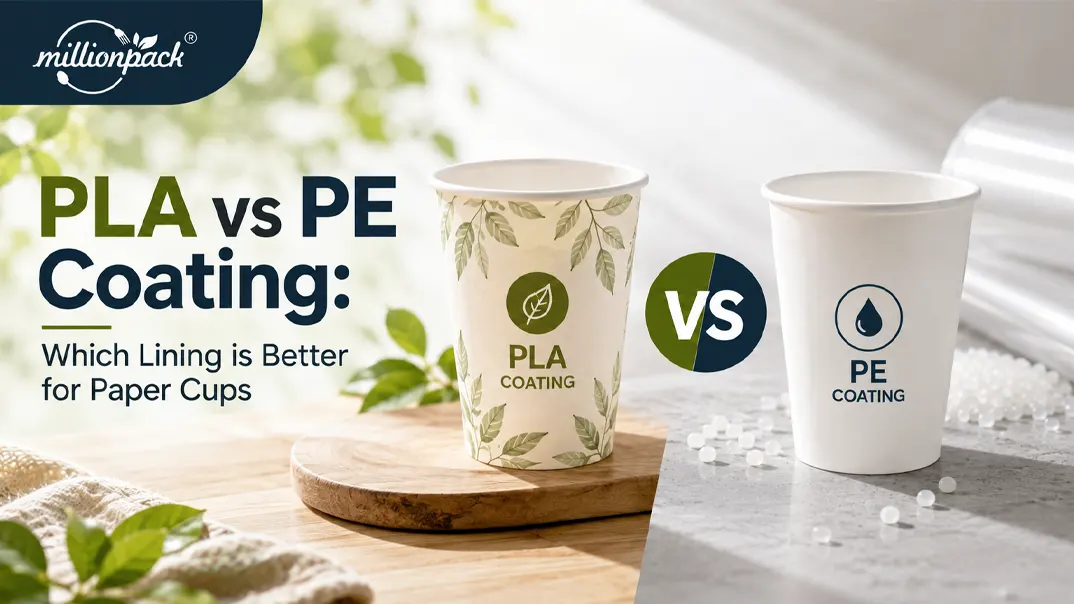
Every paper cup needs an inner lining to hold liquids without leaking. Today, the two main choices for this waterproof layer are traditional PE (plastic) and plant-based PLA. But in the debate of PLA vs PE coating, which one is actually better for your business?
In this guide, we will break down the exact differences between PLA and PE coatings in simple terms.
Understanding PLA vs PE Coating
PE and PLA coatings serve the same basic purpose: they create a thin barrier between the paperboard and the liquid inside the cup. Without this lining, paper fibers would absorb moisture, causing the cup to soften and eventually leak.
What is a PE Coated Paper Cup?
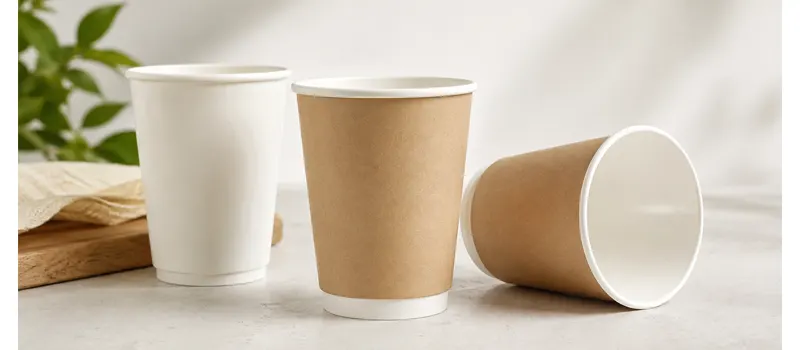
PE stands for Polyethylene. In simple terms, it is the plastic layer that has been used inside paper cups for decades. Depending on the cup design, PE can be applied to the inside only or to both sides of the paper.
Advantages of PE Coated Paper Cups
- Highly reliable: It forms a strong barrier to prevent liquids from seeping into the paper. Whether it contains cold or hot drinks, it will remain intact without melting or deforming.
- Cost-Effective: PE cups have a mature supply chain and ample supply, making them very affordable.
Limitations of PE Coated Paper Cups
PE is made from petroleum, which is a fossil fuel. It is not naturally compostable and makes the paper cup much harder to recycle. As more cities introduce strict rules against single-use plastics, sticking with traditional PE cups might create future compliance issues for your brand.
Million Pack PE Coated Paper Cups
At Million Pack, our PE-coated paper cups are designed for everyday foodservice use, with the paperboard and PE layer selected according to cup size and application.
- Paperboard: Typically 180–280 gsm, depending on cup size and required strength.
- PE coating: Typically 15–25 gsm food-grade PE, with LDPE or HDPE selected according to the product specification.
- Bonding: The PE layer is heat-laminated to the paperboard during production.
Our PE coating ensures a strong heat-sealed seam, allowing the cup to remain leak-proof and retain its shape during use. We use food-grade PE coating intended for direct food and beverage contact. Material specifications can be matched to different markets and customer requirements, and relevant food-contact documentation can be provided according to the order.
What is a PLA Coated Paper Cup?
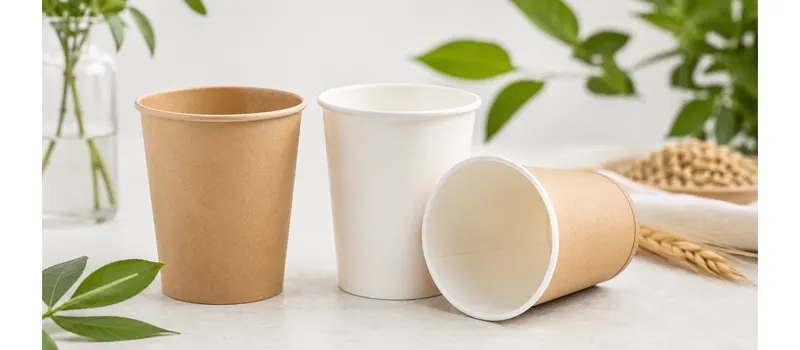
PLA is Polylactic Acid. It is a bio-based plastic usually made from renewable plant materials such as corn starch or sugarcane. In paper cups, a thin PLA layer is applied to the paperboard to prevent liquids from soaking into the paper, serving the same basic purpose as a PE coating.
Advantages of PLA Coated Paper Cups
- Renewable Resources: PLA is produced from plant-based raw materials, helping reduce reliance on fossil plastics.
- Eco-Friendly Branding: Certified PLA-coated cups can break down under suitable industrial composting conditions. Choosing this plant-based lining is a powerful way to show your customers that your brand is actively supporting sustainability.
- Future-Proof: As local governments crack down on traditional plastics, upgrading to PLA helps you stay compliant with tightening environmental packaging rules.
Limitations of PLA Coated Paper Cups
PLA cups are generally more expensive than traditional PE cups because the material and supply chain are less mature. More importantly, PLA does not simply decompose in a regular trash bin or landfill. It normally requires an industrial composting facility with controlled temperature, moisture, and processing conditions. Its heat resistance also depends on the PLA grade and cup specification, so the correct material should be selected for the intended beverage temperature.
Million Pack PLA Coated Paper Cups
Our PLA-coated paper cups are designed for eco-conscious foodservice brands, with the paperboard and plant-based PLA layer selected according to cup size and application.
- Paperboard: Typically 180–280 gsm, depending on cup size and required strength. (FSC-certified)
- PLA coating: Typically 20–35 gsm food-grade PLA, derived from renewable plant resources.
- Bonding: The PLA layer is heat-laminated to the paperboard during production.
Our PLA coating ensures a strong heat-sealed seam, providing excellent leak resistance and retaining its shape during use. We use food-grade PLA coating intended for direct food and beverage contact. Material specifications can be matched to environmental regulations across different markets, and relevant compostability and food-contact documentation can be provided according to the order.
PLA vs. PE Coating: Head-to-Head Comparison
Here is a simple breakdown of how they compare in daily business operations:
| Feature | PE Coating (Traditional) | PLA Coating (Plant-Based) |
| Material Source | Petroleum (Fossil fuels) | Renewable resources (Corn starch, sugarcane) |
| Cost & Budget | Highly cost-effective (Most budget-friendly) | Premium price (Higher upfront cost) |
| Leak Resistance | Excellent | Excellent |
| Hot Drink Performance | Perfect for all hot and cold beverages | Perfect for all hot and cold beverages |
| End of Life (Disposal) | Hard to recycle; usually goes to landfill | 100% Compostable (in commercial facilities) |
| Eco-Friendly Branding | Standard (No special green benefits) | Premium (Strong appeal to eco-conscious consumers) |
What Are the Differences Between PLA vs PE Coating Cups?
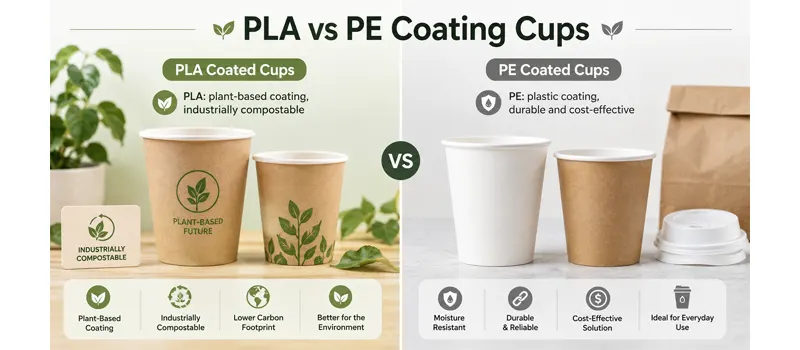
Both PE-coated and PLA-coated paper cups can keep a cup leak-resistant, but they differ in raw material, heat performance, cost, compostability, and end-of-life treatment. Understanding these differences helps you avoid paying more for a coating that does not fit your actual use or local waste system.
1. Product Performance and Tactile Experience
- PE Products: PE provides a very familiar feel. It is highly resistant to extreme temperatures, meaning it handles boiling liquids flawlessly without any risk of the cup softening.
- PLA Products: PLA often offers more premium tactile feel. While it perfectly handles standard hot coffees and teas, PLA is slightly more sensitive to extreme boiling heat than PE. Additionally, PLA is naturally odorless, whereas traditional plastic can sometimes release a faint smell when exposed to high heat, meaning PLA provides a purer tasting experience.
2. Environmental Impact and Disposal
- PE Products: Traditional plastic coatings are petroleum-based. Because the plastic is heat-sealed to the paper, they are notoriously difficult to separate during standard recycling. As a result, most PE cups do not naturally break down and ultimately end up in landfills.
- PLA Products: Made from renewable plant resources, PLA is 100% commercially compostable. When sent to a proper industrial composting facility, the entire cup breaks down naturally, leaving zero toxic residue behind.
3. Production Costs
- PE Products: The standard plastic coating industry is highly mature with massive manufacturing scales. This efficiency makes PE-coated products the most cost-effective option on the market.
- PLA Products: Plant-based raw materials simply cost more to harvest and process than fossil fuels. As a result, PLA cups carry a higher premium price tag compared to standard PE cups.
4. Shelf Life and Warehouse Storage
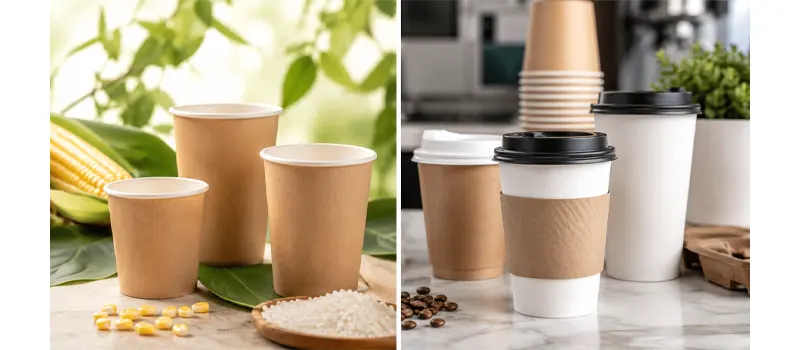
- PE Products: PE is incredibly durable and stable. You can store PE-coated cups in standard warehouse conditions for extended periods without the inner coating degrading or losing its waterproofing ability.
- PLA Products: Because they are explicitly designed to break down, PLA products are more sensitive to their environment. You must provide proper, dry storage and ensure they are not exposed to extreme heat or direct sunlight for long periods to maintain their structural integrity.
5. Market Compliance
- PE Products: While they have been the reliable industry standard for decades, PE cups are increasingly affected by local governments globally introducing strict bans on single-use plastics.
- PLA Products: Because they are fully plant-based and compostable, PLA products are widely recognized as environmentally compliant, easily meeting the requirements of markets with strict single-use plastic bans.
Which Lining Should You Choose for Your Business?
Once you understand the differences between PE and PLA, the next step is to match the coating to your actual business needs. The right choice depends less on which material sounds better and more on your specific operations, customer base, and local laws.
You should choose PE-coated cups if:
- Cost is your top priority: If you run a high-volume operation like a busy daily cafe or a large-scale wholesale business, PE offers the most budget-friendly price point to keep your margins healthy.
- Local regulations are flexible: If your city or country does not currently enforce strict bans on single-use plastics, PE remains a highly reliable and perfectly legal choice.
- You need long-term storage: PE is less sensitive to heat and humidity, making it easier to manage when you purchase cups in bulk and keep inventory for months.
You should choose PLA-coated cups if:
- Sustainability is part of your brand positioning: PLA is made from renewable plant-based materials and can help support a more environmentally focused packaging range. And if your business targets environmentally conscious consumers, serving your drinks in compostable, plant-based cups is a strong, visible statement that aligns with their values.
- You want a premium experience: If you run a specialty coffee shop or an organic food brand, the slightly crisper feel and completely odorless nature of PLA pairs perfectly with a high-end customer experience.
- You face strict plastic bans: If your local government is actively cracking down on traditional plastics, upgrading to PLA ensures you stay compliant and avoid future fines or rushed packaging changes.
- You are prepared for slightly stricter storage conditions: PLA-coated cups should be kept away from excessive heat and humidity, so warehouse and inventory management may require more attention.
At Million Pack, both linings will keep your drinks secure and your customers safe from leaks. Simply refer to local packaging regulations and your operating budget to easily determine which option best suits your business.
FAQs
Does the coating affect the taste or smell of drinks?
If food-grade materials are used properly, neither PE nor PLA will alter the taste or smell of a beverage. If the cups you purchase will be used to hold beverages that are sensitive to smell or taste, it is best to request samples for testing before placing a bulk order.
What is the difference between a single-coated cup and a double-coated cup?
A single coating means the waterproof layer is applied only to the inside of the cup. If your business serves ice-cold drinks, you will need a double-coated cup (which has the lining on both the inside and the outside). The outer layer prevents external condensation from soaking into the paperboard and making the cup soft in your customer’s hands.
Does coating thickness matter for paper cups?
Yes. The coating weight affects moisture resistance, sealing performance, production stability, and material cost. A thicker coating is not always better; the correct specification depends on cup size, paper weight, beverage type, and manufacturing process.
Are PE and PLA coatings completely safe for direct food contact?
Yes. Both standard PE and plant-based PLA coatings used in commercial paper cups are heavily regulated. They are food-grade, BPA-free, and specifically engineered to safely hold hot and cold liquids without leaching harmful chemicals into your customer’s beverage.
Do PLA-coated paper cups have a shorter shelf life?
PLA-coated cups can be stored for normal commercial periods, but storage conditions deserve more attention. Excessive heat, humidity, and direct sunlight may affect bio-based materials over time. Buyers planning long warehouse storage should confirm the recommended storage conditions and shelf life with the manufacturer.
How to determine whether a paper cup uses a PE coating or a PLA coating?
You usually cannot tell just by looking at the finished cup because PE and PLA linings can appear almost identical. The most reliable way is to check the product specification, packaging label, or material certificate from the supplier. Compostable PLA cups may also carry certification marks when applicable.
Conclusion
As global sustainability standards and local regulations continue to evolve, the most successful businesses are those that stay flexible. A coating only makes sense when its performance, cost, local regulations, and end-of-life system work together.
For buyers, the smarter approach is to start with the market where the cups will be used, then work backward to the material specification. At Million Pack, we can provide both PE- and PLA-coated paper cups and help you match the coating, paper weight, cup structure, printing, and compliance requirements to your actual application. This makes it easier to compare options based on real business needs rather than relying on a simple “green vs. traditional” label.