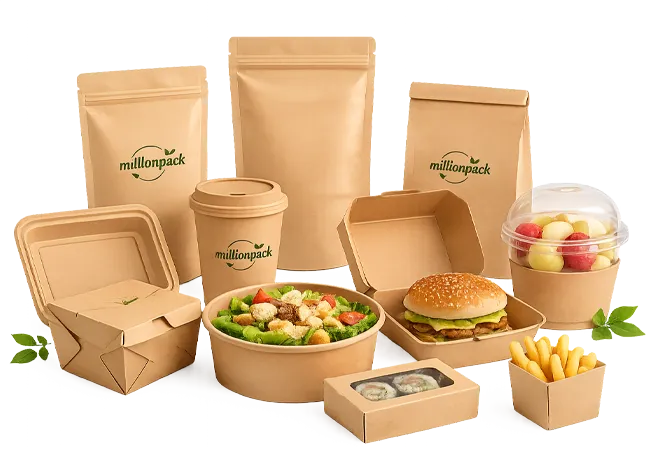
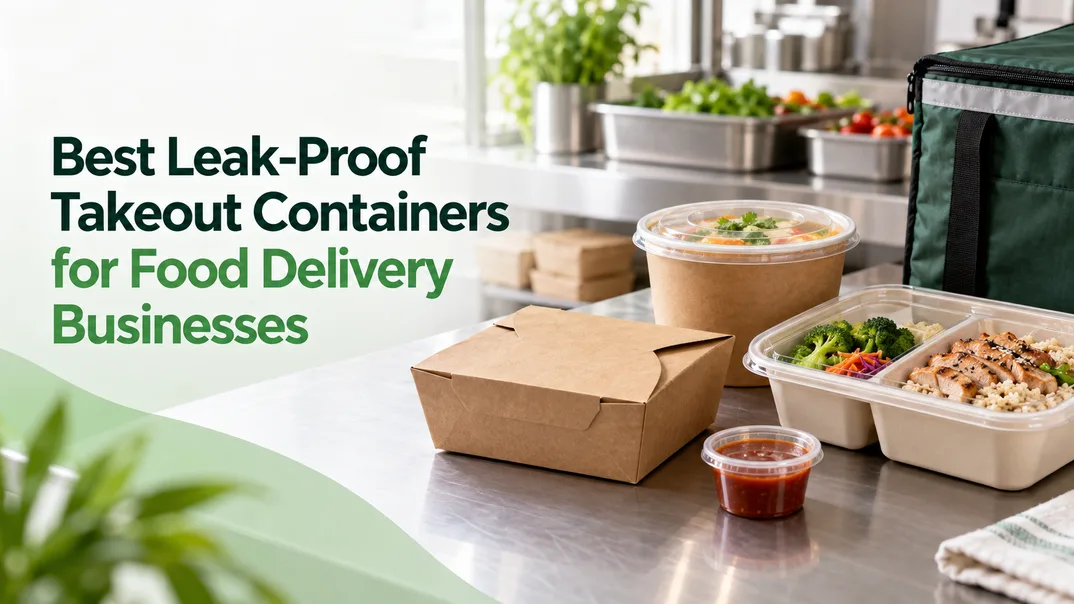
A takeout container may look perfectly secure on the counter but start leaking once it is stacked, tilted, or shaken during delivery. For food delivery operators, that can mean messy bags, damaged orders, customer complaints, refunds, and wasted food.
The best leak-proof takeout containers for food delivery businesses are not chosen by the lid alone. The container must match the food, temperature, fill level, holding time, and delivery setup. Below, we compare leak-proof formats for common delivery foods and explain what to check in lid design, materials, seams, and sealing performance before a bulk order.
What Makes A Takeout Container Leak-Proof?
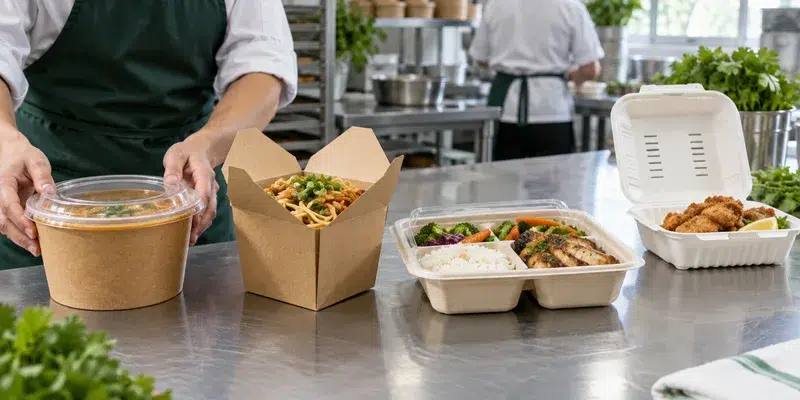
Leak-proof performance comes from the complete packaging system. The base holds the food, the rim and lid control the opening, the coating or lining protects the food-contact surface, and the outer bag or carton keeps the order in a safe position.
A container that passes a quick counter check may still fail after hot food creates steam, sauce reaches a seam, or a delivery driver carries the order over uneven roads. The main areas to check are:
- Lid and rim: The lid should engage with the full rim and stay closed during handling.
- Seams and corners: Folded or joined areas can soften when they stay in contact with liquid or grease.
- Food-contact surface: The coating or lining must suit the moisture, grease, and temperature of the meal.
- Headspace: Liquid needs room to move without being pushed into the closure.
- Base stability: A soft or weak base can tilt, deform, or pull the lid open when it is lifted.
- Delivery position: The bag, carton, and stacking pattern should keep the container upright and protected.
“Leak-proof” should describe a specific product configuration and test condition, not every container in a broad product category. Confirm the exact size, lid, material, coating, food, temperature, fill level, and holding time before placing a bulk order.
Which Leak-Proof Container Fits Each Food?
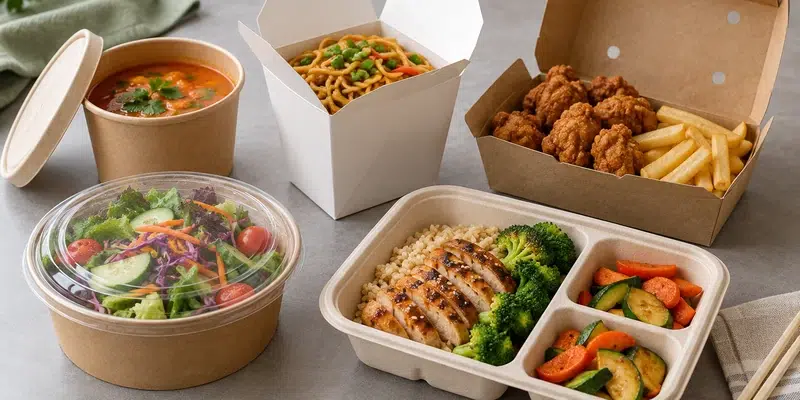
Food behavior should guide the container format. Soup needs a secure closure and enough headspace. Sauced noodles need a stable base and a lining that can handle moisture over time. Fried food needs grease control without trapping too much steam.
| Food | Suitable format | Main leak risk |
|---|---|---|
| Soup, curry, and broth | Deep bowl with a fitted lid | Liquid reaching the rim, lid lift, and movement in the bag |
| Noodles, rice, and pasta | Paperboard takeout box or lidded bowl | Soft seams, sauce at the base, condensation, and overfilling |
| Fried food, burgers, and sandwiches | Vented clamshell or food box | Grease spread, trapped steam, crushed walls, and lid gaps |
| Salads and cold meals | Salad bowl or box with a secure lid | Dressing movement, lid pressure, and loose sauce cups |
| Combo meals | Compartment tray or divided meal box | Sauce crossing partitions and pressure on the lid |
Soup And Curry Containers
Soup and curry need a deep base, a stable rim, and a lid that stays engaged while the order is moved. Leave room between the food and the lid so liquid does not press into the closure. Fill the container at the temperature used in normal service and test it after the longest common delivery period.
Review our disposable soup bowls as a starting point. Confirm the exact bowl-and-lid combination because size, lid style, material, food temperature, and fill level affect the leak result.
Noodle, Rice, And Pasta Boxes
Paperboard boxes can work for dry or moderately sauced meals when the structure and lining match the food. Noodles release steam after packing, and sauce can collect at the bottom seam. Inspect the base and corners after the normal holding period, when moisture has had time to affect the paper.
Our round noodle box range is a useful format reference. Ask for the exact dimensions, coating or lining, lid construction, and intended food use for the version you plan to test.
Fried Food, Burgers, And Sandwiches
Fried food needs ventilation as well as grease resistance. A fully closed box can trap steam and make the food soft, while weak vents or an unsuitable lining can allow grease to spread through the package. Check the vent layout, paper structure, closure, and resistance to pressure from other items in the delivery bag.
Use takeout boxes as a format reference, then match the box to the food size and holding time. A burger box and a fried-rice box may both be called takeout boxes, but they need different internal space and ventilation.
Salads And Combo Meals
For salads, test the dressing in the position it will occupy during delivery. If the dressing travels separately, secure the sauce cup so it cannot press against the lid or spill into the bag.
For divided meals, check partition height and lid clearance. A low partition can allow sauce to move across sections, while a lid that presses on the food can damage the closure. Our kraft salad boxes page shows a common paperboard format; confirm the exact lid, lining, and packing method for the selected version.
What Should You Look For In A Leak-Proof Design?
A Lid That Engages The Full Rim
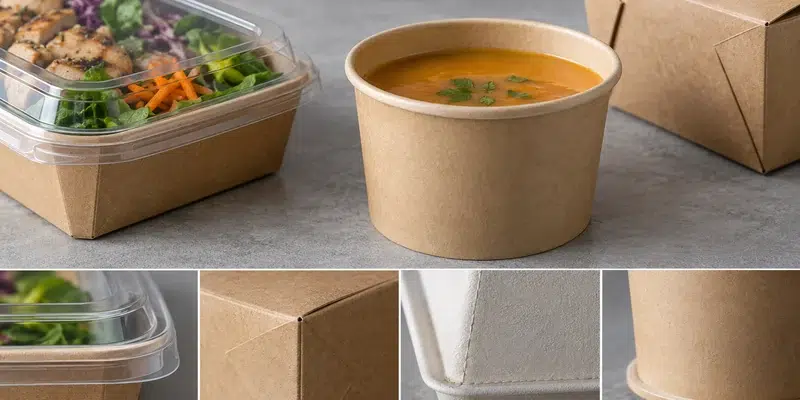
Check the entire rim, including every corner. The lid should close without lifted edges, open gaps, or weak locking points. Food, sauce, or paper fibers on the rim can prevent a proper seal, so the closing method should be part of the packing instructions.
Seams That Stay Firm During Holding
Bottom seams, folded corners, and joined edges receive constant contact with moisture and pressure. Inspect these areas after the food has been held for the same time used in normal delivery. A dry empty box cannot show how a hot, oily meal will affect the seam.
A Coating Or Lining Matched To The Food
Soup, oily curry, wet noodles, and cold dressing place different demands on the food-contact surface. A paper container that works for dry food may soften when it holds hot sauce for an hour. Ask which food and temperature the selected coating or lining is intended to handle.
Enough Headspace And A Stable Base
Headspace gives liquid room to move without reaching the lid. The base also needs enough strength to stay flat when the container is lifted or stacked. Compare the usable internal height with the real portion size before testing the closure.
How Do Materials And Coatings Affect Leak Resistance?
“Paper food box” is not a complete specification. Paper grade, coating or lining, folding structure, lid material, size, and packing method all affect leak resistance. Some designs use paperboard for the base and a separate clear or molded lid. Others use a full paperboard structure. Treat each SKU as its own specification.
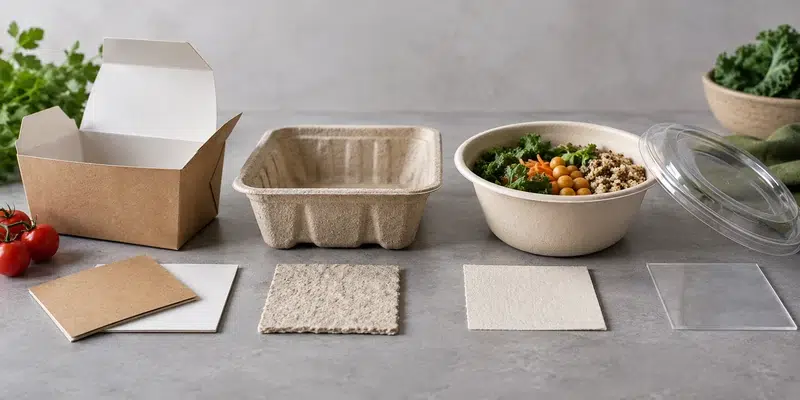
- Paperboard: Suitable for many boxes and bowls when the structure and lining match the food. Test moisture, grease, heat exposure, and seam performance.
- Molded fiber or bagasse: Useful for trays, bowls, and meal containers. Check rigidity, surface treatment, lid fit, and the performance of the complete set.
- Clear plastic or molded lids: Useful when product visibility matters. Check closure pressure, cracking risk, stacking, and compatibility with the base.
- Composite packaging: May combine different materials for the base, lining, window, or lid. Ask for the material details of every food-contact component.
Food-contact requirements depend on the material, product design, intended food, temperature, and destination market. The FDA food packaging information explains why packaging substances must be evaluated for their intended use. A certificate or test report should be checked against the exact product, material, market, and current document date. One document should not be treated as automatic coverage for every item in a product category.
How To Test Leak-Proof Takeout Containers Before A Bulk Order
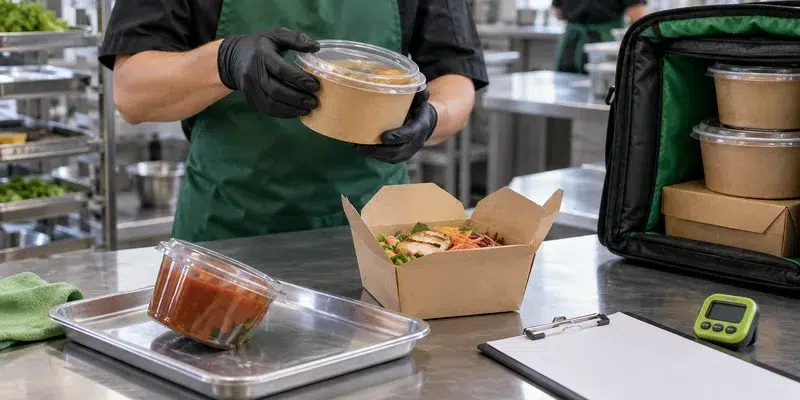
Sample testing should copy the real delivery process. A quick water test can reveal a poor seal, but it cannot show how hot soup, oily sauce, steam, portion weight, and movement work together. Test the container that will actually be ordered, including its matching lid and planned packing method.
- Record the sample version. Keep the SKU, dimensions, material, coating, lid, printing, and sample date together. A change in lid or coating can change the result.
- Use the actual food and portion. Test the menu item, serving size, temperature, and sauce level used in regular orders.
- Close the matching lid. Check the full rim, corners, folds, locks, and any vent openings.
- Hold it for the normal time. Include preparation time, pickup time, and the longest common delivery period.
- Test movement. Carry the container, tilt it, place it in the delivery bag, and stack it with the items normally placed above it.
- Inspect the package. Look for wet seams, grease marks, lid lift, soft walls, deformation, and food contact with the closure.
- Repeat after changes. Re-test after changing the size, lid, coating, filling method, or carton packing.
Keep the test result with the approved sample record. This allows the purchasing team to compare later production with the version that passed the leak test.
How Packing And Delivery Can Break A Leak-Proof Setup
A tested container can still leak when the order is filled or packed differently from the approved method. Common causes include:
- Filling liquid above the tested level
- Closing the lid before the rim is clean
- Putting hot food into a container that was tested with cold food
- Placing a liquid container on its side
- Stacking a heavy item on a soft or vented box
- Allowing a sauce cup to move inside the bag
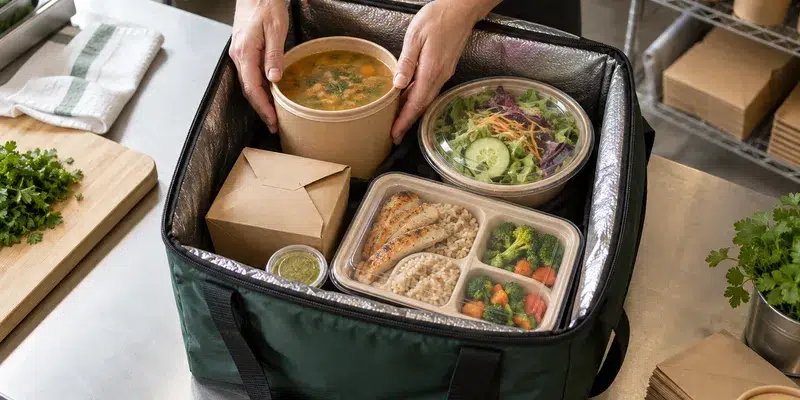
- Using a bag or outer carton that does not keep the order upright
Write the packing instructions beside the approved sample: fill level, lid-closing method, upright position, maximum stack, sauce-cup position, and outer-bag requirements. The packaging team can then repeat the same conditions that produced the approved result.
What To Send A Supplier For Leak-Proof Containers
A clear inquiry makes it easier to recommend a suitable format and prepare a useful sample. Include:
- Food type, portion size, temperature, moisture, and grease level
- Required container shape, dimensions, capacity, lid, and inner tray
- Material, coating or lining, clear window, and food-contact components
- Printing colors, artwork status, and customization requirements
- Sample quantity and the leak, stacking, heat, or transit tests to be used
- Carton quantity, carton dimensions, gross weight, pallet or loading needs
- Target quantity, MOQ, sample or tooling requirements, lead time, and trade terms
- Required documents for the destination market
Million Pack works with paper food boxes, paper cups and bowls, salad bowls, trays, bagasse and fiber packaging, and other takeaway formats. Depending on the SKU, support may include structure selection, printing, sample coordination, and export packing. Product availability, production route, documents, lead time, and current quotation need to be confirmed for the exact specification.
You can review the food containers range and the customization options before sending the inquiry. A drawing, reference sample, or clear dimension list helps the supplier assess the leak-control requirements accurately.
Frequently Asked Questions
Are Paper Takeout Containers Leak-Proof?
Some paper containers can resist leaks for specific foods and holding conditions. Performance depends on the paper structure, coating or lining, seams, lid, fill level, temperature, and time. Test the exact container with the food you plan to deliver.
What Is The Best Leak-Proof Container For Soup Delivery?
A deep soup bowl with a fitted lid is a practical starting point. Confirm the full bowl-and-lid set with hot soup, the planned fill level, and the normal delivery time.
How Do I Stop Takeout Containers From Leaking?
Use a tested container and lid, follow the approved fill level, keep the rim clean, secure sauce cups, and keep liquid items upright. Include the delivery bag and stacking arrangement in the test.
Are Leak-Proof Containers Suitable For Every Menu Item?
One format usually will not suit soups, fried food, noodles, salads, and combo meals equally well. Group menu items by food behavior and select a small set of tested formats.
What Should I Test Before Ordering Leak-Proof Containers In Bulk?
Test the actual food, portion, temperature, holding time, lid, fill level, delivery bag, and stacking arrangement. Inspect the rim, seams, corners, base, coating, lid lift, and outside of the package after movement.
Choose Leak-Proof Packaging Around Your Delivery Conditions
The best leak-proof takeout container is the one that keeps the specific food inside during your real packing and delivery process. Match the structure and lid to the food, confirm the material and coating, and approve the complete setup through a realistic sample test.
For help comparing leak-resistant container formats or preparing a specification for sampling, contact Million Pack with your food type, dimensions, quantity, destination market, and delivery requirements.