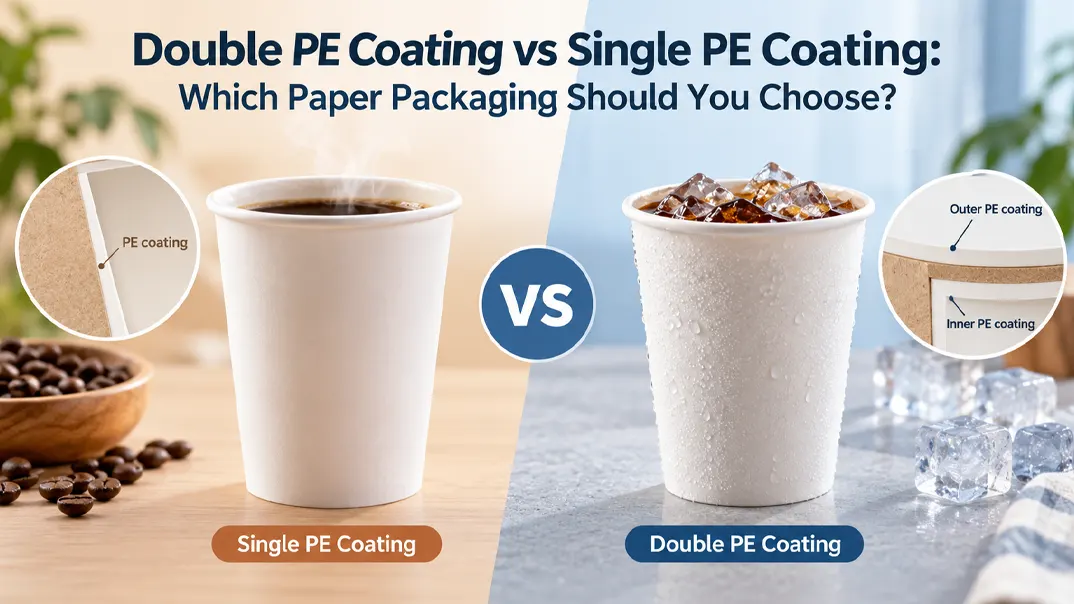
Double PE Coating vs Single PE Coating is not a simple choice between “less” and “more.” Single PE coating protects one side of the paper, while double PE coating covers both sides. This difference affects how packaging handles moisture, grease, and contact with food. So, when is a second PE layer actually necessary, and when is one enough? This guide helps you compare their performance, applications, and costs to make the right choice for your packaging.
What Is The Difference Between Single And Double PE Coating?
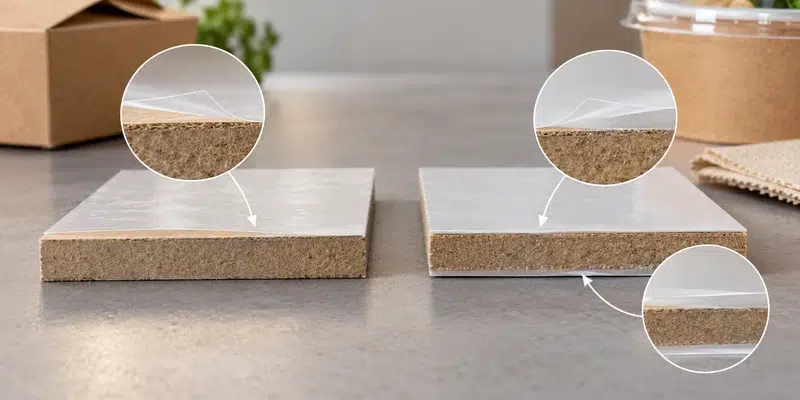
The main difference between single PE coating and double PE coating is the number of paper surfaces covered with polyethylene (PE).
Single PE coating has a thin layer of polyethylene applied to one side of the paper, while the other side remains uncoated. For food packaging, the coated side usually faces the food or liquid, providing a protective barrier between the contents and the paper.
Double PE coating applies polyethylene to both sides of the paper. This creates protective layers on the inner and outer surfaces, helping prevent direct contact between moisture and the paper from either side.
Both use the same basic coating material. The difference lies in where the PE layers are applied, rather than the type of polyethylene itself. This structural difference influences their suitability for different packaging applications.
| Point of comparison | Single PE coating | Double PE coating |
|---|---|---|
| Coated surfaces | One side | Both sides |
| Typical logic | One working surface needs moisture or grease protection | Both faces may meet moisture, grease, or contact conditions |
| Main question | Is the uncoated side protected during use and transport? | Does the added coated side solve a real exposure or process problem? |
How Do Single And Double PE Coatings Handle Food And Moisture?
Both single and double PE coatings help protect paper packaging from water, oil, and grease. However, their performance depends on which surfaces are exposed to food, moisture, and other liquids.
Moisture and Liquid Resistance
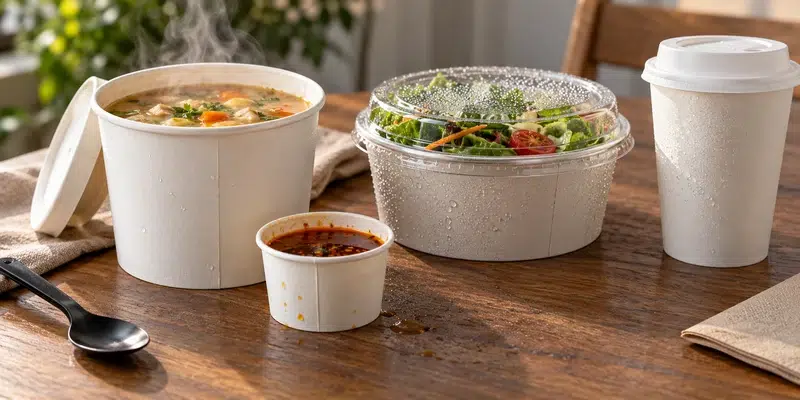
Single PE coating provides a moisture-resistant barrier on the coated side. For example, in a paper cup, the inner PE layer helps prevent drinks from soaking into the paper. However, the uncoated outer surface can still absorb moisture from condensation, spills, or humid conditions.
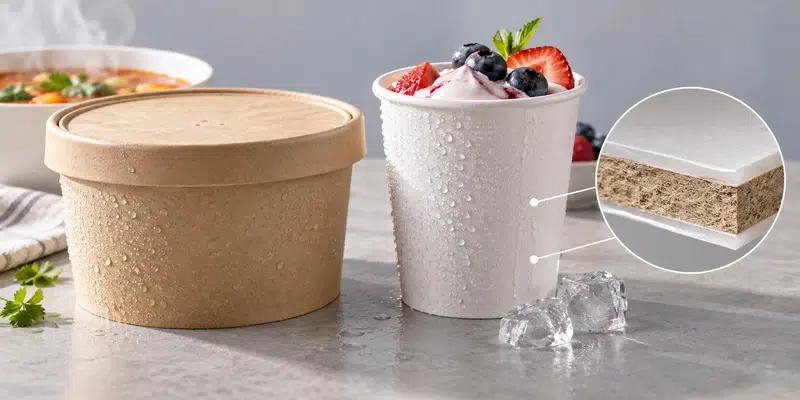
Double PE coating protects both surfaces. This is particularly useful for cold beverage cups, where condensation may form on the outside, or packaging exposed to moisture from both directions.
Oil and Grease Resistance
Both coatings can prevent oil and grease from penetrating the coated paper surface. For packaging such as takeaway food containers, a properly applied single PE layer may provide sufficient protection when greasy food contacts only the coated interior.
Double PE coating adds protection to the outer surface, but it does not automatically provide better grease resistance on the inside. The performance of the food-contact surface still depends on the coating’s quality, thickness, and integrity.
Heat Sealing Performance
PE coating also serves as a heat-sealable layer, allowing packaging components to bond under controlled heat and pressure.
Single PE-coated paper can form reliable seals when the coated surfaces are positioned correctly. Double PE-coated paper offers coating on both sides, which can provide additional sealing options for certain packaging designs.
However, double PE coating does not automatically produce stronger seals. Seal strength depends on coating thickness, sealing temperature, pressure, and the structure of the packaging.
When Is Single PE Coating A Practical Choice?
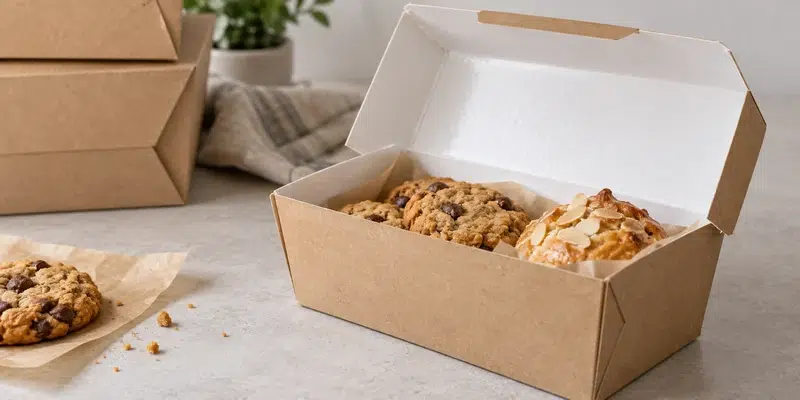
Single PE coating is a good choice when moisture, oil, or liquid primarily contacts the inside of the packaging, while the outside is unlikely to experience prolonged exposure to water or condensation. In these conditions, coating both sides may add cost without providing a meaningful benefit.
Examples may include:
- Hot Drinks Without Significant External Condensation: For paper cups holding hot coffee, tea, or similar beverages, an inner PE coating can prevent liquid from soaking into the paper. If the cups are used for immediate consumption and the outside remains relatively dry, a second coating is generally unnecessary.
- Greasy Foods with Limited Free Liquid: For takeaway boxes holding burgers, sandwiches, or pastries, a single PE coating can work when the food contacts the coated interior and the packaging is not exposed to significant moisture from outside.
- Short-Term Packaging for Moist Foods: For paper bowls holding noodles, soup, or sauced foods, single PE coating may be sufficient when the interior, seams, and bottom are properly sealed, and the packaging is designed for the intended serving temperature and duration.
- Dry Foods Requiring an Internal Barrier: For certain bakery or snack packages, a single PE layer may be enough when the main concern is protecting the paper from moisture or oils originating inside the package, rather than exposure from both sides.
When one coated surface meets your packaging requirements, eliminating the second PE layer can reduce polyethylene consumption and material costs, especially for large-volume orders.
When Does Double PE Coating Make Sense?
When Does Double PE Coating Make Sense?
The additional outer coating is particularly useful when condensation, external moisture, or specific heat-sealing requirements make a single PE layer insufficient.
Here are three situations where double PE coating offers a clear advantage:
- Cold Beverages and Chilled Foods: Cold drinks, ice cream, and refrigerated foods can cause condensation to form on the outside of the packaging. The outer PE layer helps prevent this moisture from soaking into the paper, reducing the risk of softening and loss of strength during use.
- Packaging Exposed to External Moisture: Food containers may come into contact with wet countertops, condensation, or spills during storage, handling, and delivery. Double PE coating provides an additional barrier on the outer surface, helping protect the paper when moisture exposure cannot be avoided.
- Packaging Requiring Heat Sealing on Both Sides: Certain packaging designs have folds or seams that require heat-sealable surfaces on both sides of the paper. Double PE coating can accommodate these structures by providing PE layers on both surfaces, provided the sealing equipment and conditions are compatible.
What Else Affects Coating Performance?
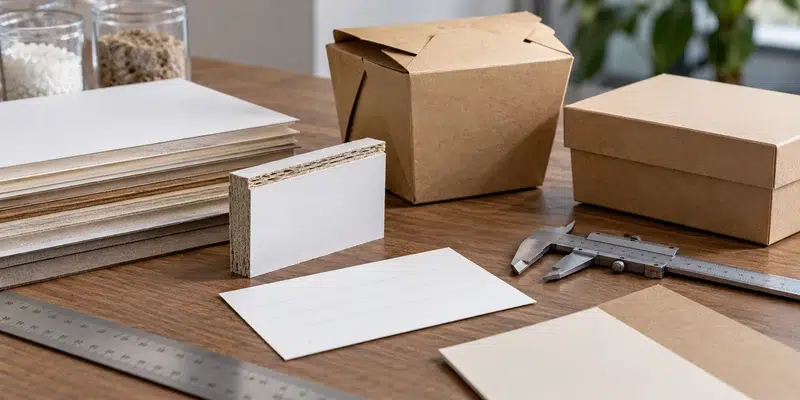
A coating decision becomes reliable only when it is tied to a complete product specification. Review these points together:
Paper Or Board Structure
Base paper or board affects stiffness, forming, edge strength, and how the package reacts to heat and moisture. The same coating structure can behave differently on different grades and basis weights.
Coating Weight And Coverage
“PE coated” does not describe the full barrier specification. Confirm the coated side, target coating weight or range, coverage, surface condition, and any limitations around scores, cuts, or exposed edges.
Folds, Seams, And Lid Fit
Many leakage complaints start at a corner, bottom seam, side seam, or lid. The container geometry, closure, and pressure during stacking need to be checked along with the selected paper board.
Food And Holding Conditions
Record the food type, temperature at filling, oil or sauce level, portion weight, holding time, delivery distance, and whether the package will be stacked or tilted. A realistic brief gives the supplier something testable to match.
Food-Contact Documentation
For the U.S. market, the FDA food-contact overview explains that substances applied to packaging surfaces can fall under food-contact requirements and that intended use matters. A document should match the actual paper, PE, printing, adhesive, temperature, food type, and market. One certificate should not be treated as blanket coverage for every size or coating version.
How Should You Choose And Test The Right Coating?
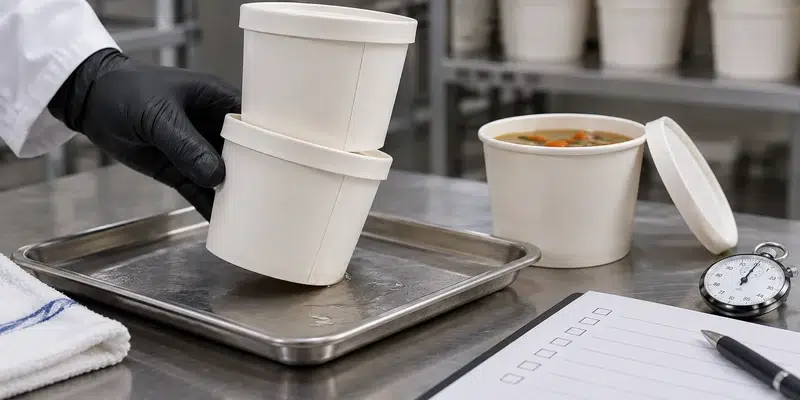
A short specification and a controlled sample test are more useful than choosing from a product name alone. Use this sequence:
- Describe the real use. Write down the food, temperature, grease level, portion, holding time, delivery conditions, stacking pattern, and lid or closure.
- Ask for the exact construction. Confirm the paper or board grade, basis weight, PE side or sides, coating weight, dimensions, seams, lid, printing, packing method, and any relevant food-contact documents.
- Test with the actual food. Fill samples at the normal temperature and portion. Hold them for the planned service time, then inspect the inside, outside, rim, folds, bottom, and seams.
- Simulate movement. Tilt, stack, lift, and move the packed containers as they would move in a delivery bag. Check condensation separately for chilled and frozen products.
- Record the approved version. Keep the sample date, material, coating, size, artwork, lid, packing configuration, and test result together. Retest after a change to board, coating, size, lid, printing, or forming process.
For a new format, custom structure and printing should be discussed with the coating requirement at the same time. Changing the blank or closure after the material has been approved can create a new leak path, even if the coating specification stays unchanged.
Frequently Asked Questions About PE Coating
Is PE Coating Safe?
Yes. PE coating is widely used in food packaging and is generally considered safe for food contact when it meets applicable food safety regulations, such as FDA requirements in the United States or EU food-contact standards. However, not all PE-coated packaging is suitable for high temperatures or microwave heating.
What Are the Different Types of Coated Paper?
Common types include PE-coated paper, PLA-coated paper, wax-coated paper, and water-based barrier-coated paper. Each uses a different coating material to provide moisture, grease, or liquid resistance.
Is Double PE Coating Always Better Than Single PE Coating?
No. Double coating protects both faces, but it can add process requirements that are unnecessary for a controlled one-side application. The better choice is the structure that matches the food, exposure, converting process, and approved test.
Which PE Coating Is Better For Soup Or Greasy Food?
Both options can be considered, but the answer depends on the container design and the outside exposure. Soup and greasy food need a continuous food-facing barrier plus reliable seams and lid fit. Double coating becomes more relevant if the outside will meet condensation, wet handling, or another moisture source.
Does Double PE Coating Make Paper Packaging Waterproof?
No. It can improve surface resistance, but the finished package still has seams, folds, rims, cuts, and closures. “Waterproof” should be supported by a defined test under defined conditions, not inferred from the number of coated sides.
Can Single PE Coating Work For Food Boxes?
Yes, when the coated surface faces the food and the uncoated side remains suitable for the planned use. Dry food and controlled moisture applications may fit this structure. Hot, wet, oily, chilled, or long-hold applications should be tested with the final box and lid.
What Should I Ask A Packaging Supplier?
Ask which side is coated, the base paper or board specification, coating weight, food-contact scope, dimensions, seam and lid design, forming method, packing configuration, and sample-test plan.
Conclusion
The packaging you choose should work well for your product, your customers, and your daily operations. Getting the details right from the beginning can make future orders easier and help you maintain consistent packaging quality as your business grows.
At Million Pack, we can help you evaluate coating specifications, paperboard materials, and packaging structures based on your products and budget. Whether you need standard food containers or custom packaging, we’re here to help you find a practical and cost-effective solution.