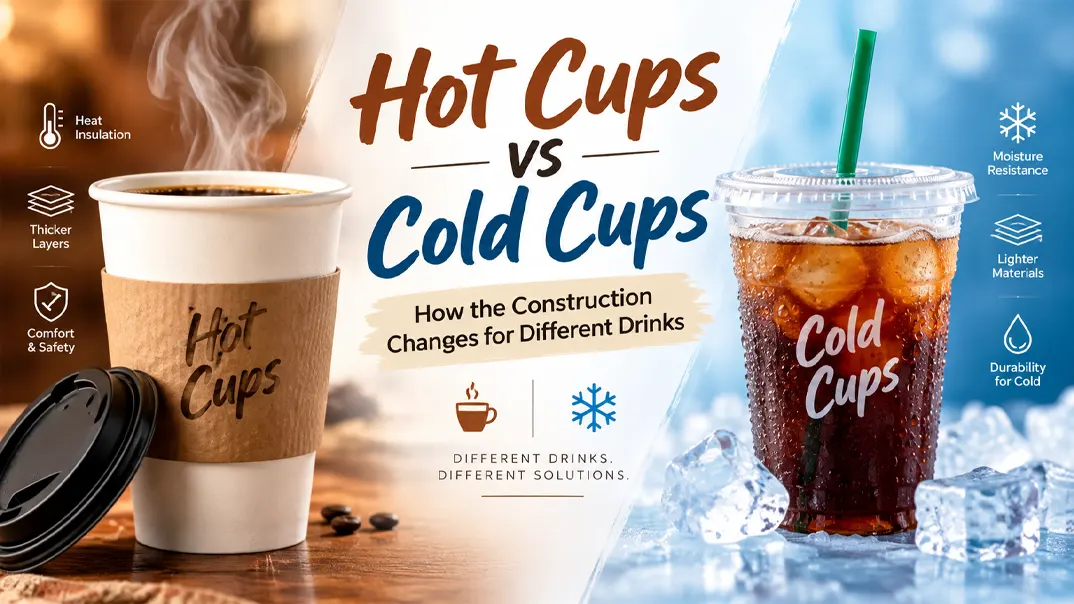
The difference between hot cups and cold cups starts with the drink, not the temperature alone. A hot cup manages heat, hand comfort, steam, and a sip lid. A cold cup handles ice, exterior condensation, wet handling, and stiffness. Paperboard, PE coating, cup wall, bottom seal, and lid all need to match the beverage and service conditions.
What Are the Differences Between Hot Cups vs Cold Cups?
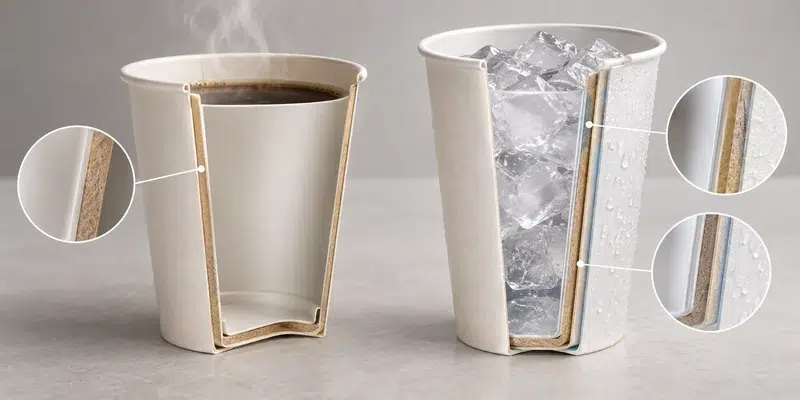
Hot cups and cold cups are built to handle different temperatures and moisture conditions, which affects their materials, wall construction, and protective coatings. Hot cups are designed to withstand heat, maintain structural stability, and make hot beverages more comfortable to hold. Cold cups focus on moisture resistance, condensation protection, and keeping their shape when filled with chilled or iced drinks.
| Feature | Hot Cups | Cold Cups |
|---|---|---|
| Primary Purpose | Handle hot beverages and reduce heat transfer | Hold chilled drinks and resist moisture |
| Wall Construction | Single-wall, double-wall, or ripple-wall | Usually single-wall |
| Materials | Heat-resistant coated paperboard | Coated paperboard, PET, or PP plastic |
| Coating | Typically an inner liquid-resistant coating | Often double-sided coatings for paper cups |
| Insulation | Additional layers may improve insulation | Usually requires little insulation |
| Main Challenge | Heat transfer, handling comfort, and sealing stability | Condensation, moisture resistance, and structural strength |
| Common Drinks | Hot coffee, tea, hot chocolate | Iced coffee, juice, soda, smoothies |
These differences do not mean that every hot cup has thicker walls or that every cold cup requires double-sided coating. The actual construction depends on the cup material, beverage temperature, and intended use.
These are starting points, not universal specifications. Understanding these differences helps you select cups that perform reliably while avoiding unnecessary material or construction costs.
How Does Wall Construction Differ Between Hot and Cold Cups?
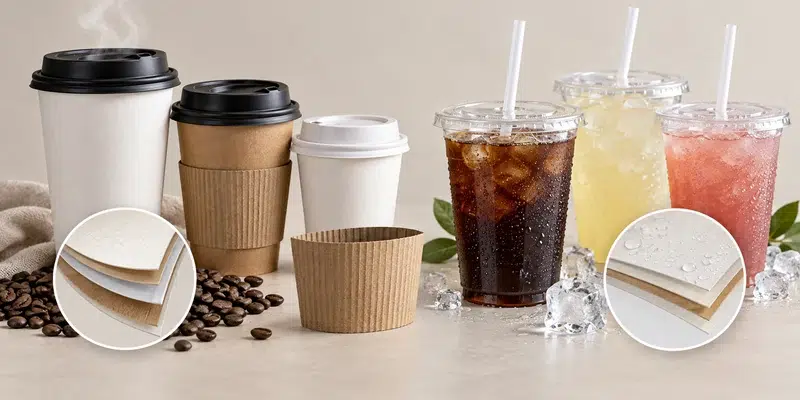
The main difference in wall construction is the number of layers and how they are arranged. Hot paper cups may use additional wall layers to improve insulation, while cold paper cups typically use a single-wall structure because they don’t require the same level of heat protection.
Single-Wall Cups
Single-wall cups are made from one layer of formed paperboard, making them the simplest and most economical paper cup construction.
You can use single-wall designs for both hot and cold beverages, provided the materials and coatings are suitable for the intended temperature. However, single-wall hot cups transfer heat more readily, so you may need to pair them with cardboard sleeves.
Double-Wall Cups
Double-wall cups feature an inner paper cup surrounded by a second paperboard layer. The space between these layers reduces heat transfer and helps keep the outside surface cooler.
If you’re supplying cups for hot coffee or tea, double-wall construction can provide better handling comfort without requiring separate sleeves. This makes it a common option for takeaway coffee service.
However, the additional paperboard and manufacturing steps generally make double-wall cups more expensive than single-wall alternatives.
Ripple-Wall Cups
Ripple-wall cups use a corrugated paperboard layer attached to the outside of an inner cup. The raised ridges create air spaces that reduce direct heat transfer and provide a textured gripping surface.
Compared with smooth double-wall cups, ripple-wall designs have a more pronounced exterior texture. Both constructions improve insulation, but their performance depends on the materials, air spaces, and overall design.
How Does The Cup Wall Handle Heat Or Condensation?
When you serve hot or cold beverages, the temperature difference between the drink and the surrounding air affects how the cup wall performs. Hot drinks transfer heat through the cup wall, while cold drinks can cause moisture from the air to collect on the outside.
How Do Hot Cup Walls Reduce Heat Transfer?
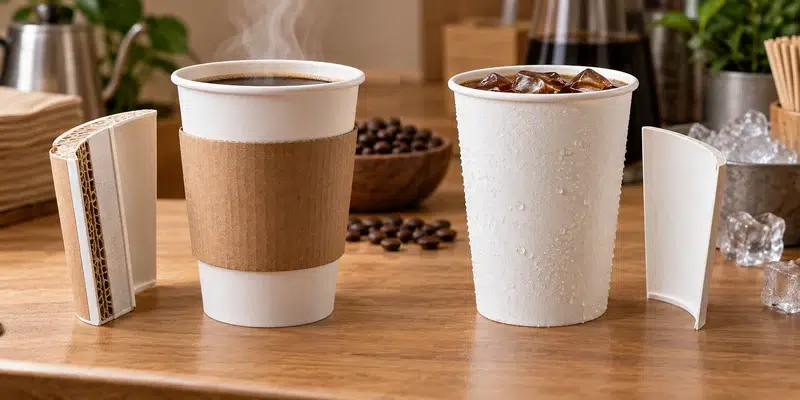
When you fill a paper cup with hot coffee or tea, heat travels from the beverage through the cup wall to the outside surface. A standard single-wall cup provides limited insulation because it has only one layer of paperboard separating the drink from the surrounding environment.
Double-wall cups add a second layer of paperboard, creating an air gap that slows heat transfer. Ripple-wall cups use a corrugated outer layer to create additional air spaces, reducing direct contact with the hot inner wall.
These structures help keep the exterior surface cooler and make hot cups more comfortable to handle. The effectiveness of the insulation depends on the wall design, air-gap thickness, and materials used.
How Do Cold Cup Walls Resist Condensation?
When you fill a cup with an iced beverage, the outer wall can become colder than the surrounding air. If its surface temperature falls below the dew point, moisture condenses into water droplets.
Unlike heat transfer, condensation does not typically require an additional insulating wall. Instead, cold paper cups often rely on moisture-resistant coatings to prevent water from penetrating the paperboard.
A double-sided coating provides protection on both surfaces: the inner coating prevents the beverage from soaking into the paperboard, while the outer coating helps resist condensation. This allows the cup wall to maintain its stiffness and structural integrity even when exposed to moisture.
What Changes in the PE Coating and Bottom Seal?
The PE coating and bottom seal both help prevent leaks, but their requirements can differ between hot and cold paper cups. When comparing cups from different manufacturers, you should pay attention to where the PE coating is applied, how it performs at your intended serving temperature, and whether the bottom seal remains secure during use.
How Does the PE Coating Differ?
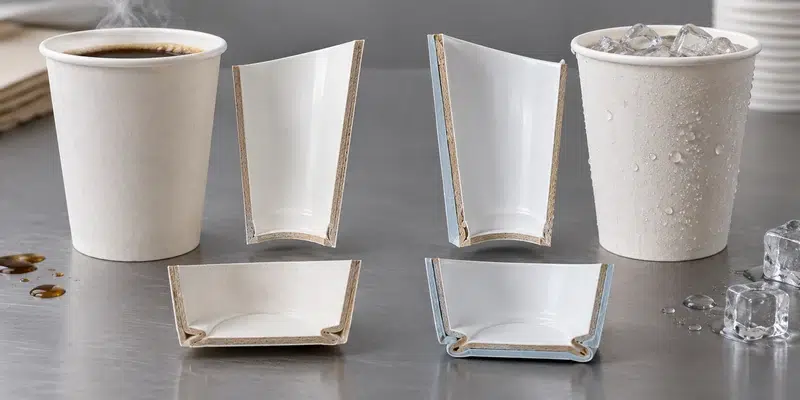
PE (polyethylene) coating creates a moisture-resistant barrier that prevents beverages from soaking into the paperboard. However, the coating arrangement can vary depending on whether the cup is designed for hot or cold drinks.
- Hot paper cups: Commonly use a PE coating on the inner surface to prevent liquid absorption. The coating must be suitable for the intended beverage temperature and remain compatible with the cup’s sealing process.
- Cold paper cups: Often use PE coatings on both the inner and outer surfaces. The inner coating prevents liquid penetration, while the outer coating protects the paperboard against condensation.
For your business, this distinction matters because a single-sided PE coating may be sufficient for certain applications, while double-sided coating can offer additional protection for iced beverages served in humid environments.
How Does the Bottom Seal Differ?
Both hot and cold paper cups typically use a similar bottom-sealing process. A coated paperboard disc is fitted into the lower part of the cup, where heat and pressure bond it to the folded cup wall. The main difference lies in the conditions the finished seal must withstand.
For hot cups, the bottom seal must maintain its strength when exposed to hot liquid. Poor bonding or unsuitable sealing conditions can cause leakage, particularly when the cup remains filled for an extended period.
For cold cups, the seal must remain watertight during prolonged contact with chilled beverages. Condensation can also affect exposed paperboard around the cup base, making moisture protection important.
In short, PE coating determines how the cup resists moisture, while bottom-seal quality determines how securely it contains the beverage. Both must be matched to the cup’s intended hot or cold application.
How Do Hot and Cold Cup Lids Differ?
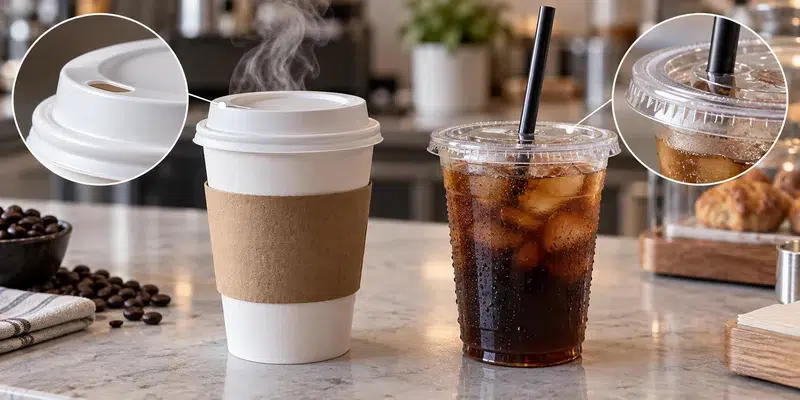
The lid is part of the cup construction system. A correct cup body with the wrong lid can still leak, release heat too quickly, or make the drink uncomfortable to use.
Hot Cup Lids: Designed for Sipping and Heat Management
Hot cup lids typically feature a small sipping opening that allows customers to drink coffee or tea without removing the lid. Many designs also include a small vent hole to help release steam and allow smoother liquid flow.
For your coffee shop or packaging distribution business, you’ll commonly encounter two designs: flat lids and raised dome-style sipping lids. Raised lids provide additional space above the beverage, while flat lids offer a lower-profile option.
When sourcing hot cup lids, you should check that the lid fits securely around the cup rim and remains stable at the intended serving temperature. A poorly fitting lid can lead to spills, especially during takeaway service.
Cold Cup Lids: Designed for Straws and Different Beverage Types
Cold cup lids offer more variety in drinking openings because iced beverages are served in different ways.
You’ll generally find three common designs:
- Flat lids with straw slots: Commonly used for iced coffee, soft drinks, and other beverages served with straws.
- Dome lids with straw openings: Provide additional space for whipped cream, foam, or other toppings.
- Sip-through lids: Allow customers to drink iced beverages directly without a straw.
Unlike hot cup lids, cold cup lids often prioritize straw access, topping clearance, and compatibility with different beverage presentations.
If you supply cups to multiple coffee shops or beverage brands, offering compatible lid styles can help you accommodate different menu requirements without introducing unnecessary cup sizes.
Why Does Cup and Lid Compatibility Matter?
Although hot and cold cup lids may look similar, they are not always interchangeable. Cup rim diameter, rolled-rim shape, lid material, and locking design all affect how securely a lid fits.
You should also consider the intended serving temperature. For example, a plastic lid designed for iced beverages may not be suitable for hot coffee unless the manufacturer confirms its temperature rating.
Before placing a bulk order, verify that your selected lids fit the actual cup models you’re purchasing. Matching the lid to the cup’s rim and intended beverage is more reliable than choosing based on diameter alone. This helps reduce leakage, compatibility issues, and unnecessary packaging waste.
When Should You Choose A Hot Cup Or Cold Cup Construction?

Start with the beverage and the service path, then match the cup construction to the exposure.
Choose A Hot Cup Format For
- Coffee, tea, cocoa, and other drinks served above room temperature.
- Programs where hand comfort, sleeve use, or built-in insulation affects the customer experience.
- Service with a sip-through lid and limited outside condensation.
- Takeaway or delivery operations that need the cup to remain stable while hot liquid is moved.
Choose A Cold Cup Format For
- Iced coffee, cold brew, iced tea, lemonade, juice, smoothies, and frozen drinks.
- Drinks packed with ice or toppings that need a suitable lid opening and headspace.
- Service in warm or humid conditions where outside condensation is expected.
- Longer holding or delivery periods where wet handling and cup stiffness matter.
If one menu includes both hot and cold drinks, using one cup for every beverage should be treated as a test question, not an assumption. A cup may hold both liquids in a short counter service, yet the hot lid, cold lid, coating side, insulation, and condensation behavior may still require separate formats.
Million Pack offers a range of paper cups, lids, and foodservice packaging for different beverage applications. You can explore available materials, sizes, and packaging options. For larger orders or custom requirements, share your beverage type, serving temperature, cup capacity, and usage conditions so we can help you identify a suitable packaging solution.
What Should Buyers Confirm Before Ordering?
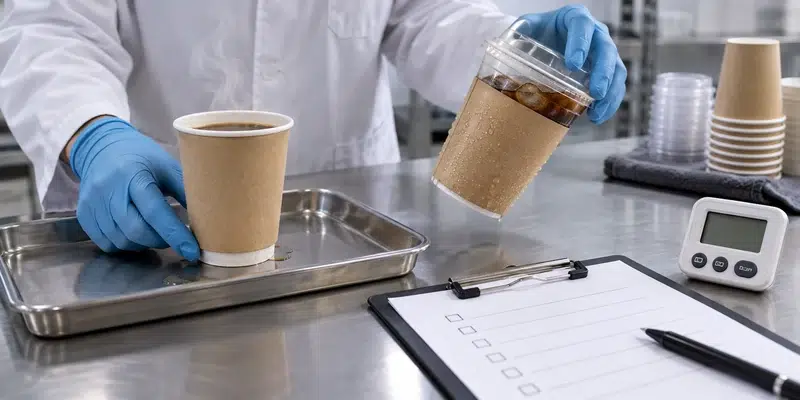
A product photo is not a complete cup specification. A buyer should confirm the following before requesting a sample or quotation:
- Capacity and dimensions: nominal volume, usable fill volume, top diameter, base diameter, height, and measuring method.
- Paperboard: paper type, basis weight, stiffness target, color, and any required surface treatment.
- Coating: PE, PLA, water-based, or another specified barrier; coated side or sides; coating weight or range; and intended food-contact use.
- Wall structure: single wall, double wall, ripple wall, sleeve, or another format, including how the outer layer is attached.
- Forming details: side seam, bottom construction, rim roll, tolerances, and equipment compatibility.
- Lid system: material, opening, diameter, fit, stacking, and suitability for hot or cold service.
- Printing and packing: artwork coverage, ink requirements, inner packing, carton quantity, carton dimensions, and loading needs.
- Market documents: food-contact information and test scope that match the actual material, use, and destination market.
Frequently Asked Questions About Hot And Cold Cups
Can I Order Hot and Cold Cups in the Same Shipment?
Yes. At Million Pack, we can help you arrange hot and cold cups in the same shipment. You can select different sizes and designs based on your needs. Minimum order quantities may apply to individual products.
Can I Use the Same Logo on Hot and Cold Cups?
Yes. Million Pack offers custom printing for hot and cold cups. You can use the same logo and branding across different cup styles to maintain a consistent brand image. We can also help you review your artwork before production.
How Should I Store Hot and Cold Cups?
We recommend storing your cups in a clean, dry place away from direct sunlight, heat, and humidity. Keep them in their original packaging until use to maintain their quality and shape.
Are Your Hot and Cold Paper Cups Recyclable?
Recyclability depends on the cup materials, coatings, and local recycling facilities. You can contact Million Pack for material specifications to help determine which options meet your market’s recycling requirements.
What Information Should I Provide When Requesting a Quote?
You can share your preferred cup sizes, order quantities, beverage types, customization needs, and delivery destination. Our Million Pack team can help you identify suitable products and prepare a quotation based on your requirements.
Conclusion
Choosing between hot and cold cups is ultimately about finding the right packaging solution for your beverage business. Beyond individual cup features, you should consider your menu variety, daily order volume, branding requirements, and long-term purchasing costs.
At Million Pack, we offer hot and cold beverage cups in various sizes, materials, and styles, with customization options to suit your business needs. Whether you’re managing a coffee shop or sourcing packaging for distribution, our team can help you explore suitable options.