Hot soup can quickly expose the weaknesses of some disposable bowls. These include a softened bowl, leaks at the seams, and difficulty holding. These issues can result in customer complaints and unnecessary cost waste. In this guide, we will help you choose the best bowl for hot soup based on your soup, serving temperature, portion size, and delivery needs. You will also learn what to test before placing a bulk order. These will help you achieve better product display and customer satisfaction.
Benefits of Disposable Soup Bowls
The primary benefits of disposable soup bowls include enabling safe takeout and delivery for liquid-heavy menu items, ensuring strict portion control to manage food costs, and maximizing back-of-house efficiency. When the bowl is chosen correctly, it reduces common problems such as leaks, softening, uncomfortable handling, and poor presentation.
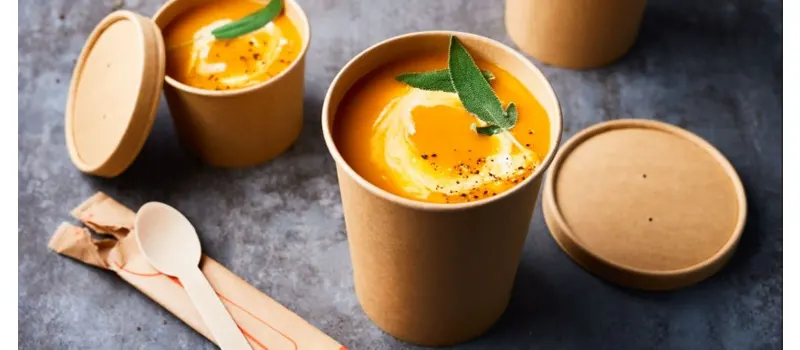
Easier Takeout and Delivery
A disposable bowl makes it easier to pack, seal, hand over, and transport without adding extra handling steps. For takeaway shops, food trucks, and catering businesses, this supports a faster workflow and helps staff manage rush periods more efficiently.
More Consistent Portion Sizes
Standard bowl capacities help businesses serve soup consistently. This improves portion control, supports menu pricing, and reduces waste caused by overfilling.
Faster, Cleaner Service
Disposable soup bowls are simple to store, stack, and use during service. Staff do not need to sort, wash, or recover containers after use. This reduces back-of-house workload and helps operations that need quick turnover.
Fits Different Menu and Business Needs
Not every soup requires the same packaging. Thin broths, creamy soups, oily soups, and side soups all place different demands on the bowl. Disposable options give you flexibility in size, material, lid type, and strength, making it easier to match packaging to the actual menu instead of forcing one container to do every job.
Supports a More Professional Presentation
Packaging influences how customers judge food before they even taste it. A sturdy soup bowl with a clean finish and secure lid makes the order look more reliable and better organized. For businesses selling takeaway or delivery, that small detail can improve perceived quality and make the brand look more consistent.
Offers More Sustainable Options
Many businesses now want to replace traditional foam or reduce conventional plastic use. Disposable soup bowls are available in paper-based, molded fiber, and other alternative materials, giving you more options to align packaging choices with brand positioning and local packaging requirements.
What Makes a Disposable Bowl Good for Hot Soup?
A good disposable bowl for hot soup needs to stay firm under heat, resist oil and moisture, and prevent leaks. The difference between a basic bowl and a reliable soup bowl often comes down to a few key structural and material details.
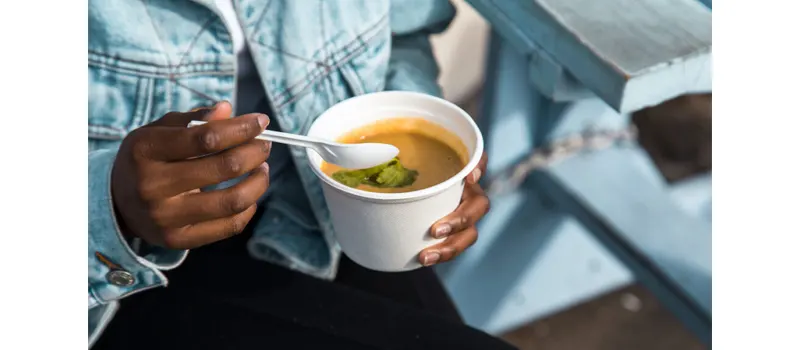
A Reliable Inner Barrier
Paper by itself absorbs liquid, so a hot soup bowl needs an inner barrier that can resist heat, broth, oil, and steam. This lining plays a major role in preventing the bowl from becoming soggy or weakening too quickly during use. For hot soup, the quality of the inner coating often matters just as much as the outer paper itself, especially when the soup is oily or needs to stay in the bowl for longer.
Strong Bowl Structure
Hot soup is heavy, and the pressure on the bowl increases once it is lifted, carried, or packed for takeaway. A good disposable soup bowl needs enough structural strength to keep its shape and feel stable in the hand. If the bowl wall is too weak, it may soften, bend, or feel unsafe during handling, which affects both user confidence and overall service quality.
Secure Bottom Sealing
The bottom seal is an important part of a soup bowl, and it is also a common failure point. If the base is not sealed properly, leaks can appear once the bowl is filled with hot liquid, especially during transport or longer holding times. A well-made disposable bowl should have a secure bottom construction that stays reliable from the kitchen to the customer.
A Stable Rim and Lid Fit
A strong rim helps the bowl stay round and makes it easier for the lid to close properly. This matters because even a well-made bowl can still fail if the lid does not fit tightly enough. For hot soup, the bowl and lid should work as one system. A stable rim and proper lid fit help reduce spills, improve carrying safety, and make the packaging dependable for takeaway and delivery.
Tips for Choosing the Best Disposable Bowls for Hot Soup
Choosing the best disposable bowls for hot soup is about matching the bowl to the soup, served, and delivered. A good choice should balance material performance, size, structure, and real usage conditions. The tips below will help you make a more practical and reliable decision.
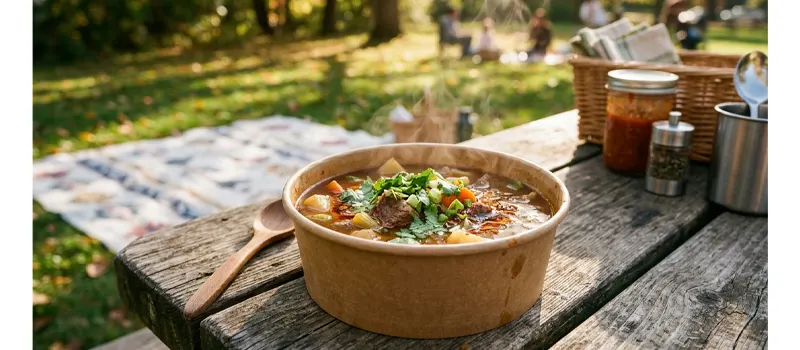
Start With the Type of Soup You Serve
Different soups place very different demands on packaging. A clear broth is light and highly fluid, so lid fit and leak resistance matter most. Creamy soups hold heat longer and can create more condensation inside the bowl. Oily or spicy soups test the grease resistance of the inner lining. Noodle soups, stews, and chowders add weight, which puts more pressure on the bowl base and sidewalls.
This is why there is no single “best” disposable soup bowl for every menu. If you skip this step and chooses only by appearance or price, the risk of packaging complaints goes up quickly.
Choose the Right Bowl Material
Material determines how a bowl performs under heat, liquid pressure, oil content, and holding time. For hot soup, the key is whether the bowl can stay rigid, resist soaking, and remain stable during delivery.
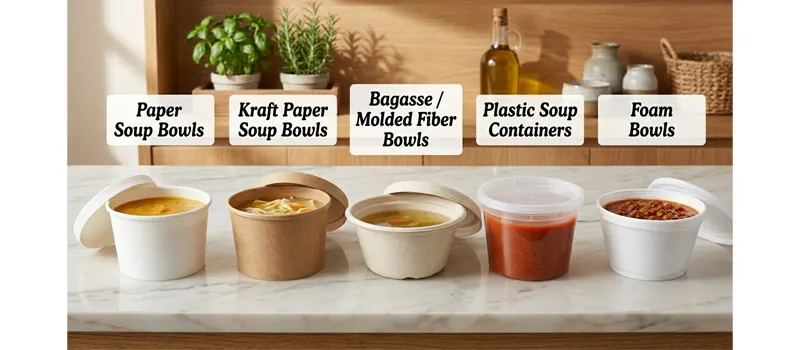
- Paper Soup Bowls
Suitable for most hot soups, including broths and creamy soups. High-quality paper bowls maintain structure under heat and provide reliable short-term resistance to moisture and oil. They perform well for typical takeaway and delivery times, but lower-grade options may soften when exposed to high temperatures or extended holding periods. - Kraft Paper Soup Bowls
Similar in performance to standard paper bowls, with a more natural exterior. Heat resistance and durability depend on paper weight and internal lining. Suitable for hot soup when properly constructed. - Bagasse / Molded Fiber Bowls
Can handle hot soup for short holding times, but performance varies by product quality and barrier design. Under continuous heat and liquid exposure, some versions may soften at the edges or base. More suitable for light soups and immediate service than long delivery use. - Plastic Soup Containers
Provide strong structural stability under heat and are less likely to deform when filled with hot liquid. Offer reliable leak resistance when paired with well-fitted lids. Heat tolerance varies by material type, so suitability for high-temperature soup should be verified for each product. - Foam Bowls
Offer good insulation, keeping the outer surface cooler when filled with hot soup. Maintain stable structure and are comfortable to handle. However, their use is declining due to environmental regulations and brand considerations in many markets.
Pay Attention to the Bowl Coating
The coating or lining is what helps the bowl resist moisture, oil, and heat from the inside. Especially for paper bowls, the coating has a direct effect on whether the bowl stays firm or starts to weaken during use. If the lining is not suitable for hot liquid foods, the bowl may absorb moisture, feel soft, or leak at the seams or bottom after sitting for a period of time.
- PE Coating
A widely used and stable lining for hot soup applications. Provides effective resistance to water and grease, helping the bowl maintain structure during normal takeaway and delivery use. Suitable for most hot soup conditions. - PLA Coating
Often used in products positioned as more environmentally friendly. Suitable for moderate temperatures and shorter holding times. Under higher heat or longer use, performance may be less stable compared to traditional PE coatings. - Water-Based Coating
A newer alternative is designed to provide barrier protection with a different material composition. Performance depends on formulation and manufacturing quality. For hot soup, it should be evaluated based on actual resistance to heat, moisture, and oil. - Enhanced Barrier Coating
Designed for demanding conditions such as oily soups, thick soups, and extended delivery times. Offers stronger resistance to soaking and structural weakening under heat. Suitable for high-performance soup packaging needs.
Choose the Right Size
In real use, hot soup needs headspace. If the bowl is filled too close to the rim, the soup is more likely to spill during lid closing, handoff, or delivery. You need to leave enough space for movement inside the bowl, especially for takeaway and transport.
For example, if your soup portion is 12 oz, a 16 oz bowl is often the safer choice because it leaves room for the liquid, solid ingredients, and lid clearance. If the soup contains noodles, meat, beans, or vegetables, the bowl should be selected based on total serving volume, not just the broth itself.
Read the Claims
Do not rely on surface claims such as “eco-friendly” or “biodegradable” without checking details. Look for clear, verifiable standards rather than marketing language. A reliable product should specify what it is certified for and under what conditions it performs. If the information is vague or missing, it is difficult to judge whether the bowl will meet regulatory requirements or brand expectations.
For B2B buyers, this step is not only about sustainability. It is also about compliance, consistency, and avoiding risk when supplying to different markets.
Check Lid Fit Before Anything Else
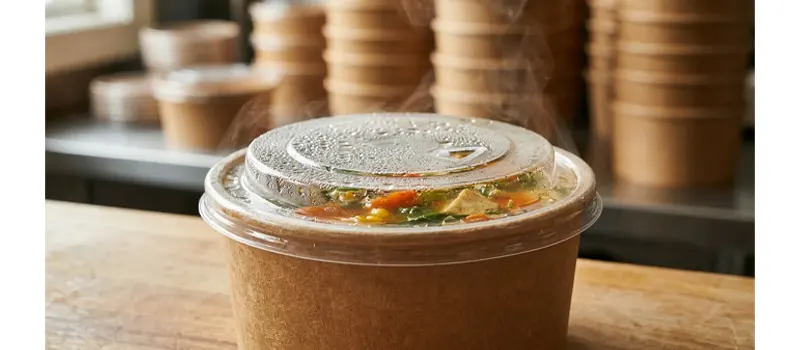
When you are testing, do not just press the lid once and assume it works. Fill the bowl with hot soup, close the lid, tilt it slightly, carry it by hand, and place it in a delivery bag. The lid should stay tight without popping open, shifting, or leaving gaps around the edge. You should always test the bowl and lid as one set.
We recommend that you prioritize choosing vented lids. Boiling soup generates steam, and trapped steam creates pressure. If a lid is completely airtight, the built-up pressure will physically pop the lid off the bowl mid-transit. Look for lids engineered with precision venting holes. A proper lid should offer a definitive “snap” or “click” when applied, giving your prep line confidence that the seal is locked, while still allowing dangerous steam pressure to escape safely.
Check How the Bowl Feels in Your Hand
A bowl for hot soup needs to be practical for your staff and customers to handle. Some bowls transfer heat quickly and become uncomfortable to carry, especially when filled with very hot soup. This creates a poor user experience and increases the chance of accidental drops.
When evaluating options, you can hold the filled bowl by hand for a realistic amount of time. If the outside becomes too hot, the bowl may need a stronger structure, better insulation, or a different material.
Run a Simple Test Before Ordering in Bulk
Before placing a large order, run a practical test using your real service conditions. Fill the bowl with your actual soup at serving temperature. Close the lid the way staff would do it during service. Let it sit for the expected holding time. Then carry it, stack it, or place it in a delivery bag. This test quickly shows whether the bowl is suitable.
Compare Cost Per Use, Not Unit Price Alone
A cheaper bowl is not always the better buy. If the bowl softens, leaks, or causes delivery complaints, the real cost becomes much higher than the purchase price. For soup packaging, even a small difference in quality can affect customer experience and brand trust.
When comparing suppliers, you should look at the cost per successful use. A slightly higher-priced bowl that reduces failures may be a better option than a cheaper bowl with inconsistent performance.
FAQs
What is the difference between single wall and double wall soup bowls?
Single wall bowls are lighter and more cost-effective, while double wall bowls provide better insulation and feel more stable when holding hot liquids. The choice depends on your budget and how important heat protection is for your customers.
Can I customize disposable soup bowls with my brand?
Yes, we offer customization options such as logo printing, color design, and size adjustments. Custom bowls can help improve brand recognition and create a more professional presentation for takeaway and delivery orders.
Can disposable soup bowls be microwaved?
Some disposable bowls are microwave-safe, but not all. It depends on the material and coating. For foodservice use, it is important to confirm microwave suitability with the supplier before offering reheating as part of the service.
What size disposable bowl is best for soup?
The best size depends on the serving portion and how the soup is used. As a general guide, 8 oz works for small sides or kids’ portions, 12 oz for light servings, 16 oz for standard single portions, 24 oz for hearty or noodle soups, and 32 oz for large or sharing sizes. In practice, it is better to leave about 10% to 15% headspace to prevent spills.
Can you recommend the best bowl option based on my soup products?
Yes. If you share your soup type, fill volume, and usage scenario, we can suggest suitable bowl options based on real packaging performance. This helps you avoid choosing only by catalog photos or price and makes sampling more efficient.
Where To Buy Disposable Soup Bowls?
Disposable soup bowls are widely available, but the right supplier depends on your needs. For small, occasional purchases, local wholesalers or online marketplaces can be enough. But for food businesses, distributors, and project buyers, the focus is usually on consistency, supply stability, and product performance rather than just availability. For buyers looking for long-term supply, working with an experienced supplier can simplify the process and ensure quality.
Million Pack focuses on food packaging solutions for commercial use, offering disposable soup bowls in different materials, sizes, and performance levels. We also support customization and bulk supply, which is important for brands that need consistent packaging across locations or want to integrate packaging into their overall brand presentation. For many B2B buyers, this type of supply model is more practical than switching between different sources over time.