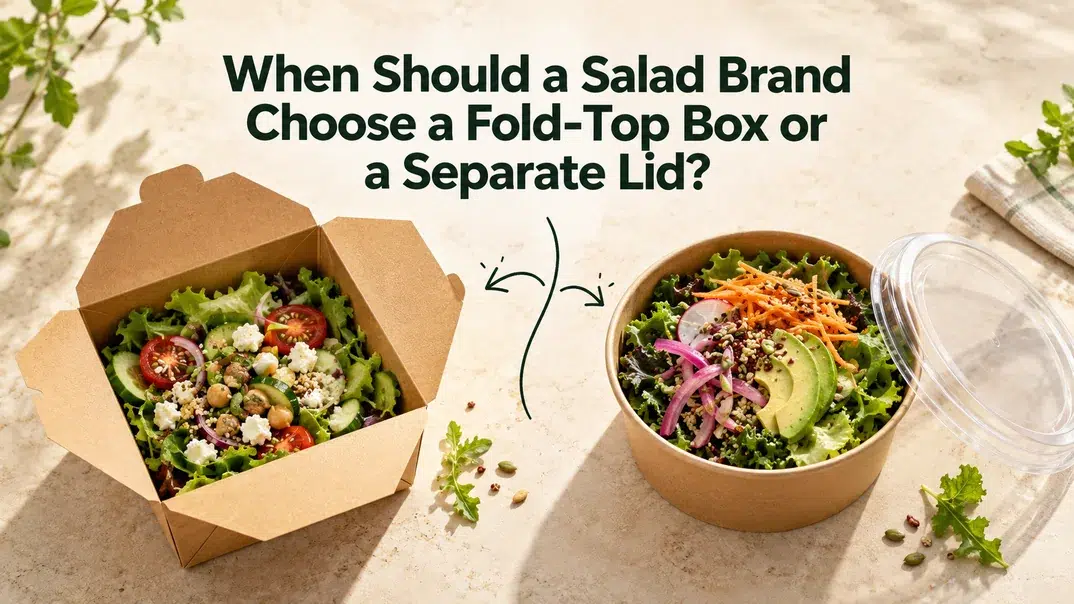
Choosing between a fold-top salad box and a bowl with a separate lid starts with how you sell the salad. The attached top may keep a made-to-order line moving, provided staff can close it without pressing down the food. A clear lid helps shoppers see a finished portion in a chilled display. Delivery changes the test again: the filled pack has to stay closed through carrying, tilting and stacking.
Fold-Top Salad Box vs Separate Lid: How the Closures Work
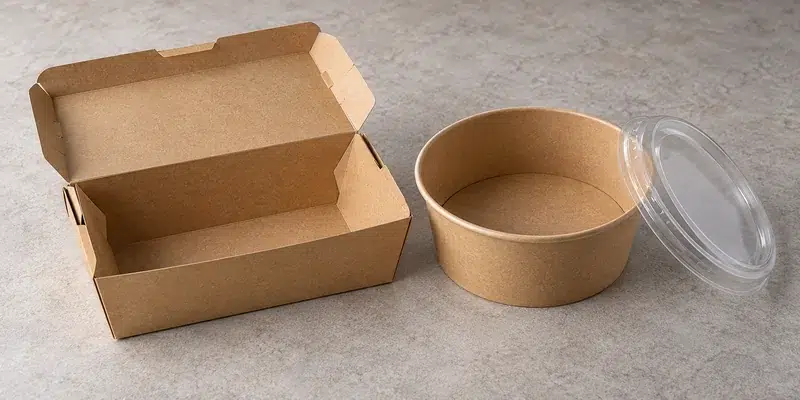
A fold-top box is cut and creased from paperboard. Its attached panels fold over the food and may lock with tabs, slots, or overlapping flaps. The closure sits across the top, while the folds and corners form separate paths that moisture can reach. A neat-looking top does not mean those paths are sealed.
A separate-lid pack has a base and a lid made to engage its rim. Depending on the design, the lid may press on, snap around the edge, or sit over it. Check that it grips all the way around: a lid resting on one side of the rim can look closed from above. A clear lid can give you a view of the salad; a raised one may create room above the base. Neither feature comes with every lid.
These are two ways to close a pack, not two fixed material specifications. Paperboard weight, food-contact coating, shape, and lid design vary by product. Treat the finished base and closure as one assembly: changing either part can change how the pack works.
Choose for the Way You Sell the Salad
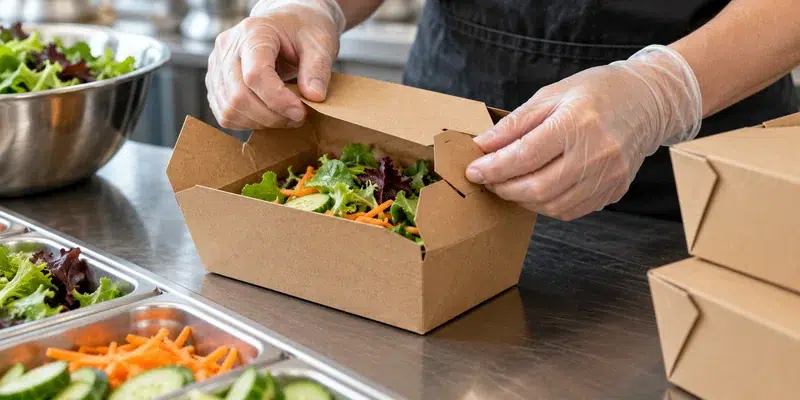
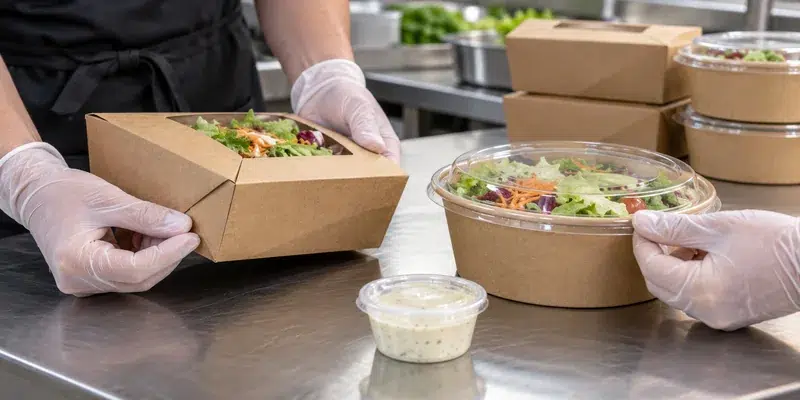
For a made-to-order lunch line, a fold-top box can reduce the number of loose parts at the packing station. The lid cannot be separated from the base, which helps when staff are moving quickly between orders. But some fold-top boxes arrive flat and need forming before filling. If your team spends time opening and locking each box, the one-piece design may not be the faster option.
A preformed bowl with a separate lid changes the work: staff can fill the bowl immediately, then take a lid from a second stack. This can suit a line that batches salads ahead of service, provided the correct lids are kept beside the bases. Count the steps from an unopened case to a closed order—not just the seconds it takes to close one empty sample.
For grab-and-go retail, the buying decision happens before the customer opens the pack. A clear lid lets shoppers inspect the finished salad and lets your team check which order is in a pickup fridge. If the container sits in a display with its top facing the shopper, that visibility can matter more than saving a packing step. If the printed front panel faces the shopper instead, a fold-top design may present the product well without showing every ingredient.
The kraft salad box options include different closure styles. Compare the exact format you intend to use; a product photo alone cannot tell you how it will behave on your line.
Match the Pack to the Salad You Actually Serve
Start with the finished portion, not the capacity printed in a catalogue. Capacity describes the space in a container under a particular measurement method. It does not tell you whether a mound of leaves, a tall protein topping, and a dressing cup will fit below the closure.
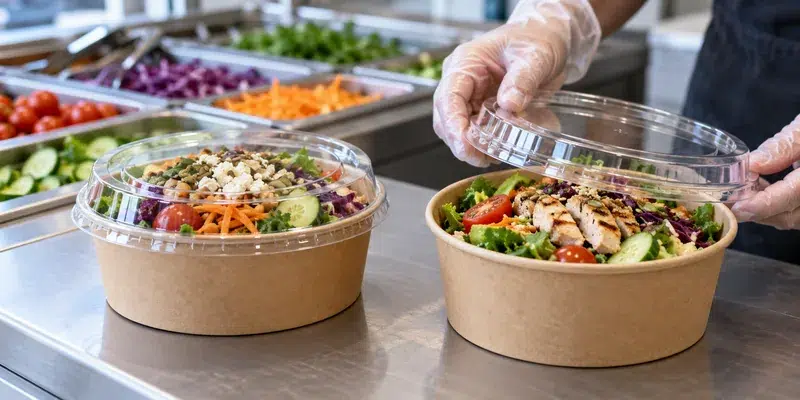
Loose greens take up height while weighing relatively little. If closing a fold-top box pushes them down, your customer receives a compressed salad and the tabs may be under constant upward pressure. A suitably matched raised lid can preserve the shape of a tall topping, but its dome needs to leave room for the food without becoming an awkward high point in the delivery bag. For a wide, low salad, compare the usable base area as well as height; a deep bowl can make the ingredients look crowded even when its stated volume is sufficient.
A grain or protein-heavy salad puts a different load on the pack. The bottom and sidewalls carry the weight when staff lift it, so look for sagging at the base and distortion near the top edge. Do not assume that a deeper bowl is stronger than a shallower box. That depends on the particular board, construction, fill weight, and how the pack is handled.
Moisture adds another decision. A coating or lining can help protect paperboard from liquid and oil, but it does not close a gap at a folded corner or under a lid edge. If dressing is mixed into the salad before packing, inspect the food-contact surface after the intended hold time and check where liquid collects. If dressing can be served separately, a closed sauce cup may reduce free liquid in the main pack; it must still fit without pushing on the top. Use the material and coating specified for the actual food and temperature, especially if you add warm ingredients to a cold salad.
What Changes When the Order Is Delivered?
The forces are different from those on a display shelf. A courier may lift a bag by its handles, set it down at an angle, or place another order above it. A top that survives upright holding may open when the package is squeezed from the sides or tipped.
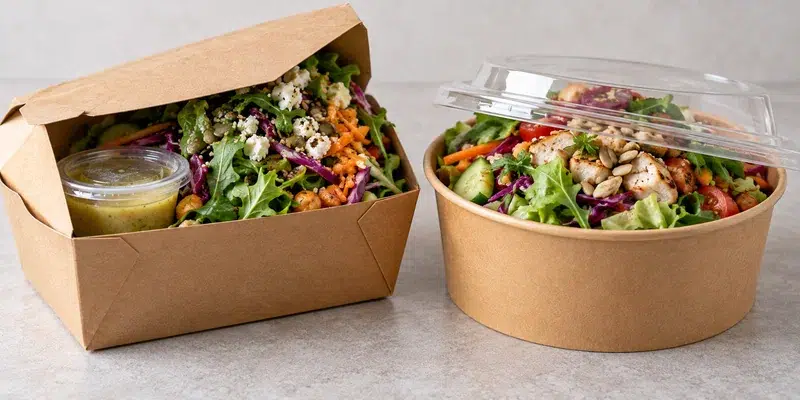
With a fold-top box, watch what happens when the filled sidewalls flex. If that movement pulls a tab out of its slot, the top can open even though it was closed correctly at the counter. With a separate lid, press along the entire rim before the pack leaves; an incompletely engaged section is the place most likely to lift when the bag shifts. A lid that fits the base on the counter may still loosen if the rim bends under load.
Stacking creates a second check. A raised lid can protect tall toppings from direct contact, yet a heavy pack placed on its dome may press it into the food or distort the rim below. A flatter fold-top box may sit more evenly in a bag, provided its closed panels do not buckle under the weight above. If delivery is central to your business, choose the stack arrangement as carefully as the individual container. Neither format should be called leak-proof without a test that reflects your menu and route.
How Can You Make the Final Choice?
Ask for assembled samples of the two exact options, with the intended base, lid if needed, and material specification. Then run a short trial around the orders that are hardest to pack. Your simplest side salad will not expose every problem.
| Trial | What to record | What would change your choice |
|---|---|---|
| Pack during normal service | Time from picking up the pack to a closed order; missed tabs, misfitted lids, or rework | If one format repeatedly slows the line or needs a second attempt to close, its apparent simplicity is not helping. |
| Hold as you normally sell it | Appearance at the end of the real chilled or counter-hold period; wet spots and visible condensation | If the salad loses its intended presentation before purchase or pickup, change the pack or the food arrangement. |
| Carry the real order | Results after the usual bag layout, stacked load, turns, and handoff | A lifted closure, deformed rim, crushed toppings, or liquid leaking into the bag rules out that assembly for the tested route. |
| Open as a customer would | Whether the pack opens cleanly and leaves enough room to eat or transfer the salad | A pack that survives delivery but makes the meal difficult to use may be wrong for that menu. |
Keep the result tied to the approved sample. A different lid profile, board, coating, or box crease can change the outcome even when the product name and stated capacity stay the same. If one format passes for your leaf salad and the other suits a heavier grain bowl, use two approved specifications instead of forcing a single pack across the menu.
FAQs
Can a Windowed Fold-Top Box Replace a Clear Lid in a Display?
Sometimes. Put the packed salad at the shopper’s actual viewing angle and check whether the window shows the ingredients that drive the purchase. A small window may identify the item but give a poorer view than a clear top. Also check the window after the normal chilled hold, when moisture may affect visibility.
Can One Lid Fit Several Bowl Sizes?
Only if those bases share the lid’s specified rim diameter and profile. Two bowls can have different depths and capacities yet use the same lid family; two bowls labelled with the same capacity can require different lids. Confirm compatibility by product code and physical fit, not by volume alone.
Where Can You Print a Logo on These Formats?
A fold-top box offers flat panels, but folds, locking tabs, and the areas hidden after closing limit the useful print space. A bowl’s curved wall needs artwork laid out for that shape. Printing on a clear lid is a separate specification, not an automatic option. Approve artwork on the assembled pack so you know what the customer will actually see.
Conclusion
Turn the result into a packing rule: specify which assembly goes with each menu item, how staff should close it, and where it can sit in a delivery bag. That makes the choice repeatable after the sample test is over.