Cardboard usually takes anywhere from 2 months to 2 years to decompose, but the real answer depends heavily on how and where it is disposed of. In a well-managed compost system, thin cardboard can break down in just a few months. In contrast, the same material can take years if it ends up in a dry environment or a landfill with limited airflow.
It is this vast difference that confuses many people about the decomposition rate of cardboard. Most articles only provide a specific figure, but this rarely reflects reality. Factors such as humidity, temperature, coatings, and even how cardboard is used in packaging all affect its decomposition rate.
In this guide, you will learn not only about average decomposition times, but also about the factors that actually influence decomposition times, the decomposition characteristics of different types of cardboard, and how to choose a better approach for food packaging or commercial operations.
Factors Affecting Decomposition
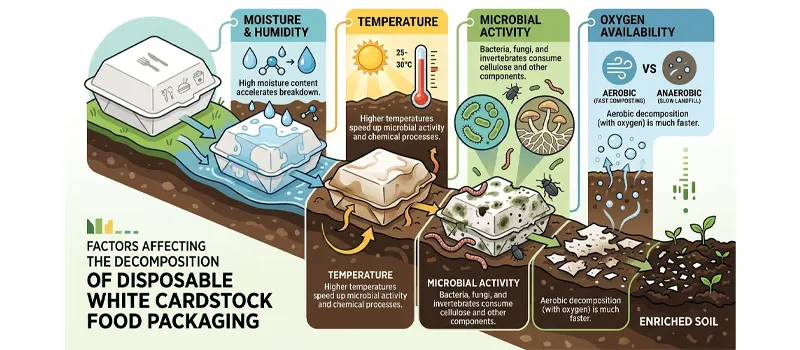
If you look at different sources, you will see very different answers for how long cardboard takes to decompose. That is because cardboard does not break down in a controlled, predictable way. It reacts directly to its surroundings.
Moisture
Water is what starts the process. When cardboard absorbs water, its fibers soften and become easier for microorganisms to break down. In composting conditions where moisture is consistent, decomposition can happen relatively quickly. In dry environments, the process slows down significantly. Cardboard stored in low-humidity conditions can remain stable for long periods with little visible change.
Oxygen and Airflow
Decomposition works best when air can circulate freely. In environments with good airflow, microorganisms have access to oxygen, which allows them to break down organic material more efficiently. When cardboard is tightly packed or buried under layers of waste, that airflow disappears. As a result, the breakdown process becomes much slower.
Temperature
In warm conditions, microbial activity increases, and cardboard tends to soften and fragment more quickly. In colder environments, the same process slows down, sometimes to the point where decomposition almost stops. This is why estimates for decomposition time can vary so widely depending on where the material is used and discarded.
Thickness and Structure
Lightweight paperboard, often used for retail or food packaging, allows moisture to pass through more easily and tends to break down faster. Corrugated cardboard behaves differently. Its multi-layer structure, designed for strength and protection, also makes it more resistant to quick decomposition.
Coatings and Treatments
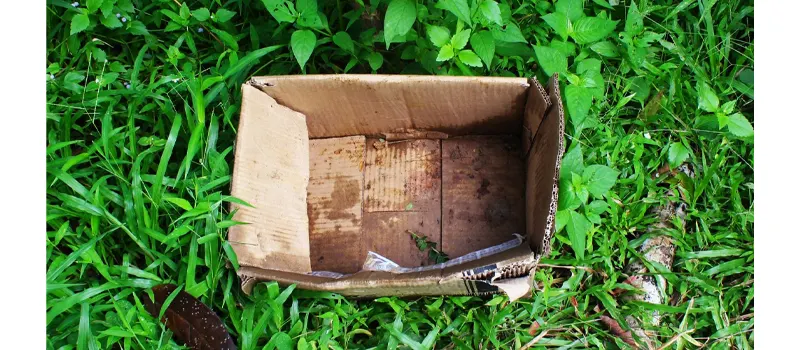
Many cardboard products are not made from untreated fiber. In food packaging, coatings are often added to resist moisture, grease, or leakage. These treatments improve performance but can slow decomposition. As a result, coated cardboard may take significantly longer to break down than uncoated material.
Disposal Method
Where cardboard ends up after use has a major impact on how it decomposes.
- In composting systems, cardboard can break down relatively quickly
- In landfills, limited oxygen and compacted conditions slow the process
- When recycled, the material is reused instead of decomposing
Contamination
Contamination from food, oil, or liquids can change how cardboard is processed after use. While added moisture may sometimes speed up breakdown, contamination often makes recycling more difficult. For food packaging, this is an important consideration. A material that is recyclable in theory may not be recycled in practice if it is heavily contaminated.
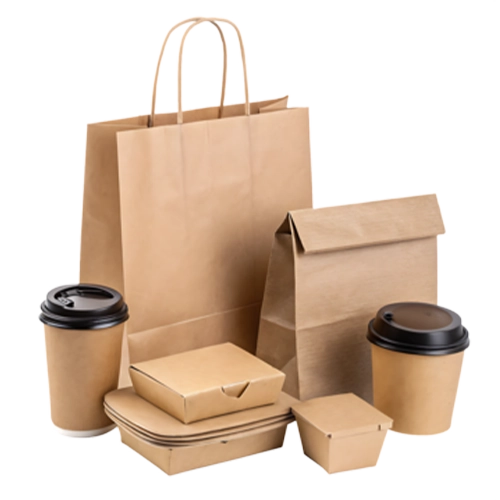
Different Types of Cardboard and Their Decomposition Rates
The term cardboard is often used broadly, but in practice it covers several different paper based materials. Some are light and untreated, some are thick and layered, and some are designed with added barriers to handle grease, moisture, or heat. These differences have a direct impact on how quickly the material decomposes.
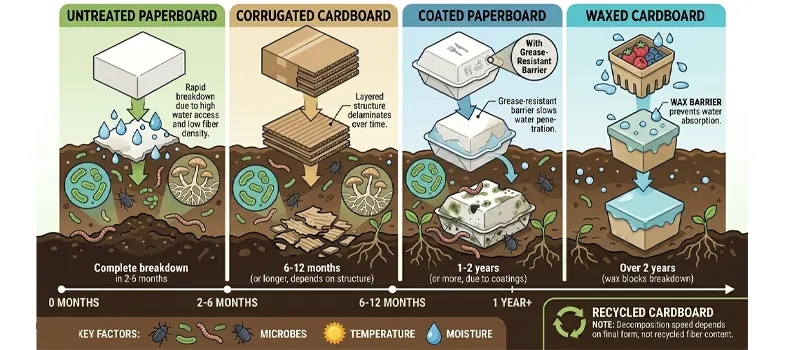
Corrugated Cardboard
Corrugated cardboard is the type most people recognize from shipping cartons and delivery boxes. It is made with multiple layers, including a fluted middle layer that adds strength and cushioning.
Because of this thicker structure, corrugated cardboard usually takes longer to decompose than lighter forms of cardboard. Under composting conditions, it may begin to break down within several months, but full decomposition often takes closer to 6 to 12 months, and sometimes longer if the material stays dry or is packed tightly with other waste.
Paperboard
Paperboard is thinner, smoother, and less rigid than corrugated cardboard. It is commonly used for cereal boxes, folding cartons, sleeves, and certain types of takeaway food packaging.
Since it has a lighter structure, paperboard usually decomposes faster. In the right composting conditions, it may break down in as little as 2 to 6 months. The shorter timeline comes from the fact that moisture and microorganisms can move through the material more easily.
For packaging, this makes paperboard attractive in applications where a clean appearance and lighter weight matter, though its environmental performance still depends on whether it has been coated or contaminated after use.
Coated Cardboard
Some cardboard products are made with added coatings to improve performance. In food packaging, coatings may be used to resist grease, prevent leakage, or protect the package from moisture.
These functional improvements are important in real use, but they also slow decomposition. A coated cardboard container will usually take longer to break down than uncoated paperboard made from similar fiber. In some cases, decomposition can extend to 1 to 2 years or more, especially if the material ends up in landfill conditions rather than a managed composting system.
Waxed Cardboard
Waxed cardboard is often used where extra moisture resistance is needed. It has been common in produce boxes, chilled packaging, and certain food related applications.
Compared with standard cardboard, waxed material is much slower to decompose because the wax layer blocks water from reaching the fiber structure. Since water is essential to the breakdown process, the material tends to remain intact longer than untreated cardboard.
Recycled Cardboard
Recycled cardboard refers to cardboard made partly or fully from recovered paper fibers. Its decomposition rate is not automatically faster or slower just because recycled content is used. What matters more is the final structure, thickness, and surface treatment of the product.
A recycled corrugated box will still behave much like other corrugated boxes. A recycled paperboard carton will still decompose more quickly than a heavier, coated format. In other words, recycled content improves resource efficiency, but it does not eliminate the influence of design and application.
So Which Type Breaks Down Fastest? In general, the breakdown pattern looks like this:
- Fastest: thin, uncoated paperboard
- Moderate: standard corrugated cardboard
- Slowest: coated, laminated, or waxed cardboard
What Happens to Cardboard in Landfills vs Compost Systems?
Cardboard decomposes much faster in compost systems than in landfills. Composting provides the moisture, oxygen, and microbial activity needed for efficient breakdown, while landfill conditions slow the process due to limited airflow and compacted waste. As a result, decomposition that takes months in compost can take years in a landfill.
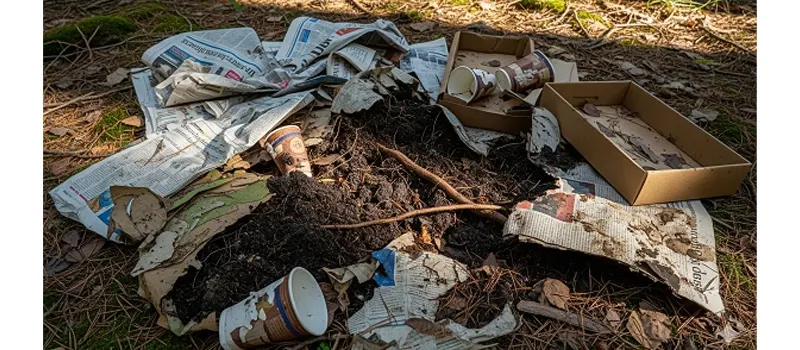
In Compost Systems
In a compost system, cardboard is exposed to the conditions that support decomposition: moisture, oxygen, microbial activity, and regular biological breakdown. If the cardboard is plain, uncoated, and shredded into smaller pieces, it can often decompose within a few months.
This is because composting creates an active environment where microorganisms can reach the fiber more easily. Air circulation helps, moisture softens the material, and turning the compost improves contact between the cardboard and the rest of the organic matter.
In Landfills
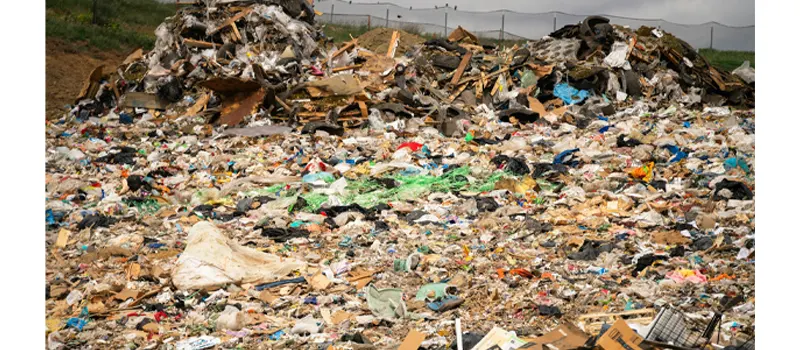
A landfill creates a very different environment. Waste is compressed, airflow is limited, and moisture conditions are inconsistent. Under these conditions, cardboard may still break down over time, but much more slowly than it would in compost.
This is one reason why broad claims about cardboard being biodegradable can be misleading in practice. A material may be biodegradable in theory, yet decompose very slowly if it is buried in a low-oxygen waste system.
According to the U.S. Environmental Protection Agency, landfills are designed primarily for waste containment, not for efficient decomposition, which helps explain why organic materials often persist much longer there than people expect.
How to Make Cardboard Decompose Faster?
Cardboard decomposes fastest when four conditions are met: sufficient moisture, access to oxygen, active microbial contact, and minimal material barriers. When these conditions are present, thin uncoated cardboard can break down within a few months.
Break Cardboard Into Smaller Pieces
A full cardboard box decomposes slowly because only the outer surface is exposed to moisture and microorganisms. Once it is torn, shredded, or cut into smaller sections, far more fiber is exposed, which helps the material soften and break down faster.
Keep It Moist, But Not Soaked
Dry cardboard can sit for a long time with very little visible change. Moisture is what activates the process by softening the fibers and creating a better environment for microbial activity. But too much water is not ideal either. If cardboard becomes waterlogged and compacted, airflow drops and decomposition becomes less efficient.
Improve Airflow
Cardboard breaks down more efficiently when oxygen is available. In a compost pile or organic waste system, regular airflow helps microorganisms stay active and keeps the material from matting into a dense layer.
Mix It With Other Organic Material
Cardboard decomposes faster when it is part of an active compost mix rather than sitting alone. On its own, it is a dry, carbon-rich material. When combined with nitrogen-rich organic matter such as food scraps or grass clippings, microbial activity becomes stronger and the overall system works more efficiently.
Remove Tape, Labels, and Non-Paper Components
Before trying to compost or speed up decomposition, it helps to remove anything that is not part of the fiber structure. Plastic tape, shipping labels, laminated sections, and synthetic coatings can all slow the process or leave behind unwanted residue. Even when the cardboard itself is biodegradable, attached non-paper materials can interfere with how evenly and cleanly it breaks down.
Balance Performance and Decomposition
For food packaging, decomposition speed cannot be evaluated in isolation. Grease resistance, moisture protection, and structural stability are often necessary, especially for hot foods, oily foods, and takeaway applications. That means many paper-based food packages need some form of treatment or barrier layer.
So the more practical approach is not to avoid treated cardboard altogether, but to reduce unnecessary complexity and match the material to the application. A well-designed package should protect the food effectively while keeping the material structure as simple as the product allows.
Use an Active Composting Environment
The fastest decomposition does not usually happen by accident. It happens in an environment where moisture, oxygen, and microbial activity are already working together. A managed compost system is far more effective than leaving cardboard outdoors and waiting for nature to take care of it.
Cardboard in Food Packaging: What Businesses Should Consider
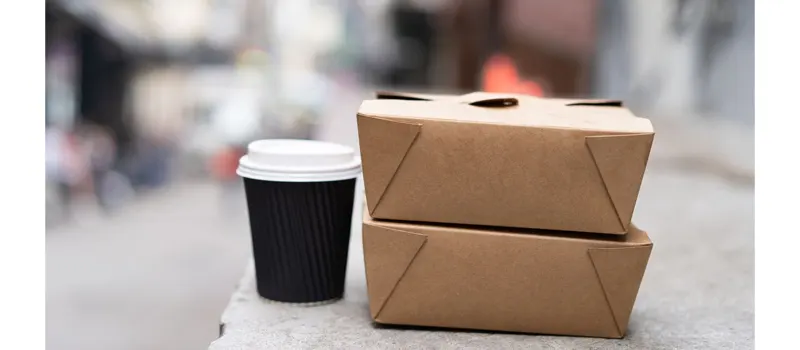
Selecting cardboard for food packaging is a decision that affects product performance, operational efficiency, and end-of-life outcomes. Instead of relying on general material claims, businesses should evaluate packaging based on how it performs in real-use conditions and how it behaves after disposal.
Food Type & Conditions
Hot food, oil, steam, and condensation all change how cardboard behaves. These factors determine whether the material softens, leaks, or loses strength during use. Packaging should be selected based on the most demanding condition it will face.
Barrier Level
Food packaging typically needs to be oil- and moisture-proof, making coatings unavoidable. Too much creates unnecessary material complexity and can reduce recyclability or slow decomposition. To avoid placing an excessive burden on the environment, we should choose packaging with the necessary protective properties.
Structural Strength
During delivery and storage, containers are stacked, moved, and exposed to pressure. Weak structures may deform, collapse, or fail under load. It is important to assess compressive strength and structural stability under actual transportation conditions.
Holding Time
The longer food stays in the package, the more moisture and heat build up inside. This increases the risk of softening and deformation. Packaging performance should match actual service time, especially for takeaway and delivery.
Food Contact Compliance
For food packaging, sustainability claims do not replace food-contact compliance. In the United States, food-contact substances must be authorized for their intended use under FDA requirements. In Canada, Health Canada controls the safety of packaging materials under the Food and Drugs framework, including the rule that packaging must not impart harmful substances to food. For buyers, this means board grade, coatings, inks, adhesives, and added treatments should all be reviewed as food-contact decisions first, not just sustainability features.
Align with Local Disposal and Recycling Systems
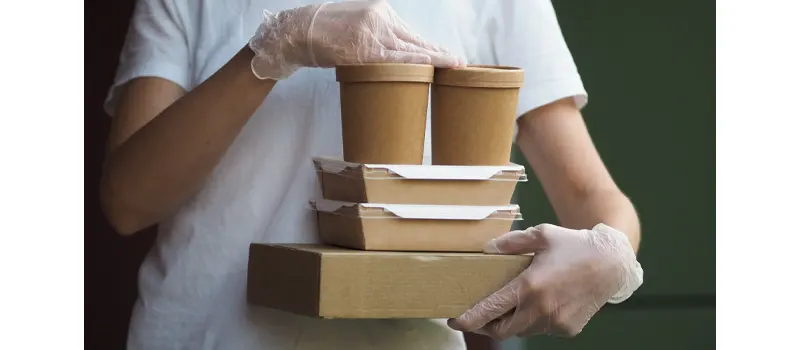
Cardboard packaging does not enter the global waste management system after use; instead, it enters the local system. Whether it is recycled, composted, or landfilled depends on existing local facilities, tolerance for pollution levels, and recycling rules in the consumer’s location. Material selection should match the most likely disposal route in the target market.
Cost vs Performance
Lower-cost packaging can create higher operational risk if it fails. Leakage, deformation, and product damage increase overall costs. A stable structure often provides better long-term value than the lowest unit price.
Brand Fit
Cardboard packaging also affects how the product is perceived. It supports printing, structure, and a more natural look. The right format should perform well and align with brand expectations at the same time.
Key Procurement Mistake
Recyclable, biodegradable, and compostable are not the same. Treating them as interchangeable leads to poor decisions. A stronger evaluation looks at the full structure of the package, including the board grade, coating type, barrier requirement, food application, and likely disposal route.
Final Thinking
In compost systems, cardboard may break down within months. In landfills, the same material can take years due to limited oxygen and restricted microbial activity. This difference highlights an important point: decomposition is not just about the material itself, but about how it is used and where it ends up.
For food packaging, the decision becomes more complex. Factors such as food type, moisture exposure, barrier requirements, and delivery conditions all shape how the material behaves in real applications. At the same time, environmental outcomes depend on local waste systems, contamination levels, and how the packaging is actually handled after use.
This is why simple labels such as recyclable or biodegradable are not enough to guide a good decision. What matters more is how well the packaging structure aligns with real-world conditions, from product performance to end-of-life pathways.
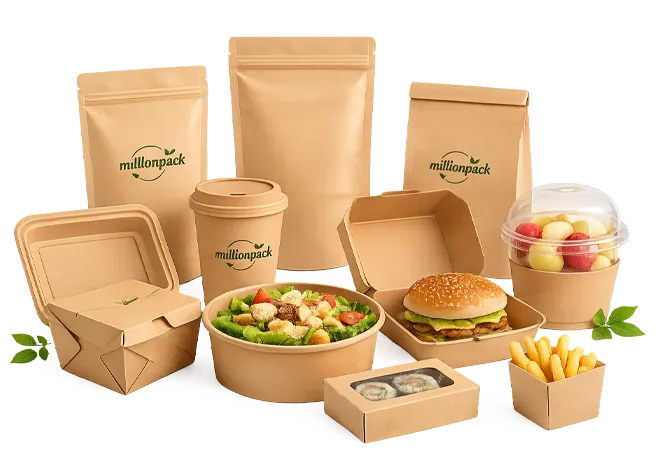
At Million Pack, cardboard food packaging is developed with practical considerations in mind. From standard formats to customized solutions, the focus is on helping businesses choose packaging that performs reliably in real-use conditions while aligning with evolving sustainability expectations.
FAQs
Can all cardboard be composted?
No. Only plain, uncoated cardboard is generally suitable for composting. Cardboard with wax coatings, plastic laminations, or heavy chemical treatments may not break down efficiently and may not be accepted in standard compost systems. Always check the material structure before composting.
Is food-contaminated cardboard recyclable?
It depends on the level of contamination. Lightly soiled cardboard may still be recyclable in some systems, but heavily contaminated packaging, especially with oil or grease, is often rejected. In those cases, the material is more likely to be sent to landfill or compost, depending on local waste rules.
Does coated cardboard still count as biodegradable?
Coated cardboard can still be biodegradable in a general sense, but the coatings slow down the process. The more resistant the surface is to moisture and oil, the longer it typically takes for the material to break down.
Why do some cardboard packages look the same but perform differently?
Because cardboard packaging can have very different internal structures. Some use simple fiber layers, while others include coatings, laminations, or multiple layers. These differences affect strength, moisture resistance, and how the material behaves after disposal.
Can I customize cardboard packaging for my specific application?
Yes. Customization can include size, structure, thickness, coating type, and printing. For businesses, customization is often necessary to balance product protection, cost, and branding.
Can Million Pack packaging reduce my overall packaging costs?
Yes, we can, but not always through unit price alone. Cost savings often come from reduced product damage, fewer leaks, better stacking efficiency, and improved customer satisfaction. A well-designed cardboard package can lower total operational cost even if the material price is slightly higher.