This simple distinction dictates whether your stickers are best suited for high volume giveaway or for long term outdoor display. For businesses, the choice impacts budget control, the application process for staff, and ultimately how customers perceive the product’s quality. A Kiss Cut sticker excels at maximizing your budget for indoor use, while a Die Cut sticker serves as a premium weather resistant representation of your brand’s commitment to quality.
This guide will provide clear definitions and comparisons of Kiss Cut Vs Die Cut stickers. Understanding this distinction is key to making an informed choice for your marketing strategy, ensuring your custom decals perfectly match your budget application environment and brand aesthetic.
What Is Kiss Cut Sticker?
A Kiss Cut Sticker represents a distinct method in the world of custom decals, offering a blend of flexibility and practicality. Understanding its structure and application is key to knowing when to choose it over its counterparts.
1. Definition and Structure
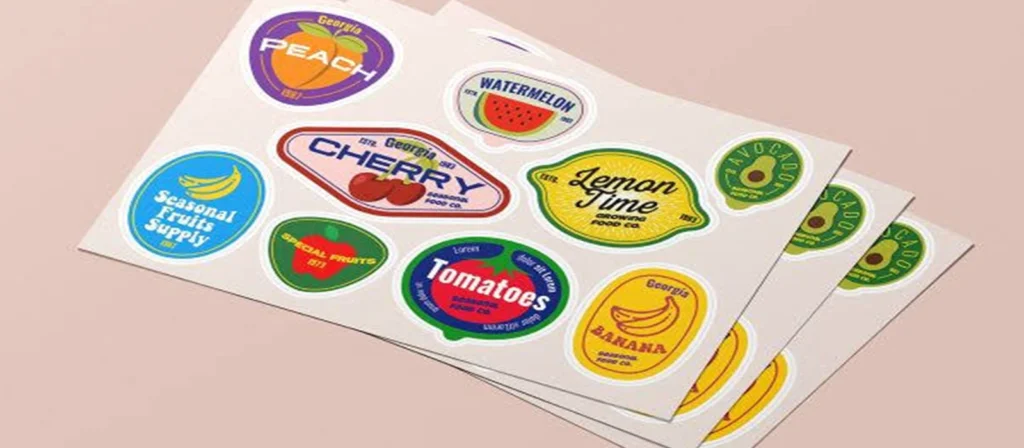
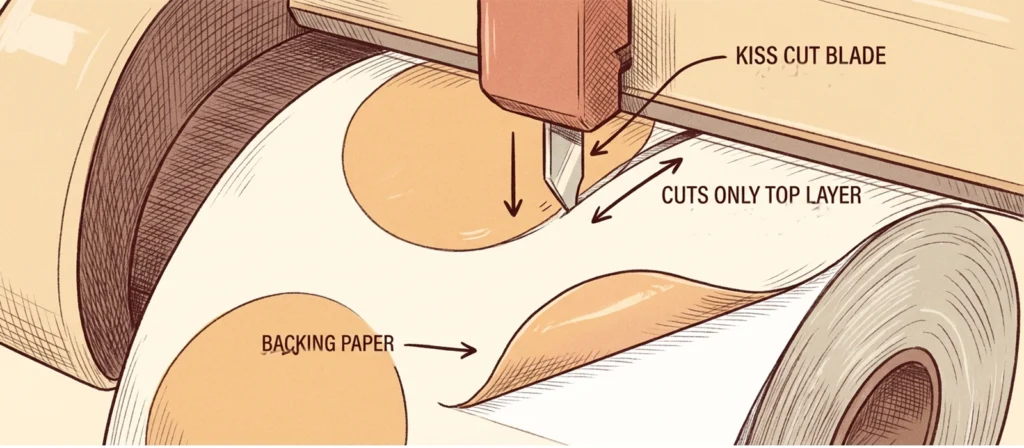
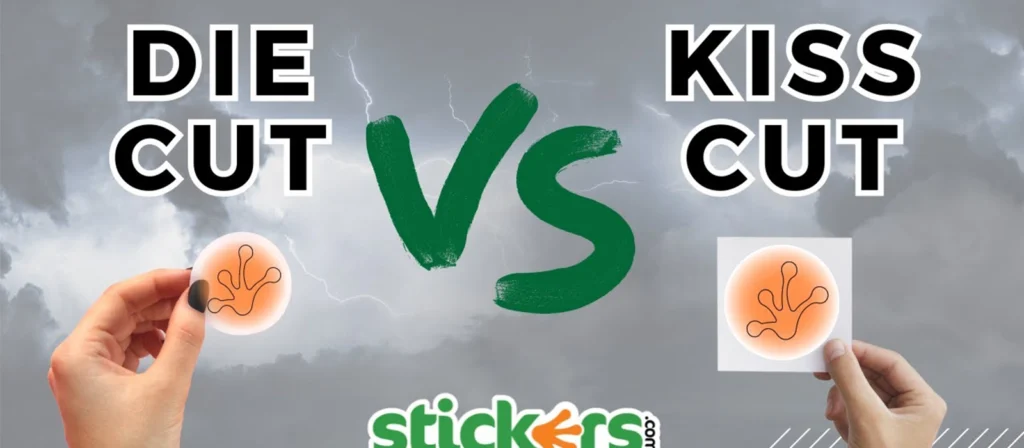
The defining characteristic of a Kiss Cut Sticker lies in its cutting technique. The sticker is cut only through the vinyl or paper face material and the adhesive layer, but crucially, it leaves the backing paper or liner intact. This contrasts with other cutting methods where the entire material stack is severed. This process results in a sticker design surrounded by a residual margin of the intact backing material.
2.The Kiss Cut Process
- Design Printing: The custom artwork is digitally printed onto the selected substrate material, typically vinyl, which is permanently affixed to its backing liner.
- Lamination/Coating: A clear, protective film is applied over the printed ink. This step seals the design and significantly enhances the sticker’s durability against abrasion, UV exposure, and moisture.
- Kiss-Cutting: The sheet moves to a specialized cutting machine. The blade or laser performs the kiss-cutting step, slicing precisely through the sticker material and the adhesive, but crucially leaving the backing liner intact.
- Weeding : While often optional, if the design requires an external border to be removed, the excess material around the custom shape is manually or mechanically removed from the surface of the backing liner.
- Final Product: The resulting product is a sticker design cut to its custom shape, resting easily on the larger, intact backing sheet, ready for easy peeling.
Advantages of Kiss Cut Stickers
The unique construction of a Kiss Cut Sticker translates into several distinct benefits that make it the preferred choice for specific projects.
Benefits of Kiss Cut Stickers:
- Cost-Effectiveness: The simpler cutting process consumes less material, making Kiss Cut stickers a highly economical choice for large promotional campaigns.
- Ease of Peeling: The surrounding backing material makes peeling effortless, helping users apply stickers quickly without damaging edges.
- Flexibility: Offers broad customization for internal shapes, colors, and sizes without complicating the cutting of the backing sheet.
- Branding Opportunity: The leftover border can include QR codes, instructions, or brand elements, enhancing marketing value for giveaways and packs.
- Suitability: Best suited for indoor and lightweight applications such as journals, laptops, or interior walls where weather protection is not required.
Disadvantages of Kiss Cut Stickers
While offering practical benefits, the Kiss Cut method also presents certain limitations that should be considered before committing to an order.
Limitations of Kiss Cut Stickers:
- Durability: Materials used for Kiss Cut stickers often prioritize cost, resulting in lower durability compared with Die Cut Stickers under abrasion or frequent handling.
- Curling: Since only the top layer is cut, peeled edges can curl in humid or extreme temperatures, particularly with thinner paper materials.
- Design Limitations: Extremely intricate shapes may struggle with stability during peeling, as delicate points can remain vulnerable.
- Outdoor Use: Kiss Cut stickers are not ideal for long term outdoor exposure as they cannot resist sun, moisture, or temperature fluctuations as effectively as Die Cut options.
- Handling: Thin materials may require careful peeling to avoid edge tearing, especially when compared with the sturdier construction of Die Cut Stickers.
Kiss Cut Stickers are defined by a cutting method that slices the sticker material but leaves the backing paper intact, offering a cost-effective and easy-to-peel solution. Although excellent for high-volume indoor applications, they offer lower durability and are less suited for long-term outdoor use compared to Die Cut stickers.
What Is Die Cut Sticker?
A Die Cut Sticker is the industry standard for custom-shaped, professional-grade decals. The term describes a cutting process that yields a final product trimmed precisely to the contours of the design.
1. Definition and Characteristics
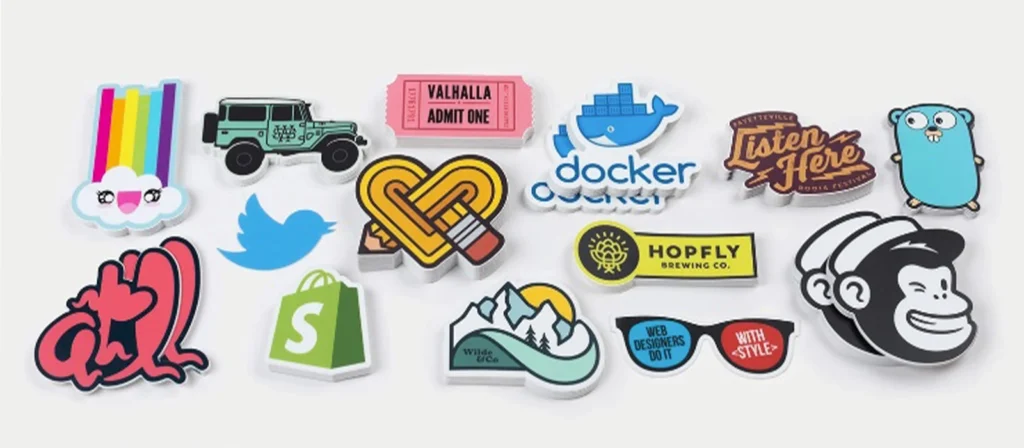
A Die Cut Sticker is defined by a cutting process where the sticker material and the backing liner are cut into the exact same shape of the final design. When you pick up a Die Cut Sticker, there is no surrounding backing material, only the shape of the image itself. This creates a clean, premium, and professional presentation, distinguishing it from the Kiss Cut method where the backing remains. The result is a perfect contour cut, trimmed flush with the sticker’s graphic edge.
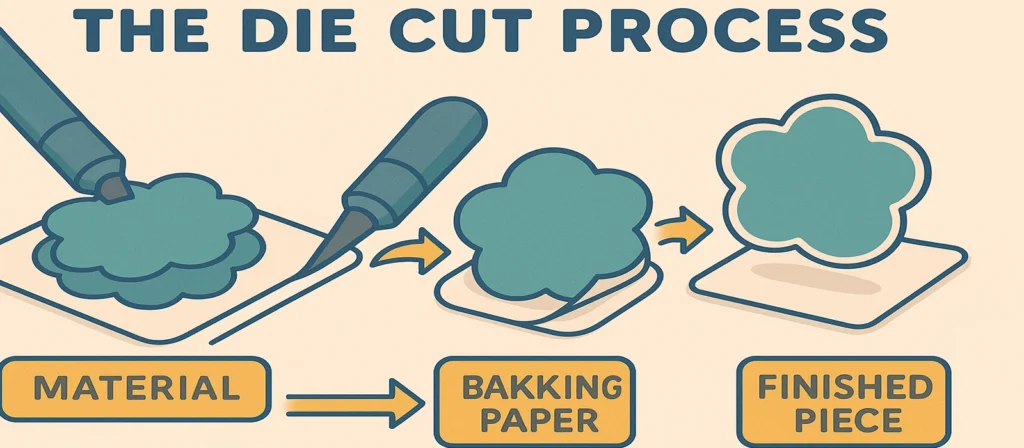
2. The Die Cut Process
- Design Printing: The custom artwork is digitally printed onto the chosen substrate material, typically vinyl.
- Lamination/Coating: A clear, protective layer of film is applied over the printed ink. This step seals the design and significantly enhances the sticker’s durability against abrasion, UV exposure, and moisture.
- Die-Cutting: The sheet moves to a specialized cutting machine. The blade or laser performs the die-cutting step, slicing precisely through the sticker material, the adhesive, and the backing liner to achieve the exact custom contour shape.
- Weeding : The waste material—the excess vinyl and backing surrounding the perfectly cut sticker design—is manually or mechanically removed.
- Final Product: The resulting product is a clean, precisely shaped Die Cut Sticker, ready for application.
Advantages of Die Cut Stickers
The inherent properties and cutting method of a Die Cut Sticker offer significant advantages, particularly for branding and outdoor use.
Limitations of Kiss Cut Stickers:
- Durability: The materials often selected for Kiss Cut production prioritize cost, which can make them less durable compared with Die Cut Stickers, particularly when faced with abrasion or frequent handling.
- Curling: Because the cut is only on the surface layer, the edges of the peeled sticker are more susceptible to environmental factors; they may curl in humid or extreme temperatures, especially if the material is thinner paper stock.
- Design Limitations: A Kiss Cut may offer limited compatibility with highly intricate designs when the fine cuts need to remain perfectly stable during the peeling process, as ultra-fine points can still be vulnerable.
- Outdoor Use: The typical materials and construction are not ideal for long term outdoor use as they cannot withstand prolonged exposure to sun, rain, and temperature fluctuations as effectively as Die Cut Stickers.
- Handling: Although generally easy to peel, if the material is thin, the sticker may require more care when removing from the backing to ensure the very edge of the design does not tear, especially compared to the thicker construction of some Die Cut Stickers.
Disadvantages of Die Cut Stickers
Despite their professional appearance and durability, Die Cut Stickers come with trade-offs, primarily related to cost and production complexity.
Limitations of Die Cut Stickers:
- Production Cost: Cutting through both the sticker material and the thick backing requires heavy-duty machinery and precise alignment, making production more expensive compared with Kiss Cut Stickers.
- Size Limitations: Large-format Die Cut Stickers can be restricted due to technical constraints and the higher cost of durable vinyl sheets used for oversized shapes.
- Production Time: The exact alignment and specialized cutting process typically increase production time, including creating the custom cutting file and executing the full cutting sequence.
- Application Precision: Since the sticker is cut to its exact shape without extra grip margins, it must be applied carefully to avoid misalignment, folding, or premature sticking along the edges.
- Material Waste: Cutting the entire shape through both layers produces more discarded material, as the leftover vinyl and backing around the sticker must be removed and thrown away.
Die Cut Stickers are the premium choice, cut precisely to the design’s contour trimming both the sticker and backing for maximum visual impact and professionalism. They offer superior durability and are ideal for long-term outdoor use, but they come with higher production costs.
Kiss Cut Vs Die Cut Stickers: Key Differences
1. Cutting Method
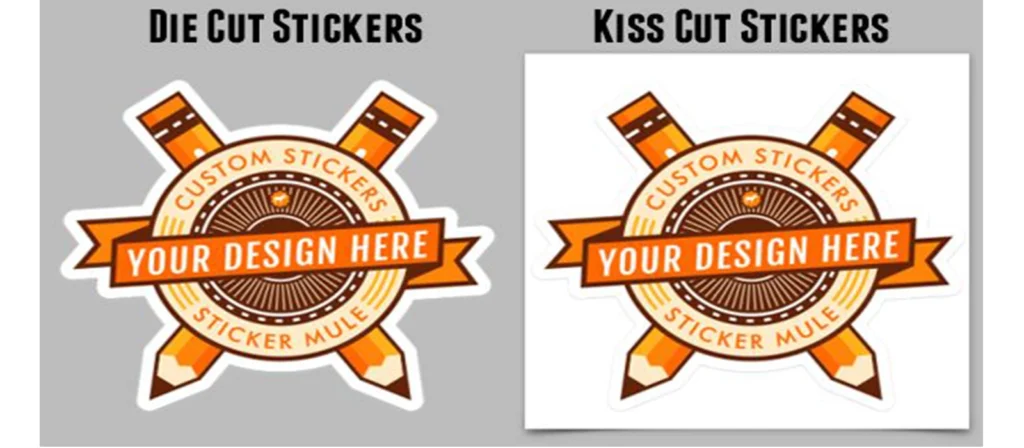
For Kiss Cut Vs Die Cut Stickers, the cutting method is the key difference. Kiss Cut stickers are cut only through the face material and adhesive, so the backing sheet stays whole. Die Cut Stickers are cut through the face, adhesive, and backing to create the final shape. In food packaging, this affects how easily labels sit on cups, bowls, and takeaway boxes and how clean the final edge looks.
2. Shape Flexibility
Kiss Cut stickers allow detailed shapes in the print, but the final pieces are usually supplied on a square or rectangular backing. This is handy when food brands need sheets of many small labels. Die Cut Stickers follow the exact logo outline, which looks very tidy on ice cream tubs, coffee cups, or deli containers and helps the brand icon stand out on crowded shelves.
3. Durability
Kiss Cut stickers for food packaging are often used with lighter materials and simple varnish, so they suit short promotions, seasonal campaigns, or inner packaging. Die Cut Stickers are usually made with thicker vinyl and lamination that resist moisture, oil, and handling. This makes them better for cold drinks, frozen foods, sauces, and reusable containers that face frequent contact, condensation, and long distance transpor
4. Ease of Peeling
Kiss Cut stickers are easier to peel because the intact backing around the design gives workers or customers something to grip. In bakeries, cafes, and cloud kitchens, staff can quickly lift labels from sheets to seal bags or close cake boxes. Die Cut Stickers sit flush with their edge, so they can be slightly harder to peel by hand, unless you use split backs or dispensers on the packing line.
5. Best Use Cases
In the food industry, Kiss Cut stickers are ideal for coupon sheets, nutrition labels, QR code labels, and small information inserts that go inside meal kits or snack packs. Die Cut Stickers suit primary branding on cups, jars, bottles, and takeaway boxes for a more premium look and long term use. In other sectors, Kiss Cut works well for indoor labels and product inserts, while Die Cut is widely used for outdoor branding, vehicle stickers, and high end promotional decals.
6. Cost
For Kiss Cut Vs Die Cut Stickers, cost is often the key deciding factor in food packaging. Kiss Cut stickers are usually more cost effective, especially for large runs of promotion labels, QR code tags, or ingredient stickers on cups and takeaway boxes. Die Cut Stickers cost more because they use thicker materials and more complex cutting processes. Many brands therefore reserve Die Cut for hero logos or premium food lines, while using Kiss Cut for bulk campaigns, inner labels, and inserts to keep the overall packaging budget under control.
| Comparison Dimension | Kiss Cut Stickers | Die Cut Stickers |
| Cutting Method | Cuts only the face stock and adhesive, leaving the backing paper intact. | Cuts through the face stock, adhesive, and the backing paper into the final shape. |
| Shape Flexibility | Highly flexible for the design itself, but the final delivered shape is typically square/rectangle with the backing. | Cut precisely to the final shape of the design; fully custom contours. |
| Durability | Generally less durable; dependent on the material chosen, often used with thinner stock. | Highly durable; often made with thicker, weather-resistant vinyl and laminate. |
| Ease of Peeling | Easy to peel due to the surrounding backing paper to grab onto. | Can be harder to peel as the cut is flush with the design edge. |
| Best Use Cases | Bulk promotional giveaways, sticker sheets, indoor labeling, product inserts. | Outdoor branding, vehicle decals, premium promotional items, long-term use. |
| Outdoor Suitability | Limited; generally not recommended for long-term outdoor exposure. | High; designed to withstand weather, UV rays, and abrasion. |
| Waste Production | Less material waste from the cutting process, as less material is trimmed away. | More material waste due to the entire surrounding material being cut away and discarded. |
| Cost | More cost-effective, especially for high-volume orders. | Higher production cost due to complex cutting and material quality. |
| Production Time | Faster turnaround time due to simpler cutting process. | Longer production time due to the precision and complexity required. |
| Advantages | Cost-effective for high volumes; Very easy to peel and handle. | Highly durable and weather-resistant; Provides a professional, exact shape presentation. |
| Disadvantages | Lower durability; edges may curl; Not suitable for long-term outdoor use. | Higher production cost; Requires more precision during application. |
How to Choose Between Kiss Cut and Die Cut Stickers
The choice between Kiss Cut Vs Die Cut Stickers is a strategic decision that should be guided by your specific goals. You must weigh factors like design requirements, budget constraints, quantity needed, and the intended application environment. Use the following considerations to finalize your choice.
1. Consider the Complexity of Your Design
If your design involves intricate contours or an unusual custom shape, the Die Cut Sticker is the superior choice. Its precision trims the design exactly to the edge, maximizing the visual impact. While a Kiss Cut can have complex internal shapes, the surrounding backing sheet may detract. For truly bespoke designs, Die Cut capabilities are essential.
2. Evaluate Customization Needs
If having a sticker only the shape of your perfectly contoured logo is paramount, Die Cut Stickers offer the greatest final shape customization. If your need is for a high volume of custom colors and simple designs while maintaining budget, the Kiss Cut method offers excellent flexibility.
3. Think About the Sticker’s Lifespan and Usage Environment
If the sticker is destined for a water bottle, car bumper, or outdoor equipment, it requires the superior protection and strength of a Die Cut Sticker. This is typically thick, waterproof vinyl. For protected indoor use, a Kiss Cut sticker will suffice and save money. Die Cut Stickers are engineered for a long lifespan.
4. Define Your Budget Range
Ultimately, the decision must align with your financial parameters. If the budget is tight and the quantity is high, the cost savings offered by the Kiss Cut method are undeniable. If the sticker is a core branding element and budget allows, the superior presentation, quality, and durability of the Die Cut Stickers justify the higher production cost.
Choose Die Cut Stickers for superior presentation, complex shapes, and maximum durability. Select Kiss Cut stickers for high volume, budget efficiency, and simple designs.
Common Materials Used for Kiss Cut vs Die Cut Stickers
| Material Type | Typically Used for Kiss Cut Stickers | Typically Used for Die Cut Stickers |
| Vinyl (BOPP/PVC) | Common, especially for simple designs where cost is a factor. Often uses thinner vinyl without heavy laminate. | Standard, used for almost all high-quality applications. Usually thicker vinyl, often protected with UV-resistant laminate. |
| Paper Stock | Very Common. Used heavily for bulk, disposable, or indoor-only applications like simple labeling or promotional giveaways. | Less Common. Only used when extreme cost savings are needed or for strictly indoor use, as the Die Cut shape makes paper more susceptible to edge damage. |
| Clear Vinyl | Common, providing a transparent background on the intact backing sheet for easy handling. | Common, providing a seamless, custom-shaped transparent decal for a premium look. |
| Holographic/Metallic | Used for special visual effects, often for indoor or protected applications due to the backing providing stability. | Used for premium, durable decals that require a high-impact, contoured shape presentation. |
| Lamination/Coating | Often uses simple gloss or matte coatings, or no laminate, to keep costs low. | Essential for outdoor durability; almost always includes a thick, protective gloss or matte UV laminate. |
Which Sticker Type Is Best for Your Use Case?
Choosing the right sticker type involves matching the features of the Kiss Cut and Die Cut methods to the practical needs of your project, especially when considering the fast-paced, often humid environment of food service packaging.
Best For Kiss Cut Stickers
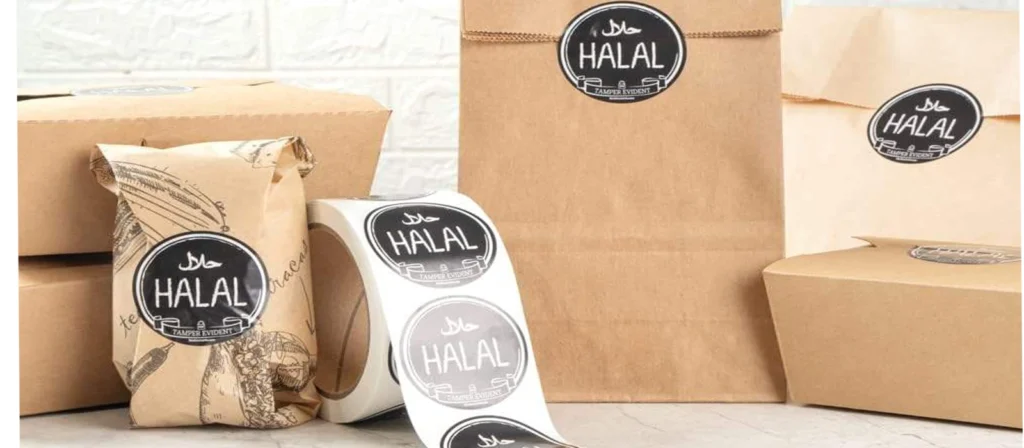
Kiss Cut stickers excel in scenarios where cost and ease of application are prioritized over extreme long-term durability, making them ideal for high-volume, disposable items.
- Bulk Promotional Giveaways: Cost-effectiveness and ease of peeling make them perfect for high-volume distribution inside food containers or as a simple giveaway item, such as freebie stickers in kids’ meal boxes.
- Simple Branding Seals for Internal Packaging: Ideal for basic designs and lightweight applications where the sticker needs to be quickly applied and only needs to last until consumption, such as sealing sandwich wraps or coffee sleeves.
- Branding Add-ons for Secondary Packaging: They are easily placed onto secondary packaging as a bonus item or to quickly add a temporary campaign logo, such as a logo sticker placed on a paper carry-out bag or pizza box.
- Indoor Branded Decals for Customer Loyalty: Ideal for use as an enclosed value-add or a loyalty incentive inside food subscription boxes or meal kits. These are small, personalized stickers that customers can use to decorate their laptops or planners indoors, serving as a constant and protected reminder of your food brand.
- Stickers Used Primarily for Aesthetics: When the look is more important than the ability to survive harsh conditions, such as adding a colorful decorative element to a dessert box.
Best For Die Cut Stickers
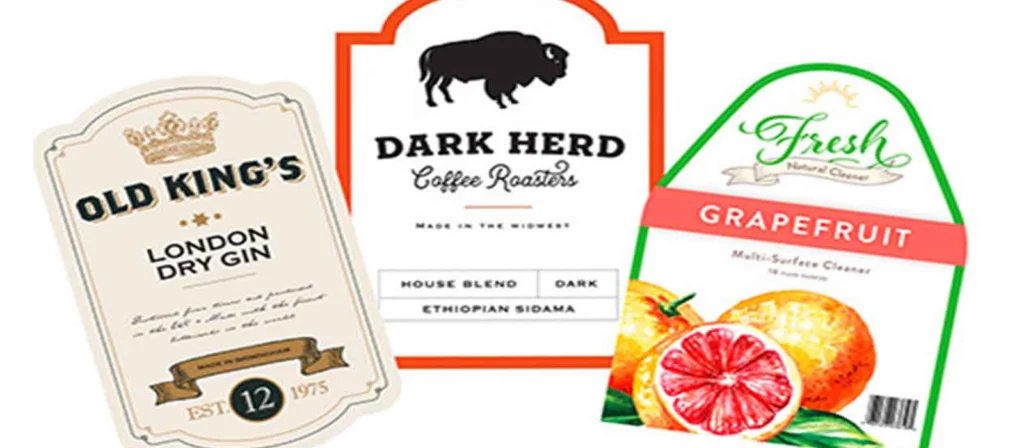
Die Cut stickers are the superior choice when the sticker needs to withstand moisture, heavy handling, or present a highly professional, permanent brand mark on reusable or refrigerated items.
- Durable Product Labeling for Refrigerated Items: Their superior weather resistance and strong adhesive make them a must-have for items exposed to condensation and cold temperatures, such as ingredient labels on juice bottles or frozen meal containers.
- Reusable Branded Containers: Ideal for items that are frequently handled and washed, ensuring the branding remains intact on a customer’s personal coffee tumbler or food prep containers.
- Premium Promotional Add-ons: Used for items intended to convey high quality and professionalism when included with high-value food products or sophisticated packaging sets, such as a durable, custom-shaped logo decal added to a gourmet coffee subscription box or a reusable glass jar of premium spices.
- Highly Detailed Custom Shaped Food Labels: The precision cut allows the intricate design to be the entire focus, creating a strong, clean brand identity on premium packaging, such as a logo cut to the exact shape of a complex food mascot.
- Long Term Industrial or Commercial Labeling: Required for durable property identification or safety labels that must last for years in a commercial kitchen environment or on equipment serial numbers.
In summary, choose Kiss Cut stickers when you need to maximize budget efficiency for high-volume, disposable packaging and ease of peeling is key. Opt for Die Cut Stickers when durability, weather resistance, and a premium, precise-cut shape are essential for refrigerated goods or permanent branding on reusable items.
Essential Tips for Designing Custom Stickers
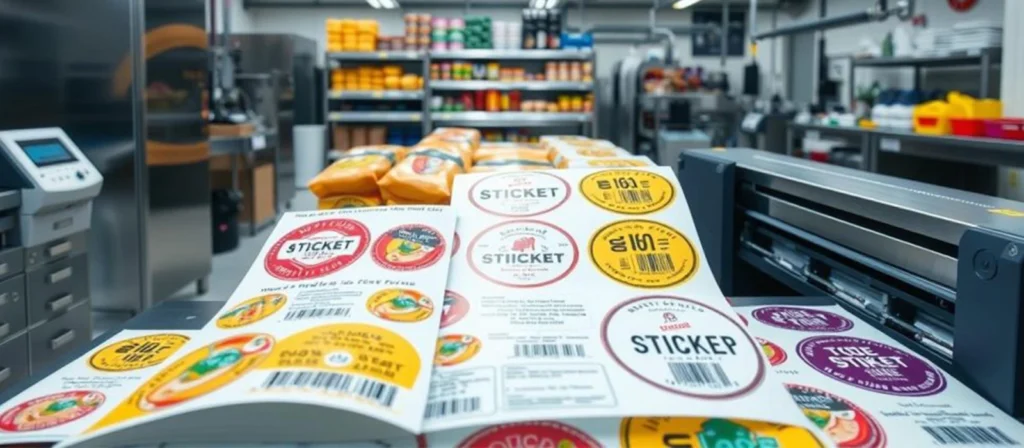
Regardless of whether you choose Kiss Cut Vs Die Cut Stickers, the design itself must be optimized to achieve the best result. Follow these essential tips to ensure your custom stickers make the intended impact.
- Set a Clear Purpose for Your Sticker: Before starting, define the sticker’s role. Is it for brand awareness, product information, or personal art? The purpose will determine the required size, material, and necessary level of durability.
- Understand Your Target Audience: Design elements, color choices, and messaging should resonate with the people who will be receiving or using the stickers. A design that appeals to your audience is more likely to be displayed.
- Keep the Design Clean and Simple: A sticker is a small format, so cluttered designs are ineffective. Stick to a clear message, a strong central graphic, and legible font. For a Kiss Cut, a simpler shape on the internal cut is easier to peel.
- Use High Resolution Artwork: Always provide high-resolution files, preferably vector files, to your printer. This ensures your sticker is printed with sharp lines and crisp colors, avoiding pixelation, especially important for Die Cut Stickers where the edge quality is a key feature.
- Maintain Brand Consistency: Use your established brand colors, logos, and fonts. This strengthens your brand identity and ensures that the sticker instantly communicates your company’s image, whether it is a Kiss Cut or a Die Cut Sticker.
In essence, great sticker design is about intentionality and quality. Focus on a clear, simple concept and always use high-resolution files for professional results.
Conclusion
The decision between Kiss Cut Vs Die Cut Stickers comes down to balancing three key factors: budget, durability, and final presentation. The Kiss Cut excels in cost-effectiveness and ease of use, making it the champion for bulk promotional giveaways and indoor scenarios. In contrast, the Die Cut Stickers method offers unmatched durability, professional shape presentation, and weather resistance, justifying their higher production cost for premium outdoor branding and long-term applications. Understanding what is Die Cut Stickers production process allows for a full appreciation of its quality.
Ultimately, by defining your sticker’s intended use and budget, you can confidently select the method that best transforms your design from a digital file into a high-impact physical piece. Choosing the right cutting technique is the final step in ensuring your custom sticker achieves its goal and makes a lasting impression.
FAQs
1. Are kiss cut stickers easier to peel?
The extra backing material on Kiss Cut stickers creates a margin that makes them much easier and faster to peel off the liner.
This design helps users remove the sticker cleanly without damaging small edges.
2. Are die cut stickers waterproof?
Die Cut Stickers are usually waterproof and weather resistant.
They are commonly made from durable vinyl with a protective laminate for long term outdoor use.
3. Which type is better for small details?
Die Cut Stickers generally perform better for intricate shapes.
Their sturdy materials help preserve fine and complex outlines.
4. Which option is more budget friendly?
Kiss Cut stickers are usually the more cost effective option.
Their production process is simpler and uses less material, especially in bulk orders.
5. Can both sticker types be used outdoors?
Both options can be placed outdoors for short periods.
Die Cut Stickers, however, are the better choice for long term outdoor exposure.
6. Does a Kiss Cut sticker look different once applied?
No, a Kiss Cut sticker looks the same as a Die Cut Sticker after application.
The surrounding backing is removed, leaving only the shaped sticker.