When choosing paper food trays for your restaurant, you may quickly run into a common problem: the size labels are not always easy to understand. A 1 lb, 2 lb, or 3 lb tray may look similar online, but the actual length, width, depth, and usable space can be quite different. The right size also depends on the food you serve, your portion size, and whether you need extra room for sauces or toppings. This guide explains how paper food tray sizes are measured, what the common capacity labels mean, and how to choose a tray that fits your menu and daily service needs.
What Are Paper Food Tray Sizes?
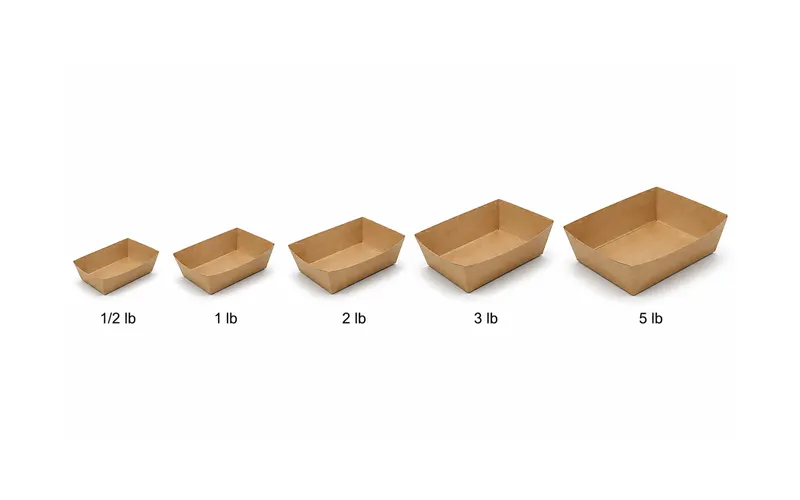
Paper food tray sizes refer to the tray’s capacity and physical dimensions. Common capacity labels include 0.25 lb, 0.5 lb, 1 lb, 2 lb, 3 lb, and 5 lb.
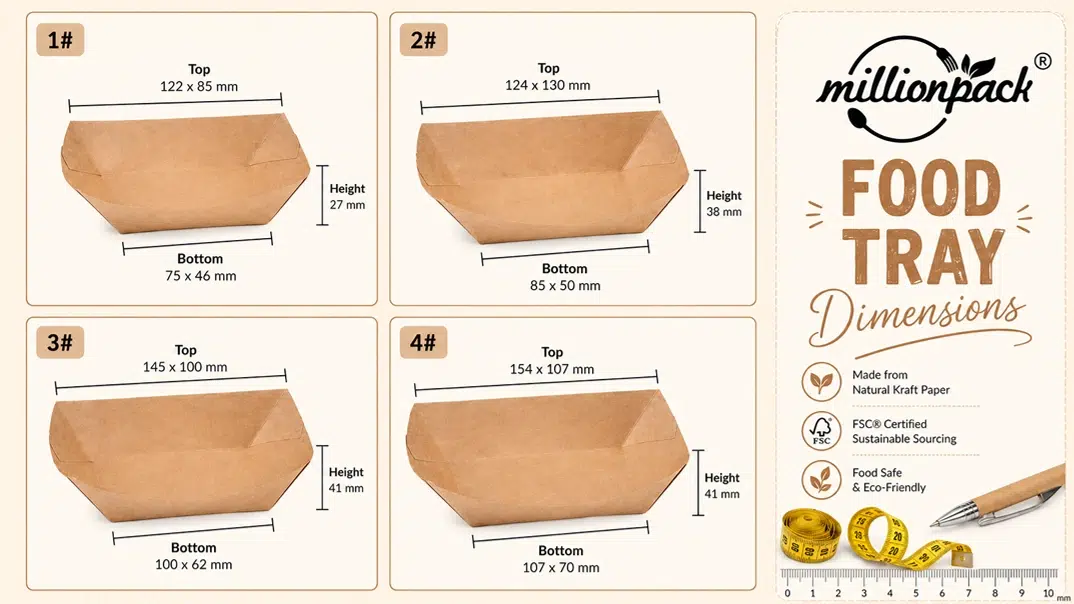
The capacity label gives you a general idea of how much food the tray can hold, while the detailed dimensions show its actual shape and usable space.
The main measurements include:
- Top length and width: the size of the tray opening
- Bottom length and width: the usable space at the base
- Height: the depth of the tray
- Capacity: the tray’s general volume category
Trays with the same capacity label may have different dimensions, so both the capacity and measurements should be considered when comparing sizes.
Common Paper Food Tray Sizes and Their Best Uses
The table below provides a side-by-side comparison of common paper food tray sizes and the foods they are typically used for.
| Tray Size | Top Dimensions | Bottom Dimensions | Height | Typical Uses |
|---|---|---|---|---|
| 1/2 lb | 5 5/8 × 4 in | 3 1/4 × 2 1/4 in | 1 in | Food samples, small fries, nuts, cookies, fruit, and light snack portions |
| 1 lb | 6 1/2 × 4 3/8 in | 3 7/8 × 2 3/8 in | 1 1/2 in | Regular fries, nuggets, onion rings, pastries, and side dishes |
| 2 lb | 6 1/2 × 4 3/4 in | 4 1/2 × 2 3/4 in | 1 3/4 in | Hot dogs, sandwiches, chicken wings, nachos, and larger snack portions |
| 3 lb | 8 1/8 × 5 7/8 in | 5 1/4 × 3 1/4 in | 2 1/8 in | Burgers with sides, loaded fries, fried chicken, and individual meals |
| 5 lb | 9 1/2 × 6 3/8 in | 6 3/4 × 3 5/8 in | 2 1/8 in | Large meals, fish and chips, mixed platters, and sharing portions |
Key Factors to Consider When Choosing a Paper Food Tray Size
A capacity label alone cannot tell you whether a tray will suit your food. Two trays marked with the same capacity may still differ in base size, depth, and usable space. To choose the right size, you need to look at the food itself, the final serving portion, and how the tray will be handled.
Portion Size and Food Weight
Start with the exact portion you plan to serve, because a side dish, a regular snack, a full meal, and a sharing portion all require different amounts of space. Use the same scoop, scale, or serving container used in your kitchen to test the tray. The food should sit comfortably below the rim, with enough space for customers to pick it up without spilling.
Food Shape and Usable Base
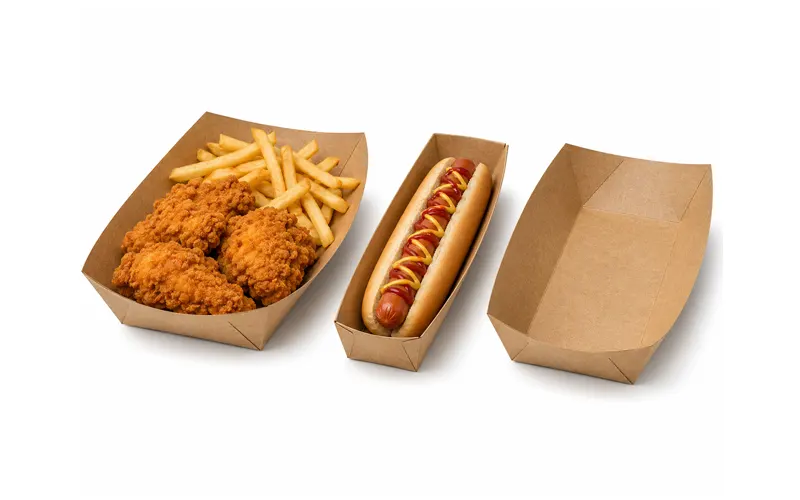
After confirming the portion, check whether the tray shape matches the food. Long items such as hot dogs and sandwiches need enough length, while burgers and flatter foods need a wider base. Loose foods such as fries, nuggets, and popcorn usually need more depth to keep them inside. Since most paper food trays have sloped sides, the bottom dimensions often matter more than the width of the top opening.
Food Height and Toppings
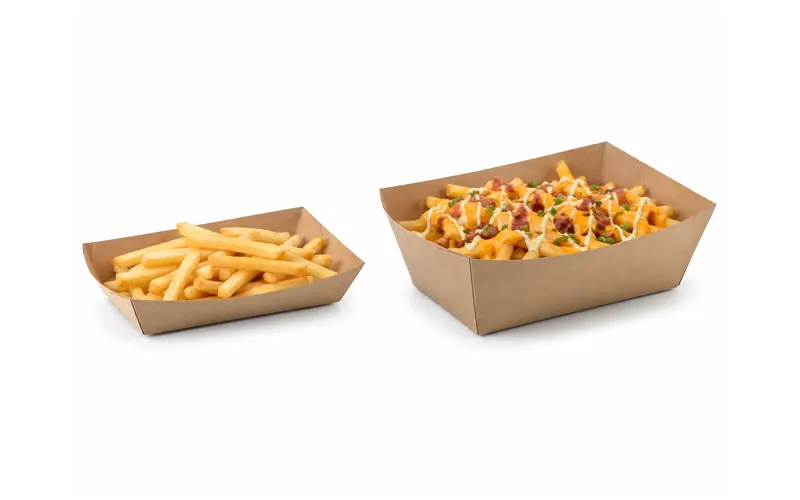
You also need to consider the food after toppings and side items are added. Sauces, cheese, fruit, cream, and garnishes can take up much more space than the main food itself. A tray that fits a plain waffle, burger, or portion of fries may become too shallow once it is fully prepared. For loaded foods, choose a tray with enough depth and open space around the food to keep toppings away from the rim.
Grease, Sauce, and Moisture
If the food contains oil, sauce, or moisture, the tray must provide both enough space and enough strength. A deeper tray can help contain drips, but it will not prevent leaking if the paperboard is too thin or lacks suitable grease resistance. For fried foods, loaded snacks, and saucy meals, consider the tray depth, coating, and bottom stability together.
Serving and Packaging Method
Finally, think about how the tray will be used after serving. For walk-up or event service, it should be easy to hold and stable in one hand. For takeaway orders, it should fit inside the bag or outer box without sliding or being crushed. When a lid is required, the tray dimensions must also match the lid. The best tray size is one that fits the food and works smoothly throughout serving, carrying, and packaging.
Find the Right Food Tray for Your Menu
The right food tray should match your portion size, food type, and serving method. Million Pack offers paper food trays for snacks, takeaway meals, catering, and a wide range of foodservice applications.
Explore standard sizes or create a custom tray with the dimensions, structure, barrier coating, and printing your product requires.
Explore Disposable Food TraysHow to Test a Paper Food Tray Before Bulk Ordering
Tray dimensions can help you narrow down the options, but they cannot fully show how the tray will perform with your food. Before ordering in bulk, test several samples under the same conditions used in your restaurant, food truck, or catering service.
1. Use the Final Food and Normal Portion
Prepare the food exactly as it will be served, including sauces, toppings, garnishes, and side items. Use your regular scoop, scale, or serving utensil so the test reflects the actual portion your customers will receive.
2. Compare Two or Three Nearby Sizes
Do not test only one tray. Compare two or three sizes that appear suitable. This makes it easier to see whether the smaller option feels crowded or the larger one leaves too much empty space and makes the portion look undersized.
3. Check the Tray During Real Use
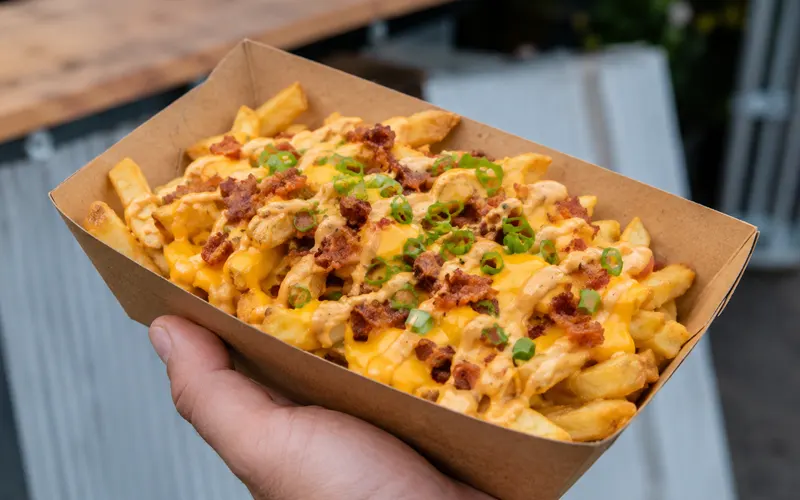
Fill the tray and handle it as a customer would. Check whether:
- The food sits securely on the bottom
- There is enough space below the rim
- The base bends under the food’s weight
- The sides spread outward
- Oil or sauce soaks through
- The tray is comfortable to hold
- The food moves or spills while carrying
- The tray fits the matching lid, bag, or outer box
The tray should remain stable from serving to carrying, not simply look suitable when placed on a table.
4. Confirm Samples Before Mass Production
For standard trays, samples help you confirm the dimensions, strength, coating, and packaging compatibility. For custom-sized or printed trays, sample approval is even more important because changing the structure after production begins can increase both cost and lead time.
A simple food test usually gives you a more reliable answer than comparing capacity labels alone.
FAQs About Paper Food Tray Sizes
Are paper food tray sizes standardized?
No universal sizing system applies to every paper food tray. Capacity labels such as 1 lb, 2 lb, and 3 lb are widely used, but the exact dimensions can vary between manufacturers. Always check the full product specification.
What is the difference between a 1 lb and 2 lb food tray?
A 2 lb tray usually provides more usable space and may have a wider base, greater length, or additional depth. The exact difference depends on the manufacturer’s design.
Should I choose a tray by dimensions or capacity?
Use both. Capacity gives you a quick comparison, while dimensions tell you whether the tray matches the actual shape of the food. For waffles, hot dogs, sandwiches, crepes, and cakes, physical dimensions are especially important.
How do I measure a paper food tray?
Measure the top length and width, bottom length and width, and vertical depth. For tapered or specialty trays, you may also need the opening width, folded size, or internal usable dimensions.
What paper food tray size is best for French fries?
A small tray may work for samples or side portions. A medium tray is usually better for regular servings, while a large or deep tray may be needed for loaded fries or sharing portions. Test the tray with your normal serving scoop before ordering.
What paper food tray size is best for burgers?
A 2 lb tray may work for a single burger, depending on the burger’s diameter and the tray’s bottom dimensions. For a burger served with fries, sauces, or other side items, a 3 lb tray usually provides more usable space. The base should be wide enough to support the burger without pressing it against the sides.
Can paper food tray sizes be customized?
Yes. Manufacturers can develop custom dimensions for specific foods, portion sizes, takeaway systems, and branded packaging. Custom production may require a minimum order quantity.
Find the Right Paper Food Tray Size for Your Business
The right paper food tray should match your food, portion size, and serving method. Capacity labels are useful for comparing options, but you should also check the tray’s bottom dimensions, depth, strength, grease resistance, and compatibility with lids or takeaway bags.
At Million Pack, we provide paper food trays in a range of standard sizes for snacks, side dishes, full meals, and sharing portions. You can test samples with your actual food before confirming the size, helping you check the fit, presentation, stability, and handling experience.
For special menu items or branded food concepts, Million Pack can also support custom dimensions, materials, coatings, and printing. This gives you a tray that fits your product more closely and works smoothly with your existing food service packaging.