In today’s competitive food service, presentation and customer experience matter just as much as taste. When customers open a takeaway bag or sit down at a restaurant table, napkins are one of the first details they touch.This is where airlaid napkins come into play.
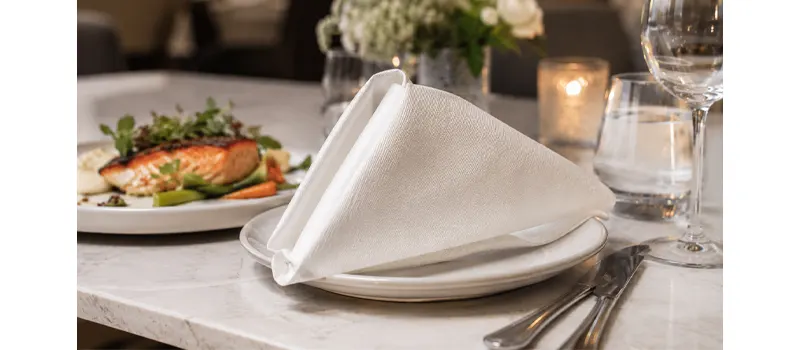
So, what are airlaid napkins? Simply put, airlaid napkins are a premium type of disposable napkin made using an advanced air-laid technology process. Unlike traditional paper napkins that are formed using water, airlaid materials are created by using air to bond fluff pulp and fibers together. The result is a thick, soft, and cloth-like napkin that feels significantly more luxurious than standard tissue products.
In the following sections, we will explore how airlaid napkins are made, their key characteristics, benefits, and where they are commonly used. We will also provide practical buying tips to help you choose the right option for your business needs.
What Are Airlaid Napkins?
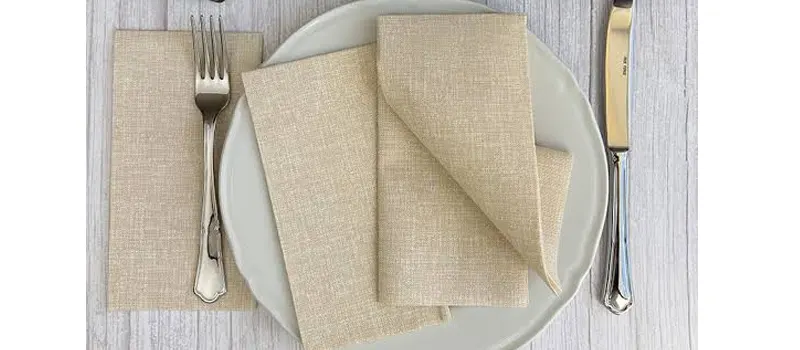
Airlaid napkins are manufactured using a dry-form nonwoven process that transforms natural cellulose fibers into a structured, fabric-like material without relying on traditional water-based paper production methods.
What sets airlaid napkins apart is not just the material itself, but the engineering behind it. The fibers used in airlaid products are arranged through controlled air distribution, creating a dense yet breathable web structure.
This gives them several standout characteristics:
- Soft, textile-like touch
- High thickness and cushioning feel
- Excellent liquid absorption capacity
- Strong durability, even when wet
- High absorbency
- Good folding performance
How Are Airlaid Napkins Made?
The production of airlaid napkins is based on a specialized air-laid manufacturing process, which replaces water with air to form the fiber structure. This process is what gives airlaid napkins their unique performance advantages.
1. Selection of Raw Materials
The process begins with high-quality fluff pulp, usually derived from natural wood cellulose fibers. These fibers are long, soft, and highly absorbent, making them ideal for creating a strong and flexible structure. Unlike recycled paper products, airlaid materials prioritize fiber quality, which contributes to their premium feel.
2. Fiber Separation and Air Formation
The pulp is then defibrated into individual fibers and introduced into a controlled air stream. These fibers are evenly dispersed and laid onto a forming belt using air pressure. This step creates a uniform fiber web without using water, which is a key distinction from traditional papermaking methods. The result is a lightweight, fluffy, and highly porous structure that allows for excellent absorbency.
3. Fiber Bonding Process
Once the fiber layer is formed, it must be stabilized. This is achieved through bonding techniques such as:
- Thermal bonding (heat activation)
- Latex bonding (adhesive application)
- Hybrid bonding (for enhanced strength and durability)
This step transforms the loose fiber web into a stable sheet that can withstand folding, cutting, and use in real-world dining environments.
4. Drying and Surface Finishing
After bonding, the material undergoes finishing processes to enhance its usability:
- Light compression to improve uniform density
- Drying to ensure structural stability
- Surface refinement for a smoother, softer feel
At this stage, the material already resembles a soft textile-like sheet rather than traditional paper.
5. Cutting, Folding, and Packaging
Finally, the finished material is cut into standard napkin sizes and folded into different formats depending on market needs, such as:
- Quarter fold for restaurants
- Interfold or dispenser-style formats
- Custom folding for branded packaging
Many food service businesses also choose custom-printed airlaid napkins to enhance brand identity and customer experience.
Why Airlaid Napkins Are Becoming a Standard in Food Service?
Airlaid napkins are rapidly gaining popularity in the food service industry because they solve real operational and customer experience problems faced by catering companies and takeaway brands. Their value is not only in appearance, but in how they improve efficiency, branding, and overall service quality.
Enhancing Customer Perception and Dining Experience
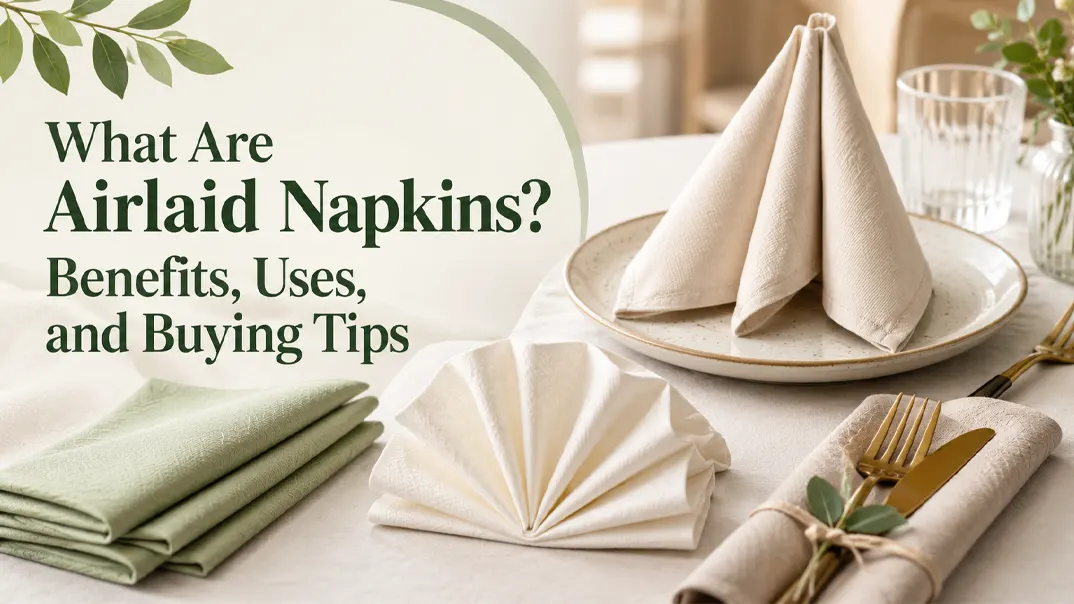
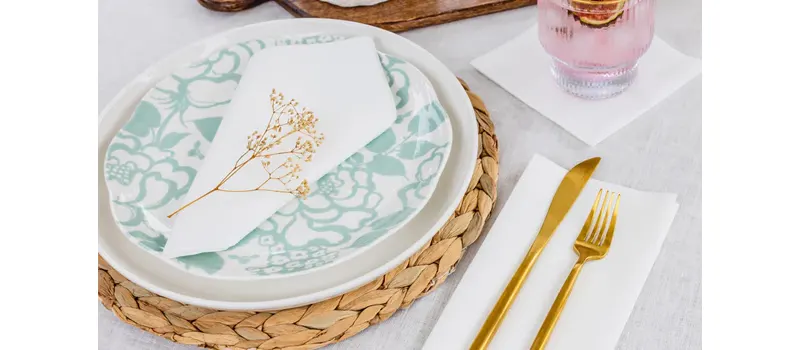
In food service, presentation often influences perceived food quality. Airlaid napkins offer a clean, premium, cloth-like appearance. They are widely used in integrated table presentation setups where napkins are combined with cutlery and glassware to create a more refined dining layout. In this format, the napkin is not only a functional item but also part of the overall table design.
This subtle upgrade in presentation can directly influence customer satisfaction and encourage repeat visits, especially in competitive dining markets where small details matter.
Improving Operational Efficiency and Reducing Labor Costs
Traditional cloth napkins require washing, drying, folding, and storage, all of which increase operational workload and cost. Airlaid napkins eliminate these steps.
Because they are single-use but still premium in appearance, businesses can maintain a high-end experience while significantly reducing labor and laundry expenses. By simplifying operations, airlaid napkins allow staff to focus more on service quality.
Delivering Better Performance for Food Handling
Standard paper napkins often fail when dealing with greasy, saucy, or high-moisture foods. Airlaid napkins provide significantly better absorbency and wet strength, meaning they do not tear easily and remain functional during use. This improves the overall customer experience.
Supporting Brand Identity Through Customization
Airlaid napkins are not just functional items—they are also effective branding tools. Million Pack offers customization options such as:
- Printed logos
- Brand colors
- Pattern designs
This allows food service businesses to reinforce their identity across every customer touchpoint. This type of subtle branding helps businesses stay memorable without increasing marketing complexity.
Improving Hygiene and Simplifying Food Safety Compliance
Hygiene is a top priority in the food service industry. Airlaid napkins eliminate cross-contamination risks associated with reusable linens.
Because each napkin is individually used and disposed of, businesses can maintain consistent hygiene standards across high-traffic environments. It also simplifies compliance with food safety regulations, reducing operational risk.
Airlaid Napkin vs Paper Napkin
Although both serve the basic function of hygiene and cleaning in food service environments, they are designed with very different materials, production methods, and performance expectations.
Material Structure and Manufacturing Process
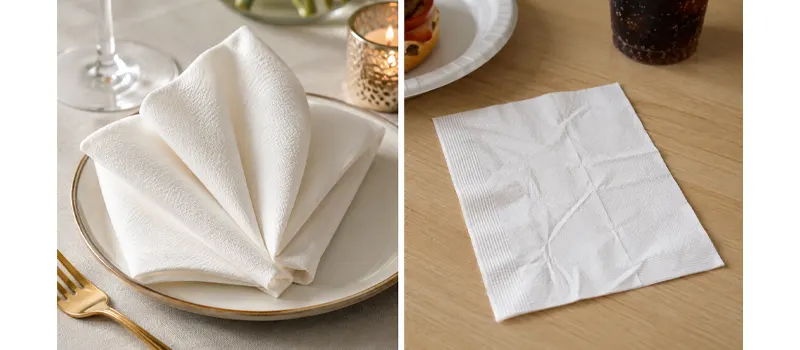
Paper napkins are typically produced using a wet pulp pressing process, where fibers are mixed with water, formed into thin sheets, and then dried and compressed. This results in a lightweight, flat structure designed for basic functionality and cost efficiency.
Airlaid napkins are produced using a dry-form nonwoven air-laid process, where cellulose fibers are distributed using air and bonded without water. This creates a thicker, more open fiber structure, which closely resembles textile fabric in both feel and performance.
Softness and User Experience
Paper napkins generally feel thin, slightly rough, and lack cushioning, especially in lower-cost versions commonly used in fast food.
Airlaid napkins provide a noticeably softer and more premium touch. Their multi-layered fiber structure creates a cushioned feel that enhances the overall dining experience.
Absorbency and Wet Strength
Paper napkins have limited absorbency and often break down quickly when exposed to oil or moisture. This can lead to tearing or ineffective cleaning during actual use.
Airlaid napkins offer significantly higher absorbency and stronger wet integrity, meaning they retain their structure even after soaking up liquids. This makes them far more reliable in real dining scenarios, especially with greasy or saucy foods.
Durability and Resistance to Tearing
Paper napkins are designed for single, light use and tend to lose strength quickly when wet or folded multiple times.
Airlaid napkins are engineered for higher wet and dry strength, allowing them to withstand more demanding use without tearing.
Cost vs Value Perception
From a cost perspective, paper napkins are more economical and widely used in high-volume, low-margin environments such as fast food chains.
Airlaid napkins are more expensive per unit, but they deliver significantly higher perceived value. For businesses in the food service industry, this often translates into improved brand image, better customer satisfaction, and a more premium dining perception. In many cases, the additional cost is justified by the enhanced experience and branding benefits.
A Clear Comparison Table
| Feature | Airlaid Napkin | Paper Napkin |
|---|---|---|
| Material Structure | Dry-laid nonwoven cellulose fibers | Wet-pressed pulp paper |
| Feel & Texture | Thick, soft, cloth-like | Thin, light, slightly rough |
| Absorbency | High absorbency, handles grease well | Moderate to low absorbency |
| Wet Strength | Strong, does not easily tear when wet | Weak, easily breaks when wet |
| Appearance | Premium, fabric-like look | Basic, functional appearance |
| Customer Experience | High-end dining perception | Standard, budget-friendly feel |
| Cost Level | Higher unit cost, higher value | Lower cost, basic functionality |
| Best Use Case | Restaurants, hotels, catering, premium takeaway | Fast food, casual dining, low-cost service |
How to Choose Airlaid Napkins for Your Business?
Choosing the right airlaid napkins for your business is not just a purchasing decision—it directly impacts customer experience, brand perception, and operational efficiency. To make the selection process easier, it is important to evaluate airlaid napkins from a few key business-oriented perspectives.
Define Your Service Type and Usage Scenario
The first step in choosing airlaid napkins is understanding where and how they will be used. Different food service environments have different requirements:
- Fast-casual and takeaway businesses need practical, cost-balanced options that still look presentable
- Fine dining restaurants and hotels prioritize a premium feel and visual presentation
- Catering events require durability and consistency across large volumes
By clearly defining your use case, you can avoid overpaying for unnecessary features or choosing a product that does not meet customer expectations.
Choose the Right Thickness (GSM Level)
One of the most important quality indicators of airlaid napkins is GSM (grams per square meter), which determines thickness and strength.
- Lower GSM: more economical, suitable for high-volume use
- Medium GSM: balanced option for most restaurants and cafés
- Higher GSM: premium feel, ideal for upscale dining and branding-focused businesses
Thicker napkins generally offer better absorbency and a more luxurious hand feel, but they also come at a higher cost. The key is finding the right balance between budget and customer experience.
Evaluate Absorbency and Strength Requirements
Not all food service environments require the same level of performance. If your business frequently serves:
- Greasy foods
- Sauces
- Beverages
Then you should prioritize airlaid napkins with higher wet strength and absorbency. This ensures the napkins remain functional during actual use and reduces customer frustration caused by tearing or saturation.
For lighter-use environments like coffee shops or bakeries, standard absorbency may be sufficient.
Consider Size and Folding Options
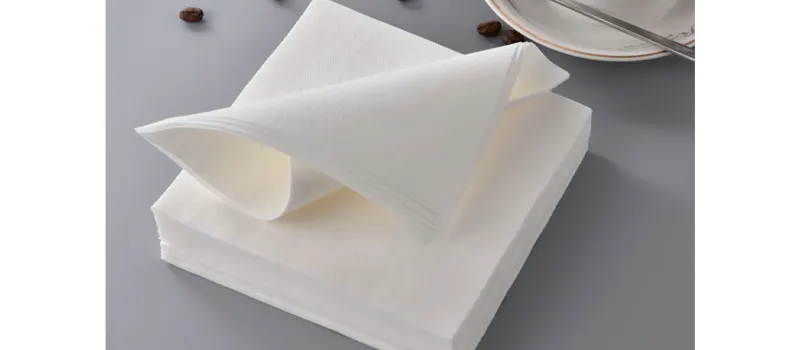
Airlaid napkins come in different sizes and fold types, which affect both usability and presentation. Common options include:
- Standard square napkins for general dining
- Larger formats for formal table settings
- Quarter-fold or interfold designs for dispensers
- Custom folding styles for branded packaging kits
Choosing the right format helps improve table efficiency and enhances the overall dining experience.
Decide Whether You Need Custom Printing
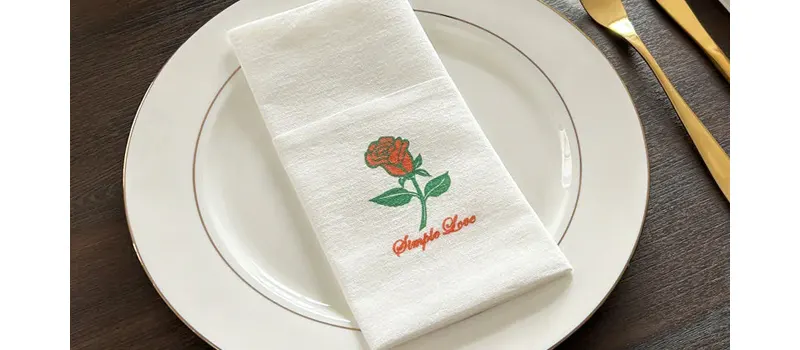
Custom printed airlaid napkins can help restaurants and food brands strengthen brand recognition. A logo, slogan, pattern, or brand color can make the napkin part of the overall packaging experience. Choose according to your needs.
Check Material Composition and Environmental Claims
Many airlaid napkins are made mainly from wood pulp or cellulose fibers, which can support a more eco-friendly product image. However, biodegradability and compostability depend on the full material composition, including binders, dyes, printing inks, and added treatments.
For markets with strict sustainability requirements, buyers should ask suppliers for material details, certification documents, and test reports.
Balance Cost with Long-Term Value
While airlaid napkins are more expensive than traditional paper napkins, the decision should not be based on unit price alone. Instead, consider:
- Customer perception improvement
- Reduction in additional linen costs
- Branding value
- Operational efficiency
In many cases, a slightly higher investment leads to a significantly better customer experience and stronger brand positioning.
Conclusion
Airlaid napkins should not be simply regarded as an upgraded version of paper napkins, but rather as a functional material choice for catering service enterprises that balances efficiency and appearance.
From a practical standpoint, their main value lies in solving three core industry problems:
- First, improving table and packaging presentation without introducing reusable linen systems;
- Second, maintaining consistent performance in real food handling conditions such as grease, moisture, and high-volume service;
- Third, reducing operational complexity while still supporting a more premium customer experience.
If you are sourcing airlaid napkins for your business. Feel free to contact us. Million Pack provides airlaid napkins and other food packaging solutions designed to support consistent quality and better brand presentation in food service.
FAQs About Airlaid Napkins
Are airlaid napkins biodegradable or eco-friendly?
Airlaid napkins are generally considered more environmentally efficient than many traditional disposable alternatives because they use less water in production and rely on cellulose-based fibers. However, biodegradability depends on the specific bonding agents used during manufacturing. Some airlaid products are fully biodegradable, while others may have partial limitations depending on coatings or additives.
Can airlaid napkins be used for both hot and cold foods?
Yes, airlaid napkins are suitable for both hot and cold food environments. Their fiber structure allows them to maintain strength and absorbency even when exposed to heat, moisture, or oil, making them practical for a wide range of food service applications.
Do airlaid napkins require special storage conditions?
No special storage conditions are required. However, to maintain product quality, they should be kept in a dry, clean environment away from excessive humidity. Proper storage helps preserve their texture, absorbency, and appearance before use.
What factors affect the price of airlaid napkins?
The price of airlaid napkins is mainly influenced by GSM (thickness), size, embossing quality, customization requirements, and order volume. Higher GSM products with branding or special folding styles typically cost more due to additional material usage and production complexity.
Are airlaid napkins suitable for high-volume fast food operations?
They can be used in fast food operations, but they are more commonly applied in premium fast-casual environments. For very high-volume and cost-sensitive operations, businesses often choose a lighter GSM version to balance performance and cost.