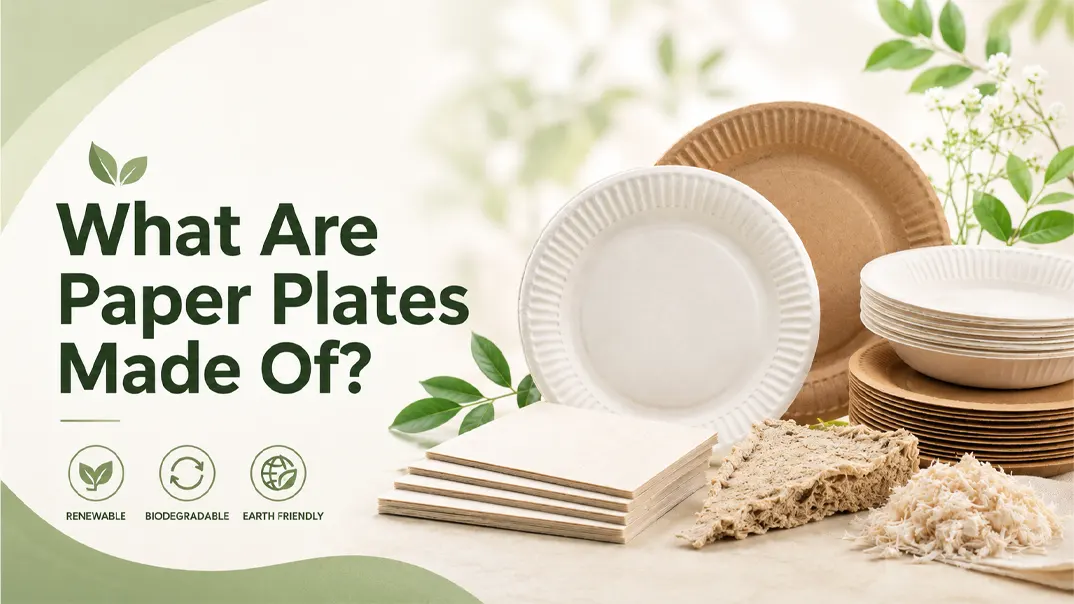
As environmental awareness continues to grow, many businesses are turning to paper plates as an alternative to plastic. But what are paper plates made of? Are all paper plates environmentally friendly, and how well do they perform in real use?
For the food business, these questions directly affect operating costs and customer experience. In this article, we will explain the main materials used to make paper plates, the purpose of different coatings, and how these factors affect their strength and environmental sustainability.
What Are Paper Plates Made Of?
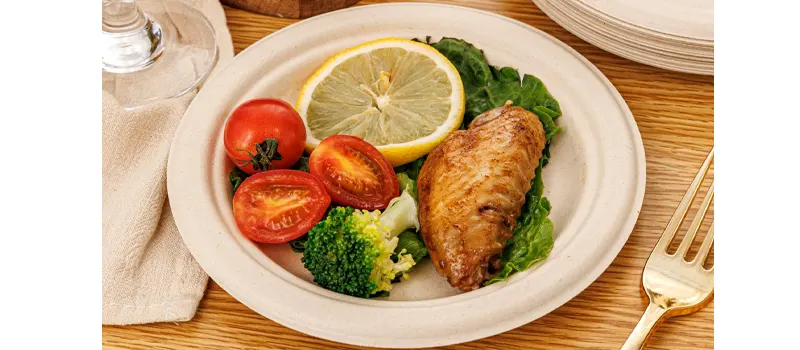
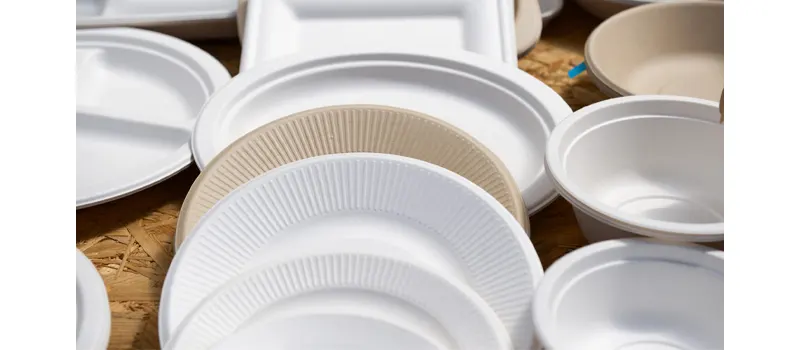
Paper plates are mainly made from a fiber-based material, such as paperboard, molded pulp, or plant fiber. Some plates also have a coating or laminated layer to improve their resistance to grease and moisture.
Base Material:
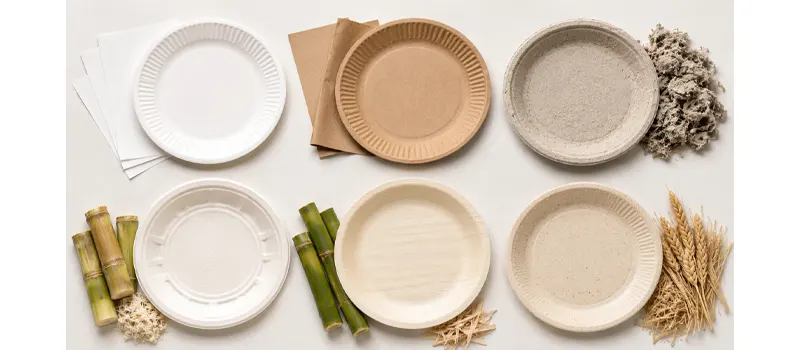
- Paperboard
- Molded paper pulp
- Recycled paper fiber
- Bagasse Bamboo fiber
- Wheat straw fiber
Traditional paper plates are usually made from paperboard, which is supplied in flat sheets and pressed into shape. Plates made from sugarcane bagasse, bamboo fiber, wheat straw, or molded wood pulp are more accurately classified as molded fiber plates because wet fiber pulp is formed directly inside a mold. However, molded fiber plates are often included in the broader paper plate category in the food-service market.
Coatings and Laminates:
Paper fibers naturally absorb oil and moisture, so some paper plates have a thin barrier coating on the food-contact surface. The coating helps the plate remain firm for longer when holding greasy, wet, or saucy foods.
- PE Coating: Polyethylene provides strong resistance to grease and moisture. However, it is a conventional plastic coating and may make the plate more difficult to recycle or compost.
- PLA Coating: PLA is a plant-based polymer commonly used as an alternative to PE. It provides a similar barrier against oil and moisture but usually requires industrial composting conditions.
- Wax Coating: Wax offers light protection against moisture and grease. It is generally suitable for chilled foods, desserts, and foods served for a short period, but its heat resistance depends on the type of wax used.
- Water-Based Barrier Coating: This coating is applied as a liquid and leaves a thin protective layer after drying. It may reduce the need for traditional plastic lamination, although its recyclability and compostability depend on the specific formulation.
Some paper plates are also made by bonding several layers of paperboard together to improve strength. This is known as a multi-layer or laminated paper structure, but it does not contain a plastic coating. Uncoated paper plates have no additional grease or moisture barrier. They are usually suitable for dry foods.
Types of Paper Plates Materials
Different paper plate materials offer different levels of strength, cost, appearance, and environmental value. When I help a buyer compare them, I usually start with the customer’s priorities. You may need a lower price, a stronger structure, a natural appearance, or a clearer sustainability position.
Traditional Paperboard Plates
Traditional paperboard plates are made from sheets of paperboard. The paperboard is cut into round blanks, pressed into shape using heated molds, and trimmed to create the finished plate. They are the most common and economical option.
Paperboard Plates
Paperboard plates are made by cutting and pressing flat sheets of food-grade paperboard. They are lightweight, affordable, and easy to print. Their main limitation is strength. Thin paperboard can bend or soften more quickly, especially when it has no barrier coating.
If you prioritize low cost, ease of storage, and brand customization, you can choose paperboard plates. This is a practical option for large-volume orders that do not require heavy load-bearing capacity.
Kraft Paper Plates
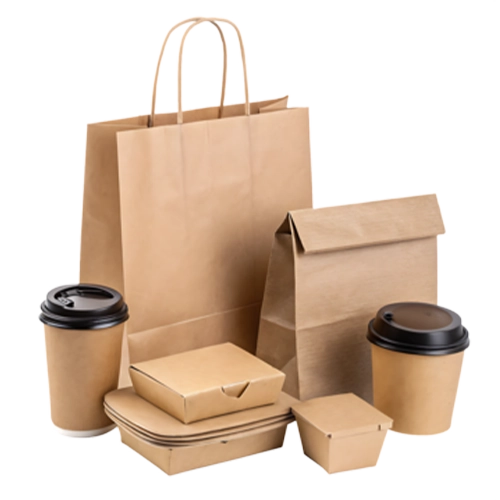
Kraft paper plates are made from natural brown or unbleached paperboard. They have the same basic structure as standard paperboard plates but offer a more natural appearance. Their biggest advantage is branding. The brown surface can help your product look simple, natural, and environmentally conscious.
If you value a natural look and brand image while retaining the cost advantages and good printability of paperboard, kraft paper plates are a good option. However, don’t blindly choose them just because they seem environmentally friendly; you still need to check the coating and material specifications.
Molded Pulp Plates
Molded paper pulp plates are made by forming wet wood pulp or recycled paper fibers inside a mold. They are usually thicker and more rigid than traditional paperboard plates. They provide better support and feel more substantial in the hand. However, their surface is usually less smooth, and printing options are more limited. I recommend molded pulp when you want better strength but still prefer a fiber-based product.
Molded Plant-Fiber Plates
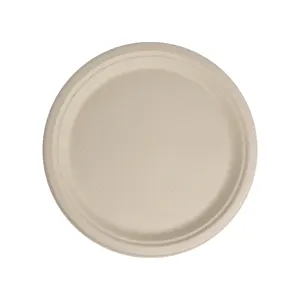
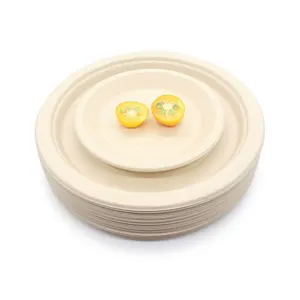
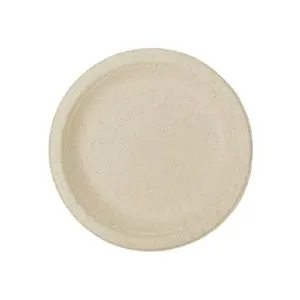
Molded plant-fiber plates are made from non-wood fibers such as sugarcane bagasse, bamboo, and wheat straw. The fibers are processed into pulp and formed directly inside molds. These plates usually have a firmer structure and a more natural surface than traditional paperboard plates.
Sugarcane Bagasse Plates
Bagasse plates are made from the fiber left after sugarcane juice is extracted. The fiber is turned into pulp and molded under heat and pressure. They offer good rigidity and a clear plant-based material story. But their cost is normally higher than basic paperboard.
Choose bagasse plates when you care about both performance and sustainability. They are especially suitable for businesses that want to replace plastic with a stronger molded-fiber option. You should confirm the compostability certification before making environmental claims.
Bamboo Fiber Plates
Bamboo fiber plates are made by processing bamboo into pulp and molding it into shape. They usually have a firm structure and a clean, natural appearance. Their main advantage is differentiation. Bamboo gives the product a more distinctive and premium plant-based position.
If you value renewable materials and visual appeal, consider bamboo fiber tableware. Additionally, it’s advisable to verify the specific fiber composition, as some products are made by blending bamboo fiber with bagasse or wood pulp.
Wheat Straw Plates
Wheat straw plates are made from the stems left after wheat is harvested. The material is processed into pulp and molded into disposable tableware. They make use of agricultural waste and have a natural fiber texture. However, their strength and appearance can vary between suppliers.
Choose wheat straw plates when you want an alternative agricultural-fiber product and you need something different from standard paperboard or bagasse. Before ordering, I suggest checking sample consistency and the exact material blend.
Note: Many customers are looking for coated paper plates. Actually coated paper plates are not a separate material category. A coating is an additional surface layer applied to one of these base materials to improve grease and moisture resistance. When you compare paper plates, you should therefore look at both the base material and whether the plate is uncoated or coated with wax, PE, PLA, or a water-based barrier. Million Pack offers customization services, allowing you to choose preferred materials and coatings.
Do Paper Plates Contain Plastic?
Some paper plates do contain plastic, but the plastic is usually found in the coating rather than the plate body.
PE Coating
PE is polyethylene, a conventional petroleum-based plastic. It creates a strong and reliable barrier against grease and moisture, which is why it is widely used on disposable food packaging.
PE-coated plates are usually cost-effective and perform well during normal food service. The trade-off is that the plastic layer makes them unsuitable for composting and harder to process through ordinary paper recycling.
PLA Coating
PLA is also a plastic, but it is usually made from renewable materials such as corn starch or sugarcane. It is used in much the same way as PE and helps prevent oil and moisture from entering the paper.
Its main advantage is its plant-based origin. A certified PLA-coated plate can be sent to an industrial composting facility. It still does not break down properly in normal landfill conditions or a typical home compost bin.
Wax Coating
Wax forms a lighter barrier than PE or PLA. It slows down the absorption of moisture and grease without plastic.
Vegetable waxes may come from soy, carnauba, or other plant sources. Wax works well for short-term protection, but it is less suitable for high temperatures because it can soften.
Water-Based Barrier Coating
A water-based barrier is applied as a liquid. The water evaporates during drying, leaving a very thin protective layer on the paper surface.
Unlike PE film, it does not form a separate laminated sheet. The coating normally uses polymer binders and other barrier materials to resist grease and moisture. This can reduce the amount of conventional plastic used and make the paper easier to repulp.
Uncoated Paper Plates
Uncoated plates have no added PE, PLA, wax, or water-based barrier. Their construction is simple, and there is no plastic. The limitation is that exposed paper fibers absorb oil and moisture quickly. The plate may stain, soften, or lose rigidity sooner than a coated version.
Are Paper Plates Safe for Food?
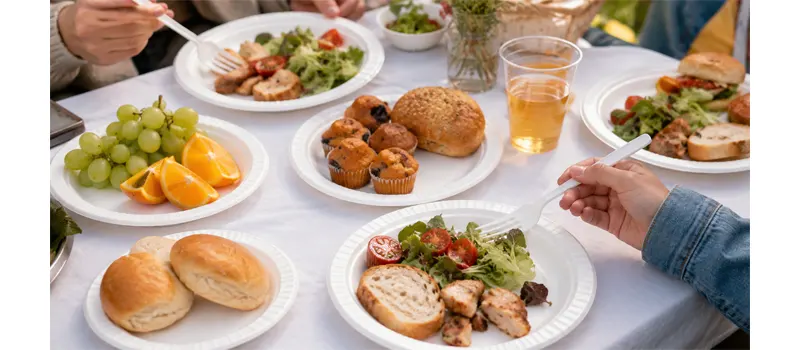
Paper plates intended for food contact are safe when the paper, coating, adhesive, and printing materials comply with the regulations of the target market.
However, you also need to use them as intended. For example, a paper plate designed for room-temperature food may not be suitable for very hot food. You should never place a paper plate in an air fryer or microwave unless the manufacturer clearly states that it is safe for that use.
I recommend checking the product carefully during inspection. The coating, adhesive, and printing ink are all part of the finished plate. You should request a food-contact test report or declaration of compliance that matches the exact product you are purchasing. The document should cover the plate’s coating and intended conditions of use. The U.S. Food and Drug Administration (FDA) makes it clear that the compliance of a finished food-contact product depends on every component used in it.
A safe paper plate should meet three conditions: it is made from compliant food-contact materials, it is suitable for the intended food and temperature, and the supporting documents match the product actually delivered.
Future Trends of Paper Plates
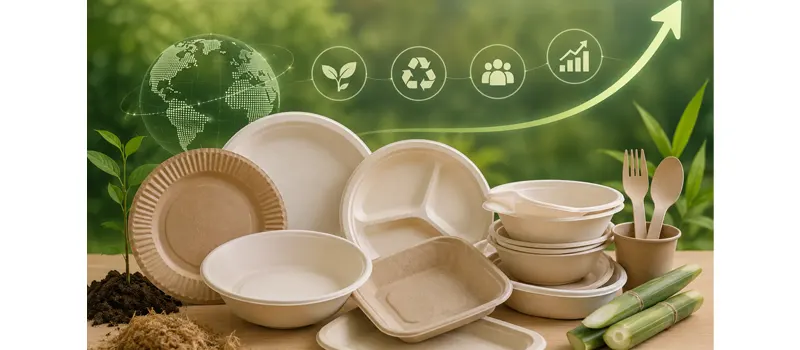
Paper plates are moving beyond the simple idea of replacing plastic with paper. Buyers now expect good strength, reliable grease resistance, fewer problematic chemicals, and clear information about how the product should be disposed of. In the coming years, the coating and the supporting documentation may become as important as the fiber itself.
PFAS-Free Barrier Treatments
Grease resistance was once commonly improved with PFAS-based treatments. This approach is being phased out. In the United States, PFAS-containing grease-proofing agents are no longer sold for paper food packaging, and the related FDA authorizations became ineffective in January 2025. The EU’s new packaging rules also restrict PFAS in food-contact packaging above specified limits.
This will push manufacturers toward fluorine-free barriers, including improved water-based coatings and other lower-plastic solutions. When you source future paper plate ranges, I recommend checking how the grease resistance is achieved instead of relying only on a “PFAS-free” label.
Less Conventional Plastic Coating
PE will remain useful where price and strong moisture resistance matter most. However, more buyers will look for plates that use less fossil-based plastic or are easier to process after use.
This does not mean every future plate will be completely coating-free. Paper fibers still need protection from oil and moisture. The real development will be thinner barriers that provide the required performance without making the fiber difficult to recover.
More Molded Plant-Fiber Plates
Bagasse will remain the most practical molded plant-fiber option for many commercial buyers. Bamboo, wheat straw, and other agricultural fibers will offer more choice for brands that want a different material story.
However, material names alone will become less convincing. You need to know the full fiber blend, whether a coating is used, and whether environmental claims apply to the finished plate. Consistent strength and reliable supply will matter more than simply using an unusual fiber.
Products Designed for a Clear Disposal Route
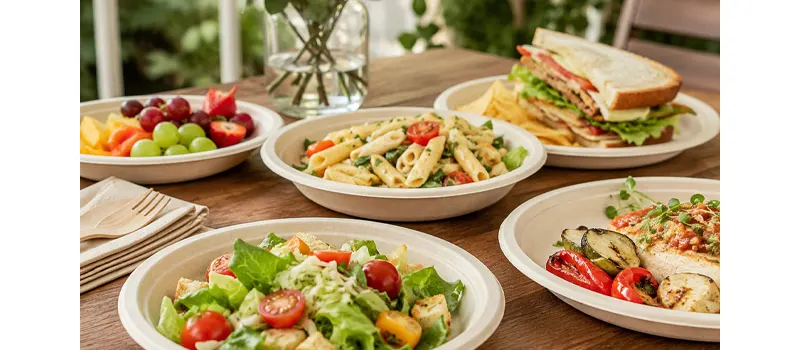
Future paper plates will increasingly be designed for a specific end-of-life route. A product may be developed for paper recycling, industrial composting, or another local waste system. It will be harder to sell one product as recyclable, biodegradable, and compostable at the same time without clear evidence.
The EU’s Packaging and Packaging Waste Regulation entered into force in 2025 and generally applies from August 2026. Its wider goal is to make packaging placed on the EU market recyclable in an economically viable way by 2030. This direction will increase demand for simpler material structures and clearer disposal instructions across the food-service market.
You should compare the base fiber, barrier coating, intended use, and disposal route together. The future paper plate will not succeed simply because it looks environmentally friendly. It will need to perform well and support every claim with the right documentation.
FAQs
Does a higher GSM always mean a stronger paper plate?
GSM tells you the weight of the paper per square meter, but it does not describe the complete plate structure. A higher GSM can improve rigidity, yet the shape, number of layers, pressing process, and rim design also affect strength. Compare finished samples instead of choosing by GSM alone.
Why do molded fiber plates have small color or texture differences?
Molded fiber products are formed from natural fibers. Minor differences can appear because of the fiber blend, raw-material batch, moisture level, and molding process. These variations are usually visual, but you should set an acceptable color and surface standard before bulk production.
What makes a paper plate “heavy duty”?
A paper plate’s durability is mainly determined by the thickness and density of the paperboard, the strength of its pressed structure, the depth and rigidity of the rim, and its resistance to grease and moisture. Thicker, well-pressed plates with reinforced edges and a suitable barrier are less likely to bend, leak, or become soggy.
How should paper plates be stored?
Keep paper plates in a clean, dry area away from direct sunlight, high humidity, strong odors, and heat sources. Moisture can cause warping, softening, or plates sticking together. Keep the cartons sealed until use and avoid placing heavy goods on top of them.
How Many Paper Plates Can Be Made From 1 kg of Raw Material?
The number depends on the finished weight of each plate. You can calculate it using:
1,000 g ÷ plate weight in grams = theoretical number of plates
Is a Paper Plate Better Than Plastic?
It depends on your priorities. Paper plates are usually a better fit when your customers value renewable fibers, natural appearance, and reduced use of conventional plastic. Plastic plates may offer stronger moisture resistance and a lower unit weight.
Conclusion
Choosing the right paper plate requires balancing product performance, brand positioning, and the waste-processing systems available in your market. Your decision should therefore be based on your actual business priorities, rather than a single claim such as “eco-friendly” or “plastic-free.” Million Pack can help you select suitable paper plate products based on your target market, product positioning, and packaging requirements.