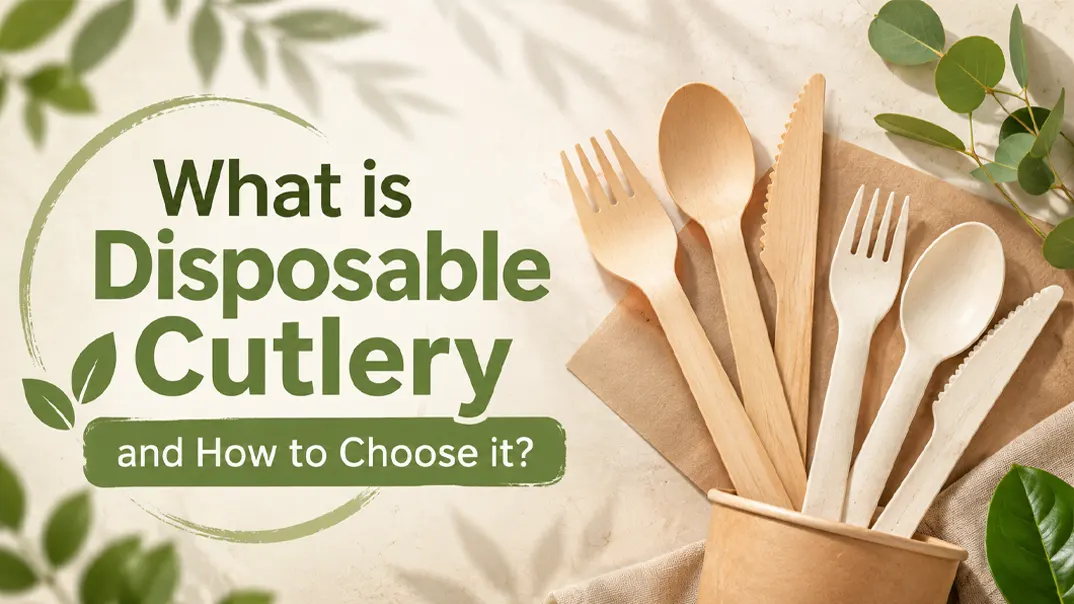
In today’s fast-paced food service industry, disposable cutlery has become an indispensable tool for restaurants and takeaway services. But what is disposable cutlery exactly? Simply put, it refers to single-use utensils such as forks, spoons, and knives designed for convenient, hygienic, and practical use. These utensils are typically made from materials like plastic, wood, bamboo, or other biodegradable options to meet various service and sustainability needs.
Understanding what is disposable cutlery can help food service providers and retailers make informed choices. Keep reading to discover how to choose the right cutlery for your business, and explore popular materials options.
What is Disposable Cutlery?
Disposable cutlery refers to eating utensils that are designed for single use. These products are used once and then thrown away, recycled, composted, or processed based on the material. The basic concept of disposable cutlery revolves around providing ultimate convenience and ensuring public sanitation.
Disposable cutlery was introduced to eliminate the time-consuming task of washing dishes in fast-paced dining environments. Over the decades, it has evolved from a simple convenience into a global necessity. The massive surge in food delivery applications and quick service restaurants means that the demand for reliable disposable cutlery is higher than ever before.
Benefits of Disposable Cutlery
Disposable cutlery offers several practical benefits for food service businesses and individual users. The benefits are especially clear in busy catering services, where reusable utensils are difficult to manage.
- Easy to Use: The biggest benefit of disposable cutlery is convenience. Customers can use it directly without washing or returning it.
- Helps Save Time: Disposable cutlery can help food service businesses work faster. Staff do not need to collect, wash, dry, or store reusable utensils after each meal.
- Supports Hygiene: Disposable cutlery is often packed in sealed bags or individual wrappers. This helps reduce direct contact before use.
- Useful for Branding: Disposable cutlery can also support brand presentation. Businesses can choose different materials, colors, packaging styles, and cutlery set combinations.
Types of Disposable Cutlery Materials
Disposable cutlery materials affect product strength, appearance, cost, heat resistance, and environmental performance. There is no single material that fits every business. The right choice depends on the food type, usage scenario, budget, packaging style, and local waste disposal conditions.
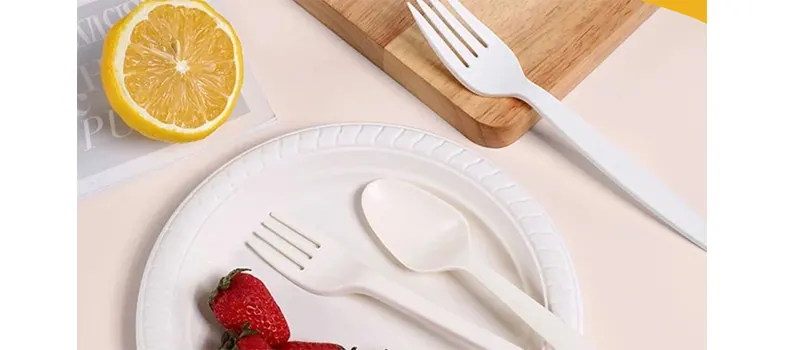
Plastic Disposable Cutlery
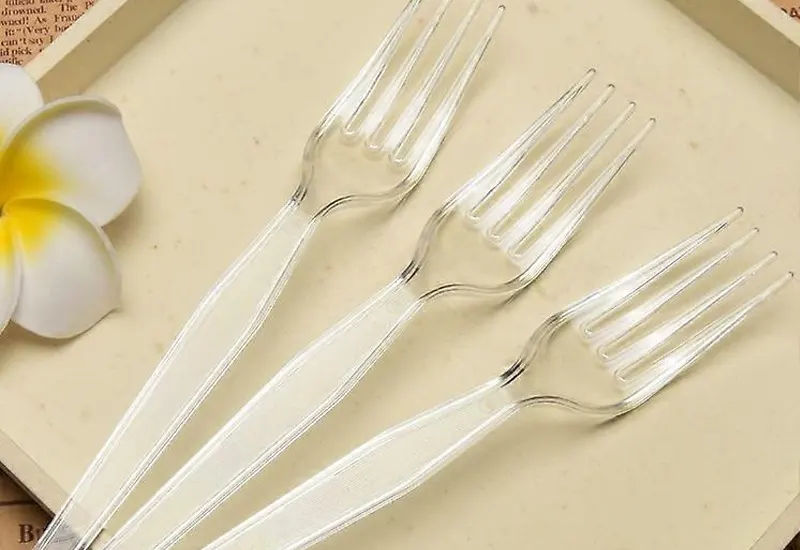
Plastic cutlery is usually chosen for its low cost, consistent shape, and stable strength. It is easy to produce in large quantities and can be made in different weights, colors, and sizes.
However, many markets now restrict certain single-use plastics, so buyers must check local rules before purchasing. It is less suitable for brands that want a plastic-reduction image.
Wooden Disposable Cutlery
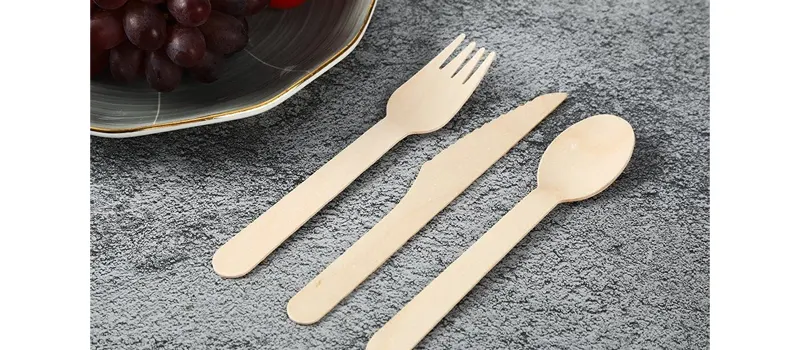
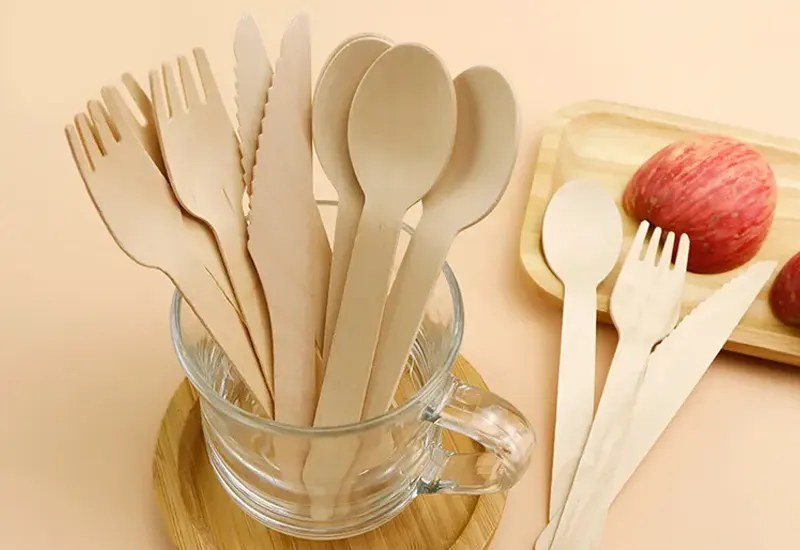
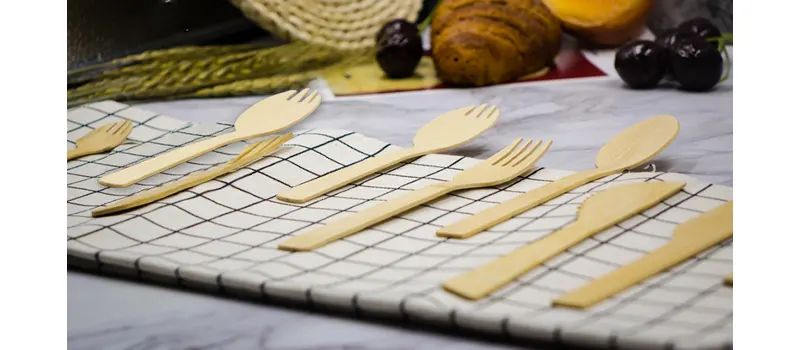
Wooden cutlery is commonly made from birch wood and is valued for its natural texture and plastic-free appearance. Its main advantages are visual appeal, simple material positioning, and suitability for eco-conscious packaging lines.
You should pay attention to surface smoothness, splinter control, thickness, odor, moisture resistance, and food contact documentation. Low-quality wooden cutlery can feel rough or break easily, so sample checking is important.
Bamboo Disposable Cutlery
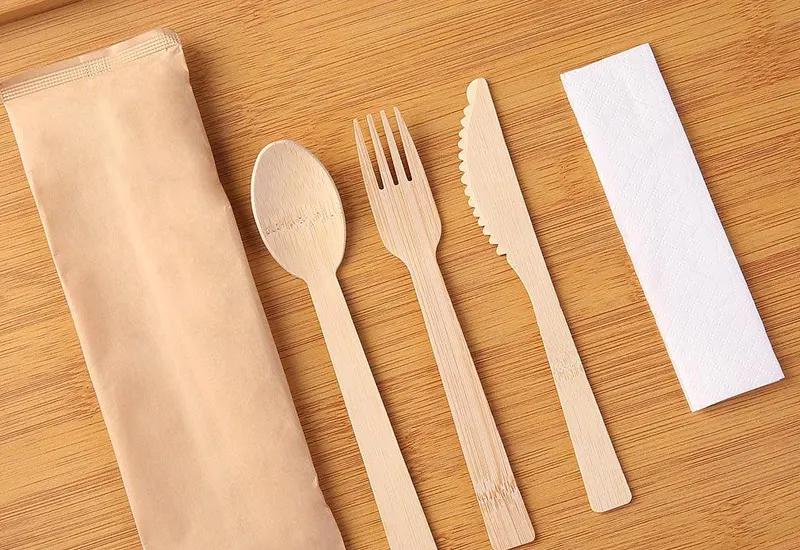
Bamboo cutlery has a strong plant-based image and is often positioned as a premium natural alternative. It can offer good strength and a distinctive appearance, but the cost is usually higher than standard plastic or basic wooden options.
You should evaluate finish quality, supply stability, production consistency, and whether the material story matches their target market.
Bagasse Disposable Cutlery
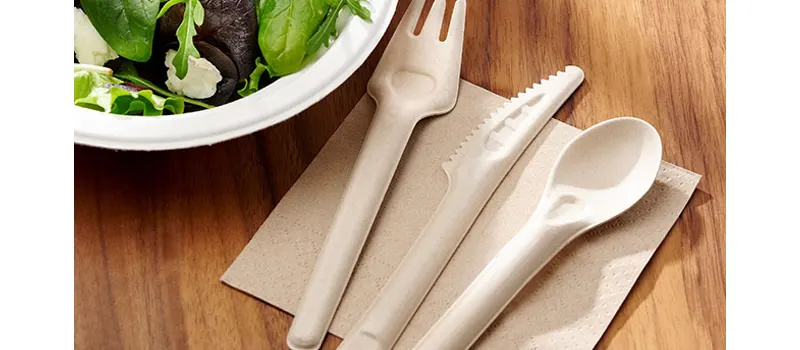
Bagasse disposable cutlery is made from sugarcane fiber, a by-product of sugar production. Compared with plastic or CPLA, bagasse cutlery usually has a more fibrous texture and a softer visual appearance. It is a molded fiber material, so its strength depends heavily on fiber density, pressing pressure, mold design, and thickness.
The main advantage of bagasse is not its strength, but its natural fiber positioning. It often fits well with bagasse plates and bowls, building a consistent and eco-friendly packaging line.
PLA Disposable Cutlery
PLA is a plant-based plastic alternative that looks similar to conventional plastic. It is useful when buyers want a familiar appearance with a more eco-conscious material claim.
However, regular PLA has limited heat resistance and is usually not ideal for hot food unless the product is specifically designed for that use. Buyers should confirm temperature tolerance, compostability certification, and local composting conditions before making environmental claims.
CPLA Disposable Cutlery
CPLA is a crystallized form of PLA with better heat resistance and stronger than regular PLA. It is often selected when buyers need compostable-style cutlery for warmer foods.
The key point is that CPLA still depends on proper industrial composting conditions. It should not be promoted as universally biodegradable without checking certification, local waste systems, and labeling requirements.
Paper-Based Disposable Cutlery
Paper-based cutlery is mainly used as a plastic-reduction option, but its performance depends heavily on structure and coating.
It may work for light foods, desserts, or short-use applications, but it can struggle with oily, wet, heavy, or hot foods. Buyers should test strength, mouthfeel, bending resistance, and moisture performance before ordering in bulk.
Comparing Different Types of Disposable Cutlery
Different disposable cutlery materials perform differently in daily food service. The table below gives a simple comparison based on key performance factors.
| Material Type | Heat Resistance | Durability and Strength | Best Food Applications | Environmental Profile |
| Plastic | High for PP but low for PET options | High flexibility and excellent resistance to snapping | Hot soups or cold desserts depending on the specific plastic choice | Recyclable in some areas but takes centuries to decompose |
| Wood | Excellent stability and will not melt in high heat | High rigidity though the surface can feel slightly dry | Steaks and heavy meals requiring solid structural leverage | Fully biodegradable and can be composted naturally at home |
| Bamboo | Outstanding performance with very hot foods | Exceptionally high tensile strength and a very smooth texture | Premium catering events and dense or heavy dishes | Highly sustainable plant growth and completely compostable |
| Paper | Moderate heat resistance but softens in hot liquids over time | Low to moderate structural integrity over extended use | Light snacks and quick consumption food items | Highly biodegradable and easily recyclable if free from food oils |
| PLA | Low performance limited to cold items | Moderate strength similar to traditional clear plastic | Cold salads and iced food or beverage items | Composts successfully but only within industrial composting facilities |
| CPLA | High heat tolerance up to 85 degrees Celsius | Excellent rigidity and a very robust feel during use | Hot takeaway meals and premium eco friendly dining | Industrial compostable bio plastic material alternative |
| Bagasse | Moderate heat resistance but may soften with long hot liquid contact | Medium strength; stronger than paper but less rigid than wood | Light meals, desserts, rice dishes, and short-use food service | Made from sugarcane fiber and compostable under proper conditions |
What is the Most Eco-Friendly Disposable Cutlery?
The eco-friendly disposable cutlery is usually made from renewable, plastic-free, or certified compostable materials. In most cases, wooden cutlery and bamboo cutlery are considered practical, eco-friendly options because they are made from natural materials and do not rely on traditional plastic. They are especially suitable for food service businesses that want a cleaner, more natural packaging style without making the customer experience complicated.
However, the most eco-friendly choice is not decided by material alone. Disposal conditions also matter. Compostable cutlery, such as PLA or CPLA cutlery, can be a good option when proper composting facilities are available. Without the right composting system, these products may not break down as expected, which can reduce their environmental value.
In simple terms, the most eco-friendly disposable cutlery is the one that uses a responsible material, fits the food being served, and can be handled properly after use.
How to Choose Disposable Cutlery?
Choosing the right disposable cutlery depends on the food being served, the service style, and environmental considerations. Instead of focusing only on appearance or price, you should look at several practical factors to make the best choice.
Intended Use
Consider the type of food, portion size, and dining scenario. Heavier or hot meals require sturdier utensils, while light snacks or desserts may need only basic cutlery.
Durability
Check whether the cutlery can withstand normal use without bending, breaking, or deforming. Strong and reliable utensils reduce complaints and waste.
Heat Resistance
Heat resistance is important when serving hot meals. Cutlery that can withstand high temperatures avoids melting, warping, or transferring unwanted flavors. Testing for heat tolerance before ordering in bulk can prevent service issues and customer dissatisfaction.
Environmental Impact
Evaluate sustainability, compostability, and local disposal options. Eco-friendly materials are important, but only if they can be processed properly after use.
Cost and Budget
Balance quality and performance with your budget. Higher-quality or eco-friendly options may cost more, but they can support brand image and improve customer experience.
Service Efficiency and Branding
Consider how the cutlery fits into your packaging, presentation, and overall service workflow. Easy-to-pack and visually consistent cutlery can enhance brand perception and simplify operations.
Conclusion
Disposable cutlery may look like a small detail in food packaging, but it often becomes the part that customers directly touch and use. A fork that bends too easily or a spoon that feels rough that does not match the meal can quietly affect how customers judge the whole food service experience.
Million Pack provides a wide range of disposable cutlery solutions. Whether you need standard disposable cutlery or customized options, Million Pack can help you choose suitable product combinations based on your actual business needs. A reliable cutlery solution should not only serve the meal, but also support the way your business operates.
FAQs
What is the difference between disposable cutlery and disposable tableware?
Disposable cutlery refers to eating utensils such as forks, spoons, and knives. Disposable tableware is a broader category that can include plates, bowls, cups, trays, containers, lids, straws, and cutlery.
Is compostable cutlery always eco-friendly?
Not always. Compostable cutlery can be a good eco-friendly option, but it needs proper composting conditions to break down effectively. If it is sent to regular landfill, it may not provide the same environmental benefit. Buyers should check certifications and local waste processing options before choosing it.
Is wooden disposable cutlery better than plastic cutlery?
It depends on the business need. Wooden cutlery offers a more natural and plastic-free appearance, which is useful for eco-conscious food brands. Plastic cutlery is usually lower in cost and widely available. The better choice depends on budget, food type, customer expectations, and local regulations.
Is disposable cutlery safe for food contact?
Yes, qualified disposable cutlery should be made from food-grade materials and meet relevant food contact safety standards. Buyers should ask suppliers for product specifications, test reports, or certifications when purchasing for restaurants, catering, retail, or export markets.
How can businesses reduce waste when using disposable cutlery?
Some disposable cutlery can be used for both hot and cold food, but not all materials perform the same way. Before ordering, buyers should check heat resistance, product strength, and whether the cutlery changes shape or feel when used with hot meals.