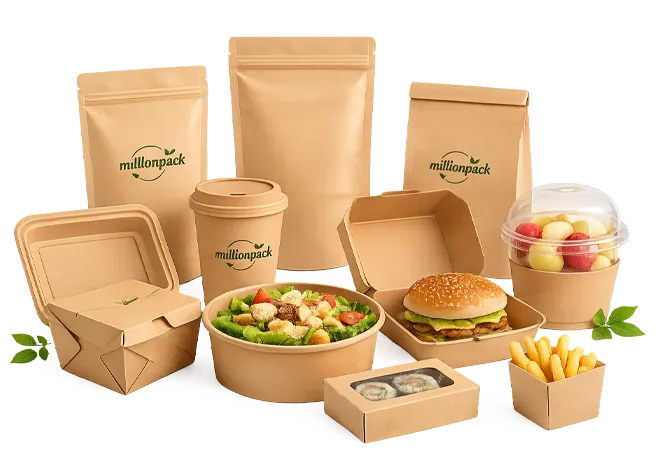
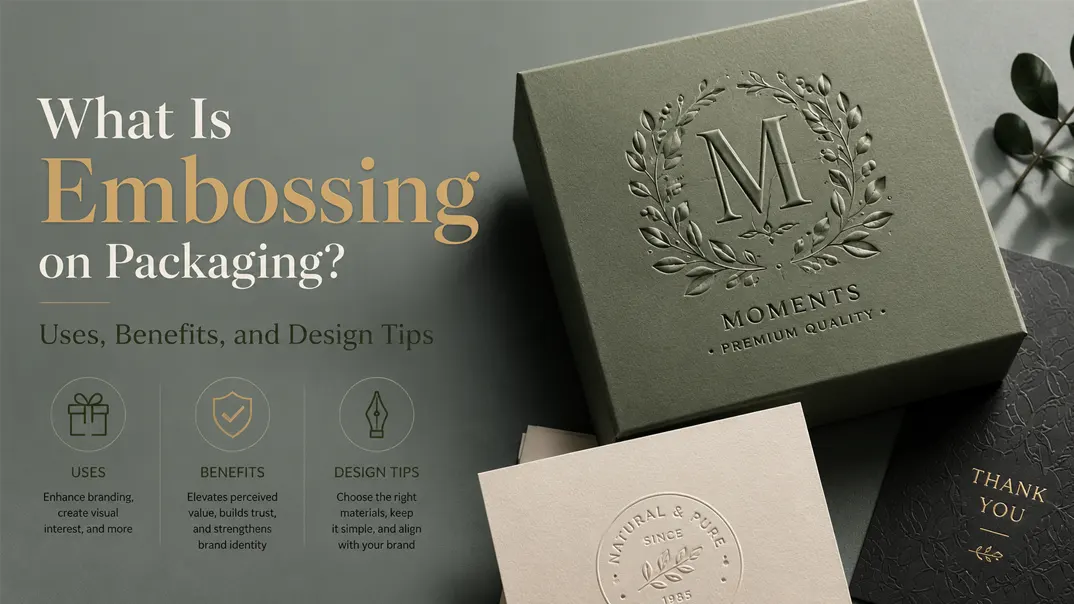
Packaging is often the first thing customers notice before they see the product itself. A clean design can attract attention, but a textured surface can make the package feel more memorable. This is where embossing becomes valuable.
Embossing is a packaging finishing technique that creates a raised effect on the surface of paperboard, cardboard, or other packaging materials. It is commonly used for logos, brand names, patterns, borders, and decorative details. By adding depth and touch, embossing can make simple packaging look more refined, premium, and distinctive.
In this article, we will explain what embossing on packaging is, how the process works, where it is commonly used, and what brands should consider before choosing it for their packaging design.
What Is Embossing on Packaging?
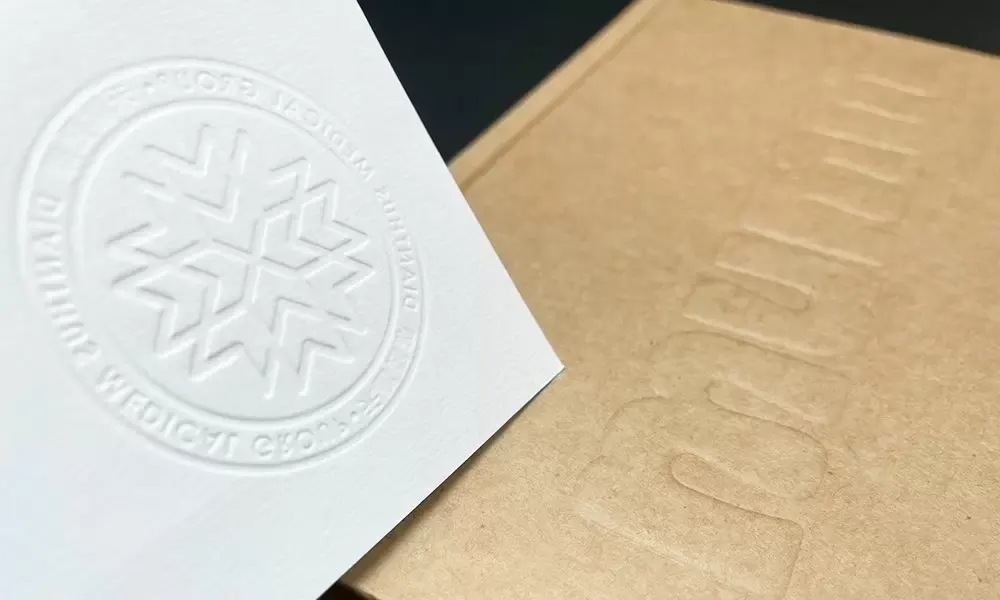
Embossing is a surface finishing technique used to create raised patterns on materials such as cartons, paper bags, labels, and other packaging. It is commonly employed to highlight logos, brand names, intricate designs, or decorative details.
This process imparts a tactile quality to the packaging that is both visible and tangible. The raised effect elevates the packaging’s overall appeal, lending it a refined and distinctive look that leaves a lasting impression on consumers.
How Does the Embossing Process Work?
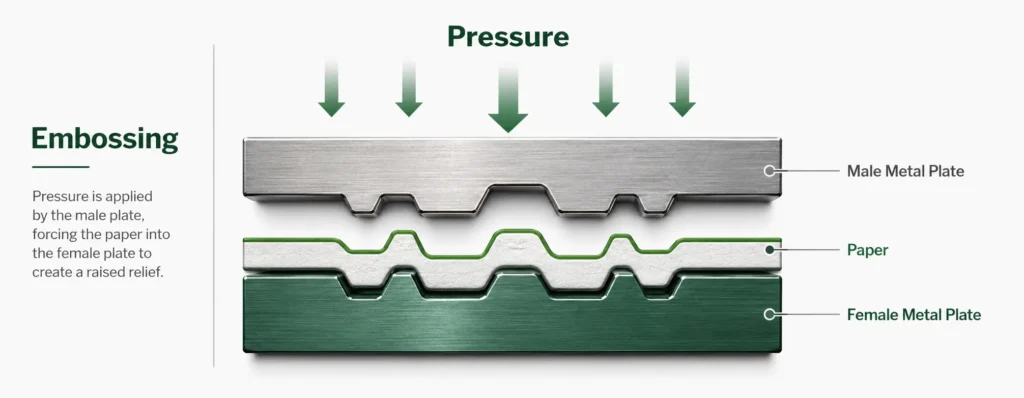
In commercial packaging production, the embossing effect is typically achieved using a set of custom metal dies. These dies are specifically crafted based on the areas of the design intended to be raised—such as logos, product names, borders, patterns, or decorative details.
The first step is die creation. Printers or packaging suppliers manufacture metal dies based on the design files. In most cases, the embossing process employs a matching pair of components: a female die (recessed/concave) and a male die (raised/convex, also known as the counter-die). The female die bears the recessed design pattern, while the male die provides support on the opposite side of the material; together, they press the packaging material into the desired shape.
During production, the paperboard or packaging material is placed between the embossing die and the counter-die. The machine then applies pressure—and sometimes heat—to push the selected design pattern upward from the surface, creating a raised relief effect that is both visible and tactile. If the raised design is produced without the use of ink, foil stamping, or color, it is commonly referred to as “blind embossing.”
Embossing can also be combined with other printing and post-processing techniques. For instance, it can be paired with foil stamping to create metallic logos, or with Spot UV technology to add a glossy finish to specific embossed areas, making them stand out. When the embossed area is precisely aligned with printed ink or foil-stamped patterns, the process is often called “registered embossing” or “combination embossing.”
The final result depends on various factors, including the packaging material, paper thickness, die quality, embossing depth, design details, and production precision. Logos featuring clean lines, simple shapes, and distinct outlines generally yield sharper, more refined embossing results compared to extremely small or overly intricate patterns.
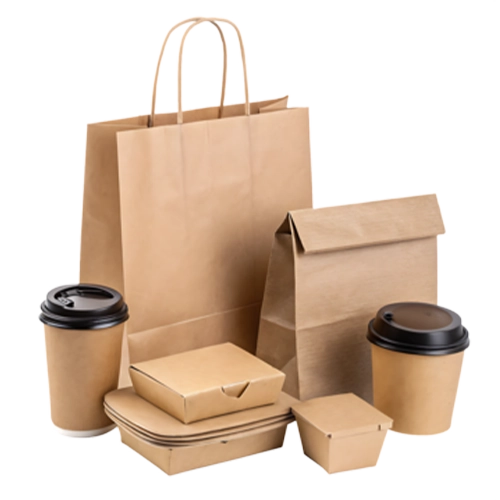
Common Types of Embossing Used in Packaging
Different embossing methods can create different visual and tactile effects. The best choice depends on the packaging material, brand style, design details, and the effect you want customers to feel.
Blind Embossing
Blind embossing creates a raised design without using ink, foil, or printed color. It gives packaging a clean and subtle texture, making it suitable for logos, simple patterns, and minimalist packaging designs.
Registered Embossing
Registered embossing aligns the raised area with printed graphics, foil stamping, or specific colors. This makes the design more noticeable and is often used when brands want the embossed effect to match a printed logo or decorative element.
Multi-Level Embossing
Multi-level embossing creates different raised heights within the same design. It adds more depth and detail, making it suitable for complex patterns, luxury packaging, and designs that need a stronger three-dimensional effect.
Combination Embossing
Combination embossing usually combines embossing with foil stamping in one process. It creates a raised metallic effect, often used for premium logos, gift boxes, cosmetic packaging, and high-end retail packaging.
Embossing vs Debossing: What Is the Difference?
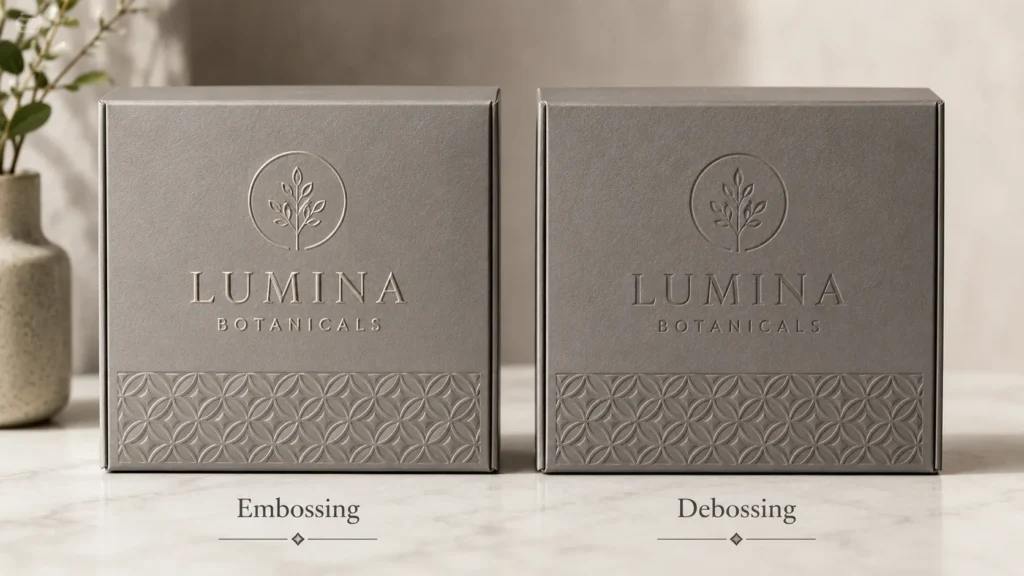
Embossing and debossing are both packaging finishing techniques used to add texture and depth to the surface. The main difference is the direction of the design effect: embossing raises the design above the surface, while debossing presses the design into the material.
| Item | Embossing | Debossing |
|---|---|---|
| Surface effect | Raised design | Pressed-in design |
| Visual style | More noticeable and dimensional | More subtle and restrained |
| Tactile feel | Customers can feel the raised texture | Customers can feel the recessed texture |
| Common use | Logos, patterns, brand names, decorative details | Logos, initials, simple marks, minimalist designs |
| Best for | Packaging that needs a stronger visual impact | Packaging that needs a quiet, premium look |
Both methods can improve the look and feel of packaging. Embossing is often better when the brand wants the design to stand out clearly, while debossing is a good choice when the packaging needs a more understated and refined finish.
Benefits of Embossed Packaging
Embossed packaging gives products a more refined look by adding texture and depth to the surface. A raised logo, pattern, or brand name can make the package feel more carefully designed, which is especially useful for products that need a premium first impression.
Creates a More Premium Appearance
Embossing makes packaging look less flat and more dimensional. Even a simple box can feel more elegant when the logo or pattern is raised from the surface. This is why embossing is often used for cosmetics, gift boxes, jewelry packaging, candles, and other products where presentation matters.
Makes the Brand Easier to Remember
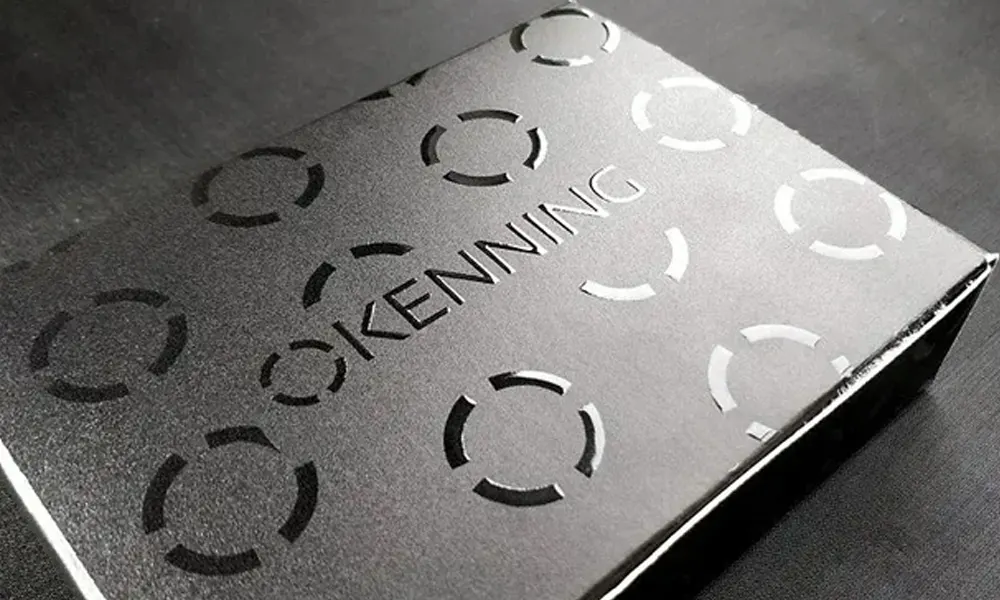
A printed logo can be seen, but an embossed logo can also be felt. This extra tactile detail helps customers notice the brand more clearly when they touch or open the packaging. For retail products, this can make the packaging experience more memorable.
Adds Texture Without Overloading the Design
Embossing can improve the package without adding too many colors or graphics. For brands that prefer a clean, simple, or minimalist style, blind embossing is a good way to create detail while keeping the overall design elegant.
Helps Products Stand Out
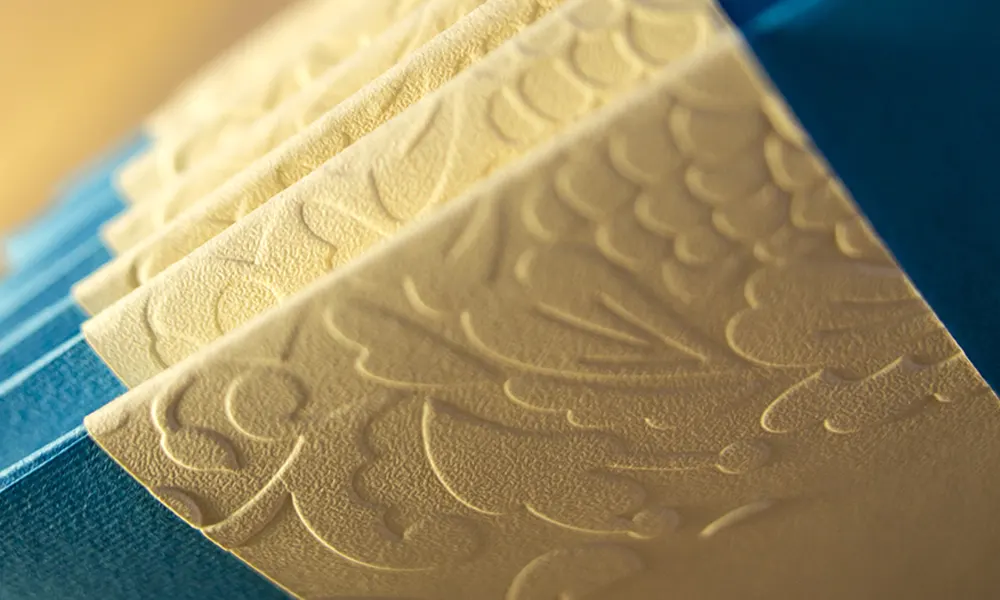
On shelves or in product photos, packaging with embossed details can look more distinctive than a completely flat surface. The raised effect catches light and shadow, helping logos, patterns, or key design areas become more noticeable.
Improves Perceived Product Value
Packaging often shapes how customers judge a product before they use it. When the package feels solid, detailed, and well-finished, customers may also see the product inside as more valuable. This makes embossing a useful finishing choice for brands that want to strengthen their product image.
What to Consider Before Choosing Embossing
Before choosing embossing for packaging, brands should consider whether the design, material, and production requirements are suitable for this finishing method. Embossing can create a strong premium effect, but the final result depends on more than the design idea alone.
Design Complexity
Simple logos, clear lines, and bold patterns usually work better for embossing. Very small text, thin lines, or highly detailed graphics may not create a clean raised effect, especially on thinner packaging materials.
Material Thickness
The packaging material needs enough thickness and strength to hold the embossed shape. Paperboard, rigid cardboard, kraft paper, and specialty paper can all be used, but the effect may vary depending on the material surface and structure.
Embossing Position
The embossed area should be placed where it can be seen and touched easily. Logos on the front panel, brand names on the lid, or patterns around the main visual area often work better than embossing hidden or crowded parts of the package.
Cost and Order Quantity
Embossing usually requires a custom die, so it may add setup cost to the project. For larger orders, this cost can be spread across more units, making embossing more cost-effective.
Production Time
Since embossing adds an extra finishing step, it may increase the production timeline. Brands should confirm the schedule early, especially for seasonal packaging, product launches, or limited-edition campaigns.
Matching with Other Finishes
Embossing can be used alone or combined with foil stamping, spot UV, matte lamination, or printed graphics. The best choice depends on the brand style. A luxury package may use foil and embossing together, while a minimalist package may only need blind embossing.
Is Embossing Suitable for Sustainable Packaging?
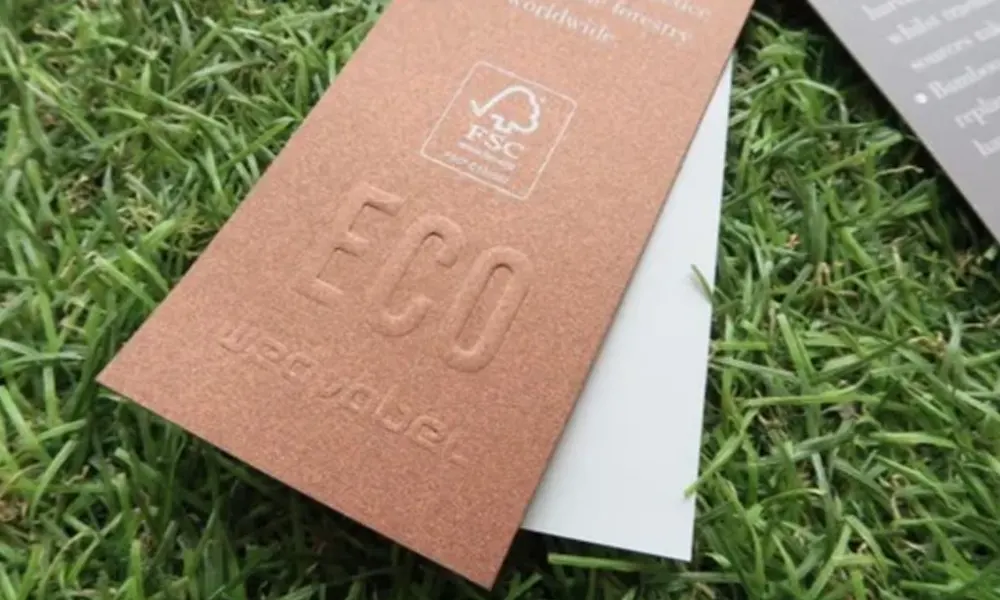
Embossing can be suitable for sustainable packaging when used in a simple and thoughtful way. It creates texture through pressure, so it can add a premium look without heavy ink, plastic decoration, or extra surface layers.
Embossing works well on paper-based packaging such as paperboard, kraft paper, and rigid cardboard. Blind embossing is especially friendly for minimal packaging because it does not add foil, ink, or color. It uses the material itself to create a raised effect.
However, brands should be careful with combined finishes. Foil stamping, lamination, spot UV, and specialty coatings may improve the appearance, but they can also affect recyclability. For a more sustainable choice, embossing is best used on selected areas like a logo, brand name, or simple pattern.
Conclusion
Embossing is a practical way to make packaging look more refined and memorable without changing the whole design. With the right material, clean artwork, and suitable finishing choice, it can add a premium touch to logos, patterns, and brand details.
At Million Pack, embossing can be used as part of a custom packaging solution, together with options such as foil stamping, spot UV, and eco-friendly paper materials, helping brands create packaging that looks professional, tactile, and aligned with their product image.
FAQ About Embossing on Packaging
Is embossing the same as debossing?
No. Embossing raises the design above the packaging surface, while debossing presses the design into the material. Both methods add texture, but embossing looks more dimensional, while debossing creates a more subtle and recessed effect.
Can embossing be used with foil stamping?
Yes. Embossing is often combined with foil stamping to create a raised metallic effect. This is commonly used on luxury boxes, cosmetic packaging, gift boxes, labels, and premium retail packaging.
What packaging materials are suitable for embossing?
Embossing works well on paperboard, rigid cardboard, kraft paper, coated paper, specialty paper, labels, folding cartons, and rigid boxes. Thicker materials usually create a clearer and more stable raised effect.
Is embossed packaging expensive?
Embossed packaging can cost more than standard printed packaging because it usually requires a custom die and an extra finishing step. However, for larger orders, the setup cost can be spread across more units, making it more cost-effective.
Does embossing work on kraft paper?
Yes. Embossing can work on kraft paper, especially when the design is simple and the paper has enough thickness. Blind embossing on kraft paper is often used for natural, minimal, or eco-friendly packaging styles.
What designs are best for embossing?
Simple logos, bold patterns, clear lines, icons, borders, and short brand names usually work best. Very small text, thin lines, or complex details may lose clarity during the embossing process.