In food packaging, product performance depends on several external factors. Moisture, oxygen, grease, and transportation conditions can all affect freshness, texture, and overall product quality, especially for snacks, coffee, frozen food, and takeaway meals.
To address these challenges, laminated packaging is widely used across the food industry, helping brands improve protection, sealing reliability, and overall packaging performance in different applications.
What Is Laminated Packaging?
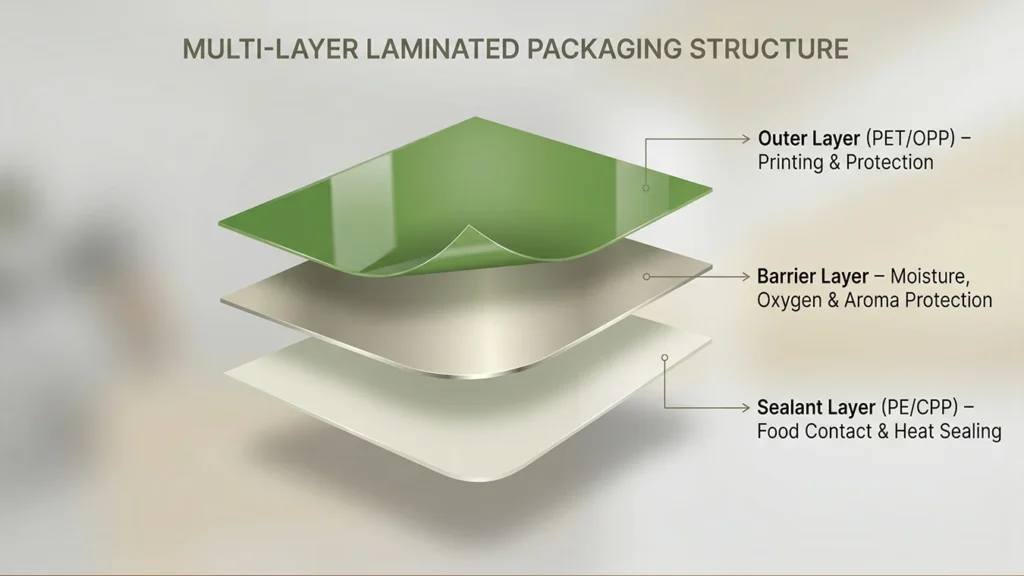
Laminated packaging is a multi-layer flexible packaging structure created by bonding two or more materials together to form one complete package with better performance. These materials may include plastic films such as PET, OPP, PE, and CPP, as well as paper, aluminum foil, or metallized film. Instead of relying on a single material, laminated packaging combines different layers so each one can serve a specific purpose.
In food packaging, the outer layer is often used for printing and surface protection, the middle layer helps improve barrier performance against moisture, oxygen, light, or aroma loss, and the inner layer is usually designed for food contact and heat sealing. This layered structure allows packaging to provide protection, functionality, and strong shelf presentation at the same time.
The Benefits of Using Laminated Packaging
Laminated packaging is a functional structure used to improve food protection and packaging performance. It is designed to address common challenges such as moisture, oxygen, grease, aroma loss, and physical damage, which cannot be effectively managed by a single material. By combining multiple layers, laminated packaging allows each material to serve a specific role within the structure.
The main benefits of laminated packaging include:
- Better product protection by helping prevent moisture absorption, oxygen exposure, aroma loss, grease migration, and light damage, which helps maintain freshness, flavor, and texture.
- Stronger sealing performance through reliable heat sealing, leak prevention, puncture resistance, and better package durability during transportation, storage, and retail handling.
- Improved machine compatibility for automatic filling lines, vacuum packaging, frozen food packaging, zipper pouches, and roll film applications, helping improve production efficiency.
- Longer shelf life support by creating stronger barrier performance that helps food products stay stable for a longer period under proper storage conditions.
- Better shelf appearance with high-quality printing, matte or gloss finishes, metallic effects, transparent windows, and premium visual presentation that improve consumer trust and purchase decisions.
- More flexible material choices such as PET, OPP, PE, CPP, aluminum foil, and metallized film, allowing brands to choose the right structure based on food type, product sensitivity, and packaging goals.
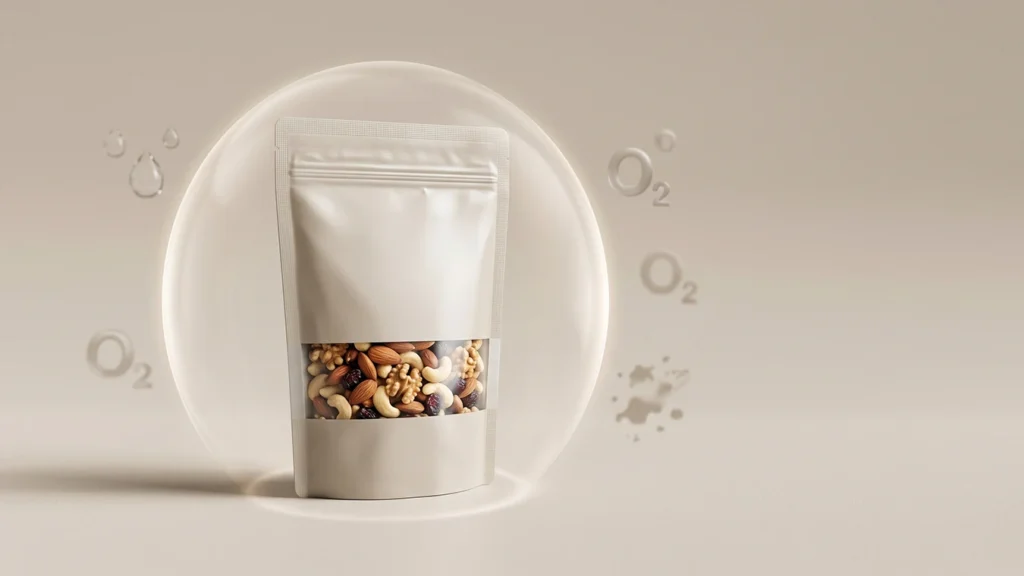
In short, laminated packaging helps food brands balance protection, function, and design in one complete packaging solution. It protects the product inside, supports efficient production, and creates stronger visual impact on the shelf.
How Does the Lamination Process Work?
The lamination process is the method of combining two or more packaging materials into one complete structure. In food packaging, this often involves materials such as PET, OPP, PE, CPP, aluminum foil, or metallized film, depending on the product’s protection and packaging requirements.
Each layer has a specific function. The outer layer, often PET or OPP, is usually used for printing and surface protection. The middle layer may provide barrier protection against moisture, oxygen, light, or aroma loss. The inner layer, commonly PE or CPP, is designed for food contact and heat sealing.
By combining these layers together, laminated packaging helps improve product protection, sealing performance, shelf life, and overall packaging quality.
To achieve this structure, the lamination process follows several key production steps, from material selection to final pouch making. Each step affects the package’s strength, appearance, and performance in real food packaging applications.
Step 1: Material Selection
The process starts with choosing the right packaging materials based on the food product and its packaging requirements.
Different foods require different structures. Coffee may need strong aroma and oxygen barriers, frozen food may require puncture resistance and sealing strength, while snacks may focus more on moisture protection and shelf appearance.
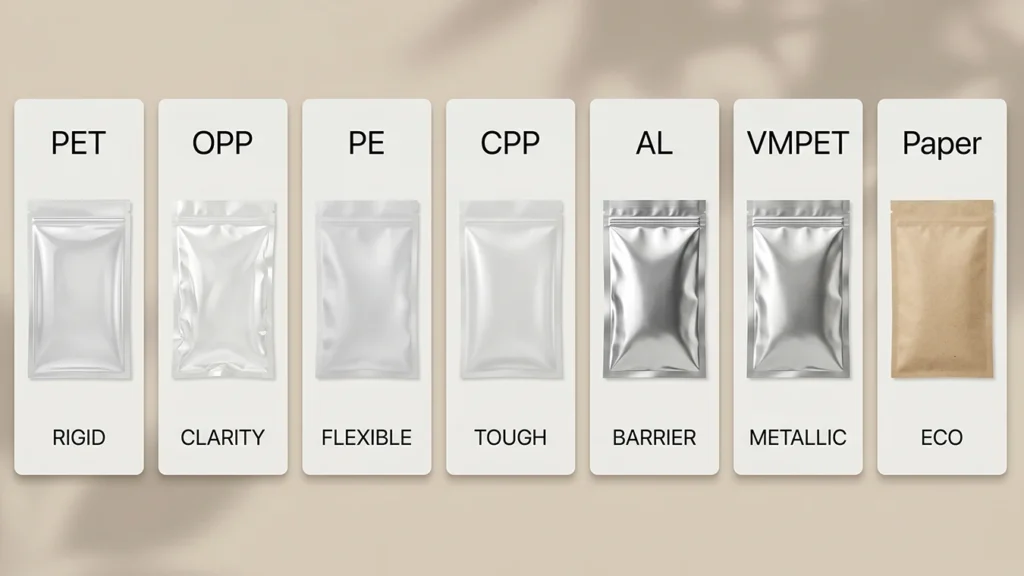
Common materials include PET for strength and printing, OPP for clarity and stiffness, PE for heat sealing, CPP for sealing performance, and aluminum foil or metallized film for high barrier protection.
Step 2: Printing the Outer Film
Before lamination, the outer layer is usually printed first. This is often done using reverse printing, where the design is printed on the inner side of the outer film.
PET and OPP are commonly used for this step because they provide excellent print quality and stable surface performance. After lamination, the printed design is protected inside the structure, which improves durability and gives the package a cleaner, more premium appearance.
Step 3: Applying Adhesive and Bonding Layers
After printing, adhesive is applied to one of the material layers, and the films are brought together.
Heat, pressure, and rollers are then used to press the layers into one laminated structure. This step ensures strong bonding and removes air bubbles or uneven surfaces that may affect packaging quality.
This is the most critical stage because poor bonding can lead to delamination, wrinkles, leakage risks, or weak sealing performance.
Step 4: Drying and Curing
Once the layers are bonded, the laminated structure needs time to dry and cure.
This allows the adhesive to fully stabilize and ensures the final packaging material reaches the required bonding strength and food safety standards. Proper curing is especially important for food packaging because the package must remain stable during filling, transportation, storage, and shelf display.
Step 5: Slitting and Pouch Making
After curing, the laminated roll is slit into the required size and converted into final packaging formats.
These may include stand-up pouches, flat bottom bags, zipper pouches, side gusset bags, vacuum bags, roll film, or frozen food packaging.
At this stage, the laminated structure becomes the final food packaging solution used for filling and sealing.
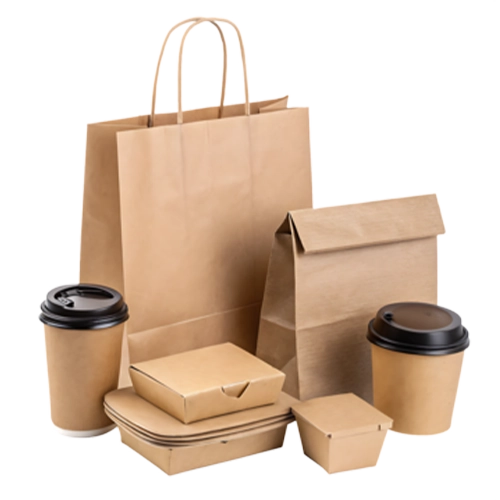
Common Materials Used in Laminated Food Packaging
The performance of laminated packaging depends heavily on material selection. In food packaging, choosing the right material is not simply about thickness or cost—it is about matching the structure to the product’s barrier requirements, filling process, shelf life, and brand positioning.
Different layers serve different purposes. Some materials are better for printing and shelf appearance, some improve oxygen and moisture barriers, and others are designed for heat sealing and direct food contact. This is why food packaging often uses multiple films in one laminated structure rather than relying on a single material.
PET (Polyester Film)
PET resin is one of the most commonly used outer-layer materials in laminated food packaging. It offers excellent printability, strong mechanical strength, and good dimensional stability during production.
PET is often chosen for products that require premium printing quality, puncture resistance, and stronger packaging performance, such as coffee bags, frozen food packaging, dried fruit pouches, pet food bags, and seasoning packaging.
It also works well with matte finishes, gloss finishes, metallic effects, and transparent packaging designs.
OPP (Oriented Polypropylene Film)
OPP is widely used in snack and lightweight food packaging because of its clarity, stiffness, and cost efficiency.
It provides a clean appearance and strong shelf presentation while keeping the packaging lightweight. OPP is commonly used for snacks, biscuits, candy, bakery products, noodle packaging, and dry food roll film.
Compared with PET, OPP is often preferred when high clarity and economical production are more important than heavy-duty strength.
PE (Polyethylene Film)
PE is commonly used as the inner sealing layer because of its flexibility and strong heat-sealing performance.
It is often the food-contact layer inside the package and helps ensure reliable sealing, leak prevention, and product safety. PE is widely used in stand-up pouches, frozen food bags, vacuum bags, and liquid food packaging.
CPP (Cast Polypropylene Film)
CPP is another common sealing layer, especially when stronger sealing performance or higher heat resistance is needed.
It is often used in automatic filling lines, retort packaging, and packaging structures that require stable sealing under more demanding production conditions.
Aluminum Foil
Aluminum foil is used when high barrier protection is required. It provides strong resistance against oxygen, moisture, light, and aroma loss.
This makes it a common choice for coffee packaging, spice pouches, tea packaging, powdered food, and products with strong aroma retention requirements.
Although foil provides excellent protection, it is usually more expensive and less flexible than some alternative structures.
Metallized Film (VMPET / VMOPP)
Metallized film offers barrier performance between standard plastic film and full aluminum foil structures.
It improves moisture and oxygen resistance while keeping the package lighter and often more cost-effective than foil laminates. It is commonly used for nuts, chips, roasted snacks, dried fruit, and pet food packaging.
Paper-Based Laminates
Paper laminated structures are often chosen for products that require a more natural or premium appearance.
They are commonly used in bakery packaging, coffee bags, dry food packaging, and specialty food products where shelf appearance and brand positioning are especially important.
In many cases, paper is combined with PET, PE, or foil layers to improve both appearance and functional performance.
The right material choice depends on the product itself. A snack pouch, coffee bag, frozen food package, and pet food pouch may all require completely different laminated structures. This is why understanding PET, OPP, and other material options is the foundation of effective food packaging design.
Applications of Laminated Packaging in Food Industry
Laminated packaging is widely used across the food industry because different food products require different levels of protection, sealing performance, and shelf presentation. A single packaging material is often not enough to meet these needs, especially when products are sensitive to moisture, oxygen, grease, aroma loss, or physical damage during transportation.
By combining materials such as PET, OPP, PE, CPP, aluminum foil, and metallized film, laminated packaging can be designed to match specific food applications more effectively.
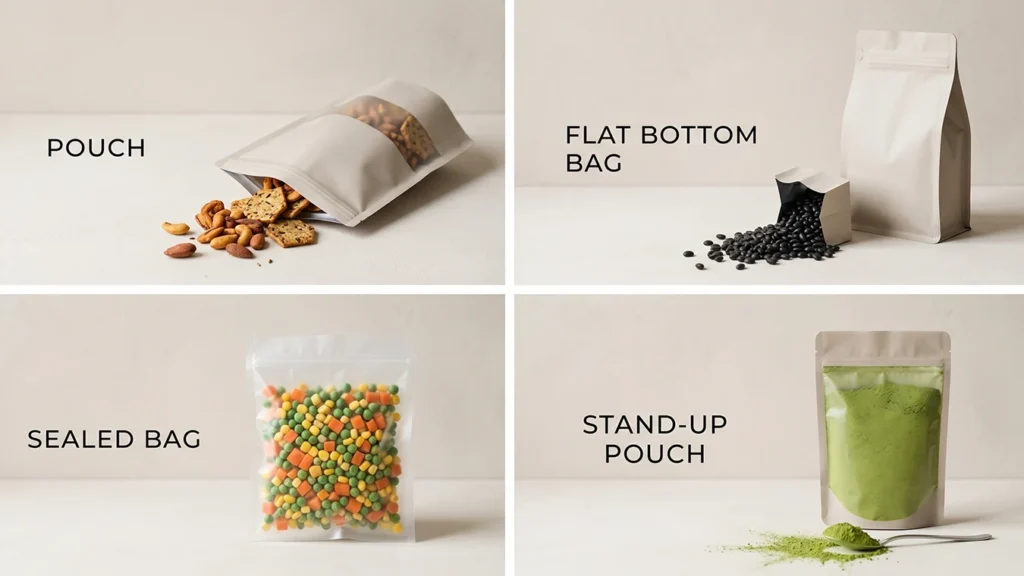
Snack Packaging
Snack products such as chips, crackers, popcorn, nuts, and dried fruit often require strong moisture barriers to maintain crispness and freshness. They may also need grease resistance and puncture protection during shipping and shelf display.
Structures like OPP/CPP or PET/VMPET/PE are commonly used because they provide good barrier performance while supporting strong printing and attractive shelf presentation.
Coffee and Tea Packaging
Coffee and tea are highly sensitive to oxygen, moisture, and aroma loss. Their packaging often requires stronger barrier protection to preserve flavor and freshness over time.
PET/AL/PE and PET/VMPET/PE structures are commonly used for coffee bags, especially for stand-up pouches, flat bottom bags, and side gusset bags. Degassing valves and zipper closures are also often added for better functionality.
Frozen Food Packaging
Frozen foods require packaging that can handle low temperatures, strong sealing, and puncture resistance. The packaging must remain stable during freezing, transportation, and storage without cracking or seal failure.
PET/PE and PET/CPP structures are often selected because they provide better strength and sealing reliability for frozen food bags and vacuum packaging.
Powder and Dry Food Packaging
Powdered products such as milk powder, protein powder, flour, seasoning, and instant drink mixes require strong moisture protection to prevent clumping and product spoilage.
High-barrier laminated structures such as PET/AL/PE or PET/PE are often used to improve shelf stability and ensure reliable sealing.
Different food products require different laminated structures, and there is no single solution for every application. The right packaging depends on the food itself, the expected shelf life, the filling process, and how the product will be stored, transported, and sold.
How to Choose the Right Laminated Packaging
Choosing the right laminated packaging is not simply about using the thickest material or the most expensive structure. The best solution depends on product protection, packaging performance, visual appearance, and cost balance.
Different food products require different packaging structures. A coffee pouch may need strong oxygen and aroma barriers, while takeaway sauces may focus more on leak prevention and grease resistance. This is why laminated packaging should always be selected based on actual product needs.
Identify Functional Requirements
Start by understanding what the product needs most.
Ask questions such as:
- Does it need protection from moisture, oxygen, light, or aroma loss?
- Is strong sealing needed for liquids, sauces, or frozen food?
- Does the package require puncture resistance during delivery or storage?
- Will it be used for automatic filling lines or vacuum packaging?
For example, aluminum foil or metallized film may be better for high-barrier needs, while PET and OPP are often used for printing and visibility.
Choose the Right Material Structure
Different laminated structures serve different purposes.
- PET/PE is common for frozen food and general food pouches
- OPP/CPP works well for snacks, bakery products, and dry food
- PET/AL/PE is often used for coffee, spices, and high-barrier packaging
- PET/VMPET/PE is suitable for nuts, pet food, and roasted snacks
The goal is to match the structure to the product, not simply add more layers.
Select the Right Finish
Packaging appearance also affects customer decisions.
- Gloss finish makes colors brighter and improves shelf visibility
- Matte finish creates a premium, soft, and non-glare look
- Soft-touch finish adds a high-end tactile experience
- Transparent windows help build product trust
- Metallic effects improve shelf impact and premium perception
For takeaway and restaurant packaging, both function and presentation matter.
Balance Cost and Sustainability
Good packaging is not always about thicker films or full foil structures. Sometimes a metallized film can provide enough protection with lower cost and less material use.
Brands should also consider recyclable structures, lighter materials, and smarter designs that reduce waste while maintaining food safety and performance.
The right laminated packaging should protect the product, support efficient production, match the brand image, and create long-term value for the business.
The Future of Food Packaging Lamination: Innovation, Sustainability & Market Trends
Food packaging lamination is moving toward structures that are not only protective, but also lighter, more efficient, and easier to align with sustainability goals. For food brands, the future of laminated packaging is not about adding more layers. It is about designing smarter structures that use the right materials for the right purpose.
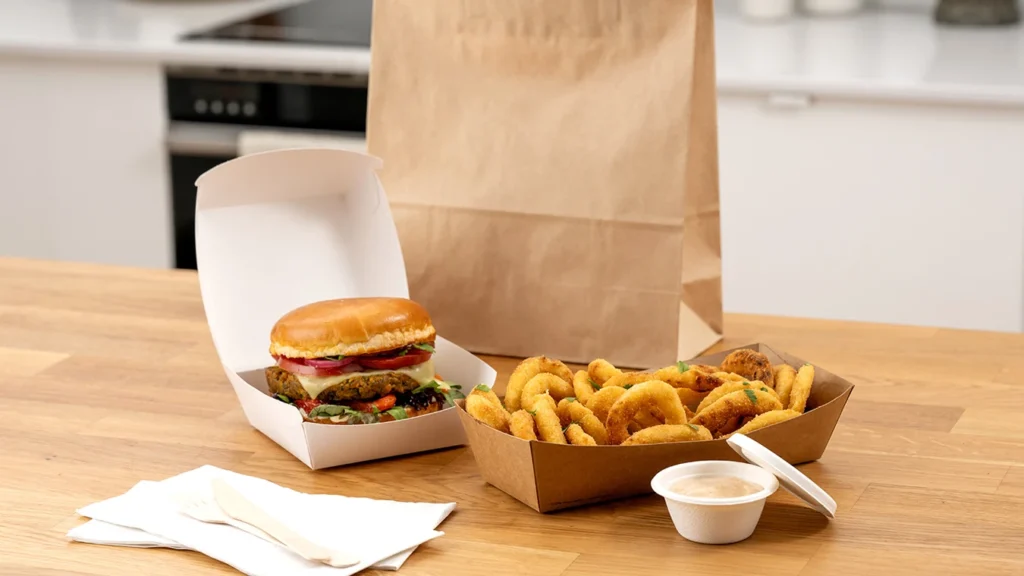
One important trend is the development of recyclable laminated structures. Traditional multi-material laminates can be difficult to recycle because different layers are bonded together. To address this, more brands are exploring mono-material options, such as PE-based or PP-based laminated packaging, depending on local recycling systems and product requirements.
Another trend is lightweight packaging. By improving film performance and structure design, brands may reduce unnecessary material use while still maintaining protection, sealing strength, and shelf appeal. This is especially important for snacks, dry foods, coffee, and pet food, where both performance and cost control matter.
Food brands are also paying more attention to high-performance barriers. Products such as coffee, nuts, spices, powders, and frozen foods still require strong protection against moisture, oxygen, aroma loss, and physical damage. Future lamination structures need to balance these protection needs with better recyclability and lower material waste.
Design expectations are also changing. Consumers want packaging that looks clean, premium, and trustworthy. PET and OPP laminated films will continue to play an important role in high-quality printing, matte or gloss finishes, transparent windows, and strong shelf presentation.
The future of laminated food packaging will be shaped by three priorities: better product protection, smarter material structures, and more responsible packaging choices. For food brands, the best solution will be the one that protects the product, supports production, fits market expectations, and avoids unnecessary over-packaging.
Conclusion
Laminated packaging plays an important role in modern food packaging because it combines protection, sealing performance, and visual presentation in one structure. For products such as snacks, coffee, takeaway meals, sauces, frozen food, and bakery items, the right laminated structure helps protect freshness, improve durability, and support better customer experience.
Choosing the right balance is the key. PET is often used for stronger printing performance and premium appearance, while OPP is suitable for lightweight and cost-effective packaging. Combined with PE, CPP, aluminum foil, or metallized film, laminated packaging can be designed based on the product’s real needs.
At Million Pack, we believe good packaging is not about using more layers, but using the right structure. Our goal is to help takeaway brands, restaurants, and food businesses find laminated packaging solutions that balance protection, function, and design for long-term business growth.
Micro FAQs
Is laminated packaging suitable for hot food delivery?
Yes. Laminated packaging is widely used for takeaway meals, sauces, and ready-to-eat food because it provides better heat sealing, grease resistance, and leak prevention during delivery. The right structure helps food arrive in better condition and improves the customer experience.
Can laminated packaging be customized for restaurant and takeaway brands?
Yes. Laminated packaging can be customized in size, pouch type, material structure, printing design, matte or gloss finish, transparent windows, and functional features such as zippers or tear notches. This helps restaurants and takeaway brands improve both packaging performance and brand presentation.
Is laminated packaging better than single-layer packaging?
In many food applications, yes. Single-layer packaging may be enough for simple products, but laminated packaging offers stronger protection, better sealing, and more flexible design options, especially for products that need moisture barriers, leak prevention, or longer shelf stability.