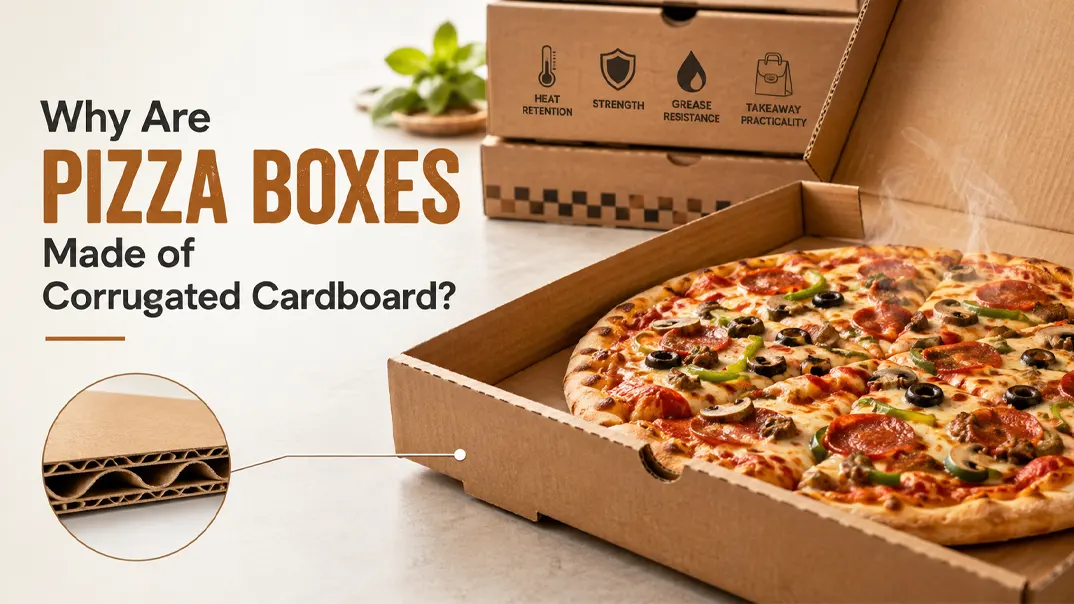
Pizza is universally loved, and ordering delivery has become a weekly ritual for millions of us. But once a hot pizza leaves the oven, the challenge begins: how do you keep it warm, fresh, and intact until it reaches the customer?
A good pizza box needs to protect the pizza during delivery, handle heat and steam, and stay strong even when several boxes are stacked together. This is why corrugated cardboard has become such a common choice for pizza packaging. So, why are pizza boxes made of corrugated cardboard? Let’s take a closer look.
What Is Corrugated Cardboard?
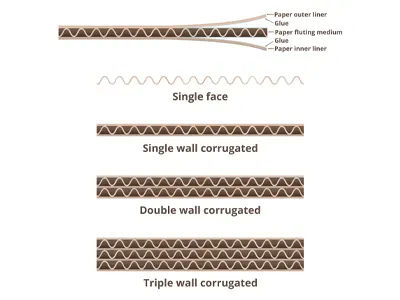
Corrugated cardboard is not just thick paper. You can think of it like a perfectly engineered sandwich. Instead of one solid sheet, it’s made of three distinct layers working together:
- The Liners (The Bread): These are the two smooth, flat outer layers. They provide a solid surface for printing your brand’s logo and give the box its initial rigidity.
- The Flute (The Filling): Hidden between the two flat liners is a wavy, ruffled sheet of paper.
If you look closely at that wavy middle layer, you’ll notice it forms a series of connected arches. In architecture, the arch is one of the strongest structural shapes in the world—it’s how ancient bridges support massive loads. By packing hundreds of these tiny paper arches between two flat boards, you create a material that can withstand heavy vertical pressure without crushing.
Even better, those arches create empty columns of air throughout the entire box. As you’ll see in the next section, that trapped air is the secret weapon for keeping your food piping hot.
Why Are Pizza Boxes Made of Corrugated Cardboard?
A pizza box has a harder job than it may seem. It has to hold hot food, deal with steam and grease, survive delivery, and often support several other boxes on top of it. Corrugated cardboard is widely used because it handles these different demands surprisingly well without making the packaging heavy or expensive.
Keep Pizza Warm
Fluted layer traps small pockets of air between the paper liners. Air is a very poor conductor of heat. When the heat tries to leave the pizza, it hits these pockets of trapped air and slows down significantly. This creates a natural barrier. Ensuring your food stays hot all the way to the customer.
This does not mean the box can keep a pizza hot forever. But for normal takeaway and delivery times, it provides useful insulation without requiring thick or bulky packaging.
Control Steam and Moisture
A freshly baked pizza also releases a lot of steam. If you put it in a sealed plastic box, that steam hits the lid, turns into water, and drops right back down. It makes the crust soft and soggy.
Cardboard naturally breathes. It absorbs a little bit of the surface grease, and small holes cut into the sides let the extra steam escape. Your client gets a crispy crust instead of a wet sponge.
Stays Strong Without Being Heavy
A large pizza needs a wide box, and a wide box can easily bend in the middle if the material is too thin. The fluted structure gives corrugated cardboard much more stiffness than a single flat sheet of paper.
That extra strength helps the box keep its shape when you lift it, carry it, or place it inside a delivery bag. At the same time, the material remains relatively lightweight, which makes handling and transportation easier.
Handles Stacking Better
If you run a pizza shop or delivery business, you know that an order may require stacking multiple pizzas, especially during peak hours or delivery times.
Corrugated cardboard is ideal for this situation because its corrugated structure helps resist vertical pressure and is less likely to collapse under the weight above, thus reducing the risk of the lid pressing on cheese and toppings.
Handle Greasy Food Better Than Thin Paperboard
Pizza naturally releases oil, so the packaging needs to stay usable even when some grease reaches the bottom of the box. The thickness and layered structure of corrugated cardboard help the box remain firmer than many thin paperboard alternatives.
However, corrugated cardboard itself is not completely grease-proof. The actual grease resistance also depends on the paper grade, liner, and any food-safe grease-resistant treatment used. If you are choosing pizza boxes, this is an important detail to check rather than assuming all corrugated boxes perform the same way.
Keeps Packaging Costs Practical
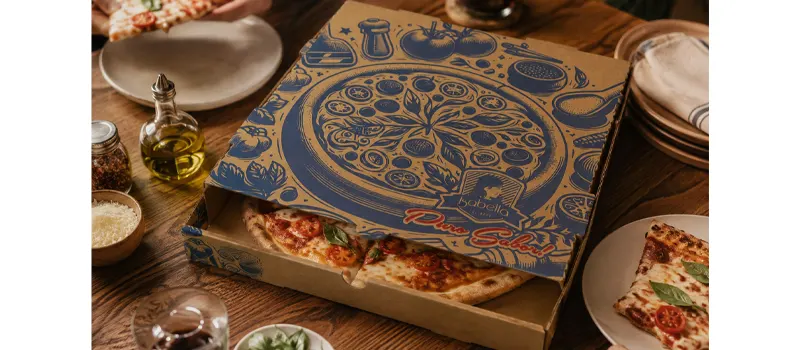
Corrugated cardboard is made mainly from paper fibers and uses its fluted structure to gain strength without requiring a thick, solid sheet. This allows manufacturers to produce boxes that are strong enough for delivery while keeping material use and unit cost under control.
Pizza boxes can also be supplied flat before use, which saves storage space and makes bulk transportation more efficient. For restaurants, chains, and distributors, these savings become much more noticeable at larger order volumes.
Easy to Print and Customize
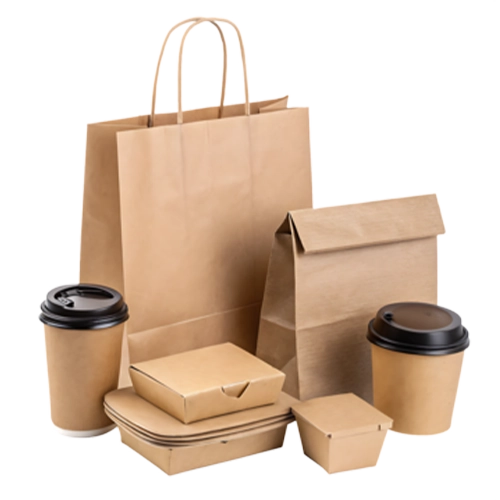
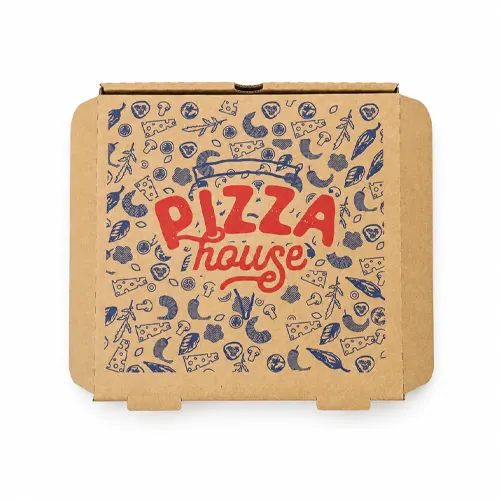
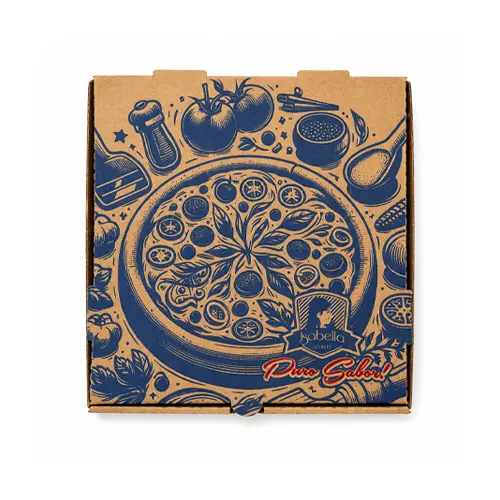
Although the inside of corrugated cardboard is fluted, its outer liners are relatively flat. This gives pizza-box manufacturers a practical surface for printing logos, brand names, and promotional information. Sizes and structures can also be adjusted for different pizzas. This makes the same box both a protective package and a practical branding tool.
Material Comparison: Why Not Others?
You might wonder why we still rely on corrugated cardboard boxes when we have so many modern packaging materials available today. Let me show you a direct comparison of how corrugated cardboard stacks up against the alternatives.
| Material | Heat Retention | Steam & Moisture Control | Stacking Strength |
|---|---|---|---|
| Corrugated Cardboard | Excellent: Air pockets inside the fluted layer help slow heat loss. | Good: The box can easily include ventilation holes to release excess steam. | Strong: The fluted structure provides good compression strength for stacking. |
| Solid Paperboard | Limited: A thin, solid sheet provides much less insulation. | Fair: It can release moisture, but may soften more quickly when exposed to steam and grease. | Weak to Medium: Large boxes can bend or sag more easily under weight. |
| Plastic Containers | Good: Plastic can hold heat well when the container is closed. | Poor without ventilation: Steam can condense inside and make the crust soggy. | Strong: Rigid plastic containers usually resist crushing well. |
| Molded Fiber / Bagasse | Medium: The thick fiber structure provides some insulation. | Medium: It can handle hot food, but prolonged contact with moisture and grease may affect performance depending on the material. | Medium: Strong enough for many meals, but less efficient for large, flat pizza-box structures. |
| Foam / EPS | Excellent: Provides very good thermal insulation. | Poor: A closed foam container can trap steam unless it is properly vented. | Medium: Lightweight but can crack or deform under pressure. |
| Aluminum Containers | Limited: Aluminum conducts heat quickly and provides little insulation by itself. | Poor to Medium: A closed lid can trap steam and condensation. | Medium: The material can bend or deform when stacked under pressure. |
What Should You Consider When Choosing Pizza Boxes?
When you are sourcing pizza boxes for your business, it can be tempting to choose a standard option based on size and price alone. But two boxes that look almost the same can perform very differently once you put a hot pizza inside and send it out for delivery. That is why it is worth checking a few practical details before you order.
Choose the Right Box Size
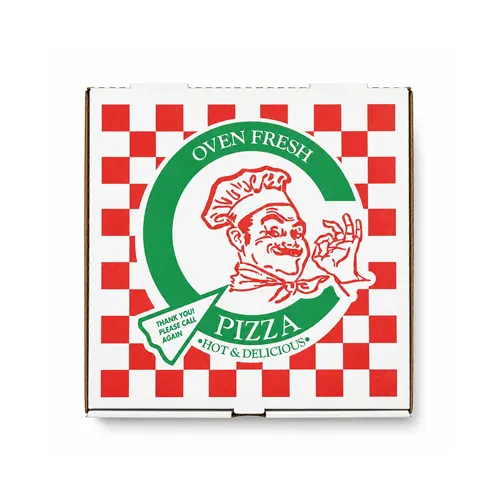
The box should fit the pizza closely without pressing against the crust or leaving too much empty space. A box that is too small can damage the edges and toppings, while an oversized box allows the pizza to move around during delivery and uses more material than necessary. If you sell several pizza sizes, it is usually better to match each size with its own box rather than use one large box for everything.
Match the Flute to the Pizza
The flute profile affects the thickness, rigidity, cushioning, and stacking strength of the box. If you serve heavy, deep-dish, or topping-loaded pizzas, you need a B-flute box. The thicker internal arches give you the maximum crush resistance so the box does not collapse in transit. If you sell thin-crust artisan pizzas, an E-flute box is your practical option. It is thinner, folds smoothly, and takes up much less storage space in your kitchen.
Consider Grease Resistance
Pizza can release a surprising amount of oil, especially around the cheese and toppings. If the board absorbs too much grease, the bottom of the box may become stained, soft, or weak. When comparing pizza boxes, ask about the paper grade and whether any food-safe grease-resistant treatment is used.
Test the Ventilation Design
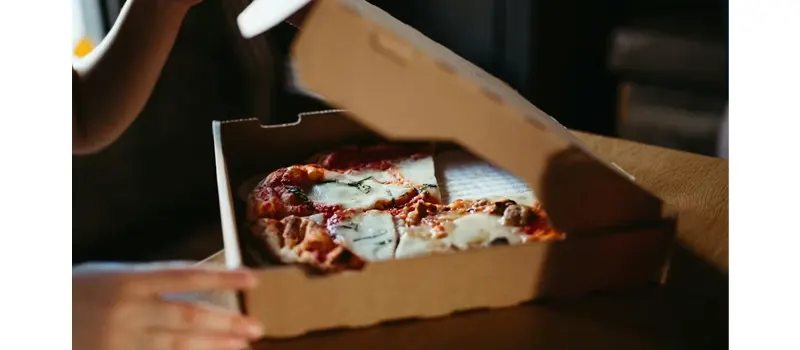
A hot pizza keeps releasing steam after it goes into the box, so you need enough ventilation to prevent too much moisture from building up inside. Depending on the box design, this may come from small vents on the sides or back, or from gaps built into the closing structure.
I recommend getting a physical sample and testing it with your actual pizza. Check whether steam can escape without allowing the pizza to cool too quickly. Poor ventilation can leave the crust soggy, while too much ventilation may cause unnecessary heat loss.
Verify Food-Grade Safety and Print Quality
The outside of the box is your biggest moving billboard. You want a smooth outer paper liner that holds ink clearly without looking messy or faded. More importantly, always verify that the corrugated board is strictly food-grade. The inside layer must be safe for direct food contact and capable of handling hot surface grease without breaking down or transferring any chemical odors to the food.
FAQs
Can You Recycle a Pizza Box If It Has Grease on It?
In many places, you can recycle the clean parts of a corrugated pizza box. Heavy grease, cheese, or food residue may make contaminated sections unsuitable for paper recycling. You should remove leftover food and check your local recycling rules before putting the box in the recycling bin.
Why do pizza boxes have small holes on the sides?
Those small holes are steam vents. When a pizza comes out of the oven, it releases a heavy amount of hot steam. If that steam is completely trapped inside the box, it cools into water droplets and falls right back onto the food, making the crust soggy. The vents allow just enough steam to escape while the thick, corrugated walls keep the heat locked inside.
Can you put a corrugated pizza box in the home oven to keep it warm?
No, you should never place a cardboard pizza box in your home oven. Even at lower temperatures, the dry paper fibers can scorch, warp, or catch fire. Additionally, the industrial adhesives and inks used on the packaging can release unwanted odors and chemicals when exposed to direct heating elements. Always transfer the slices to an oven-safe pan or baking sheet.
Why are pizza boxes square when pizzas are round?
Square boxes are used because they are far easier and more cost-effective to manufacture, ship, and assemble. A square box is cut and folded from a single, flat sheet of corrugated cardboard with zero wasted material during production. Flat square sheets also stack tightly on storage pallets, saving maximum warehouse space. Plus, the extra space in the four corners gives customers room to grab a slice easily without burning their fingers on the hot crust.
Do Pizza Boxes Need an Inner Liner?
Not every pizza box needs a separate liner. A liner or pizza pad may be useful when you serve particularly greasy pizzas or want extra protection between the pizza and the bottom of the box. Your decision should depend on the grease level, delivery time, board quality, and how the pizza is placed inside the box.
Conclusion
If you buy pizza boxes in bulk, I recommend looking beyond the lowest unit price. Ask for samples, test them with your actual pizzas, and make sure the supplier can keep the same material and production standard across repeat orders. A box that performs consistently can help you reduce packaging problems and create a more reliable delivery experience.
At Million Pack, we can help you develop pizza boxes around your actual product, order volume, and branding needs. If you are planning your next pizza box order, feel free to contact us and discuss what works best for your business.