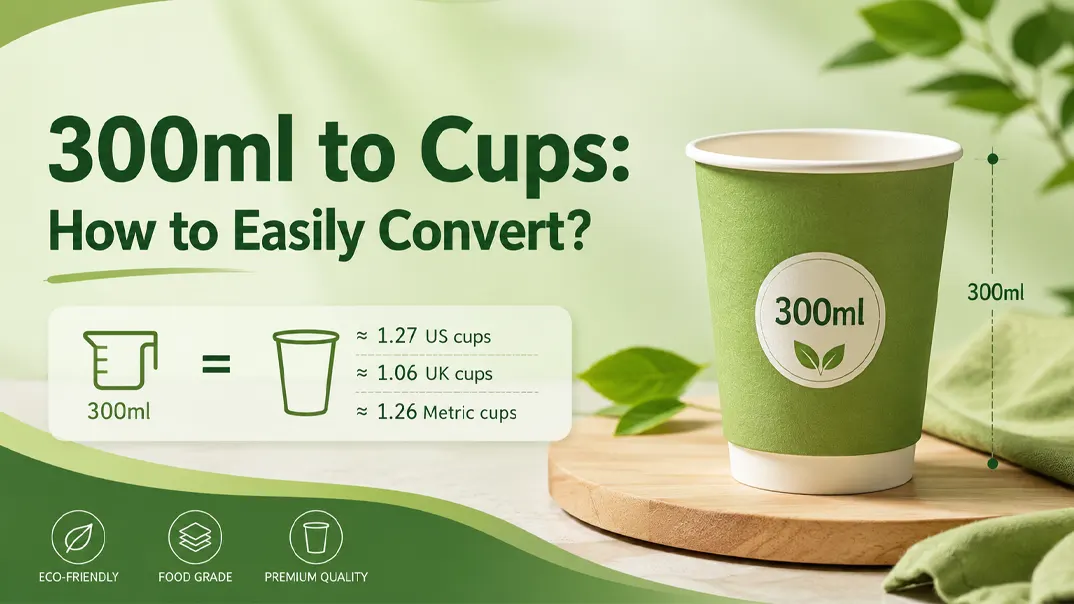
If you are trying to convert 300ml to cups, the quick answer is: 300ml is about 1.27 US cups or 1.2 metric cups. For everyday cooking or drink preparation, many people simply round it to about 1 1/4 cups.
The confusion usually comes from the word “cup” itself. A US cup, a metric cup, and the cup size used in food and beverage packaging may not always mean the same thing. That is why different conversion tools or recipe websites may show slightly different answers.
In this guide, we will explain how to convert 300ml to cups, and why the answer changes by measurement system. We will also look at different types of 300 ml cups, including paper, PET, PP, PLA, and other materials, so you can better understand which cup type fits different beverage and packaging needs.
How Many Cups Is 300ml?
300ml is about 1.27 US cups or 1.2 metric cups. For everyday cooking, drink preparation, or quick kitchen use, you can usually round it to about 1 1/4 cups. The exact answer depends on which cup measurement you are using.
To convert milliliters to US customary cups:
Use the standard US cup measurement when converting liquid volume from milliliters to cups.
The calculation for 300ml is:
Divide 300ml by the volume of 1 US cup.
Why Do Different Websites Give Different Answers?
Different websites may give slightly different answers for 300ml to cups because the word “cup” does not always refer to the same volume. In the United States, 1 cup is about 236.6ml, so 300ml equals about 1.27 US cups. In many metric-based recipes, 1 cup is 250ml, so 300ml equals 1.2 metric cups.
Rounding also changes the result. Some conversion tools show the more exact number, such as 1.27 cups. Others simplify the answer to 1.25 cups or 1 1/4 cups, which is easier to use in everyday cooking. These answers are close, but they are not based on the exact same measurement method.
The right answer depends on how you plan to use the measurement. For casual cooking, drinks, or simple kitchen use, 1 1/4 cups is usually close enough. For baking, recipe testing, beverage production, or packaging decisions, it is better to measure 300ml directly instead of relying only on a rounded cup conversion.
Why Cup Conversions Matter?
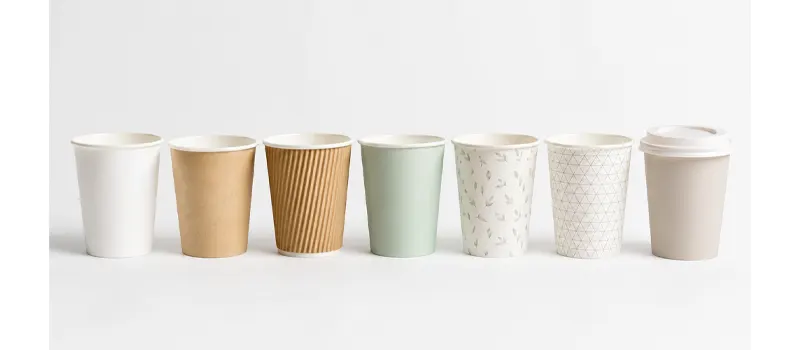
Cup conversions matter because a small measurement difference can change the way a recipe, drink, or package performs in real use.
In cooking and baking, liquid volume affects texture, balance, and final results. If a recipe says 300ml and you use a rough cup estimate, the result may become thinner or drier than expected.
Cup conversions are also helpful when you read recipes from different countries. Some recipes use cups, while many international recipes use milliliters. If you understand both systems, it becomes easier to adjust serving sizes, reduce or double a recipe, and avoid confusing a liquid measuring cup with a dry measuring cup.
For food and beverage businesses, the conversion becomes even more practical. A 300ml cup does not always mean the drink should be filled exactly to the rim. Food service usually needs to consider the cup’s actual capacity, safe filling level, foam space, lid fit, and whether the drink will be served hot or cold. A drink that looks right in a 300ml paper cup may behave differently in a 300ml PET cup, especially when ice, toppings, foam, or sealed lids are involved.
So the simple rule is: use cup conversions for quick everyday measuring, but use milliliters and actual cup specifications when accuracy, repeatability, or packaging performance matters.
Common Cup Size Conversion Chart: ml, oz, and Cups
| Common Cup Size | Approx. ml | US Cups | Common Use |
|---|---|---|---|
| 4 oz | 118 ml | 0.5 cups | Samples, espresso, tasting cups |
| 6 oz | 177 ml | 0.75 cups | Small coffee, kids’ drinks, samples |
| 8 oz | 237 ml | 1 cup | Small coffee, tea, water |
| 10 oz | 296 ml | 1.25 cups | Coffee, tea, juice, 300ml drinks |
| 12 oz | 355 ml | 1.5 cups | Regular coffee, iced drinks, soft drinks |
| 16 oz | 473 ml | 2 cups | Large coffee, iced coffee, smoothies |
| 20 oz | 591 ml | 2.5 cups | Large cold drinks, milk tea, takeaway beverages |
| 24 oz | 710 ml | 3 cups | Extra-large cold drinks, smoothies, iced tea |
| 32 oz | 946 ml | 4 cups | Large takeaway drinks, sharing portions |
Types of 300 ml (10oz) Cups
A 300 ml cup is often used as a practical single-serving size. In packaging, 300 ml is close to a 10 oz cup size, yet the usable filling volume may be lower when you need space for foam, ice, toppings, or a secure lid. That means businesses should not choose a 300 ml cup by capacity alone. They need to check the actual brim capacity, recommended filling level, lid compatibility, material thickness, and whether the cup is designed for hot drinks, cold drinks, sealing, or takeaway use.
Million Pack 300 ml cups are available in several materials, including paper, PET, PP, PLA, and bagasse. Each material gives the same cup size a different purpose and customer experience.
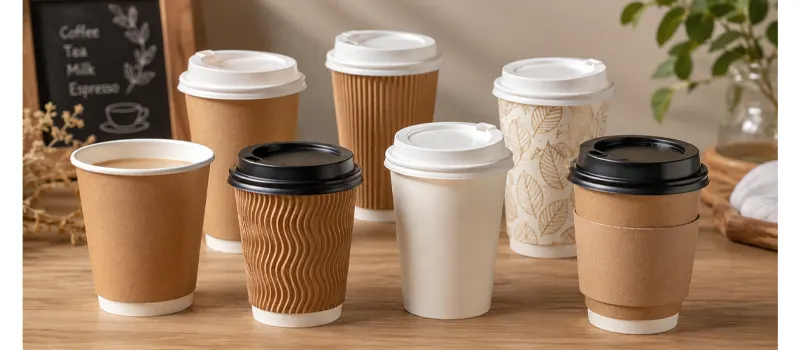
300 Ml Paper Cups
Paper cups are a common choice for 300 ml hot drinks. For foodservice brands, paper cups are easy to stack, easy to print, and suitable for custom branding.
The cup should have a proper inner coating to help resist moisture and leaking. A matching lid is also important, especially for takeaway coffee or tea. For light daily use, a single-wall paper cup may be enough. For hotter drinks or longer holding time, a stronger structure may be needed.
- Single-Wall Paper Cups
Single-wall paper cups have one layer of paperboard. They are simple, lightweight, and cost-effective, making them suitable for quick-service drinks and samples. If the beverage is very hot, many businesses use a sleeve to make the cup more comfortable to hold. - Double-Wall Paper Cups
Double-wall paper cups have an extra outer layer, which gives better insulation than single-wall cups. This makes them more comfortable for hot drinks because customers can hold the cup without feeling too much heat. They also look more stable and premium, so they are often used by brands that want a higher-quality feel.
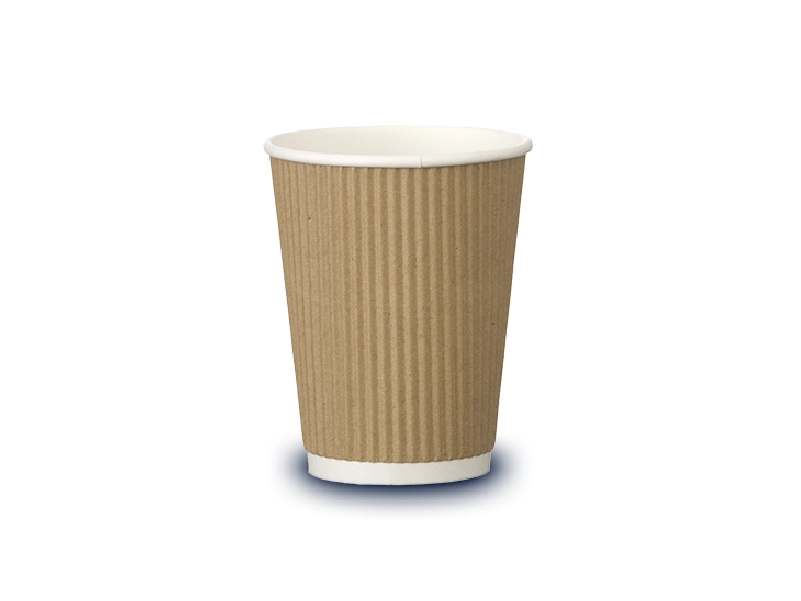
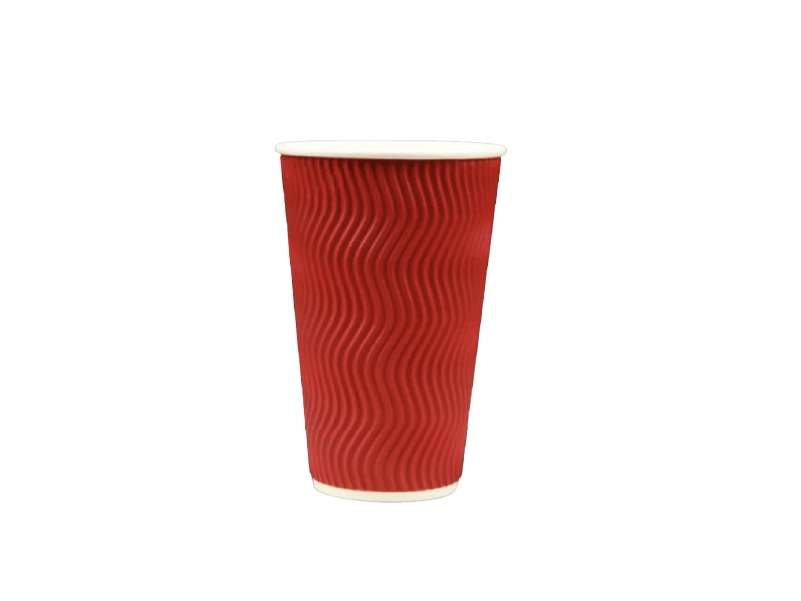
300 Ml Ripple Paper Cups
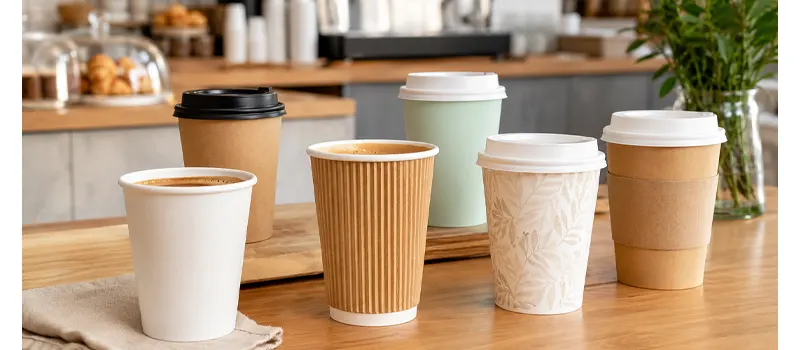
Ripple paper cups have a textured outer wall. The ripple layer helps improve grip and adds extra insulation, making the cup easier to hold when the drink is hot.
For 300 ml hot beverages, ripple cups are useful when customers carry drinks outside or hold them for a longer time. The textured surface also gives the cup a stronger visual identity, which can make the packaging look more professional than a plain paper cup.

300 Ml PET Cups
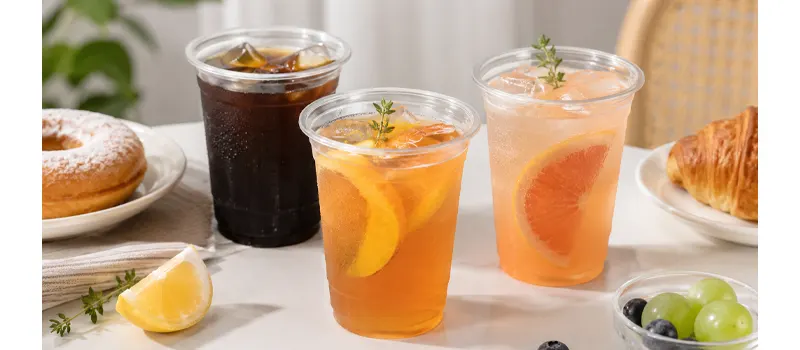
PET cups are usually used for cold drinks. Their biggest advantage is clarity. If you want customers to see the color, layers, fruit pieces, or ice inside the drink, PET cups are often a better fit.
A 300 ml PET cup works well for iced coffee, juice, smoothies, cold tea, and yogurt drinks. For brands that care about visual presentation, the transparent cup can make the drink look fresher and more attractive. However, PET cups are generally not suitable for hot drinks.
300 Ml PP Cups
PP cups are another common option for drinks and foodservice packaging. Compared with PET, PP is usually more flexible and can handle a wider range of use cases. It is often used for cold drinks and some warm drinks, depending on the product design.
For a 300 ml cup, PP can be useful when flexibility, durability, and cost control matter. It is also commonly used with sealed lids or film sealing in some beverage shops. If the cup needs to handle shaking, transport, or quick service, PP may be a practical choice.
300 Ml PLA Cups
PLA cups are often chosen by businesses that want a plant-based packaging option. They are commonly used for foodservice brands with sustainability goals.
However, PLA usually has temperature limits, so it should not be used for hot drinks. Businesses also need to check local composting conditions before making environmental claims.
300 Ml Bagasse Cups
Bagasse cups are made from sugarcane fiber and are often used when brands want a more natural-looking packaging option. They are usually thicker and more rigid.
The main benefits are its sturdy feel, natural look, and connection with renewable fiber materials. The key is to check the coating, lid compatibility, and leak resistance. Bagasse looks natural, but the cup still needs to match the actual product being served.
Looking for 10oz / 300ml Eco Cups?
If you are choosing cups for coffee, tea, juice, cold drinks, takeaway service, or food sampling, MillionPack can help you match the right 10oz / 300ml cup with the right material, lid, and packaging style. We offer paper cups, PET cups, PP cups, PLA cups, bagasse options, and custom printed packaging.
Conclusion
For everyday measuring, a cup conversion helps you move quickly. For business use, the better habit is to treat milliliters as the base measurement and then test the cup in real conditions. Fill it with the actual drink. Add ice, foam, toppings, or a lid if needed. Check how it looks, how it feels in the hand, whether it leaves enough headspace, and whether the portion still feels right to the customer.
A cup that works well on paper may not always work well at the counter, in delivery, or in a customer’s hand. So before choosing a cup size, use the conversion as your starting point, then confirm the real fit through material, lid, filling level, and serving style. That small step can help avoid waste, reduce packaging mismatch, and make every serving feel more consistent and professional.
FAQs
Is 300 ml equal to 1 cup?
In US measurements, 1 cup is about 236.6 ml, so 300 ml is about 1.27 cups. For everyday use, you can think of it as roughly 1 1/4 cups.
How to measure 300 ml of water in cups?
To measure 300 ml of water in cups, use about 1 1/4 US cups. For baking or drink recipes that need consistency, using a measuring cup with milliliter marks is better.
How many ml is 1 cup?
A US cup is about 236.6 ml, while a metric cup is 250 ml. If you are following a US recipe, use 236.6 ml. If you are following a metric recipe, use 250 ml.
What does 300 ml look like?
300 ml is close to a 10 oz drink cup. In everyday terms, it looks like a medium coffee, a small bottle of juice, or a regular single-serving drink. In packaging, a 300 ml can looks slightly different depending on the cup shape, rim width, height, and whether the drink needs space for ice, foam, toppings, or a lid.
Can I use 1 1/4 cups instead of 300ml?
Yes, for most casual cooking and drink preparation. But for baking, drink formulas, or commercial production, measuring 300ml directly is more reliable.
Does a 300ml cup hold exactly 300ml of drink?
Not always in real service. The cup may have a 300ml capacity, but the actual filling volume can be lower if you need space for foam, ice, toppings, or a secure lid.
What lid should I use for a 300ml cup?
The lid should match the cup’s rim diameter, material, and drink type. Hot drink cups usually need sip lids, while cold drink cups may use flat lids, dome lids, or sealing film.
Is 300ml a standard disposable cup size?
300ml is a common and practical capacity, but many disposable cups are sold by ounces, such as 8oz, 10oz, 12oz, and 16oz. A 300ml cup is usually close to a 10oz cup.