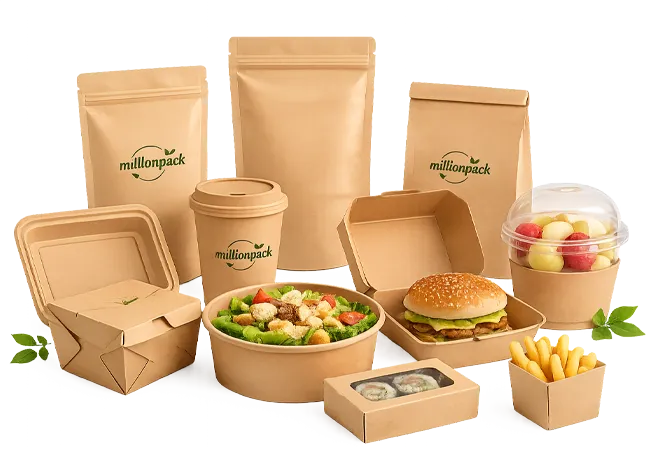
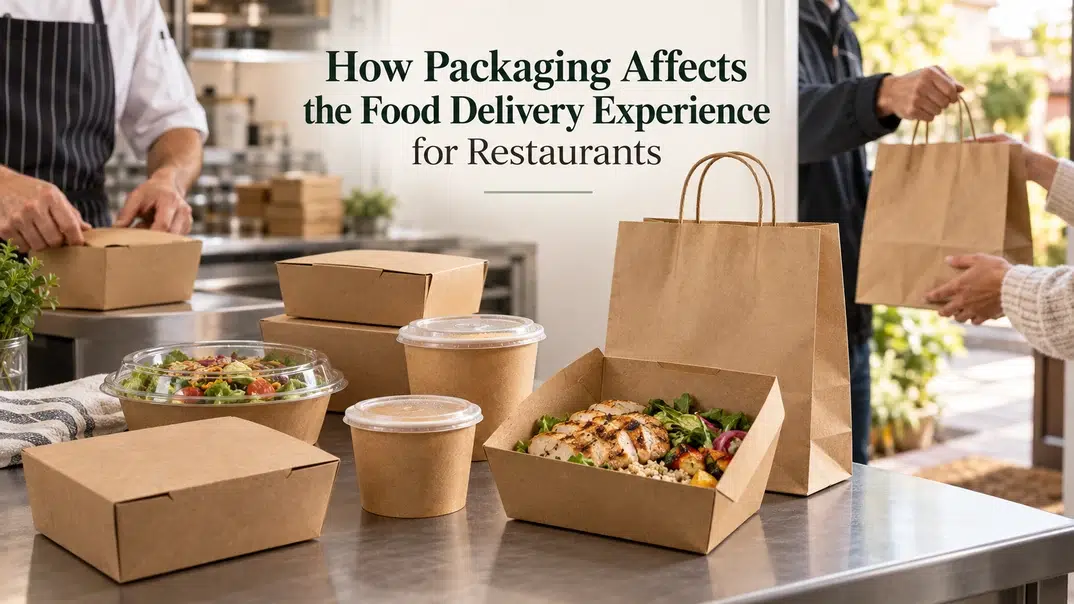
When a restaurant meal leaves the kitchen, the packaging becomes part of the service. A container can change how the customer judges the entire order. Understanding how packaging affects the food delivery experience starts with four visible results: the food’s condition, the order’s presentation, the ease of opening, and the restaurant’s consistency behind the scenes.
The sections below explain how to protect each one and how to test the complete packaging setup before you order in bulk.
Why Packaging Shapes The Food Delivery Experience?
Delivery creates a moving, changing environment for food. After the order leaves the kitchen, it may be carried by hand, placed in a thermal bag, stacked with other meals, or tilted in a vehicle. Packaging has to keep the meal stable through that journey.
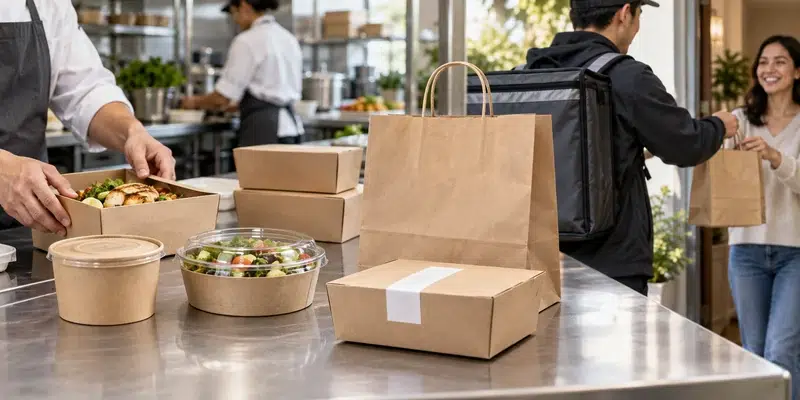
In practice, delivery packaging does four jobs at the same time:
- Protects the food: The container controls leaks, grease, moisture, pressure, and movement.
- Preserves the intended texture: The lid, vents, and internal space affect heat and steam.
- Keeps the order organized: Stable containers make it easier to separate sauces, sides, drinks, and main dishes.
- Creates the first physical impression: The customer sees the package before tasting the food.
That is why packaging should be planned with the menu and delivery route. A paper food box, bowl, tray, or cup is part of the food service process. Its size, structure, lid, coating, and packing method should support the way the meal is prepared and delivered.
How Packaging Affects Food Quality During Delivery
Food quality can change during the time between packing and the bite. Heat escapes, steam condenses, sauces move, and pressure builds when containers are stacked. Good packaging manages these changes for the specific food, with each menu item assigned a suitable format.
Temperature And Steam
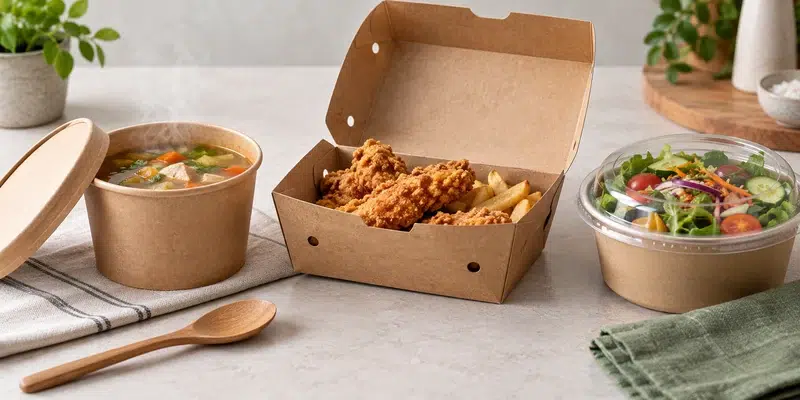
Hot meals release steam after packing. A tight container can help retain heat, but trapped condensation may soften fried food or make a crisp coating lose its texture. Soup and curry need a secure lid and enough headspace. Fried food usually needs controlled ventilation. The right balance depends on the meal and the planned delivery time.
Moisture And Texture
Moisture can travel through a seam, collect under a lid, or soften paperboard over time. Sauced noodles, rice dishes, and wet toppings need a food-contact surface that can handle the intended moisture and grease. Check the bottom seam and corners after the normal holding period, not immediately after filling.
Leaks And Movement
Leakage often starts when food reaches the rim, a lid lifts at one corner, or a container is placed on its side. A fitted lid, stable base, clean rim, and upright packing position work together. A container should be tested with the actual food and portion because a water test alone cannot show how sauce, heat, and movement will interact.
Materials And Coatings
Paperboard, molded fiber, bagasse, clear lids, and composite designs can perform differently with the same food. The paper grade, coating or lining, lid material, and structure all matter. Food-contact documentation should match the exact product, material, intended use, market, and current document date. The FDA food packaging information explains why packaging substances must be evaluated for their intended use.
How Packaging Affects Customer Perception
Customers experience the packaging before they evaluate the meal itself. They notice if the bag is wet, the lid is difficult to remove, the food has shifted, or the container looks crushed. A clean, stable package gives the meal a better start at the moment of opening.
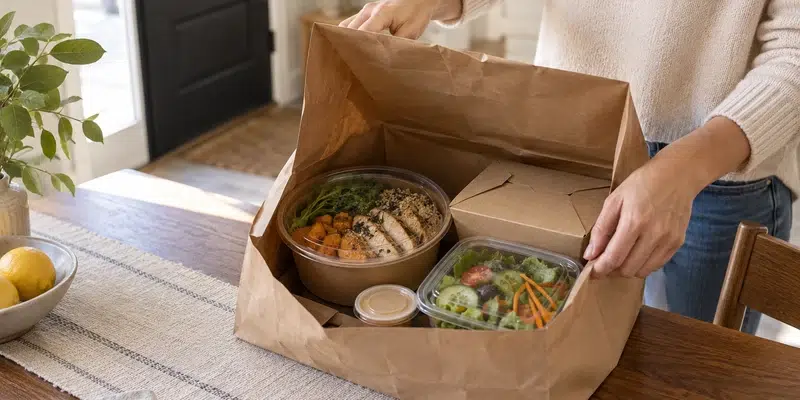
The First Look Inside The Bag
A customer should be able to identify the main dish, sides, sauces, and utensils without sorting through a damaged or crowded bag. Containers that stay upright and keep their shape make the order feel more organized.
Clean Exterior And Easy Opening
Grease on the outside of a box or sauce around the lid can make the food feel careless, even when the meal itself is good. The closure should be secure during delivery and easy for the customer to open without tearing the container or spilling the contents.
Presentation After Transport
Clear lids can help customers see salads, desserts, and arranged meals. Paperboard boxes can protect the shape of burgers, rice dishes, and other foods during movement. The design should support the food and avoid a container that is too shallow, too loose, or too tight.
Brand Details That Stay Useful
Custom printing can make packaging part of the brand experience, but it should support the container and leave its function clear. A clear logo, handling note, or product mark is useful when it remains visible after stacking and transport.
What Delivery Packaging Needs To Do In The Kitchen?
Packaging affects the delivery experience before the driver picks up the order. If staff need to guess which container fits each dish, packing slows down and mistakes become more likely. A practical system gives each menu group a clear container, lid, fill level, and packing position.
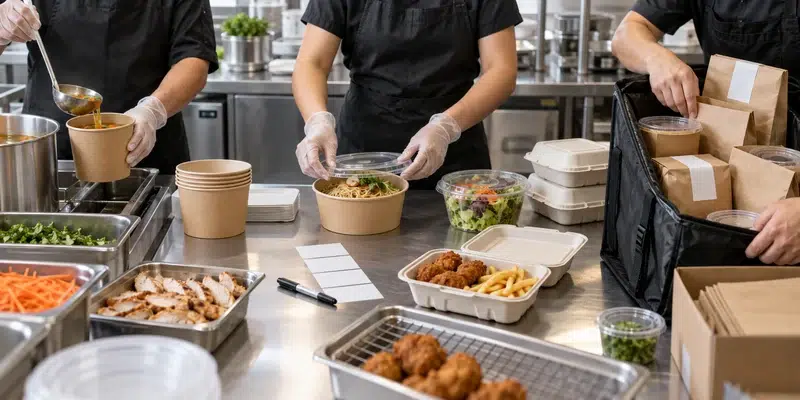
Fast And Consistent Packing
Containers should be easy to open, fill, close, and stack during a busy service. The lid should fit without repeated adjustments, and the base should remain stable when staff move it from the counter to the delivery bag.
The Correct Container For Each Dish
Soup, fried food, noodles, salads, and combo meals place different demands on packaging. Use a deep lidded bowl for liquid dishes, a vented box for food that needs airflow, and a divided tray when separation protects the meal. A small menu-to-container chart can help staff follow the approved setup.
Order Accuracy And Separation
Packaging should leave enough space for sides, sauces, and drinks without pressing them against the main container. Separate sauce cups when they could affect the lid or the food texture. Clear packing positions also help staff check that every part of the order is present.
Stable Bags, Cartons, And Loading
The outer pack-out must match the container. A heavy item placed on a soft box can deform the lid. A bag that is too large allows containers to slide, while a carton that is too tight can press on corners. Carton quantity, carton dimensions, and loading position matter when packaging is shipped to the restaurant and when orders are moved to the customer.
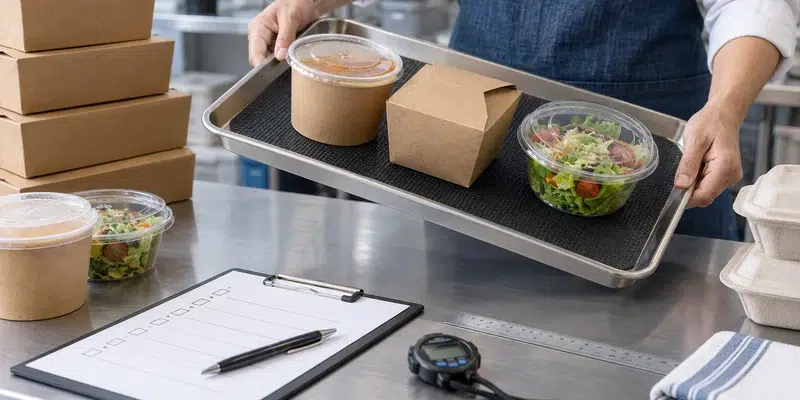
How To Choose And Test Packaging For Delivery?
Choosing delivery packaging starts with the food and ends with a realistic test. Product names are not enough. A paper food box can differ by paper grade, coating, folding structure, size, lid, and packing method.
Start With The Delivery Conditions
Record the food type, portion size, temperature at packing, sauce or grease level, expected holding time, delivery bag, and stacking arrangement. These conditions define what the container has to handle.
Match The Structure To The Food
Review the base, seams, lid, vents, coating, internal height, and usable capacity. For liquid dishes, focus on rim engagement, headspace, and upright stability. For fried foods, inspect ventilation and grease control. For salads and cold meals, check lid clearance and the position of dressing or sauce cups.
Test The Complete Packaging Setup
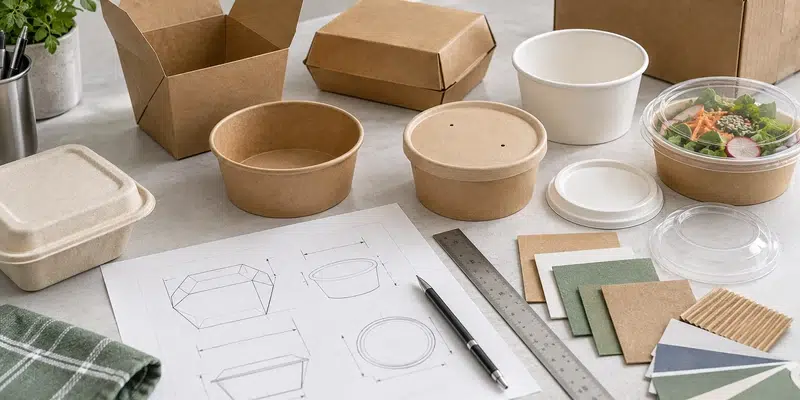
- Record the sample version. Keep the SKU, dimensions, material, coating, lid, printing, and sample date together.
- Use the actual food. Fill the container with the normal portion at the normal packing temperature.
- Hold it for the expected time. Include preparation, pickup, and the longest common delivery period.
- Move and stack it. Carry the order, tilt the container, place it in the delivery bag, and add the normal weight above it.
- Inspect the result. Look for wet seams, grease marks, lid lift, soft walls, deformation, condensation, and shifted food.
- Repeat after changes. A different size, lid, coating, filling method, or carton pack requires another check.
Keep The Approved Version On Record
Store the sample result with the approved specification. This gives the purchasing and production teams a clear reference when a later batch, lid, coating, or packing method is reviewed.
FAQs
What should be checked before a bulk packaging order?
Check the exact material, dimensions, coating, lid, food-contact components, packing method, carton loading, sample result, and required destination-market documents.
Should Takeout and Delivery Packaging Be the Same?
Not necessarily. Delivery orders usually spend more time in transit and experience more movement, stacking, and temperature change, so they may need stronger sealing or better structural support than short-distance takeout orders.
Is a Tighter Lid Always Better for Delivery?
No. A tight lid is important for liquid foods, but foods that release a lot of steam may need ventilation. The correct lid design depends on whether the priority is leak resistance or moisture control.
How Often Should Restaurants Test Their Delivery Packaging?
Packaging should be retested whenever the food, portion size, container, lid, delivery distance, or supplier changes. Testing is also useful if customers begin reporting recurring delivery problems.
Can Custom Packaging Improve the Delivery Experience?
It can, especially when standard packaging does not match the portion size, food shape, compartment needs, or delivery conditions. Customization is most useful when it solves a specific packaging problem rather than simply changing appearance.
Conclusion
Small packaging problems often become much more obvious during real delivery. That is why it is useful to review packaging whenever you change your menu, portion size, delivery range, or serving method.
Before making a large purchase, test a few suitable options with your actual food and normal delivery process. At Million Pack, we can help you compare different packaging solutions, prepare samples, and refine the specifications until you find an option that works for your operation.