To keep takeaway food hot, match the container, lid, venting, and carry bag to the food and the time it will spend in transit. Soup needs a leak-resistant closure, fried food needs controlled steam release, and hot drinks need insulation and a stable lid. The checks below help restaurants, food brands, importers, and distributors choose samples and test them before ordering.
What takeaway packaging needs to control
Heat leaves food through contact with the container, air movement, evaporation, and repeated opening during handoff. Packaging cannot add heat, but the right format can slow heat loss and protect the meal from movement, leaks, crushing, and excess moisture.
Think of the order as a system with three parts:
- Primary container: holds the food and provides the main barrier against oil, water, and heat.
- Closure and venting: keeps the package closed while managing steam and condensation.
- Secondary packaging: keeps containers upright and stable during pickup and delivery.
A tightly closed package is not automatically the right package. Soup, noodles, burgers, fries, and coffee create different combinations of heat, oil, water, and steam. The package should be selected around those conditions.
1. Match the container size to the portion
A container that is too large leaves room for movement and extra air. A container that is too small can press against the food, push the lid open, and create leaks. Check the usable internal length, width, height, diameter, and headspace alongside the nominal capacity label.
Headspace matters for hot food. Liquid dishes need enough room to avoid contact with the lid when the order is carried. Noodles and rice need room for steam and toppings. Burgers need enough height for the bun and fillings without compression. Record the portion, toppings, sauce, and garnish used in the sample test.
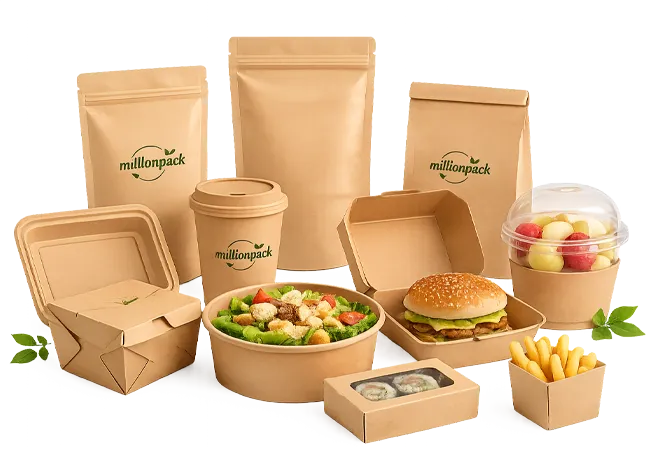
Million Pack’s product pages show multiple capacities and structures across its food packaging range. The exact dimensions, material, coating, lid, and available SKU still need confirmation before a quotation or production decision.
\n
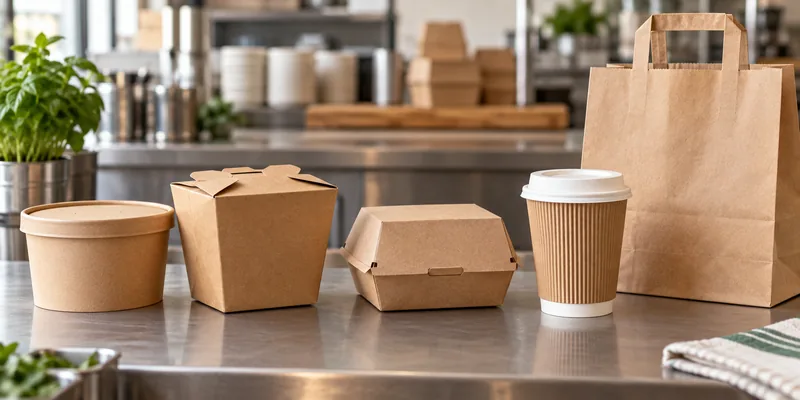
2. Select a format for the food
Soup, curry, stew, and other liquid food
Liquid food needs a rigid bowl or container, a compatible lid, and a barrier matched to heat, water, oil, and holding time. The published disposable soup bowl range includes kraft paper, white paperboard, bagasse, and bio-plastic formats, along with several lid structures. Treat the bowl and lid as one sample system: a strong base does not help if the lid fits loosely or loses its seal when tilted.
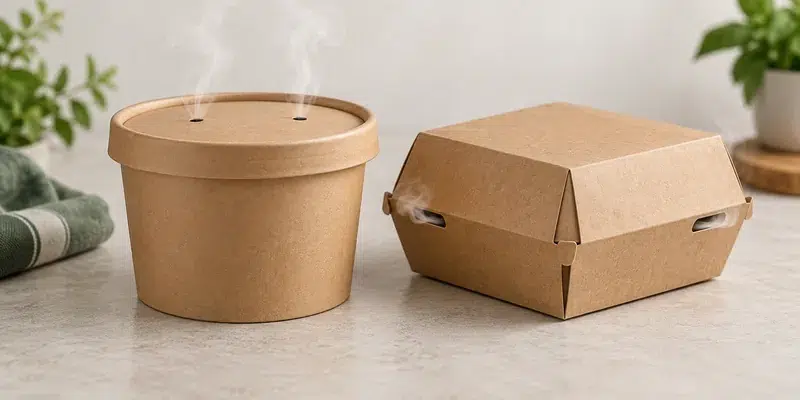
A vented lid can release some steam and reduce condensation, while a secure closure helps control spills. Test the fill level, lid fit, tilt resistance, and temperature at the intended delivery interval. The selected coating or lining should be confirmed for the specific bowl and food, not assumed from the product category name.
Noodles, rice, pasta, and saucy meals
These meals need a stable base, enough headspace, and a closure that remains secure during carrying. The published noodle box packaging range includes fold-top, round, window, and handle-style formats. Fold-top flaps can help contain the portion; round formats can suit soup noodles and other meals with more liquid.
Paperboard strength alone does not determine performance. Check the interaction between the board, coating or lining, seams, fold lines, lid, and food. Oil and sauce can soften weak areas, while trapped steam can affect texture. A sample should be filled with the normal portion, closed using the intended process, and checked after stacking and movement.
Burgers, fried chicken, and fries
Fried food needs warmth with controlled moisture. If steam has nowhere to go, the crust can soften before the order reaches the customer. If the package is too open, the food can cool quickly or move during delivery.
The published burger box packaging range shows clamshell, window, cardboard, and compartment formats. Choose the structure around the food height, grease load, stacking method, and delivery time. A compartment can keep fries, sauces, and sides apart, while a stable burger box protects the bun and toppings from compression.
Hot coffee and other drinks
Hot drinks benefit from a container wall that slows heat transfer and remains comfortable to hold. The disposable coffee cup range includes single-wall, double-wall, and ripple-wall formats. Single-wall cups may suit short service or a sleeve; double-wall and ripple-wall structures provide additional insulation and grip for takeaway use.
Check the cup, lid, and carrier as a set. Fill the cup to the normal service level, close it, carry it, and place it in the same bag or carrier used in operation. Test for leakage at the rim and lid opening after the drink has been held for the planned time.
\n
3. Balance heat retention and steam release
Steam is a packaging variable, not simply a sign that the food is hot. Condensation can soften fried coatings, wet a burger bun, blur a printed surface, or weaken paperboard at a seam.
- For liquid food: use a secure lid and controlled venting where the selected format provides it.
- For noodles and rice: leave suitable headspace and test how the closure handles steam during stacking.
- For burgers: protect the shape and avoid excess moisture around the bun.
- For fries and fried food: allow enough steam release to protect texture while limiting movement.
- For drinks: use a wall structure and lid that support insulation, grip, and spill control.
Do not judge venting from an empty package. Use the actual food, service temperature, fill level, holding time, and delivery movement. A change to the vent, lid, coating, or container size can change the result and should trigger another test.
4. Check the material and barrier as a set
Paperboard, moulded fibre, coatings, linings, lids, and windows can all affect heat, moisture, grease, stiffness, and disposal. The following descriptions are selection points, not blanket claims for every SKU:
| Material or feature | What to check |
|---|---|
| Kraft paperboard | Natural appearance and structural strength; confirm the coating or lining for wet, oily, or saucy food. |
| White paperboard | Printable surface and stiffness; confirm the food-contact barrier and heat use for the specific construction. |
| Bagasse or moulded fibre | Fibre source, shape retention, grease resistance, lid fit, and the product’s documented use conditions. |
| PE or PLA lining | Barrier performance for water and oil, food-contact suitability, and the disposal requirements of the complete pack. |
| Corrugated paperboard | Rigidity, stacking strength, flute construction, and whether the added structure fits the intended delivery format. |
“Paper food box” is not a complete specification. Ask the supplier to identify the base material, paper weight or fibre structure, coating or lining, lid and window material, printing, and packaging configuration. A sustainability statement also needs to match the complete construction and the rules of the destination market.
5. Use the carry bag to protect the order
The outer bag does not replace the primary container, but it can reduce movement and protect the order during handoff. Choose a bag with a base and height that keep containers upright without crushing lids or forcing the handles apart.
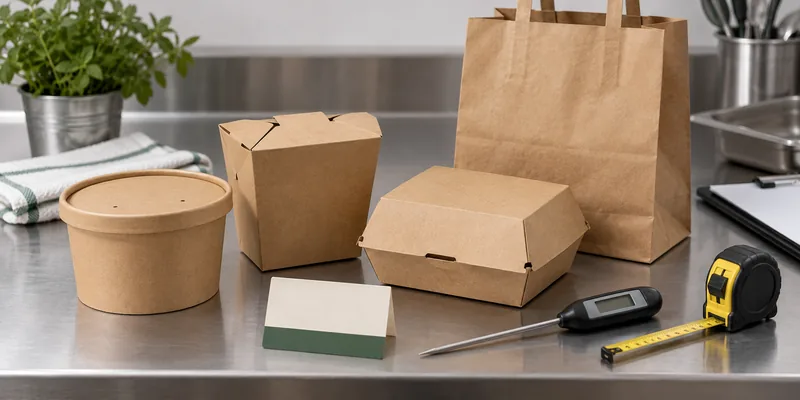
Million Pack’s takeaway food paper bags include SOS square-bottom, twisted-handle, flat-handle, and die-cut-handle formats. Match the bag to the total load, container footprint, route, and handling method. A square bottom can help staff load boxed meals quickly and keep the order stable. A handled format can suit a larger order, but its paper grade, base, and handle attachment still need a load check.
Pack hot items together when the menu allows it, separate cold drinks and chilled desserts, and place heavier containers below lighter items. Keep lids level and minimise unnecessary opening between packing and delivery.
\n
6. Test the complete packaging system
Empty-container testing can reveal folding or fit problems, but it does not show how food, steam, grease, stacking, and delivery movement interact. Use a repeatable sample test:
- Record the sample version, material, coating or lining, dimensions, lid, printing, and date.
- Fill the container with the normal portion at the usual service temperature.
- Close it using the intended staff process and place it in the actual bag, carrier, or delivery configuration.
- Check the order at realistic intervals, such as the normal pickup time and delivery time.
- Record temperature under your food-safety procedure and local requirements.
- Inspect the lid, seams, folds, base, handles, and outer surfaces for leaks, warping, softening, or grease migration.
- Check the food texture and presentation, then repeat the test after any change to the size, material, coating, lid, vent, or inner tray.
Record the result against the same sample version. A new lid, paper weight, coating, die line, or packing method can create a new performance result even when the product name stays the same.
7. Give the supplier complete inquiry information
Incomplete specifications make sample, price, packing, and delivery discussions harder to compare. For a takeaway packaging inquiry, provide:
- Food type, hot or cold use, oil and water level, steam or condensation concerns, and expected holding time.
- Portion size, capacity, internal dimensions, outside dimensions, and any height or stacking limits.
- Base material, paper weight or fibre type, coating or lining, lid, window, handle, divider, and inner tray requirements.
- Printing method, colour count, coverage, inside or outside printing, and the current artwork version.
- Inner pack, outer carton, units per carton, carton dimensions, gross weight, labels, and pallet or container loading needs.
- Sample quantity, estimated order quantity, destination market, required tests or documents, trade term, and delivery point.
Ask the supplier to list assumptions, open points, and the version date in the quotation. If the material, lid, packing method, destination, or test requirement is still undecided, keep it marked for confirmation until the specification is final.
Common questions
What packaging helps takeaway food stay hot?
A close-fitting container with a compatible lid, a suitable moisture barrier, and a stable outer bag usually gives better temperature protection than an oversized or poorly supported pack. The correct format depends on the food and the time in transit.
Should hot food be sealed without vents?
Not always. Liquid food needs spill control, while fried food often needs controlled steam release. Test the closure and venting with the actual food and delivery time before selecting the final format.
Are kraft and fibre packages suitable for hot food?
They may be suitable when the specific structure, barrier, lid, and use conditions have been confirmed. Do not assume that every kraft, bagasse, or moulded-fibre item has the same heat, grease, or moisture performance.
What documents should a buyer request?
Request documents that match the selected product, material, food use, market, and current version. A certificate or report for one product structure does not automatically cover every size, lid, coating, supplier, or SKU.
Conclusion
To keep takeaway food hot, choose packaging as a system. Match the container size to the portion, select the lid and venting for the food, confirm the material and barrier, stabilise the order with a suitable carry bag, and test the complete pack with real food and real delivery conditions.
Million Pack’s published range covers soup bowls, noodle boxes, burger boxes, coffee cups, paper bags, and food trays. Review the product format, material, coating, lid, dimensions, packing, market documents, and sample version for the exact SKU. You can also compare the decision points on our takeout packaging selection page before sending an inquiry.