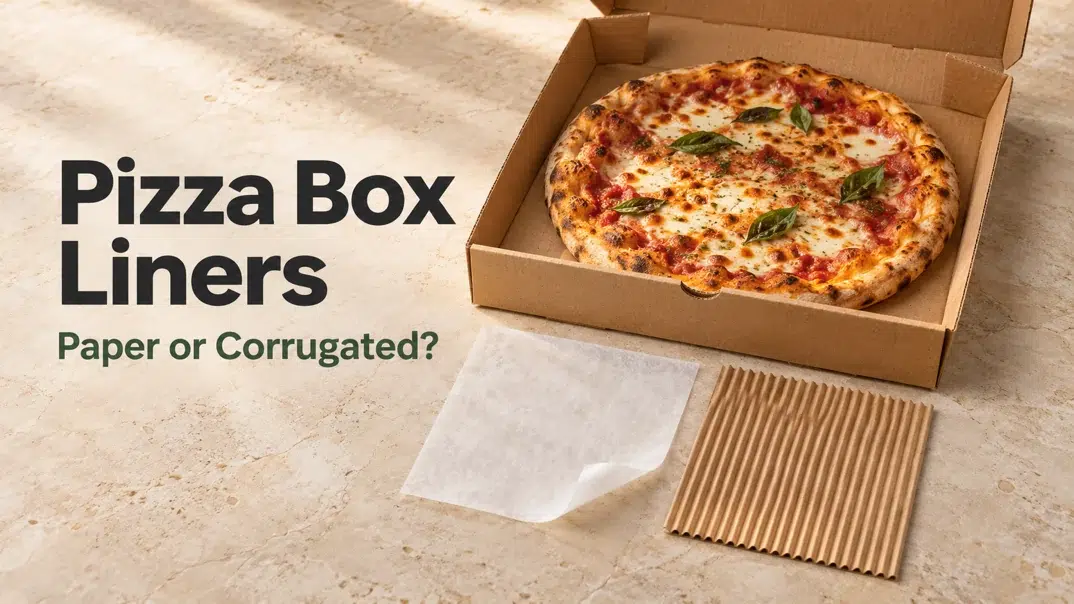
Pizza box liners are optional when the box is suitable for direct contact with hot pizza and the pizza arrives in good condition. A flat greaseproof sheet helps keep oil from soaking into the cardboard. A fluted corrugated insert lifts the crust slightly so there’s space for steam to move underneath. Try one if the underside loses its crunch before the customer opens the box.
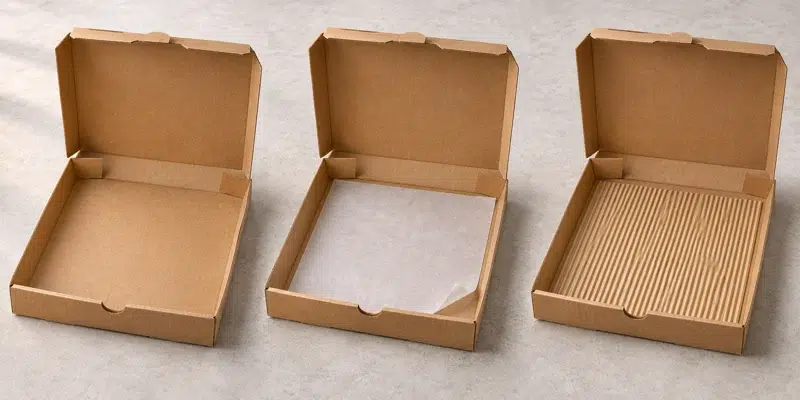
Three Ways to Pack Pizza for Takeout and Delivery
| Packing option | When to use or test it | What it does |
|---|---|---|
| Directly in the box | The box is suitable for hot pizza contact, holds its shape, and delivers a pizza that lifts cleanly with the texture you want. | The box itself is the food-contact surface. |
| Flat greaseproof paper liner | Oil shows through the box, and the crust already travels well. | Forms a grease barrier with little loss of lid clearance. |
| Fluted corrugated insert | A crust that’s crisp at packing softens underneath before handover. | The ridges hold the crust slightly above the base. |
When Can You Pack Pizza Without a Liner?
Pack directly in the box when its inside surface is specified for hot, greasy food contact and the box performs well over your normal pickup or delivery time. Open a loaded sample at handover. If slices lift cleanly, the crust has the texture you want, and grease marks are acceptable, skip the extra piece.
Lift the box the way staff or drivers normally carry it. If the base bows as soon as you load a heavy pizza, check the size and box board construction.
When Is a Greaseproof Paper Liner Enough?
Try a flat greaseproof sheet when the pizza travels well and oil from the toppings or pan crust leaves marks on the outside of the box. The sheet slows oil from reaching the cardboard and adds very little height, which helps when the lid already sits close to the toppings.
Grease resistance and absorbency are separate properties. A barrier sheet can leave oil on its surface even when the board below stays clean. If the liner needs to take up oil as well, check the sheet specification and lift a slice after the usual hold to see how much oil remains under the crust.
Check where oil reaches the box before changing the paper grade. A stain under the middle of an intact sheet suggests you need a better barrier for that use. Stains outside the sheet can come from oil running off its edge or from the sheet shifting as staff slide in the pizza. Fix coverage and placement first if oil is bypassing the paper.
When Does a Corrugated Pizza Box Insert Help?
Test a fluted insert when a pizza goes into the box with a crisp underside and softens during the time it spends boxed. This is worth checking on a thin, crisp crust that regularly spends longer in a delivery bag than it does on the pickup counter.
Look for a single-face pad with exposed ridges on the food-contact side. The crust rests on the ridges, leaving open channels where steam can move beneath it. In typical corrugated box board, those waves sit between two flat sheets, so the pizza still sits on a flat surface.
If you see condensation on the lid, check the box vents first. See whether a stack of boxes or the side of a delivery bag covers an opening.
Will the Liner Fit Your Folded Box?
Measure the usable base of the folded box before choosing a liner size. The Million Pack pizza box range lists a 30 × 30 × 5 cm corrugated box, for example. Use those dimensions to identify the box, then measure the clear space between the folded walls and locking tabs. The liner needs to cover the area the pizza touches and lie clear of the closure.
A corrugated pad takes up more height than a flat sheet. Close the box with the pad and your tallest pizza inside. If the lid touches the toppings, try a thinner pad or a deeper box and recheck the fit.
Confirm which face is suitable for contact with hot, oily food, including any coating or printing. For U.S. orders, ask for documentation covering the intended food-contact use of the finished piece. Check the box surface as well wherever the pizza can touch it, such as along the sides of a narrow liner.
How to Compare the Three Setups on a Delivery Run
Compare a paper liner and a fluted pad with the menu item that causes the problem. Include a sample without a liner if the box is suitable for direct contact with hot pizza. Use matching pizzas and keep the box, time from oven to box, bag, stacking pattern and delivery time the same.
- Check stains and crust texture separately. Look for grease through the board or beyond the sheet edge. Lift a slice from each pizza and compare the underside near the center.
- Check the pack after carrying it. Look for topping marks on the lid, a liner that shifted, or flutes that flattened under the pizza. A flattened pad loses the space it was meant to provide.
- Keep the exact combination that passed. Record the box size and board, insert cut size and thickness or sheet grade, and food-contact face. Recheck the loaded pack if any of those details change.
If you’re sampling a custom pizza box with Million Pack, share the pizza size, typical delivery time and which problem you see at handover. We can use those details to check the assembled box against your packing setup.
FAQs
Can You Slice the Pizza on the Liner?
Slice on the liner only if it holds up under your cutter. Try it on a sample and lift the slices to check for torn paper or crushed ridges. If either occurs, slice on a cutting board before boxing.
Can You Put a Paper Liner on Top of a Corrugated Insert?
You can test both together. A flat sheet laid over the ridges covers the open grooves at the crust. If you need grease resistance as well as a gap, ask whether a fluted pad with a suitable grease-resistant surface can do both jobs as one piece.
Can Customers Reheat Pizza on the Liner or Insert?
Only if the liner or pad is rated for that heating method, temperature and time. Without reheating instructions for the piece, move the pizza to an oven-safe tray or microwave-safe dish.
Conclusion
Use the results of your delivery trial to set a packing rule for each pizza that needs special handling. If a liner helps only one recipe or box size, list it for those orders so staff know when to reach for it.