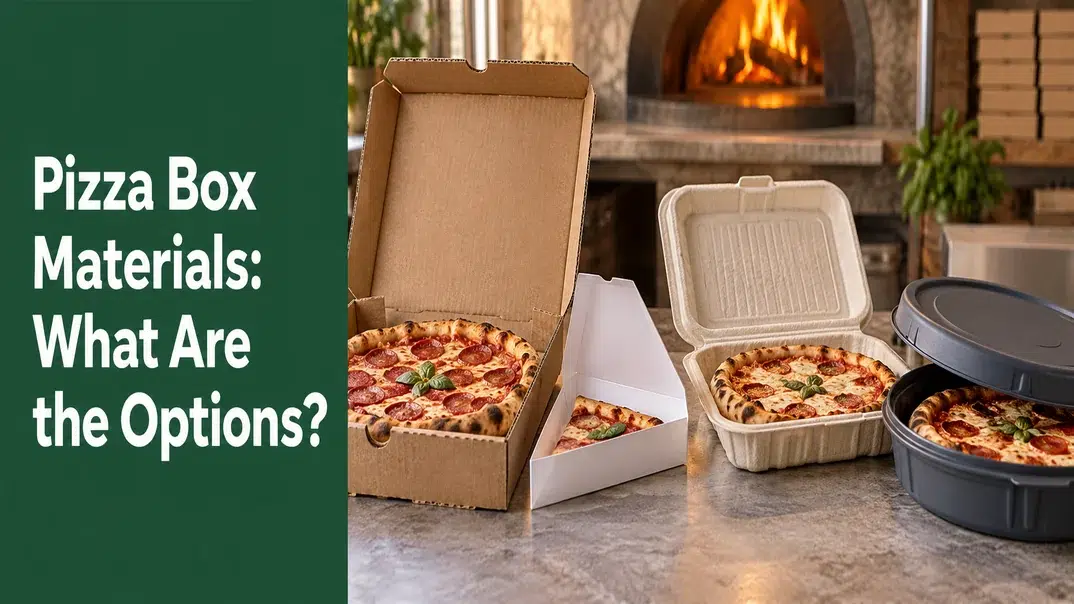
Most hot-delivery pizza boxes are made from corrugated paperboard, but that is not the only pizza box material. Solid paperboard is used for some smaller or retail cartons; molded fiber and reusable plastic are alternatives for specific setups. These are different constructions, not simply different colors of cardboard. The distinction helps you compare a full-size delivery box with a slice carton or a returnable container without confusing the material with its finish.
What Materials Are Pizza Boxes Made Of?
The main options are:
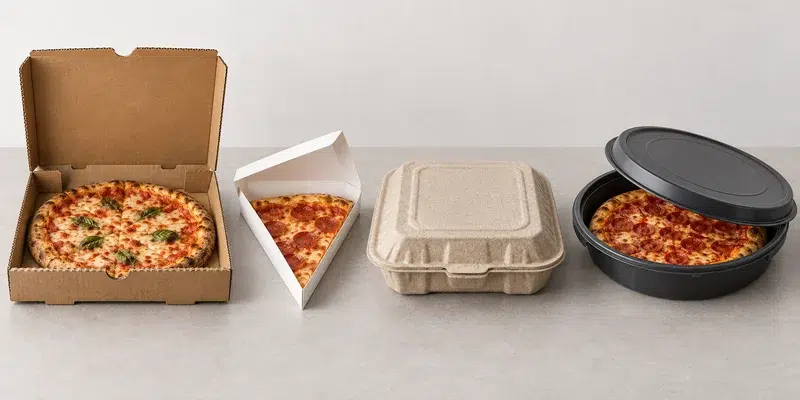
- Corrugated paperboard: Flat paper layers around a wavy middle layer. The usual choice for a full-size hot pizza box.
- Solid paperboard: A flat sheet without the wavy layer. Used in some lighter pizza, slice, and retail cartons.
- Molded fiber: Pulp formed into a tray or clamshell, often from plant fibers such as sugarcane bagasse. A specialty pizza format, not the standard folding box.
- Reusable plastic: A washable container used in a return-and-clean system, not a disposable paper-box substitute.
The cut edge gives you a quick first clue: visible waves mean corrugated board; a flat, compact edge suggests solid paperboard. Molded fiber has a pressed, shaped wall, while a plastic container is rigid and usually has a separate lid.
Corrugated Cardboard for Hot Pizza Delivery
Corrugated board is common for a full-size delivery pizza because the fluted middle layer adds stiffness across a wide base. It also leaves an air gap between the liners. The exact result depends on the paper layers, flute, folds, and box design; the word “corrugated” alone is not a performance rating.
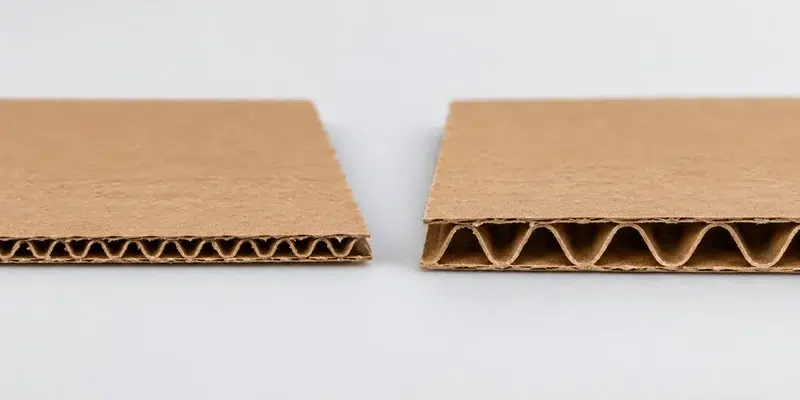
You may see E-flute and B-flute in pizza-box specifications. E-flute makes a slimmer board; B-flute has a larger wave. In Million Pack’s pizza-box reference materials, both appear alongside different outer liner colors. That is why we check the construction and the liner separately: a white box can still be corrugated, and two brown boxes can use different flutes.
For a hot, heavy pizza, check the assembled base and lid under the actual load. If the lid touches the toppings or the base bends, changing the flute alone may not solve it; the box geometry and paper layers also matter. Our article on why pizza boxes use corrugated cardboard covers that structure in more detail.
Solid Paperboard for Smaller or Lighter Packs
Solid paperboard has no fluted middle layer. It gives you a thinner, smooth-surfaced carton and can suit a pizza slice, a small takeaway portion, or an outer carton for a wrapped retail pizza. It is a different option from a corrugated box with a white liner.
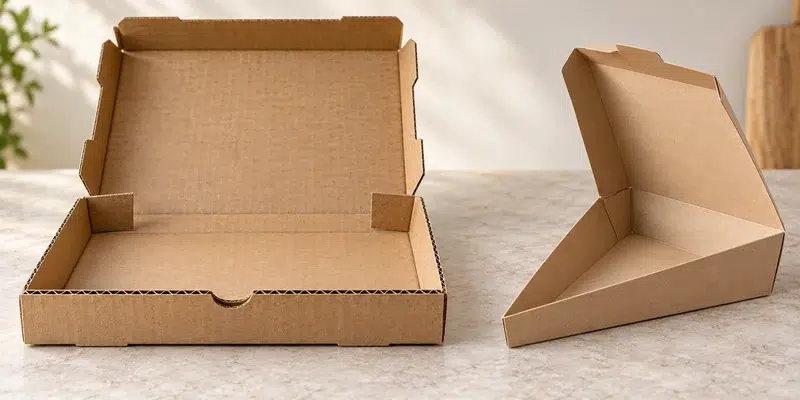
The trade-off shows up when the pack is wide, hot, and loaded with toppings: a thin solid-board base may flex, and trapped steam can soften it. A heavier board or a well-designed fold can change the outcome, so do not reject every solid-board carton on sight. Compare the finished carton with the pizza and journey it is meant to handle.
Molded Fiber and Reusable Plastic Pizza Packs
These are alternatives to the usual folding paper box, but they solve different needs. Molded fiber is pressed into shape from pulp; reusable plastic is made for repeated use with cleaning between orders.
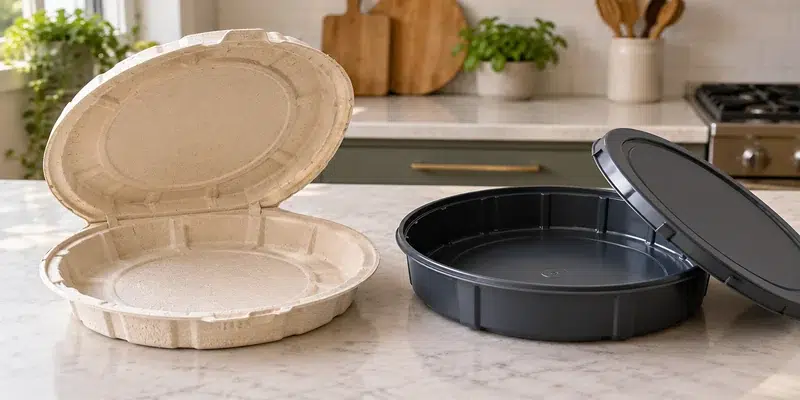
Molded fiber: A formed base and lid can hold a pizza or slice without a corrugated wall. Bagasse is one possible fiber source, but the finished pack may also have a coating or a separate plastic lid. If you are comparing it with a folding box, look at the usable inside space, how the lid closes, how the packs stack in storage, and what actually touches the food. Do not assume “plant fiber” means greaseproof or compostable.
Reusable plastic: This makes sense when you have a workable way to collect, wash, and return containers. Check the food-contact material and cleaning instructions for the exact model. A close-fitting lid can hold condensation over a hot pizza, so assess vents and crust texture during the intended delivery time. It is a different operating system, not just a material swap.
What Do Kraft, White, Recycled, and Coated Mean?
These words describe the fiber source, surface, or added barrier. They do not replace the basic construction categories above.
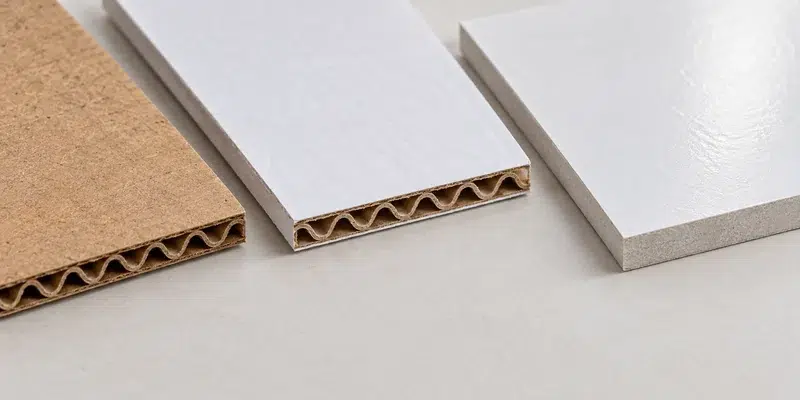
- Kraft or brown: Kraft is a paper grade made from kraft pulp; brown is a color. In product listings, both terms often describe the outer liner. Neither tells you whether the board is solid or corrugated, and a brown color alone does not prove the fiber grade.
- White: Describes a white paper surface or liner, often chosen for print appearance. It is not a separate box structure.
- Recycled fiber: Describes part of the paper feedstock. It does not by itself tell you the strength or whether the food-contact surface is suitable for hot pizza. For U.S. food-contact uses, the status of each component and its intended use need to be checked.
- Coated: Means a treatment or layer has been added, often to manage oil or moisture. Ask what the layer is and which side it covers. A coated board is not automatically recyclable or compostable in every collection system.
This distinction matters in real specifications. “White pizza box” might mean white outside and brown inside on corrugated board; “kraft pizza box” might still have a coating. If you are comparing pizza box options, start with the board structure, then check the food-contact surface and any coating. That gives you a clearer comparison than color alone.
FAQs
Can a Pizza Box Made With Recycled Fiber Touch Hot Food?
Possibly, but recycled content alone does not establish food-contact suitability. Check the material used on the inside, the intended food and temperature, and the current documentation for that exact construction and market.
Do All Pizza Box Materials Go in the Same Recycling Bin?
No. Many mills can recycle empty corrugated pizza boxes with typical grease, but local collection rules still apply. Remove leftover food. Check a coated carton, molded-fiber pack, window film, or worn-out plastic container separately; they may need different collection routes.
Does Frozen Pizza Use the Same Box Material as Hot Delivery Pizza?
Often not. A frozen pizza may be sealed in a food-contact wrap and placed inside a printed paperboard carton. A hot delivery pizza usually sits directly in its box. Check which layer touches the food before treating those cartons as interchangeable.
Conclusion
For most hot full-size deliveries, corrugated board is the familiar starting point. Solid paperboard serves some lighter formats; molded fiber and reusable plastic are more specialized. First identify the construction, then check the food-contact surface and how the finished pack works with your pizza. Labels such as “kraft” or “white” cannot answer those questions on their own.